Dear America,
As we approach this 250 year anniversary, let us rejoice for it is a Jubilee. Repent and forgive. It is a time to rebalance our society and focus on the future.
I ask the executives I work with when they last made a real friend.
They get quiet. Almost without fail, the names they come up with are people they haven't seen in twenty years — old roommates, or people they knew before the striving started.
That is the warning sign. And I recognize it, because it used to be me. At one point in my life, I was surrounded by people all day. My phone never stopped ringing. My calendar was packed. But I had never been lonelier.
I would not have admitted it at the time. But if something truly hard had happened — the kind of thing you don't put in a meeting agenda — I'm not sure I would have known who to call.
There is a lie strivers tell themselves about friendship, and the lie sounds reasonable: I'm in a sprint right now. There will be time for real friends later. I've heard versions of this from people in their twenties through their fifties. The essence never changes; only the "later" gets pushed further.
But friendship doesn't work the way the striver imagines. The people who become your friends-for-life are the people you accumulate time with — through the moves, the boring Tuesdays, the bad years. You can't fast-forward to them. You can't acquire them at fifty-five the way you acquire a second home.
The reason the names always come from college is that college was the last time friendship was the default mode of their lives. They were thrown together with people in proximity over years, with nothing competing for their attention. They didn't have to choose; the friendship happened on its own.
After college, friendship stopped being free. It started costing time, and the deliberate decision to make somebody a priority. Most strivers stop paying that cost and then, decades later, wonder why the bench is empty.
Friendship compounds, and so does its absence.
Striving is a fine thing — I'm pro-striving. The mistake is treating friendship as something that sits outside the striving, a hobby for the off-hours. By the time the urgent work slows down, the people who would have become your friends-for-life have spent those decades becoming somebody else's.
The friends you'll need at fifty-five are the people you are postponing this week.
Do not wait for friendship to become convenient. Pick up the phone and make the plans now.
@BldgCatholicMen A strong drive to Provide. It’s hard for me to start with prayer instead of knocking out more farm chores before heading off to the day job.
@unusual_whales Suggested reading list for @JDVance , Macbeth,
Murder in the Cathedral, Faust, King Lear and Crime and Punishment. I’m praying for him.
A farmer dies in April 2026.
His son inherits the farm. The farm has been in the family since 1847.
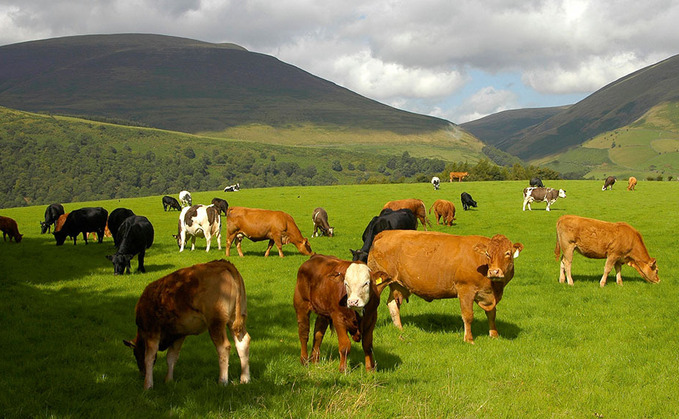
The farm consists of: 300 acres of grazing pasture, a farmhouse built in 1892, a barn, a milking parlour, two tractors of varying ages, a Land Rover that runs about 70% of the time, and a herd of 180 Hereford-cross cattle.
On paper, the farm is worth approximately £3.2 million. This is because land near him has been bought recently by a London hedge fund looking for carbon credits, which has dragged the comparable value of every field within forty miles upward to a number nobody local can justify.
In cash, the farm produces a profit of about £28,000 a year in a good year. In a bad year it loses money. The son also works as a fencing contractor three days a week to keep the operation viable.
The inheritance tax bill on a £3.2 million estate, even at the reduced 20% rate, comes to approximately £140,000 after the increased threshold is applied. The son does not have £140,000. The son has never had £140,000. The son has £4,200 in his current account and an overdraft.
The son sells 60 acres to a developer to pay the tax. The developer puts solar panels on the 60 acres. The remaining herd cannot be sustained on the reduced land. The herd is sold. The barn becomes a holiday let.
A different family eats Brazilian beef this Christmas without knowing why the price went up.
The Treasury collects £140,000.
The land never produces British food again.