@vicberggren@parkersmith You sound very very similar to me. Grok has done alot but its really only as good as the data you feed it. What MCPs are you using, or are you using grok browser instead.
@slaurvick@parkersmith Grok bot is super powerful if given the proper MCPs. What MCPs do you use and where do you find short falls on how those MCPs wire data into your grok?
AI parsing through large amounts of data is by far the best way to use AI. Using it to build software, when done right is right up there too.
A+ work. I built a grokbot that goes through amazon and finds my reimbursements for me. Thats probably the most similar example I have to what you did.
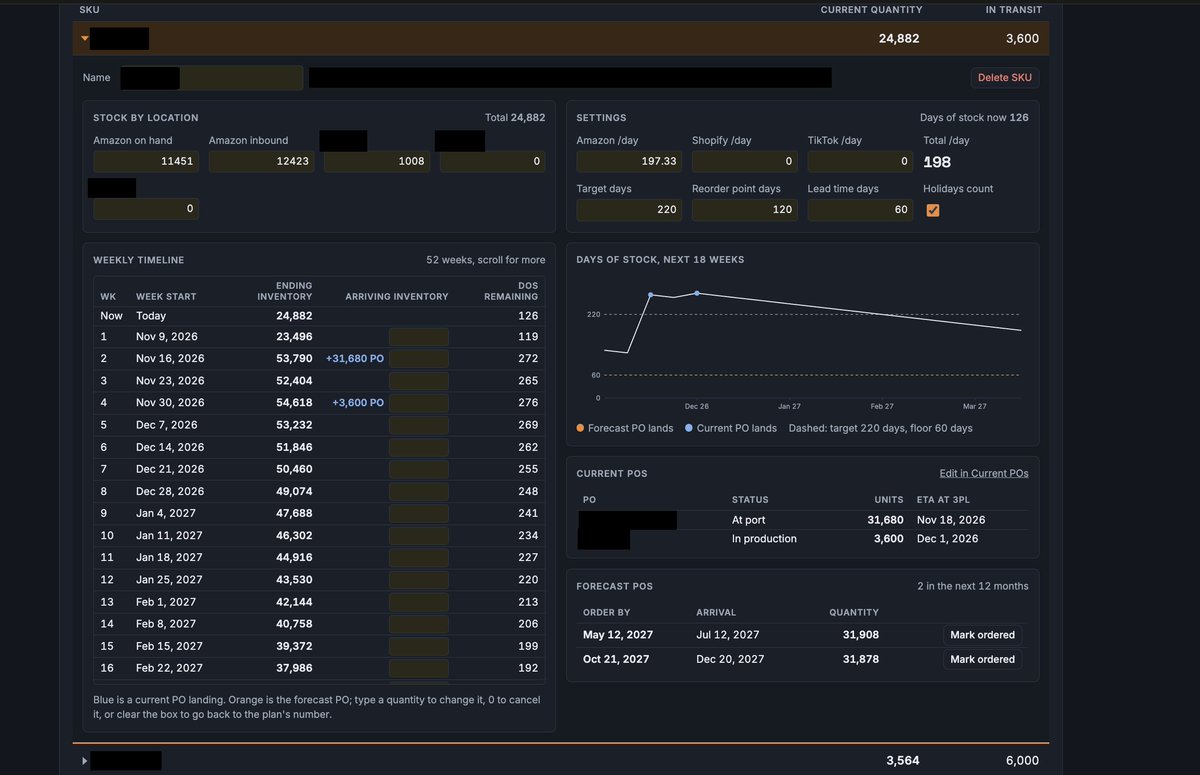
And I built an inventory software too
I had a super similar problem and ended up stocking out. Once I stocked out I lost all momentum and struggled with that product for the next year.
2 growth strats work.
1. slow and steady lean growth
2. Capital heavy fast paced expensive growth
The first needs less inventory and is safer, takes less money.
The second is fast, explosive, and risky.
9/10 times I do the second one.
Dude this is exactly how I run ops for my e com brand. You and I are living proof of how to use AI properly. I hate all these clickbait guys saying AI DOES IT ALL FOR ME. No bro thats not how it works.
What's especially good is that you have "review" bots. In a Stanford study they found that review bots increase accuracy and decrease missed or hallucinated tasks by like 60%.
Good stuff
Agreed, I hate when people say AI will replace jobs. No, not at all. What it will do is give people a higher capacity to complete given tasks. It would have NEVER been possible to reasonably run my business alone without AI. Even now, I still have a marketing agency for Amazon and a separate one for Meta. But product sourcing, operations, and aligning my teams with what I want. Still all done by me with AI parsing through all the data for me so I can make the most well informed and best decisions.
It works like a dream.
I talk to $10M+ sellers every week. None of them run inventory the way X says they do.
Here's how they actually use AI in their ops workflow, what they let the AI do, and what a human still has to do.
The "AI runs my whole store" posts mostly come from growth and dropshipping accounts. Operators with real money on the line almost never post how they reorder. So the loudest advice on here comes from the people with the least to lose.
A PO spends real money, usually a lot of it. Handing that to software that can give a different answer every time you ask is irresponsible. So a person owns the outcome.
The AI does the legwork. The AI pulls the data and lays it out, I review it, and once I approve, the AI carries out every step.
One founder I met ran inventory this way with one ops guy and AI until about $60-70M a year. Only then did he hire a team and a COO. Now he's on track for a billion.
Amazon launched its own seller AI in September. Amazon's tool asks for approval before every single action and holds your hand way too much. And the tool only knows what you do inside Amazon. Your 3PL stock, your Shopify and TikTok sales, and your containers on the water are all invisible to it.
The other limit is data. Data warehouses like Saras iQ feed your business data to AI, starting around $2K a month. They're also read-only. A data warehouse can show the AI your numbers, but the AI can't place an order on Amazon or Shopify through it.
So big sellers use AI to find the pattern, and a person makes the call. HexClad's ops team hooked AI into their ERP and caught 3PL slowdowns during Black Friday. A 30-minute morning warehouse check now takes them two seconds. HexClad's planners still edit every AI forecast.
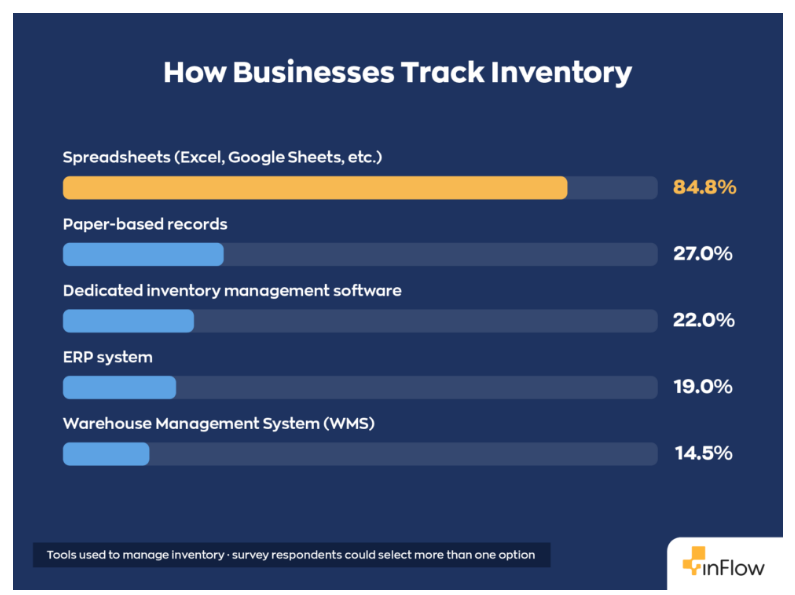
Nobody sits and builds inventory spreadsheets all day anymore at these companies. Most sellers still do. 84.8% of operators run inventory on spreadsheets, and 92% say they're happy with it. Yet 44% stock out at least once a month.
Here's how I do it. I built my own inventory software and a custom MCP that connects my AI to it. Through that MCP, my AI built a 12-month PO plan in Excel across all 20 of my SKUs. I turned the Excel into a visual planner and placed my POs from it. Planning POs and Amazon shipments used to take me 10-12 hours a week. Now it takes about 2. That's 8-10 hours back every week, and I still press buy on every order.
When someone tells me AI runs their whole store, I ask how many SKUs they carry and how big their POs are. The answer is usually a small catalog where a wrong order doesn't hurt much. Or they stop replying.
What do you let AI run in your store, and when the AI gets it wrong, who's on the hook?
@mikebeckhamsm Sometimes as entrepreneurs we forget that our gut feeling is not what makes us successful. Our gut feeling actually makes us fail, we need to launch and innovate based on data and creativity. Test, look at data, test again, look at data, then launch.
@n1ck_ecom I like upsells more. For example, buy one at $40, or two at $60 or three at $70. Or bundles, buy this $100 product and get this $40 product for free. Really only works if you have the margin but theres a shopify template I have that RIPS these types of sales. DM me
I think youd have a lot more luck posting this on linkedin. We briefly launched a supplement brand but its a very very competitive niche. Unless you have a true edge, something you offer that no one else does its very difficult. Im not looking to be your manager, but lets connect and see how I can advise.
These are really valuable insights. Profitability has been already solved by legacy SaaS but I think adding it in our custom softwares just makes us all the better. So I’m assuming you back charge storage fees to the previous months right? Or do you do what Sellerboard does and charge it the day it’s incurred
Definitely took awhile trusting it to actually carry out the actions in the workflow after approval. Such as, after approving the list of SKUs and quantities, downloading the labels and sending it to the 3pl or creating the PO and sending it to the right factory. These are simpler examples but there are more nuanced cases that took some time to develop trust.