New fastest shortest-path algorithm in 41 years!
Tsinghua researchers broke Dijkstra’s 1984 “sorting barrier,” achieving O(m log^(2/3) n) time. This means faster route planning, less traffic, cheaper deliveries, and more efficient networks - and a CS curriculum revamp =)
Did you know flowers can tell time? 🌼🕰️
In the 1700s, botanist Carl Linnaeus dreamed up a “flower clock” made of plants that open and close at specific hours of the day. 🌸💡
Imagine a garden where blooms unfold like clock hands—dandelions at 8 a.m., goat’s beard by noon, and evening primrose at dusk. Nature’s own gentle timekeeper. ⏳🌿
there are people who have a favourite colour, and there are people who's favourite colour is purple. these are very different things. purple fans are different creatures
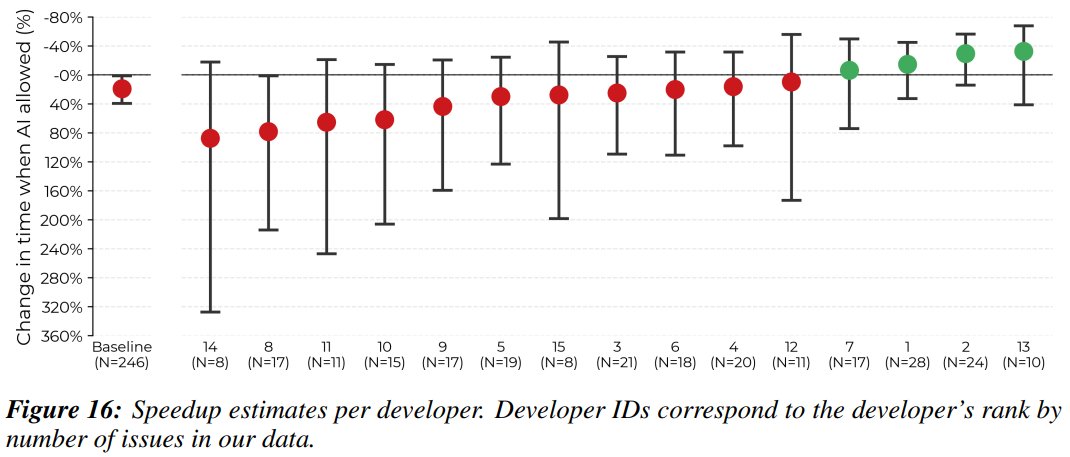
I was one of the 16 devs in this study. I wanted to speak on my opinions about the causes and mitigation strategies for dev slowdown.
I'll say as a "why listen to you?" hook that I experienced a -38% AI-speedup on my assigned issues. I think transparency helps the community.
I was one of the developers in the @METR_Evals study. Thoughts:
1. This is much less true of my participation in the study where I was more conceintious, but I feel like historically a lot of my AI speed-up gains were eaten by the fact that while a prompt was running, I'd look at something else (FB, X, etc) and continue to do so for much longer than it took the prompt to run
I discovered two days ago that Cursor has (or now has) a feature you can enable to ring a bell when the prompt is done. I expect to reclaim a lot of the AI gains this way (1/N)
I respond very well to a, how do you say, eastern european style of instruction. when they straight up tell me i’m bad at something and it’s with zero malice. I’m just being observed, and a fact is being stated. The accent helps too
The mayor can take a week’s vacation & nothing changes
The sanitation workers & morgue workers stop for 3 days & it’s pandemonium
So who are the real essential workers?
And why are they paid a fraction of what the office staff gets?
A gentle reminder that we've already had one 'general purpose technology that increased productivity across the board' — the PC.
And in that revolution, higher productivity/speed DIDN'T result in company wins.
junior pm: only 12% adoption after 3 months.
senior pm: what are the 88% doing instead?
junior pm: using the old workflow.
senior pm: why?
junior pm: it's inefficient. takes 5x longer.
senior pm: according to your measurements.
junior pm: time is objective.
senior pm: value isn't.
junior pm: they value inefficiency?
senior pm: they value what you're destroying.
junior pm: which is?
senior pm: that's your real job. finding out.
junior pm: we did user research.
senior pm: you did usability testing.
junior pm: same thing.
senior pm: usability asks "can they?" research asks "will they?"
junior pm: they can use it. we tested that.
senior pm: & yet 88% won't.
junior pm: because they don't understand the value.
senior pm: prove that's why.
junior pm: our survey says—
senior pm: 3% response rate. you're optimizing for the vocal minority.
junior pm: better than nothing.
senior pm: worse actually. false confidence kills products.
junior pm: so what do i do?
senior pm: shadow 10 users through their actual workflow.
junior pm: that's expensive.
senior pm: cheaper than 88% failure.
junior pm: what will i find?
senior pm: the old way gives them control. predictability. cover-your-ass documentation.
junior pm: those aren't in our value prop.
senior pm: exactly.
junior pm: we solved the wrong problem?
senior pm: you solved your problem. not theirs.
junior pm: but stakeholders approved—
senior pm: based on your framing.
junior pm: which was wrong.
senior pm: incomplete. there's a difference.
junior pm: what difference?
senior pm: wrong means tested & failed. incomplete means never really tested.
junior pm: harsh.
senior pm: here's harsher: you're optimizing to be right about failure instead of wrong about success.
junior pm: meaning?
senior pm: you'd rather explain the 88% than convert them.
junior pm: i'm trying to understand—
senior pm: you're trying to confirm what you already believe.
junior pm: which is?
senior pm: that users are the problem.
junior pm: they are if they don't adopt.
senior pm: features don't have adoption problems. they have job-to-be-done problems.
junior pm: our feature does the job faster.
senior pm: speed wasn't the job.
junior pm: then what was?
senior pm: that's what the 88% are screaming at you.
junior pm: they're not screaming. they're silent.
senior pm: silence is the loudest feedback.
junior pm: so how do i listen to silence?
senior pm: watch what they do. not what they say.
junior pm: behavioral data?
senior pm: actual recordings. unfiltered reality.
junior pm: of the 88%?
senior pm: especially the ones who tried it once & never returned.
junior pm: that's most of them.
senior pm: those are your teachers.
junior pm: what will they teach me?
senior pm: that your feature asks them to give up something valuable.
junior pm: like what?
senior pm: control. flexibility. the ability to blame the old system.
junior pm: we can't solve those.
senior pm: then you can't solve adoption.
junior pm: that's depressing.
senior pm: freeing actually. now you can build something real.
junior pm: by admitting failure?
senior pm: by graduating from feature factory to problem solver.
junior pm: this changes everything.
senior pm: only if you stop defending & start discovering.
junior pm: discovering what exactly?
senior pm: why 88% of people actively choose inferior tools.
junior pm: because people are irrational?
senior pm: because you're measuring the wrong definition of "better."
junior pm: there's only one definition.
senior pm: yours. theirs. & reality. three different things.
junior pm: my head hurts.
senior pm: good. comfort built your 12% feature.
junior pm: discomfort builds what?
senior pm: products people actually use.
my favorite related insight from 10+ years ago was when Facebook had their own custom loader.
when they used the custom loader, people blamed Facebook for the slowness. when they used the system spinner, people assumed their phone/ios was the issue.
What difference would it make if billionaires *did* leave? What value are they currently providing? Genuine question. They don't pay taxes...what are they actually doing?