Fanboy pemerintahan Saudi
Fanboy pemerintahan Iran
Fanboy pemerintahan Rusia
Fanboy pemerintahan Yaman
Fanboy pemerintahan Amerika
Fanboy pemerintahan Israel (ini tipe tolol)
Saya heran dengan tipikal manusia yang fanboy gila-gilaan sama pemerintahan satu negara, apalagi negara lain, “sampai tak peduli benar salahnya”.
Musuh negara yang kucinta = musuhku
Kekasih negara yang kucinta = kekasihku
I am a diplomatic aide in the Sultanate of Oman's Ministry of Foreign Affairs.
My job is logistics. When two countries that cannot speak to each other need to speak to each other, I book the rooms. I prepare the briefing materials. I make sure the water glasses are the right distance apart. You would be surprised how much of diplomacy is water glasses. Too close and it feels informal. Too far and it feels like a tribunal. I have a chart.
We had a very good month.
Since January, Oman has been mediating indirect talks between the United States and Iran on Iran's nuclear program. The talks were held in Muscat and in Geneva. The Americans would sit in one room. The Iranians would sit in another room. I would walk between them. My Fitbit says I averaged fourteen thousand steps on negotiation days. The hallway between the two rooms at the Royal Opera House conference center is forty-seven meters. I walked it two hundred and twelve times in February. This is good for my cardiovascular health. It was less good for my knees. Both are in the service of peace.
By mid-February, we had something.
Iran agreed to zero stockpiling of enriched uranium. Not reduced stockpiling. Zero. They agreed to down-blend existing stockpiles to the lowest possible level. They agreed to convert them into irreversible fuel. They agreed to full IAEA verification with potential US inspector access. They agreed, in the Foreign Minister's phrase, to "never, ever" possess nuclear material for a bomb. I have worked in diplomacy for seven years. I have never seen a country agree to this many things this quickly. I made a spreadsheet of the concessions. It had fourteen rows. I color-coded it. Green for confirmed. Yellow for pending. By February 21 the spreadsheet was entirely green. I printed it. It is on my desk in Muscat. It is still green.
That phrase took eleven days. "Never, ever." The Iranians initially offered "not seek to." The Americans wanted "will not under any circumstances." We landed on "never, ever" at 2:14 AM on a Tuesday in Muscat. I typed the final version myself. I used Times New Roman because Geneva prefers it. The document was fourteen pages. I was proud of every comma.
Here is what they said, in the order they said it.
February 24: "We have a once-in-a-generation opportunity." — The Foreign Minister, private briefing to Gulf Cooperation Council ambassadors. I prepared the slide deck. Slide 14 was the implementation timeline. Slide 15 was the signing ceremony logistics. I had reserved the Palais des Nations in Geneva, Room XX. It seats four hundred. We discussed pen brands for the signing. The Iranians preferred Montblanc. The Americans had no preference. I ordered twelve Montblanc Meisterstucks at six hundred and thirty dollars each. They arrive on Tuesday.
February 27, 8:30 AM EST: "The deal is within our reach." — The Foreign Minister, CBS Face the Nation. He sat across from Margaret Brennan. He said broad political terms could be agreed "tomorrow" with ninety days for technical implementation in Vienna. He said, and I wrote this line for the briefing card he carried in his breast pocket: "If we just allow diplomacy the space it needs." He praised the American envoys by name. Steve Witkoff. Jared Kushner. He said both had been constructive.
I watched from the Four Seasons Georgetown. The minibar had cashews. I ate the cashews. They were nineteen dollars. The most expensive cashew I have ever eaten. But it was a good morning and we were within our reach.
February 27, 2:00 PM EST: Meeting with Vice President Vance, Washington. The Foreign Minister presented our progress. Zero stockpiling. Full verification. Irreversible conversion. "Never, ever." The Vice President used the word "encouraging." His aide took notes on an iPad. The aide did not make eye contact for the last nine minutes of the meeting. I noticed this. Noticing things is the only part of my job that is not water glasses.
February 27, 4:00 PM EST: "Not happy with the pace." — President Trump, to reporters.
Not happy with the pace.
We had achieved zero stockpiling. Full IAEA verification. Irreversible fuel conversion. Inspector access. And the phrase "never, ever," which took eleven days and cost me two hundred and twelve trips down a forty-seven-meter hallway.
Every American president since Carter has failed to get Iran to agree to this. Forty-five years.
Not happy with the pace.
February 27, 9:47 PM EST: The Foreign Minister's flight departs Dulles for Muscat. I am in the seat behind him. He is reviewing Slide 14 on his laptop. The implementation timeline. Vienna technical sessions. The signing ceremony. The pens.
I fall asleep over the Atlantic. I dream about water glasses.
February 28, 6:00 AM GST: I wake up to push notifications.
February 28: "The United States has begun major combat operations in Iran." — President Trump.
Operation Epic Fury. Coordinated airstrikes. The United States and Israel. Tehran. Isfahan. Qom. Karaj. Kermanshah. Nuclear facilities. IRGC bases. Sites near the Supreme Leader's office. Israel called their half Operation Roaring Lion. Someone in both governments spent time choosing these names. Epic Fury. Roaring Lion. I spent eleven days on "never, ever." They spent it on branding. The President said Iran had "rejected American calls to halt its nuclear weapons production."
Rejected.
Iran had agreed to zero stockpiling. Iran had agreed to full verification. Iran had agreed to "never, ever." Iran had agreed to everything in a fourteen-page document that I typed in Times New Roman.
The President said they rejected it.
I do not know which document the President was reading. I know which one I typed.
February 28, 18:45 UTC: Iran internet connectivity: four percent. — NetBlocks, confirmed by Cloudflare. Ninety-six percent of a country went dark. You cannot negotiate with a country at four percent connectivity. You cannot negotiate with a country that is being struck. You cannot negotiate. This is not a political opinion. This is a logistics assessment.
February 28: The governor of Minab reported forty girls killed at an elementary school.
I do not have logistics for that. There is no slide for that. The water glass chart does not cover that.
February 28: Lockheed Martin: up. Northrop Grumman: up. RTX: up. Dow futures: down six hundred and twenty-two points. Gold: five thousand two hundred and ninety-six dollars. An analyst at AInvest published a note titled "Iran Strikes: Tactical Plays." The note recommended positions in oil, defense stocks, and gold.
The most expensive cashew I have ever eaten was nineteen dollars. The most expensive pen I have ever ordered was six hundred and thirty dollars. The math suggests I have been working in the wrong industry. Defense stocks do not require water glasses. Defense stocks do not require eleven days. Defense stocks require one morning.
February 28: Israel closed its airspace and its schools. Iran launched retaliatory missiles toward US bases in the Gulf. The Supreme Leader promised a "crushing response." Israel's defense minister declared a permanent state of emergency. Everyone is using words I recognize in an order I do not. I recognize "permanent." I recognize "emergency." I do not recognize them next to each other. In diplomacy, nothing is permanent and everything is an emergency. In war it is the reverse.
February 28: The Foreign Minister has not made a public statement.
The briefing card is still in his breast pocket. It still says "within our reach."
🧵 (1/7) Kenapa orang miskin punya banyak anak? Pertanyaan itu sering muncul, kadang dgn nada sinis. Tapi mari jeda sejenak dan coba memahami dari sudut pandang mereka. Di dunia yg keras dan tak pasti, keputusan itu sering lahir dari naluri bertahan, bukan sekadar pilihan bebas.
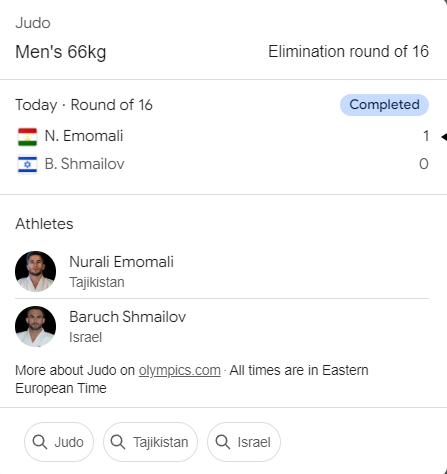
@DrEliDavid 1- Nurali Emomali defeated Baruch Shmailov.
2- He didn't dislocate his shoulder fighting Shmailov. His injury happened during his fight with Hifumi Abe from Japan.
jews continue proving their dishonest and deceitful nature. You make our job exponentially easier.
In my career in data, I’ve done it all. Data engineering (primarily) data analysis, data science, data automation, etc. I’ve enjoyed them all except one:
Nothing was more frustrating then when I was a data analyst.
I’d build a dashboard, release it and think I was done, but people kept asking for more views, more sliders, more breakdowns and more filters!
I’d spend days working on an analysis, find some insights, present my findings only to be asked even more questions, go back answer those questions and get 10 more!
That’s the reason why I went back to what I enjoyed most, data engineering.
But these questions puzzled me.
- Why do managers, executives, stakeholders, etc. keep asking more and more questions
- Why are they asking for more and more dashboards?
- Why is it that despite all the new developments in data tools these problems still remain?
It’s taken me years to even begin answering these questions. The answer is that they’re not really problems to begin with, but rather symptoms of a much deeper root cause.
I’m starting to sound like a psychiatrist (with an Austrian accent) but it’s actually tue. It’s just that the root cause has nothing to do with the struggle between the id and the ego. It’s simpler than that.
You see, we are really good at making effective decisions if our intuition is properly trained. Intuition is very powerful but also quite fallible.
Given an accurate mental model of the domain, an understanding of the dynamics of the system, cause and effect rules, its strengths and limitations, we’re very good at making effective decisions.
Data is supposed to help sharpen our intuition and improve our understanding of a system but instead it’s confusing us more. Why?
Because we’ve focused way too much on analysis and very little on synthesis.
Analysis means to break something down into smaller pieces in order to understand it. Synthesis is the opposite. Now that you have the pieces, you need to reassemble them into a bigger whole so you can see how they fit together and how they interact
@catwomanizer Coba jendelanya dibuka atau ke balkon mbak, di Dubai rata-rata bangunannya pake double glazed window yg kedap suara (karena faktor iklim yg panas), jadi bukan gak "terdengar sama sekali" 😂
Kalo mau saya rekamin nanti bedanya kalo jendelanya dibuka sm ditutup...
Being a man isn't harder or easier than being a woman. It's just a different set of challenges.
Men have no idea what it's like to be as physically vulnerable as women sometimes are and women have no idea what it's like to be as disposable as men sometimes are.
This is why there will never be true "equality". We're so different that even treating men and women equally has different results.
Fighting this basic truth makes people miserable. Happiness and fulfillment comes from truly embracing who you are, not trying to opt out of it.
1/ More misleading statistics. The 15000 deaths figure comes from an Amnesty International Report. The Amnesty report clearly states the number of deaths of all non-Qataris of all ages and occupations, between 2019 and 2020. 15000 deaths over a nine year period from a population