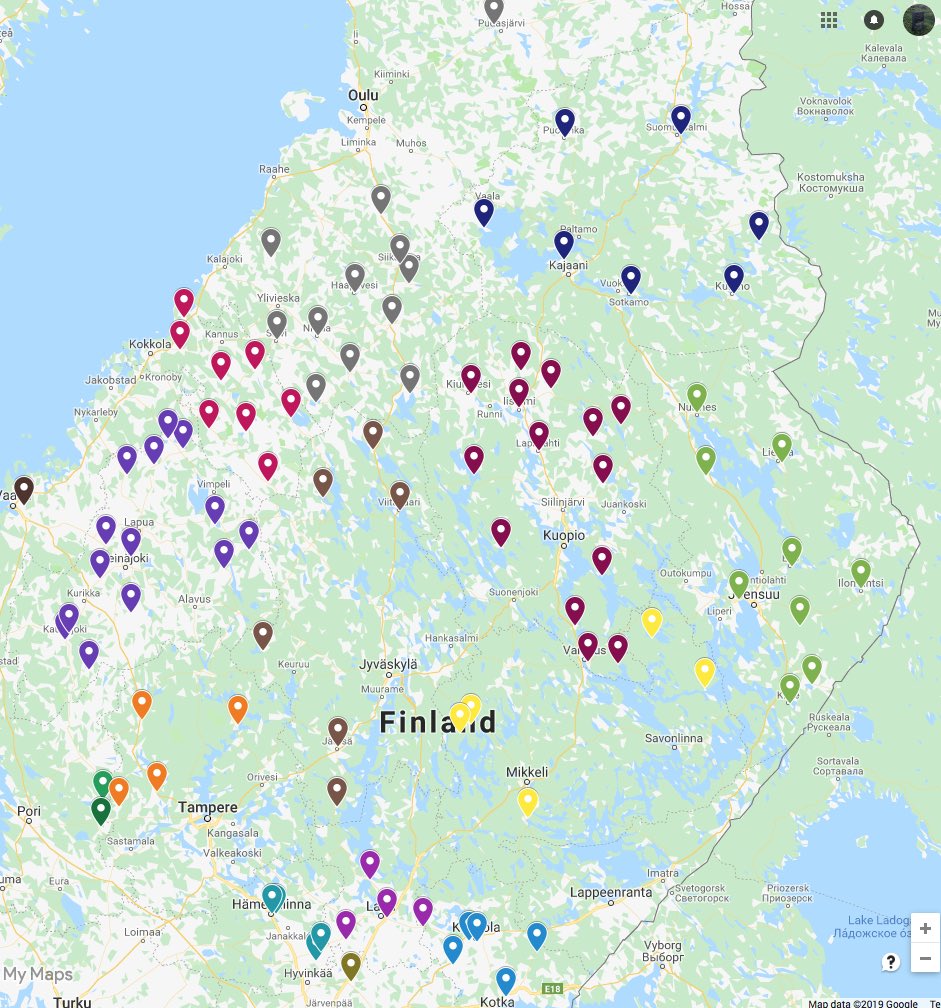
Memorials to Finland's 1860s "Great Hunger Years". No longer updated - use photos freely, but please acknowledge source. Updates via webslite (link below).
In some respects a ”forgotten famine”, Finland’s Great Hunger Years of the 1860s is commemorated in dozens — so far almost a hundred have been recorded — of sites around the country. #nälkävuodet#famine#nälkävuosien#muistomerkit#memorials
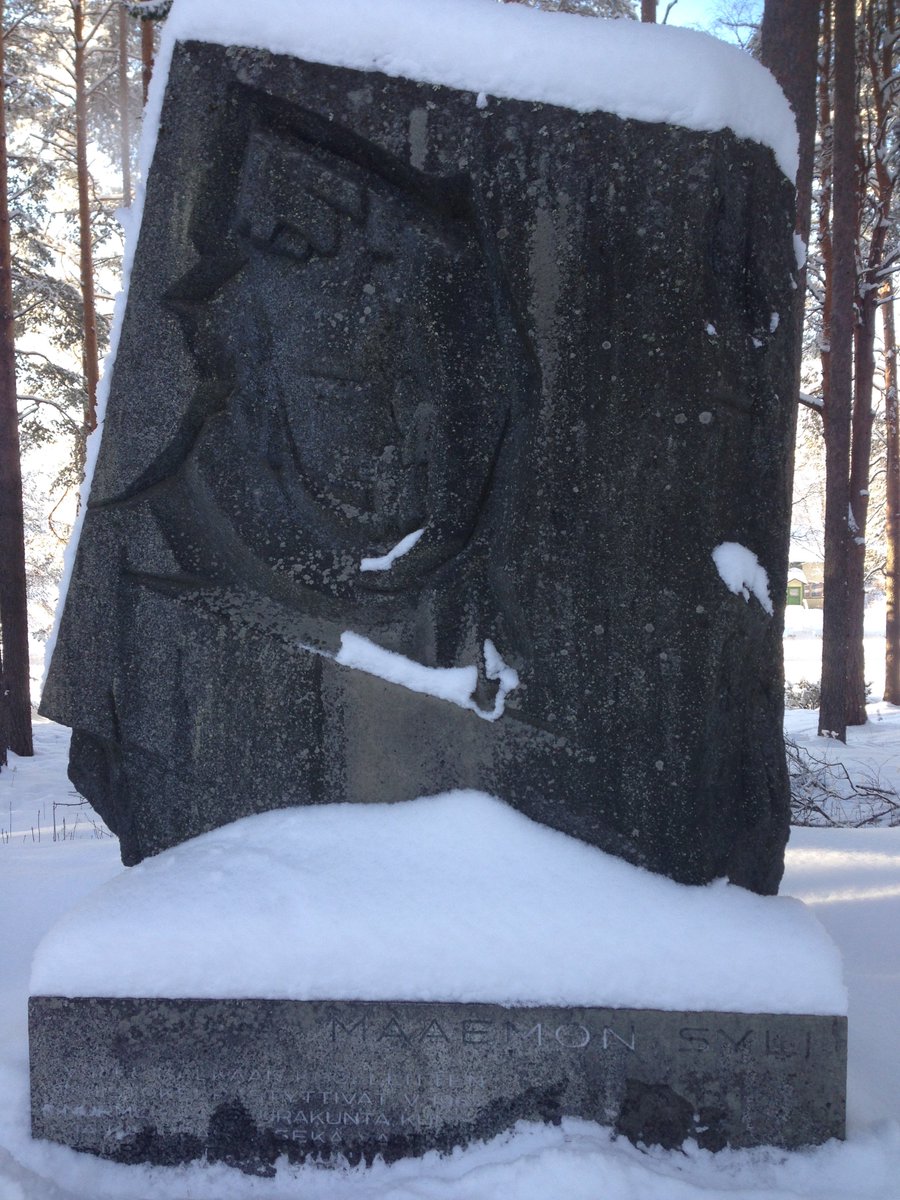
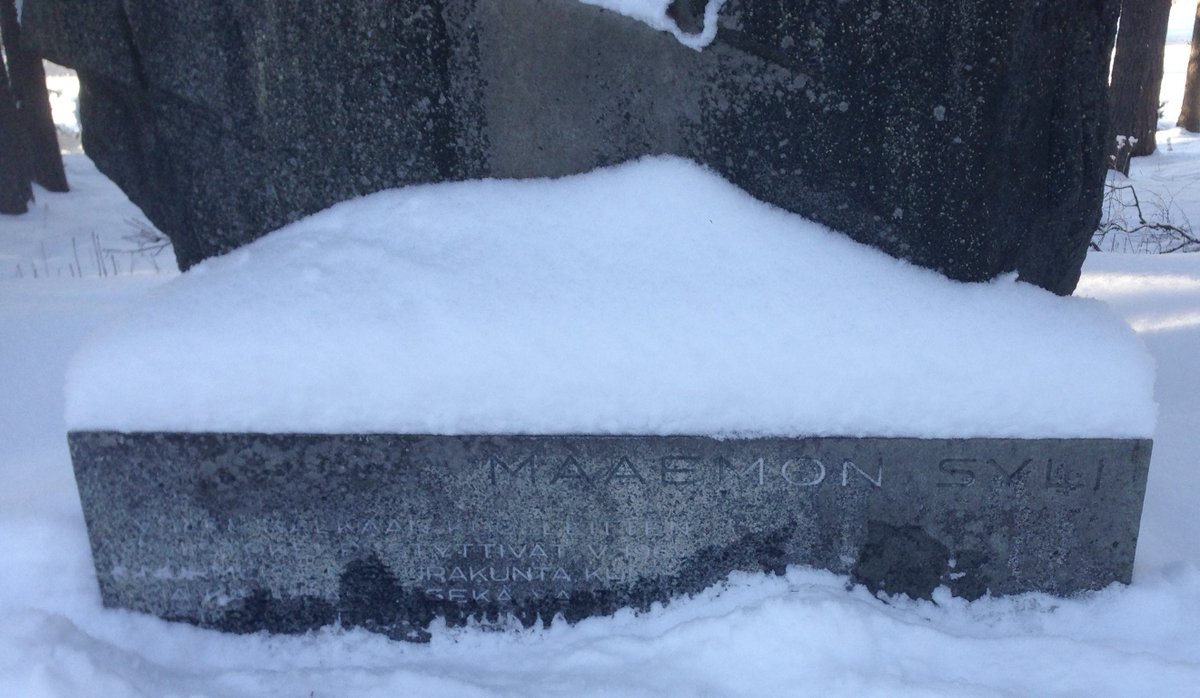
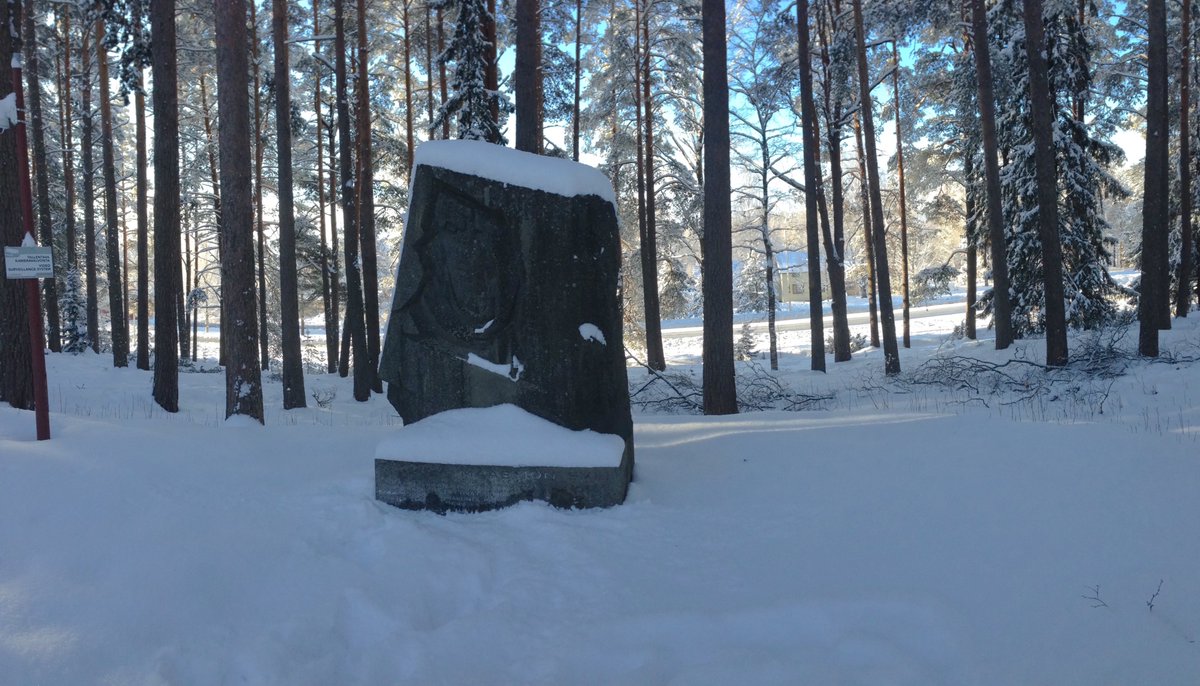
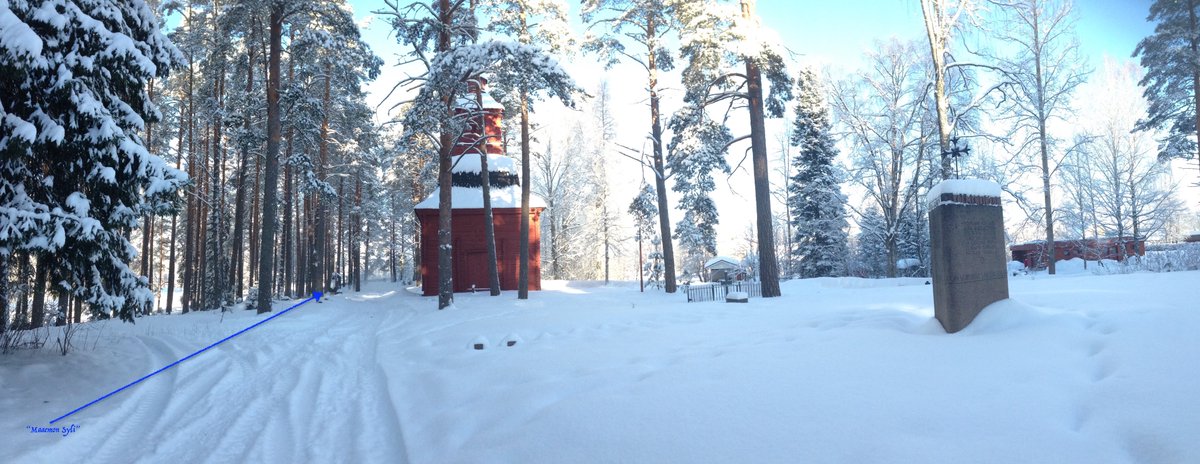
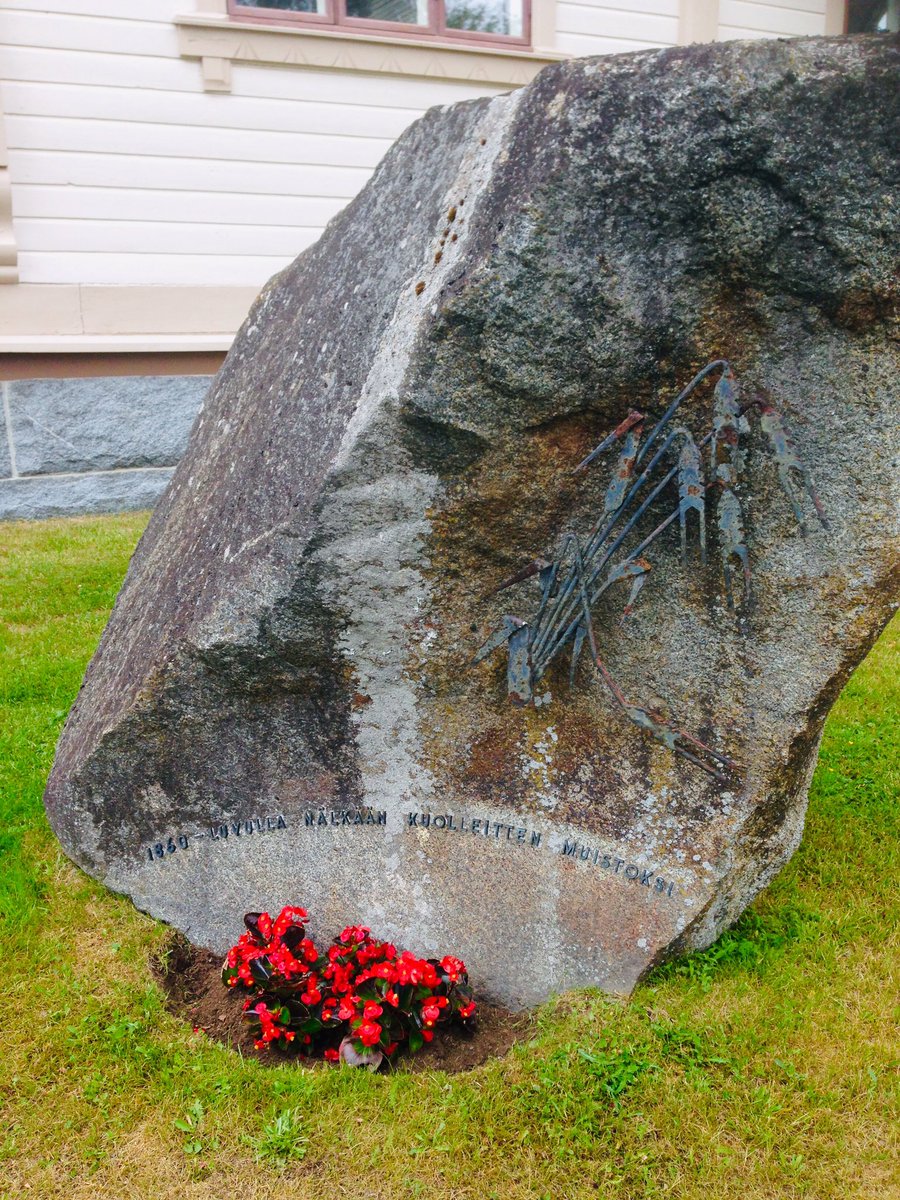
82. Nurmes, N. Karelia. The memorial in Nurmes was a pioneer among Finnish famine memorials in that it was a named piece of art, a relief by Veikko Jalava entitled “Maaemon Syli” (“In the Lap of Mother Earth”). 1,000+ died in Nurmes in 1868. https://t.co/XXZXPlw0cn
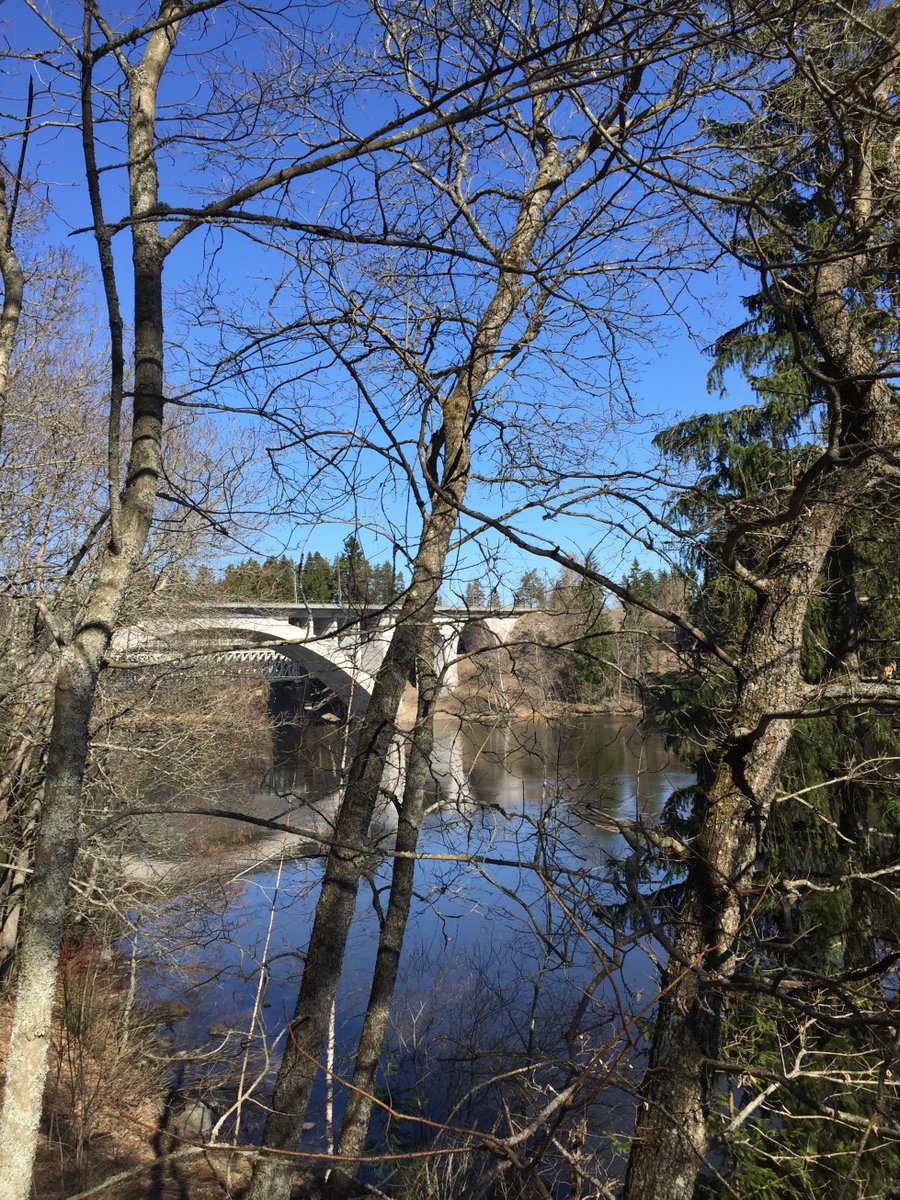
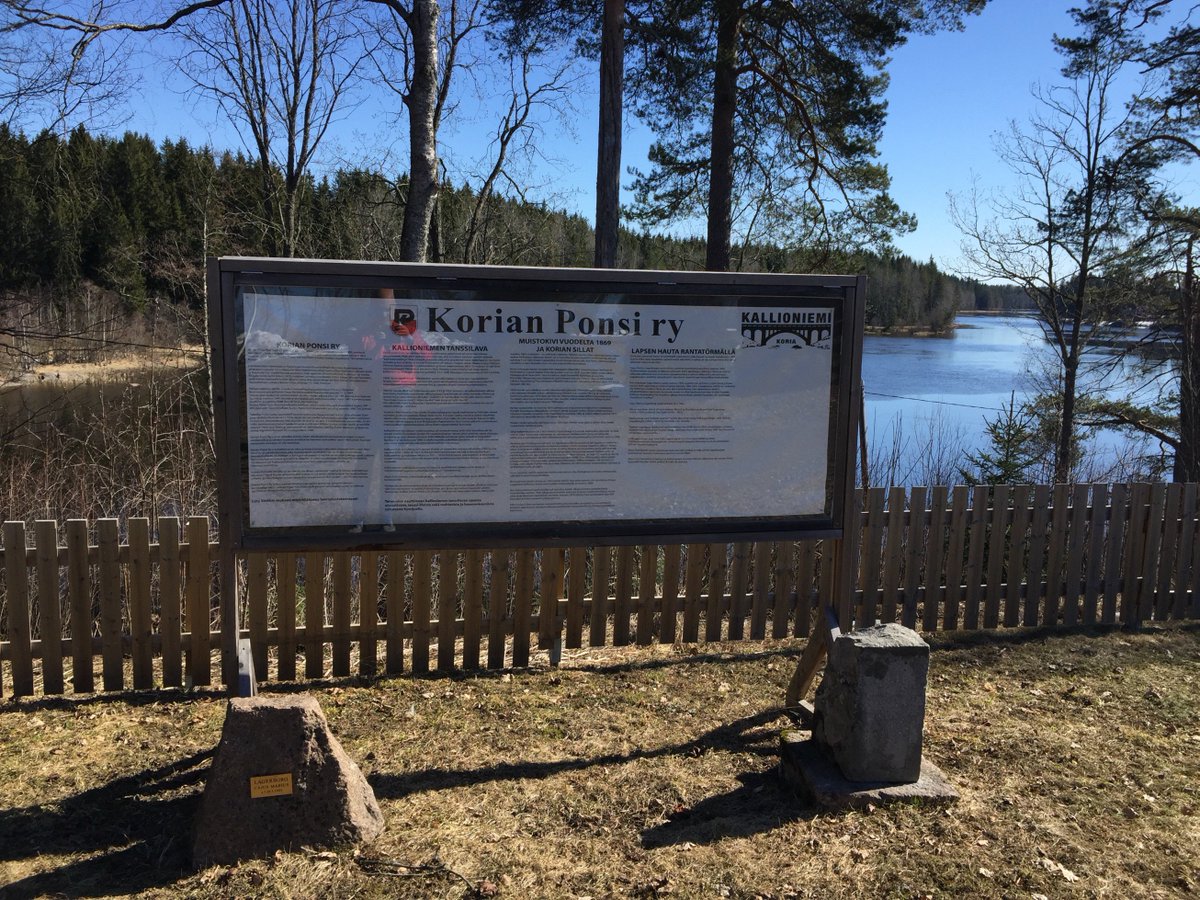
81. Koria, Kymenlaakso. Memorial stone dated 19.8.1869 and featuring the initials of six people. Thought to be made by workers on the Riihimäki-St. Petersburg railway / bridge relief work site in memory of fallen comrades. #luurata#hätäaputyö https://t.co/ZlVK1Huk3W
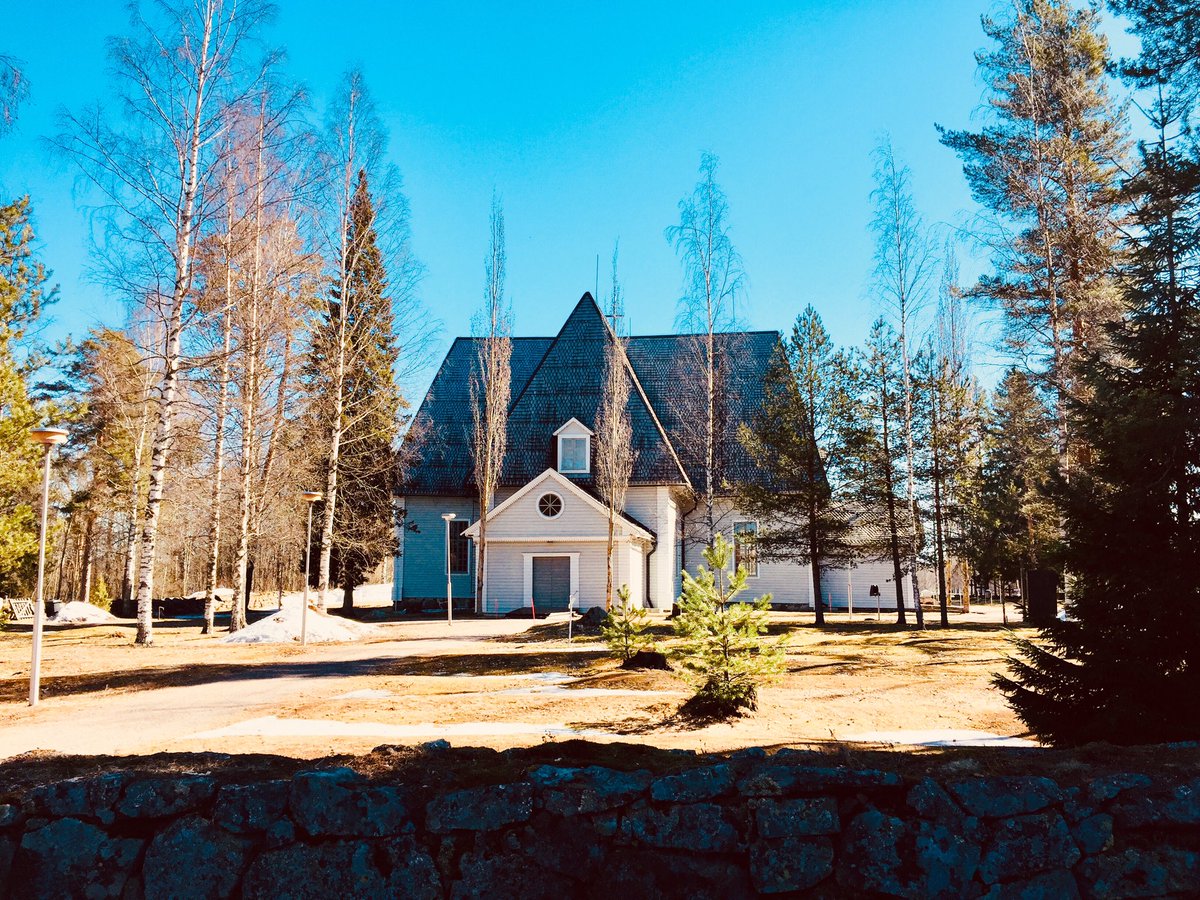
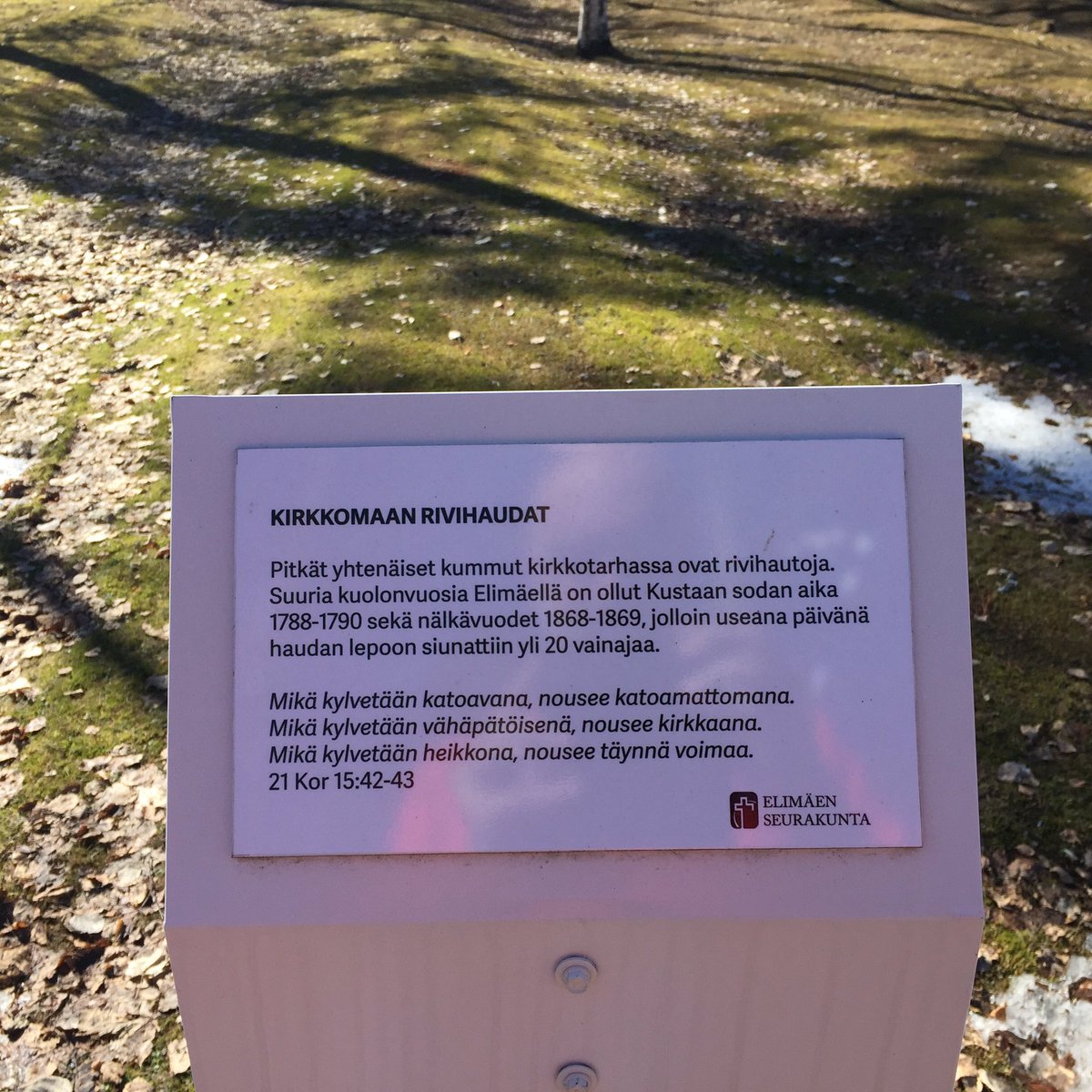
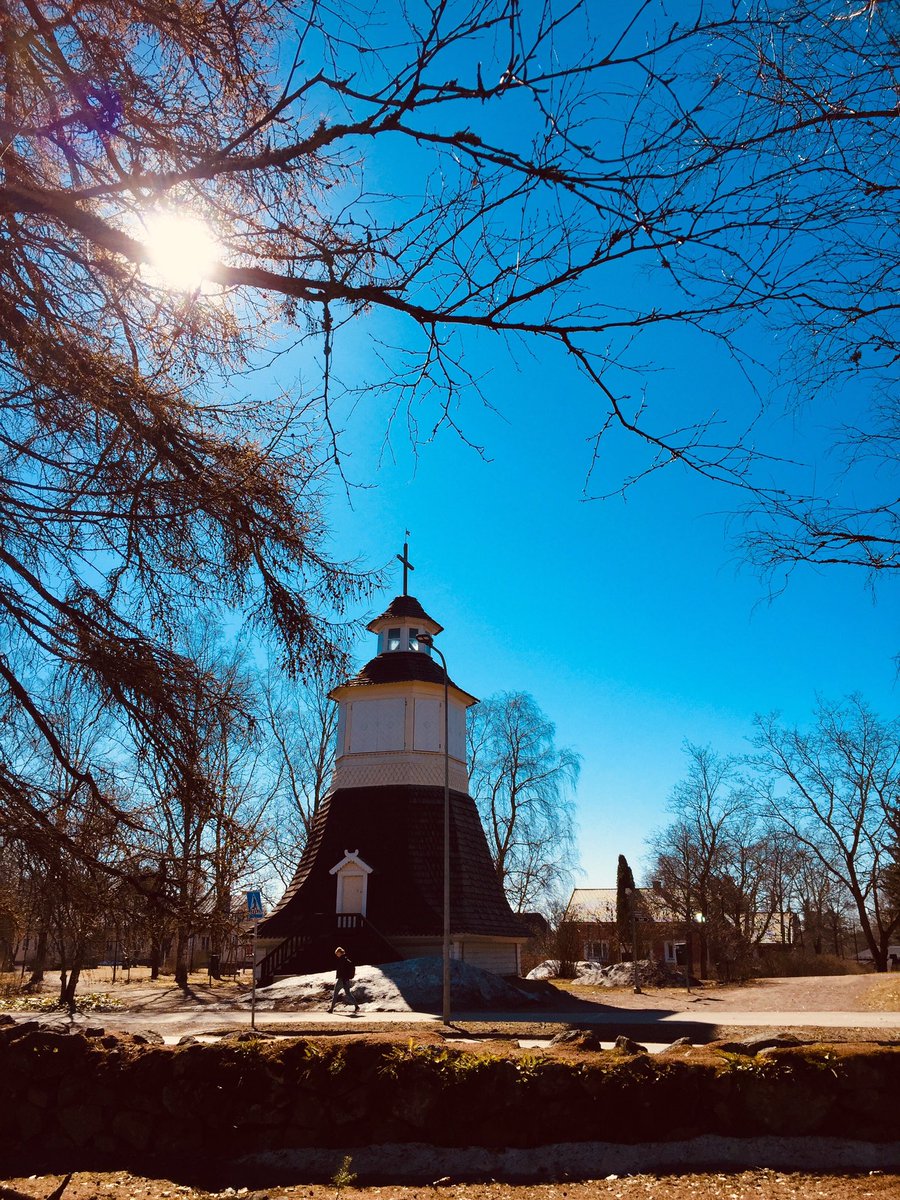
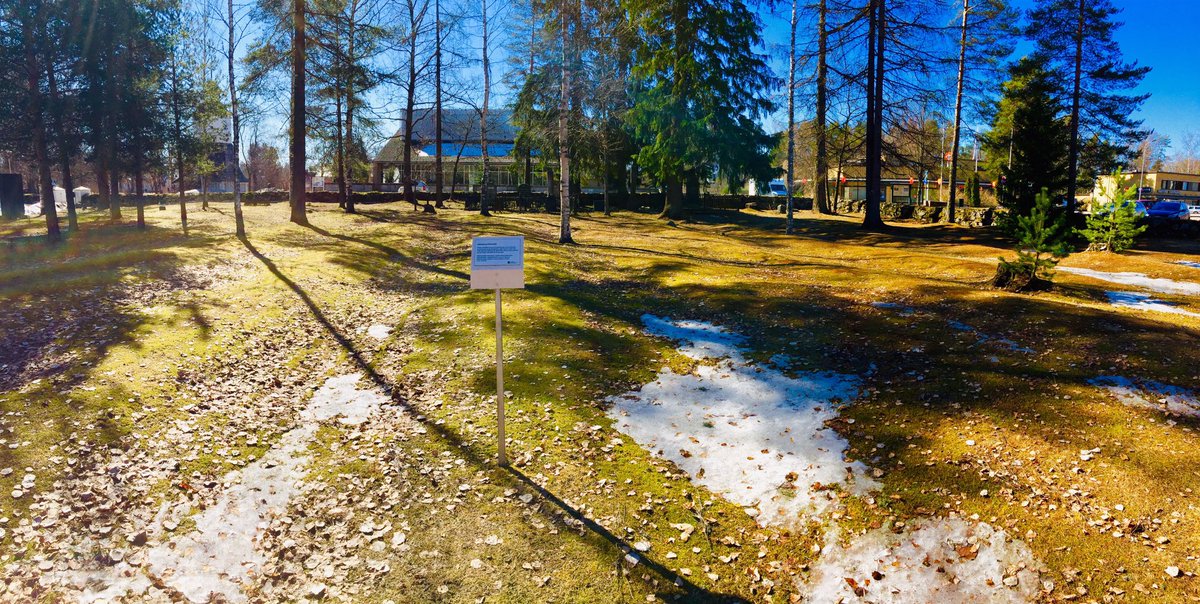
80. Elimäki, Kymenlaakso. The unmelted snow accentuates the furrows of the 1860s mass graves at the back of the churchyard. On some days twenty people were laid to rest. https://t.co/t5BjPTXddY
79. Ruovesi, Pirkanmaa. "In the month of January 43 people died here; in February 77 and in March 80, in total 200. Of these, 18 died of smallpox, 60 of typhus, and about the same number poor nutrition and hunger, in other words, famine." https://t.co/eSQqT5W0qt
78. Lahti, Päijät-Häme: "the bones of tens of thousands of citizens are bleaching in the trackbed of Riihimäki-St. Petersburg railroad" [W. Lindberg, Iitti, (SKS Archive,1935)] - memorial at the relief work's vast mass-grave site, est. 1953. https://t.co/4uOZsxxkL9 #luurata
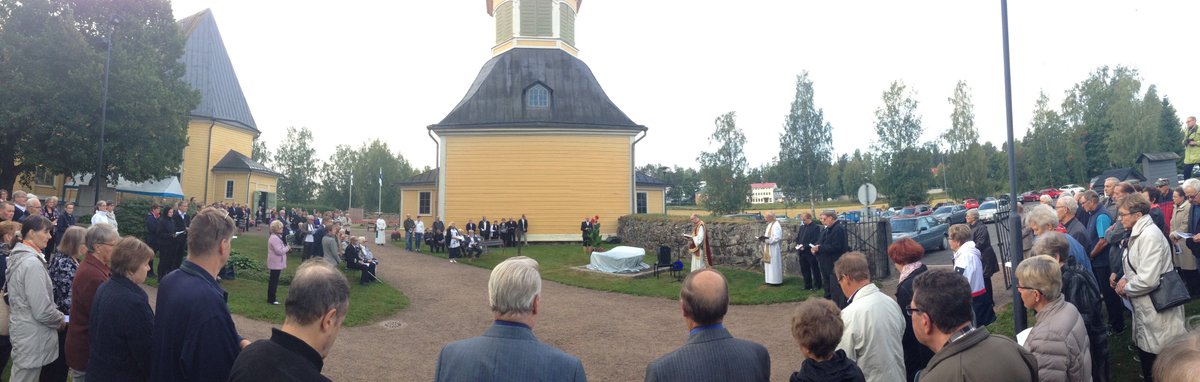
77. Kiikoinen, Satakunta. The newest 1860s memorial (Dec. 2018) - commemorating the 229 local victims of the famine. The stone wall around the church was a famine relief scheme. https://t.co/5SCVbtXJus #hätäaputyö
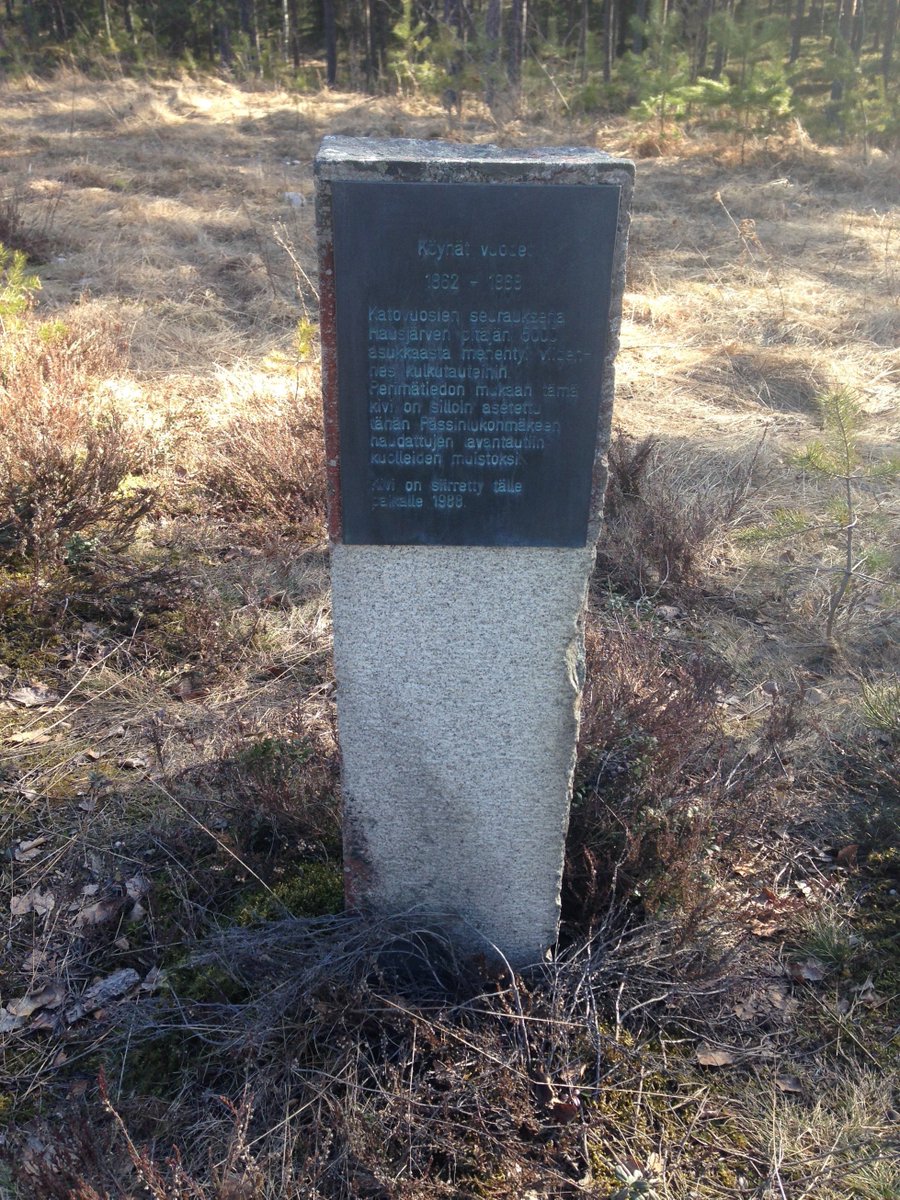
76. Hikiä, Kanta-Häme: "The Poor Years 1862-1868... Hausjärvi Parish lost 1/5 of its 5000 inhabitants to contagious diseases. According to local tradition, this stone is left in memory of those buried on Pässinluko Hill, who died from typhoid fever." https://t.co/2VAUPqAifw
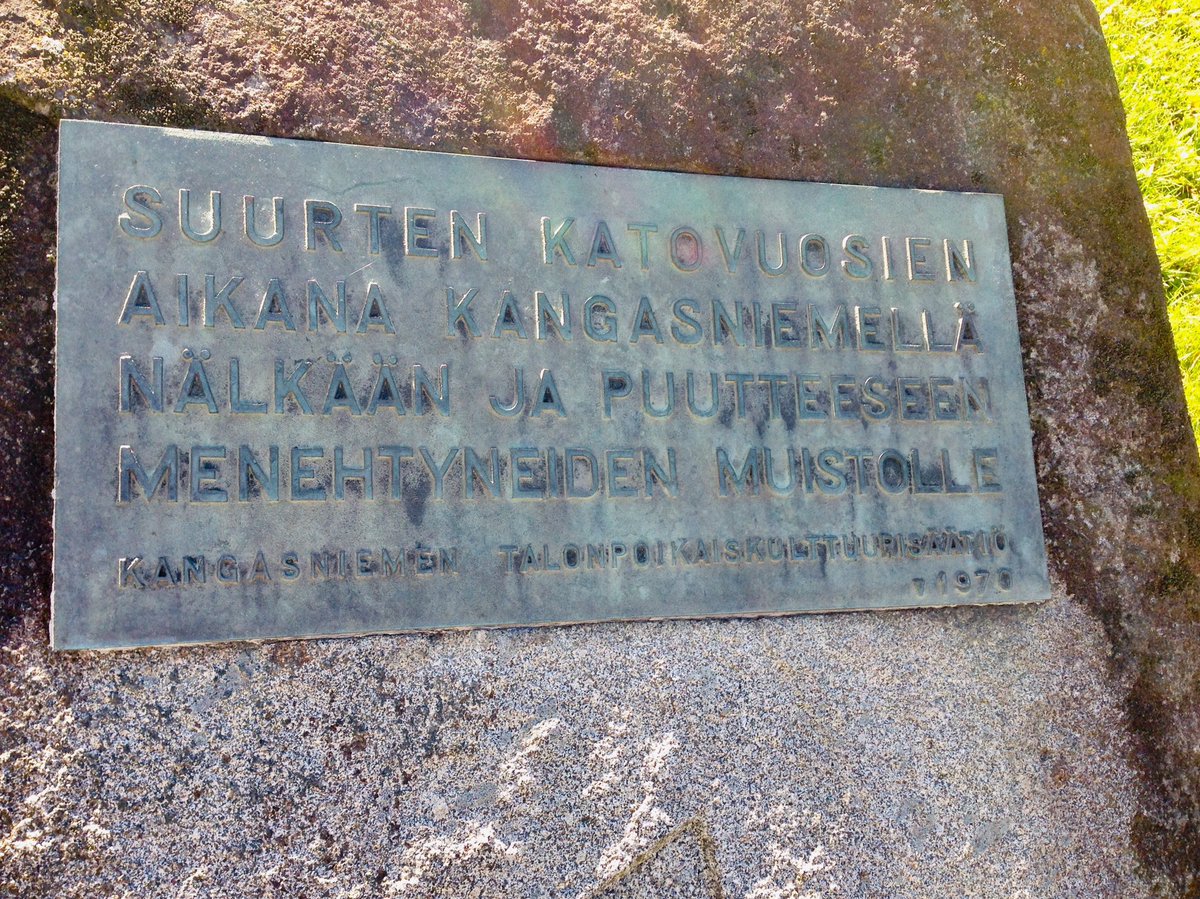
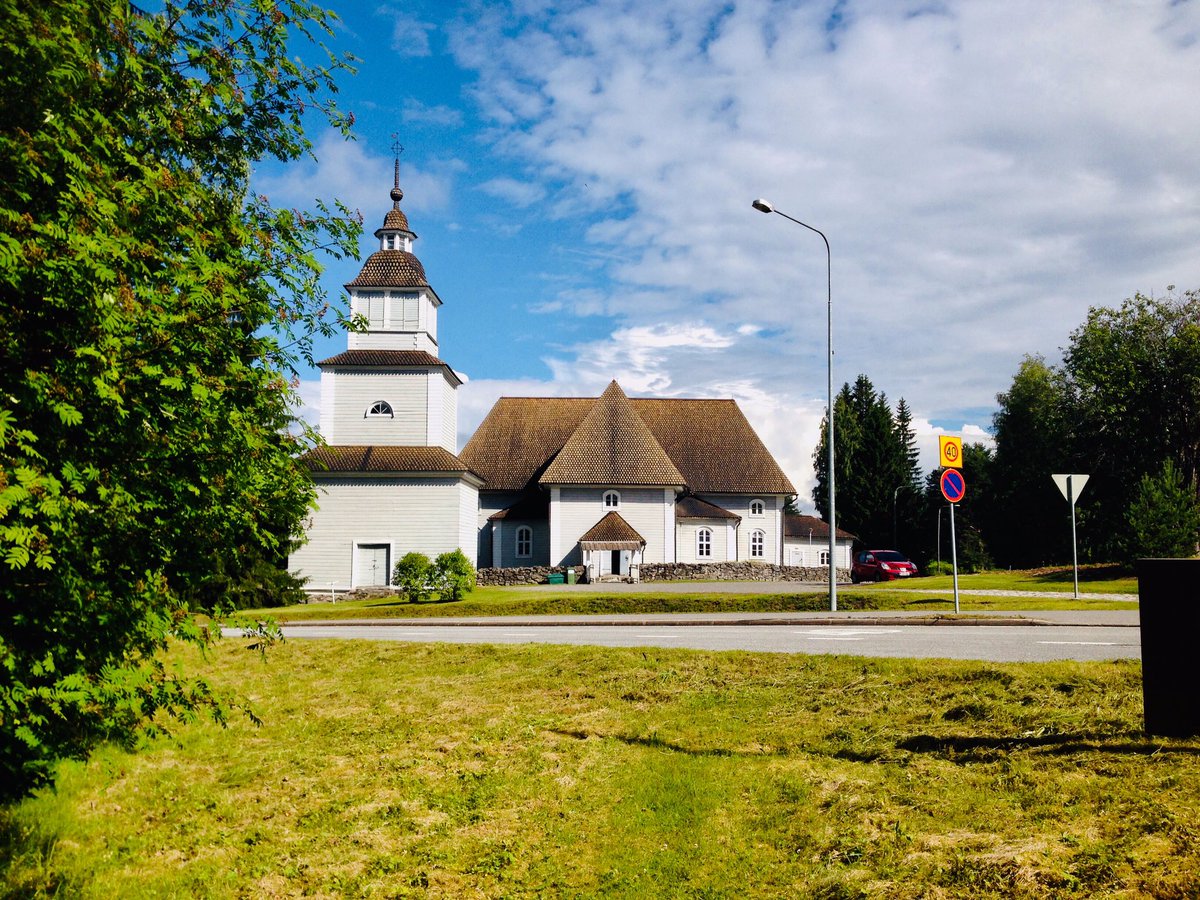
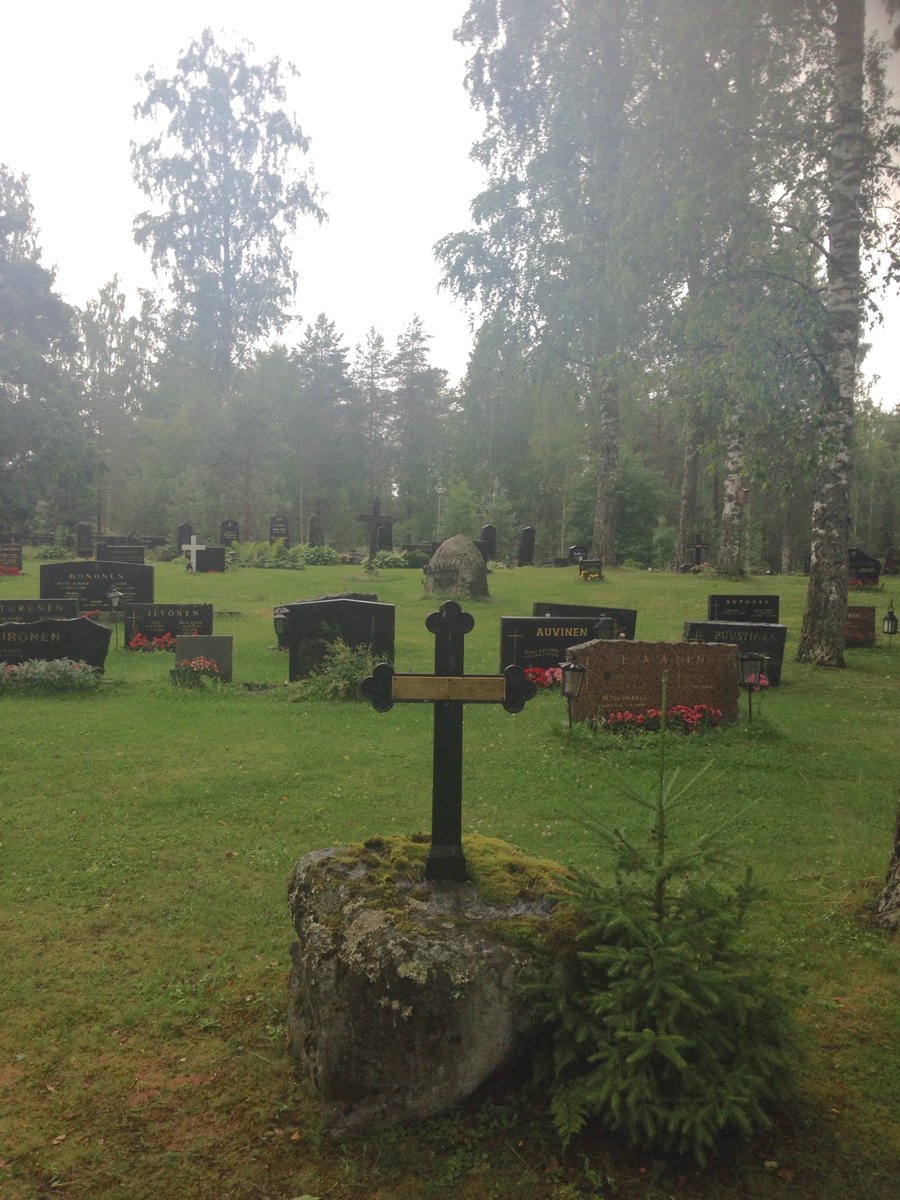
75. Kangasniemi, S. Savo. 1860s memorial (1970) with outline of municipal boundaries engraved. ”To the memory of those lost to hunger and deprivation during the Great Years of Dearth in Kangasniemi.” https://t.co/JnFuuf8N8v…
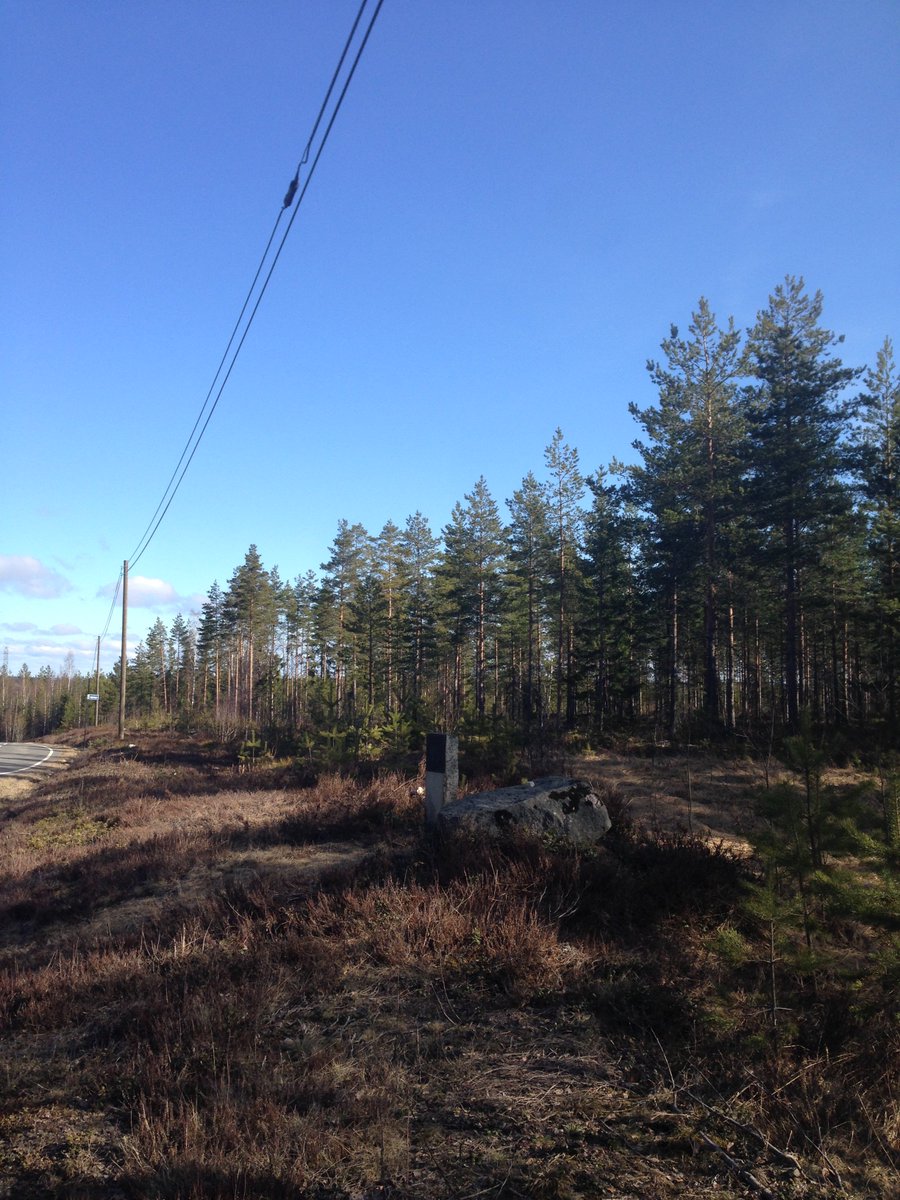
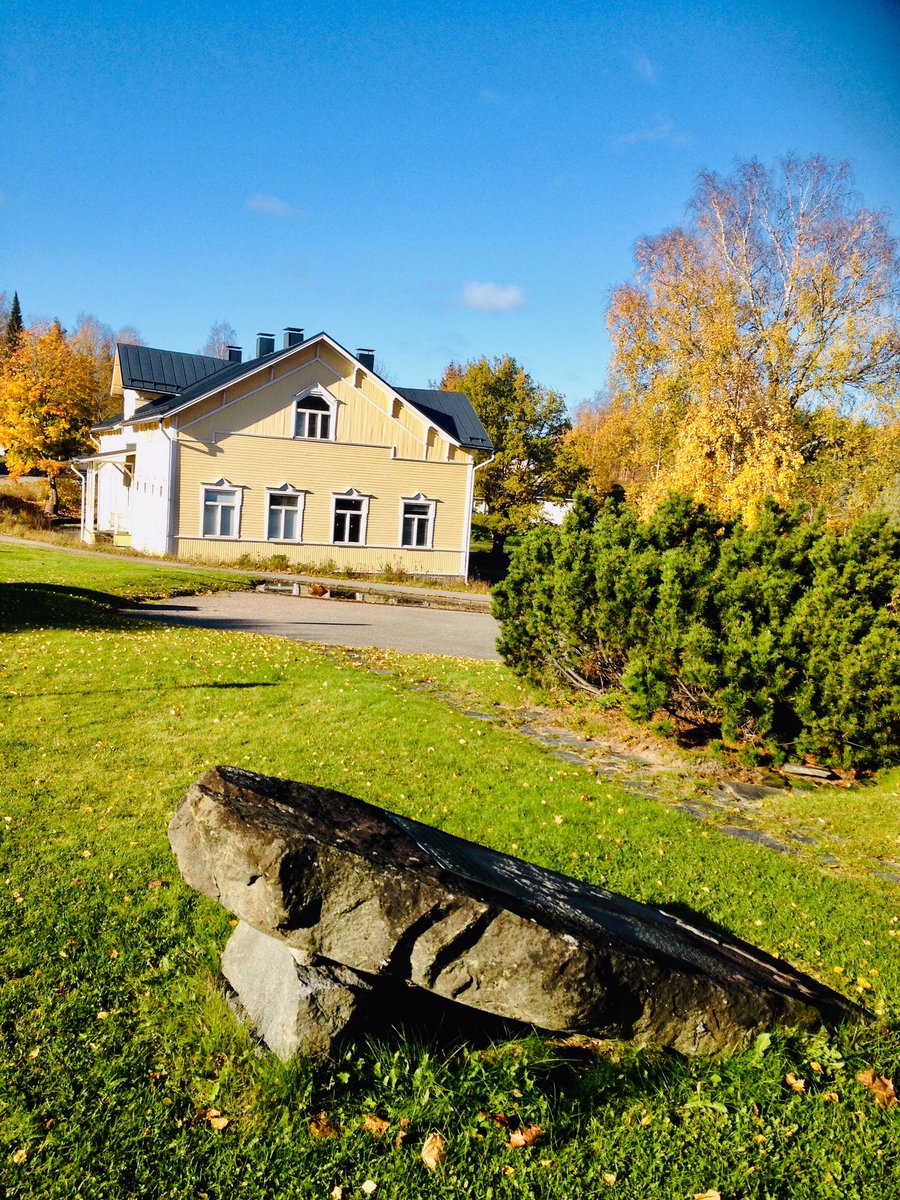
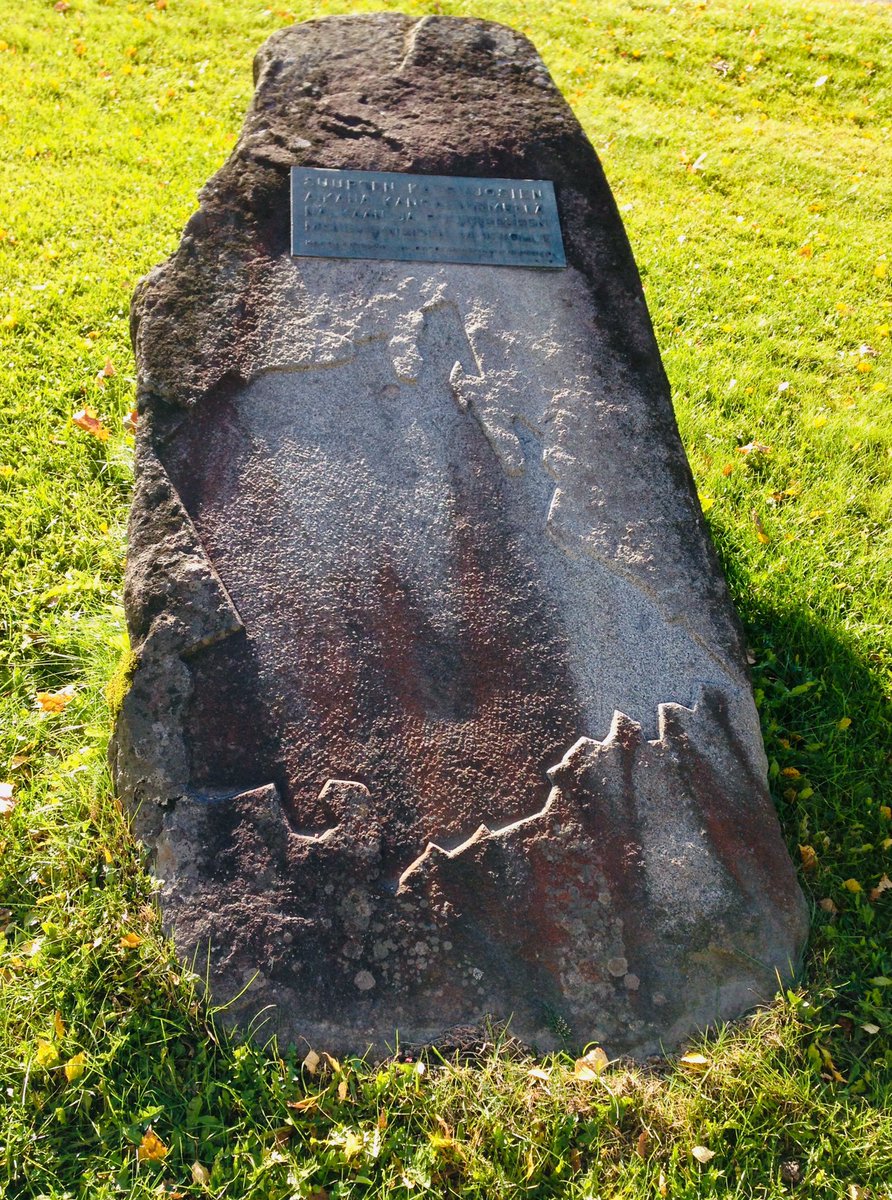
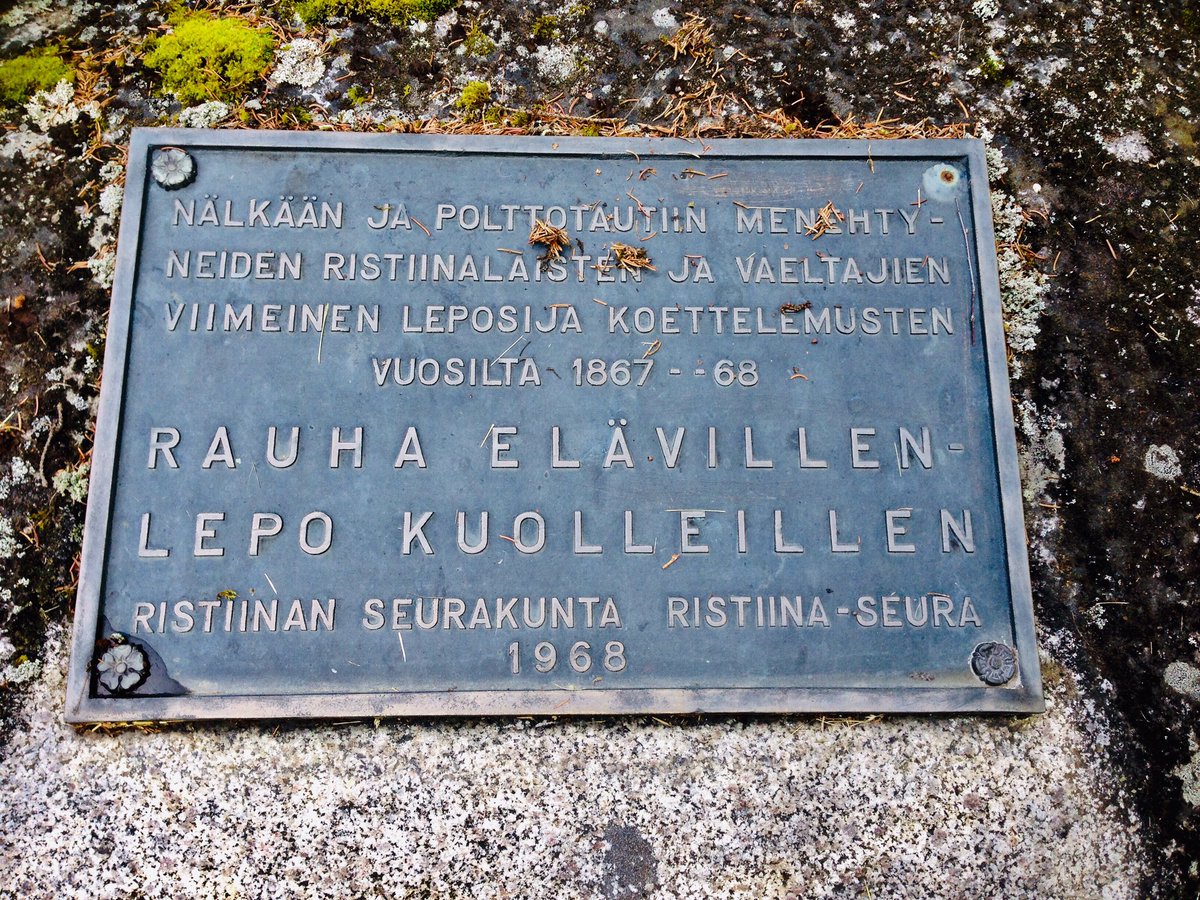
74. Ristiina, S. Savo: 1860s mass grave by #Pökkäänlahti. ”The final resting place of Ristiina people and wanderers who were lost to hunger and disease in the Years of Tribulation 1867-68. Peace to the Living. Rest to the Dead.” https://t.co/HK3V6LwBj1
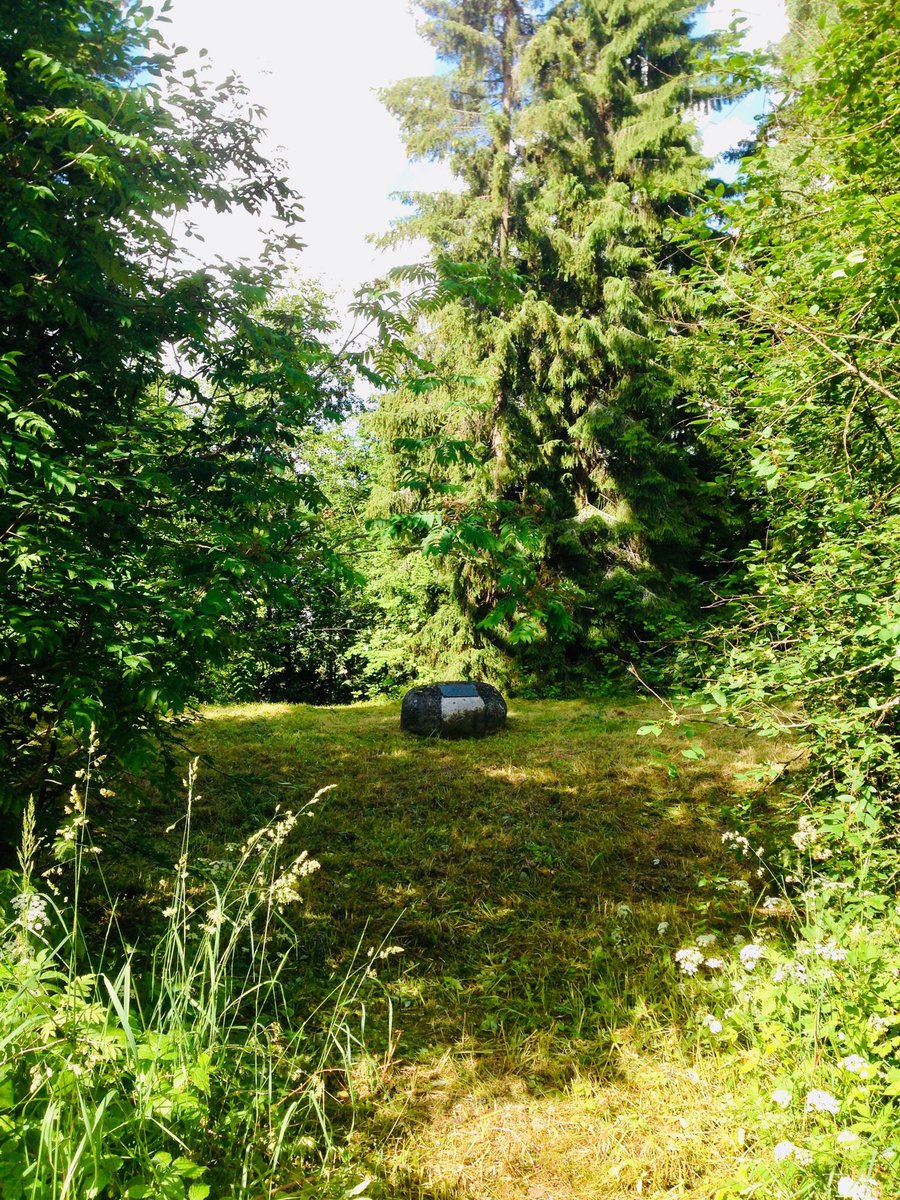
[2/2] ...these huts became known as 'dairies' among the people, and this time of emergency got the name 'the dairy years' hereabouts. These rooms soon became overrun." (L. Pentzin, "1867-68 Katovuodesta Haapaveden Pitäjässä", 1914, p. 165) https://t.co/jEHrdY1eCX
73. Haapavesi, N. Ostrobothnia [1/2]: "then came winter, accompanied by exceptional misery. Hunger started to spread. Many left for the south to find work building the railway... the town established poor- and workhouses, which in winter generally became hospitals...
72. Kangaslampi (N. Savo) - Lepola Graveyard: "Erected in memory of those buried here during the Great Hunger Years 1867-68. This stone 8.7. AD 1979 – Kangaslampi Parish". https://t.co/ihocqBY4eP #vesikansa#varkaus#lepola#kangaslampi#nälkävuosien#muistomerkki
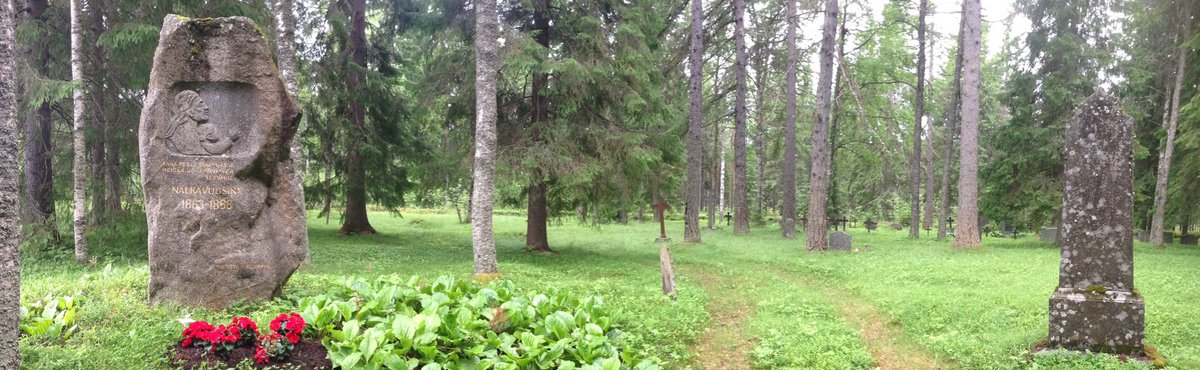
71. Pyhäjärvi (N. Ostrobothnia): "...during those frightful years of hunger, the terrors of which were felt strongly in the remote parishes. Pyhäjärvi's pastors were traumatised when they realised that a Pietist man died of hunger without seeking help." https://t.co/81X7fh0l1s
70. Lehtimäki, S. Ostrobothnia. ”We of the current generation, who live in the fields of those victims of the Hunger Years, have a sacred responsibility to remember those victims, and erect on their mass grave a collective memorial.” (Ähtäri, 27.7.1928) https://t.co/edVr8CpZEz…
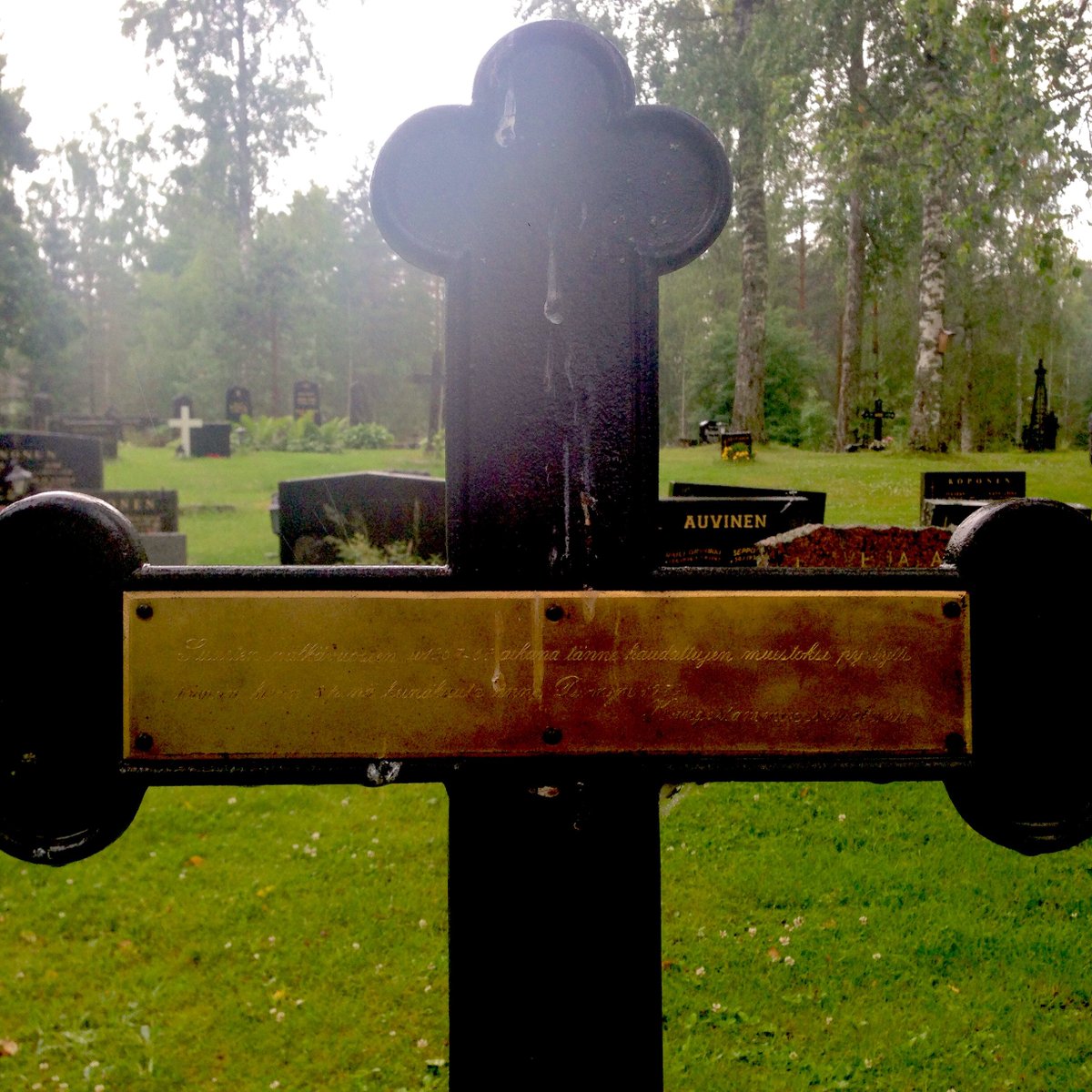
69. Kauhajoki Cathedral, S. Ostrobothnia. "The town was in a tough situation. People ate emergency food prepared with lichen and pine phloem, and were trying to arrange relief work – bog drainage and the building of the [Tokerotie] “Slop Road”. https://t.co/FTqmJv9vfo
68. Lapinlahti, N. Savo: ”People were dying in their hundreds of starvation and plague in Nerkoo village in the parish of Lapinlahti by the time the canal was being built, that is the hunger year of 1867. Houses were filled with the sick.” https://t.co/tz6P0L6fhA…
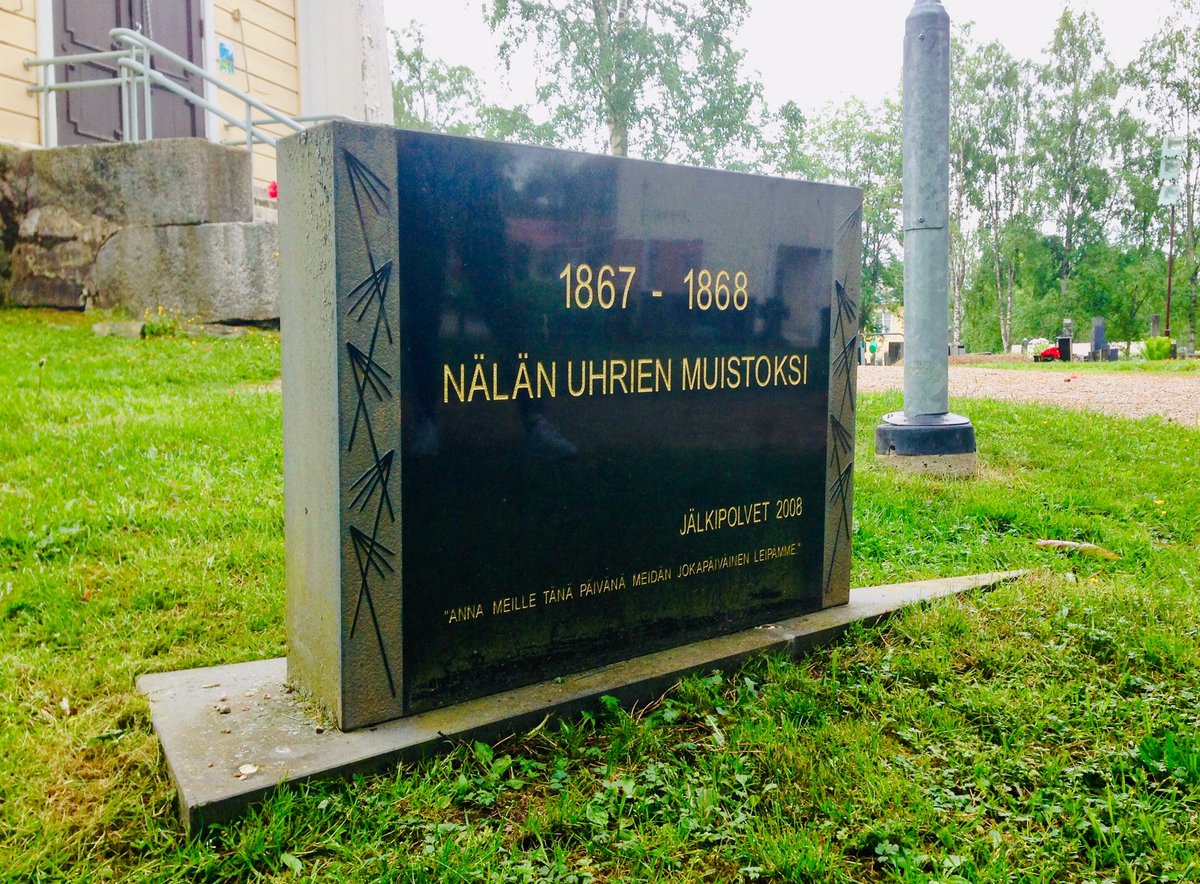
43. Nivala, N. Ostrobothnia. Est 2008 - a modern take on familiar 1860s famine memorial themes. The familiar exhortation to “Give Us This Day Our Daily Bread” is supplmented by stylised rye stems, on the margins of a black gravestone. https://t.co/lEE5InnbO0
67. Kuusankoski, Kymenlaakso. Another memorial linked to the "Hunger Track" railway relief work from Riihimäki to St. Petersburg, along with victims of earlier wars and other local dead. Est. 1987. https://t.co/9B7SwpMyZA
Reisjärvi, N. Ostrobothnia. Rye motif, mem. 1972. Only #Parkano and #Ullava suffered higher mortality than #Reisjärvi in 1867-68. Suomen Virallinen Tilasto (official state statistics) gives a death rate of 21.92% in Reisjärvi in the space of a year. https://t.co/rO79lMRSJx…
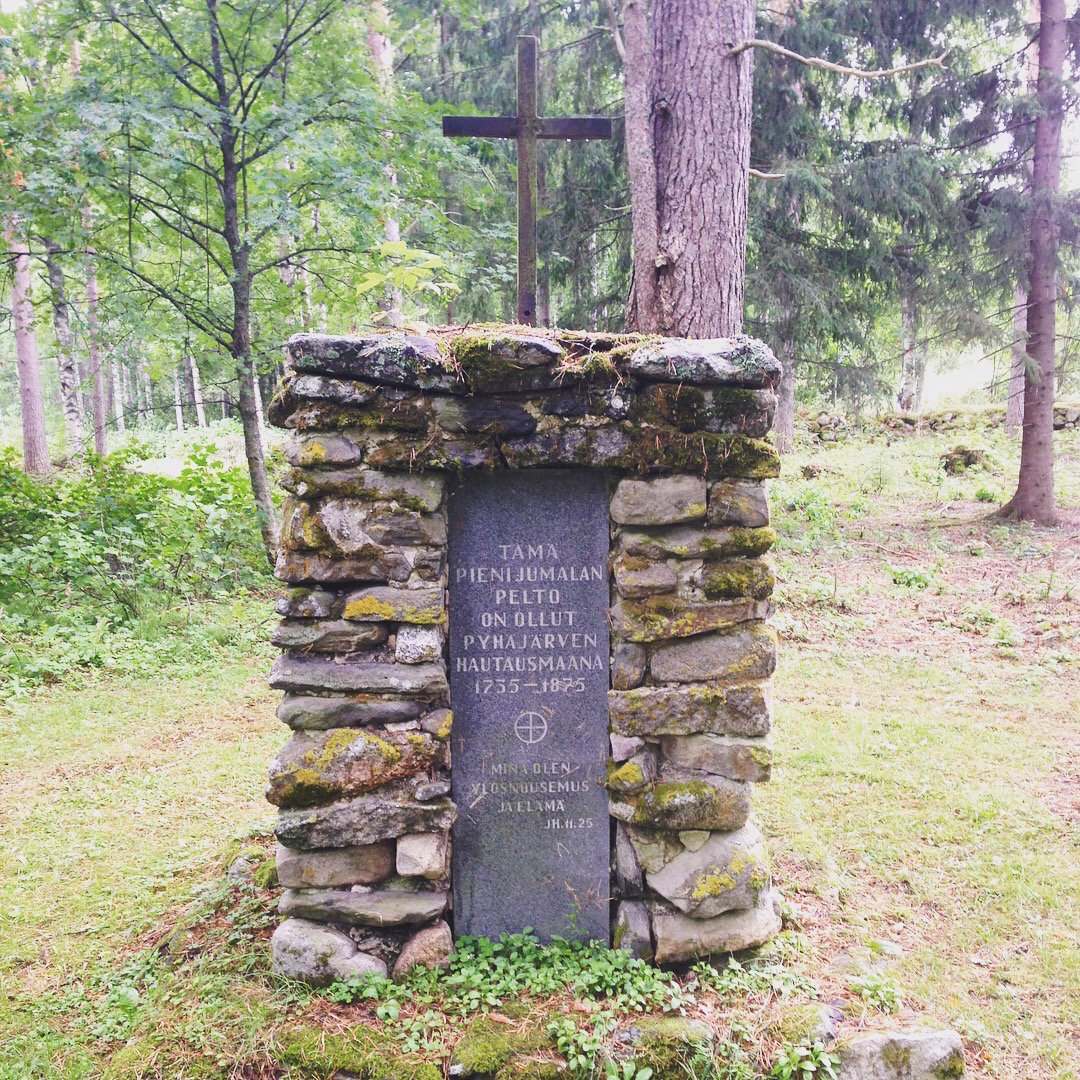
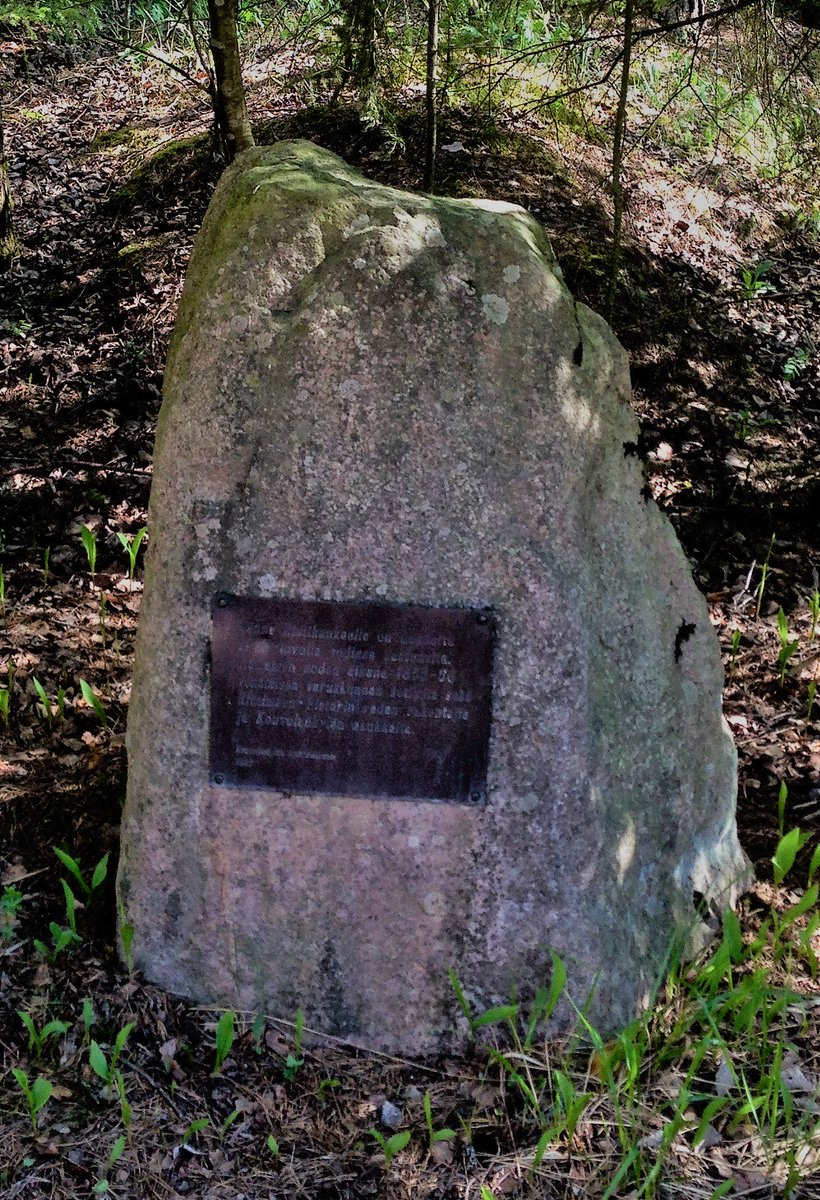
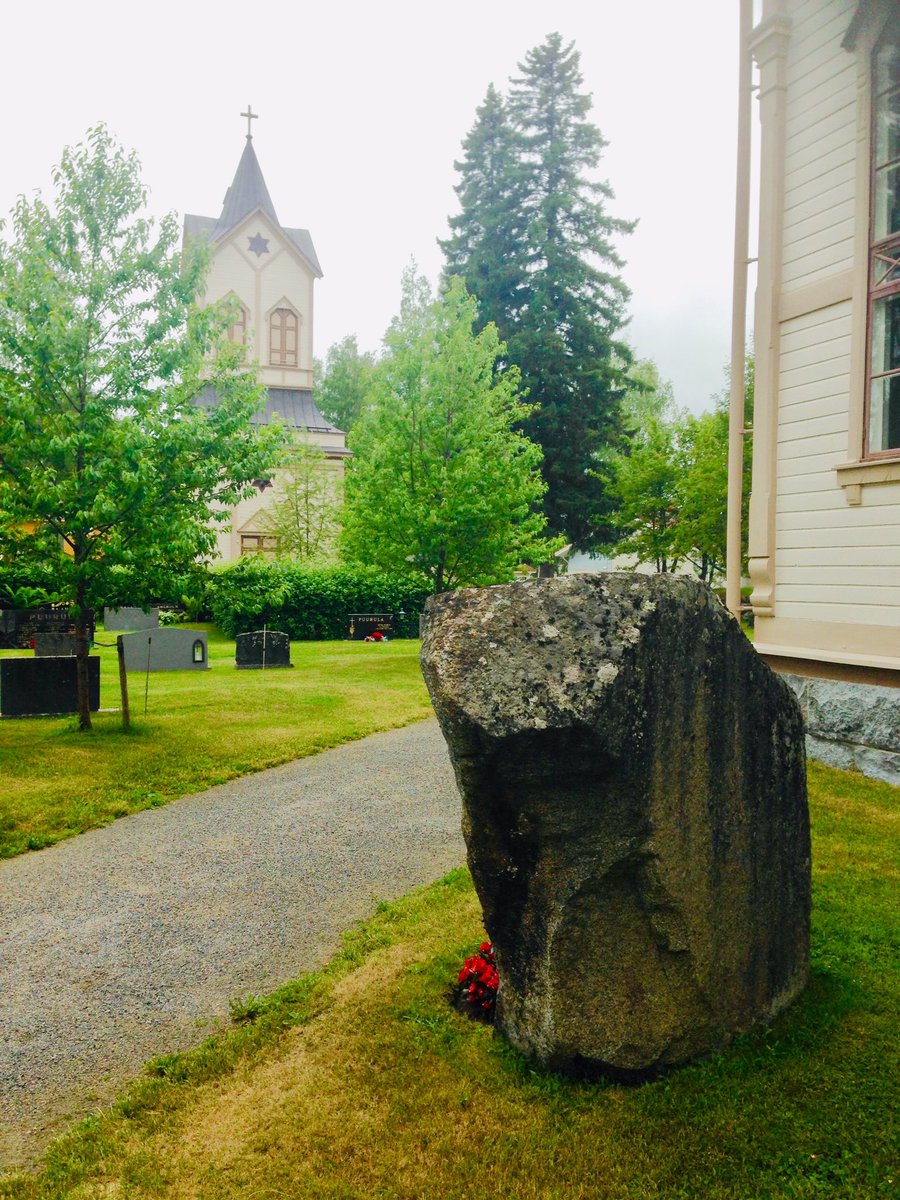
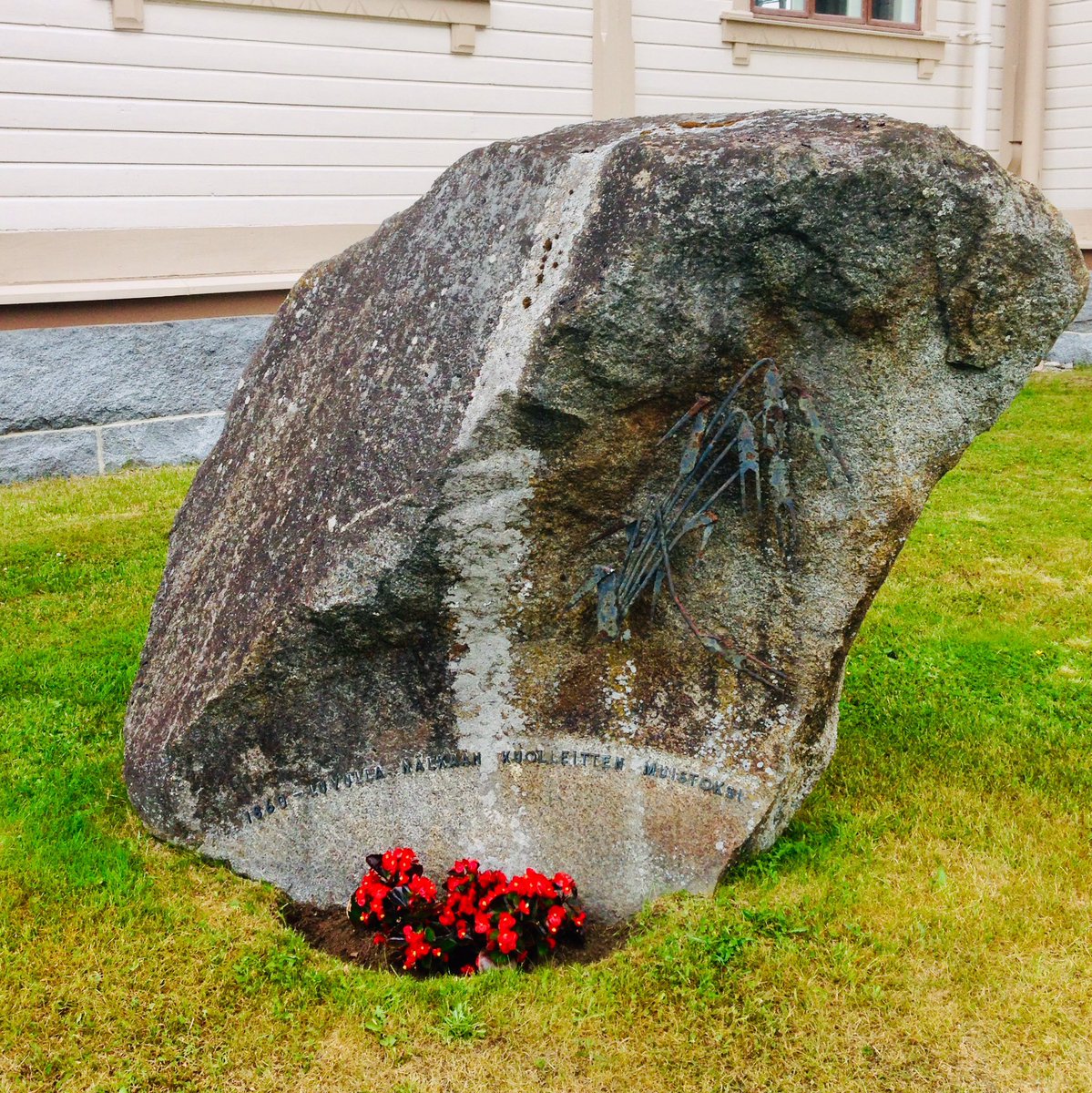
66. Aronkylä, S. Ostrobothnia - another ”famine road”: ”generally they mixed flour with water in a small basket, and warmed it over a weak flame for as long as possible. This dish has given one particular road a permanent name: Tokerotie [Slop Road]”. https://t.co/i0liLbQeic



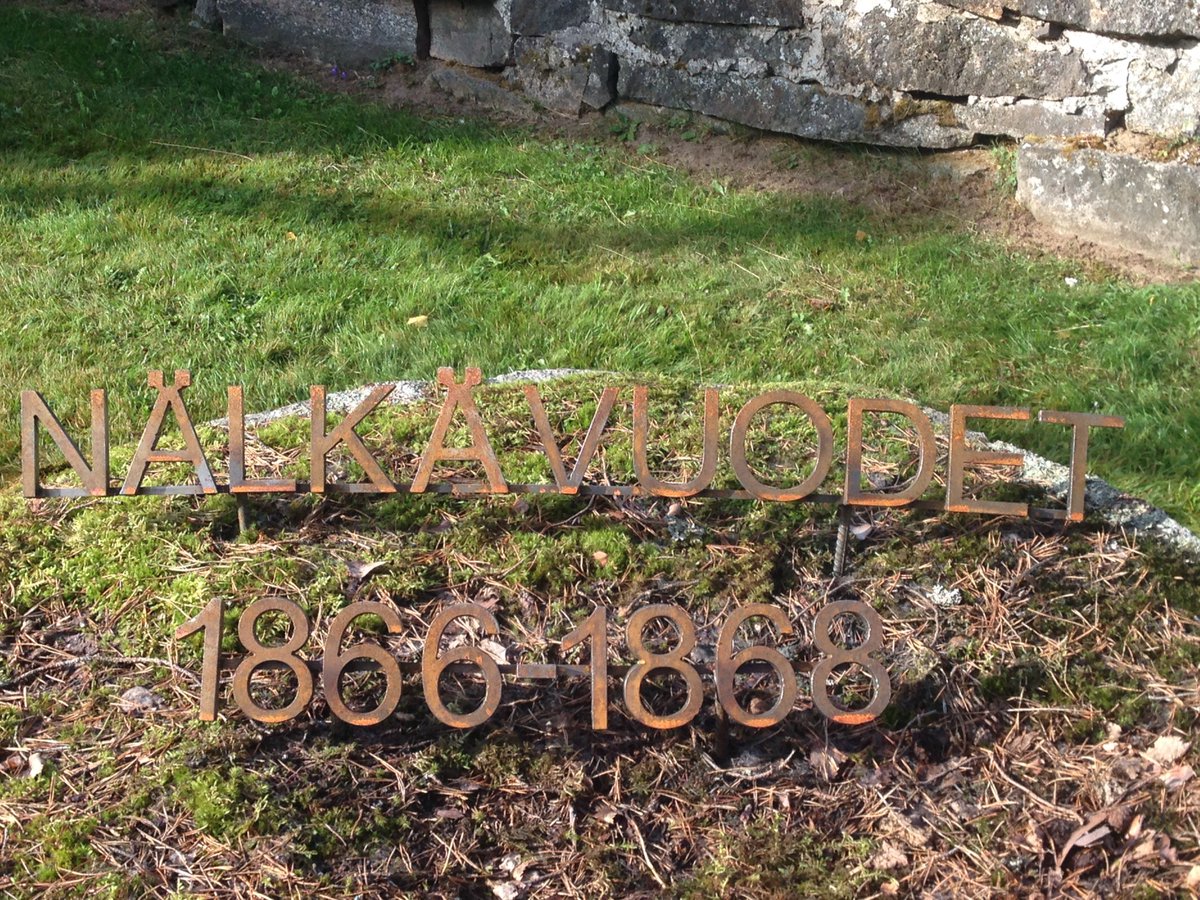
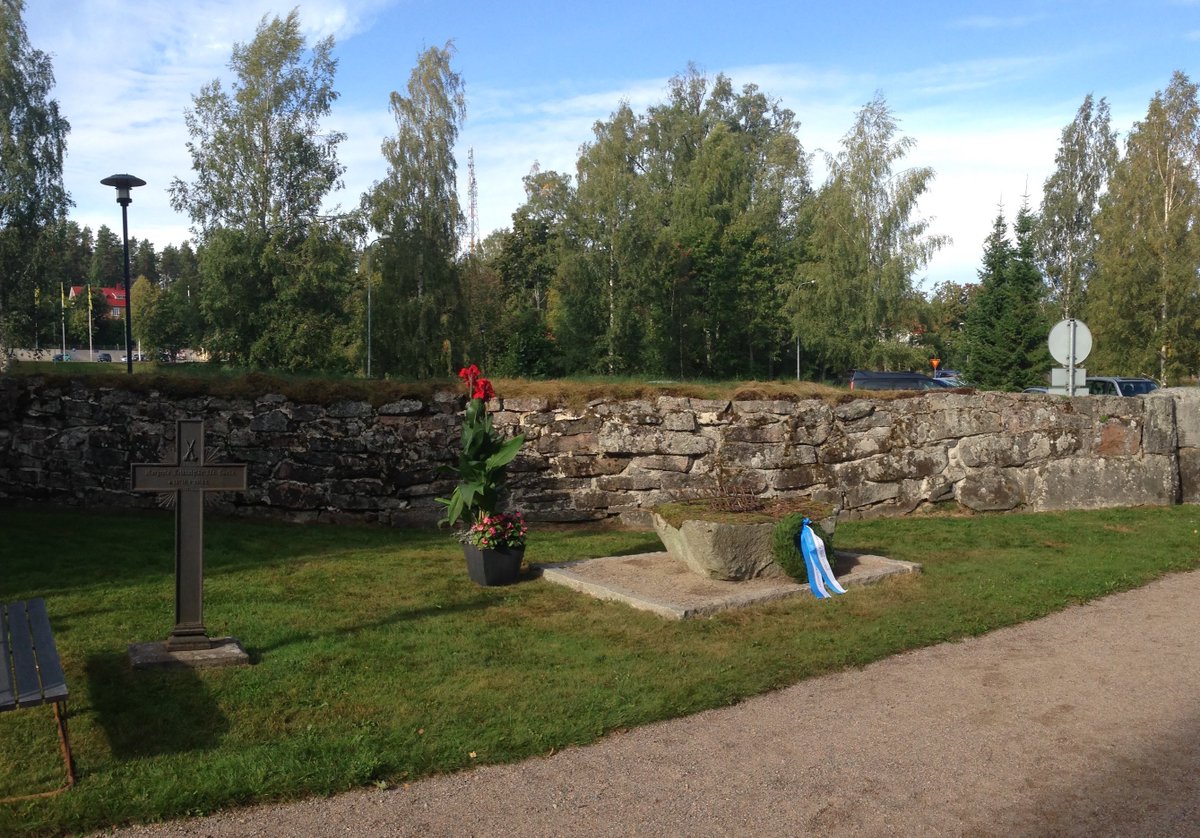
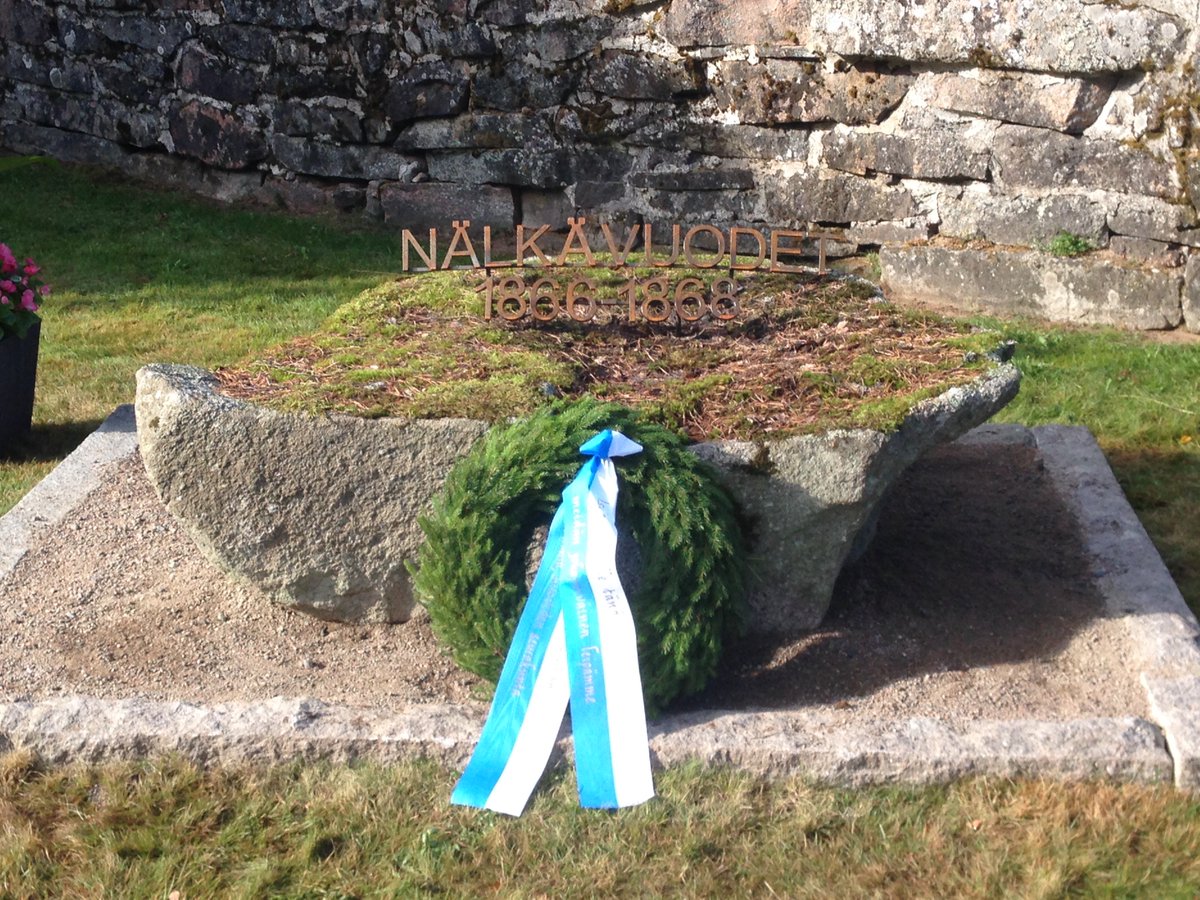
![FamineFinnish's tweet photo. 78. Lahti, Päijät-Häme: "the bones of tens of thousands of citizens are bleaching in the trackbed of Riihimäki-St. Petersburg railroad" [W. Lindberg, Iitti, (SKS Archive,1935)] - memorial at the relief work's vast mass-grave site, est. 1953. https://t.co/4uOZsxxkL9 #luurata https://t.co/nujPwkyoZx](https://pbs.twimg.com/media/D4Hi16EX4AAVlRZ.jpg)
![FamineFinnish's tweet photo. 78. Lahti, Päijät-Häme: "the bones of tens of thousands of citizens are bleaching in the trackbed of Riihimäki-St. Petersburg railroad" [W. Lindberg, Iitti, (SKS Archive,1935)] - memorial at the relief work's vast mass-grave site, est. 1953. https://t.co/4uOZsxxkL9 #luurata https://t.co/nujPwkyoZx](https://pbs.twimg.com/media/D4Hi15XW0AIiGaK.jpg)
![FamineFinnish's tweet photo. 78. Lahti, Päijät-Häme: "the bones of tens of thousands of citizens are bleaching in the trackbed of Riihimäki-St. Petersburg railroad" [W. Lindberg, Iitti, (SKS Archive,1935)] - memorial at the relief work's vast mass-grave site, est. 1953. https://t.co/4uOZsxxkL9 #luurata https://t.co/nujPwkyoZx](https://pbs.twimg.com/media/D4HitIZWkAI-cxG.png)


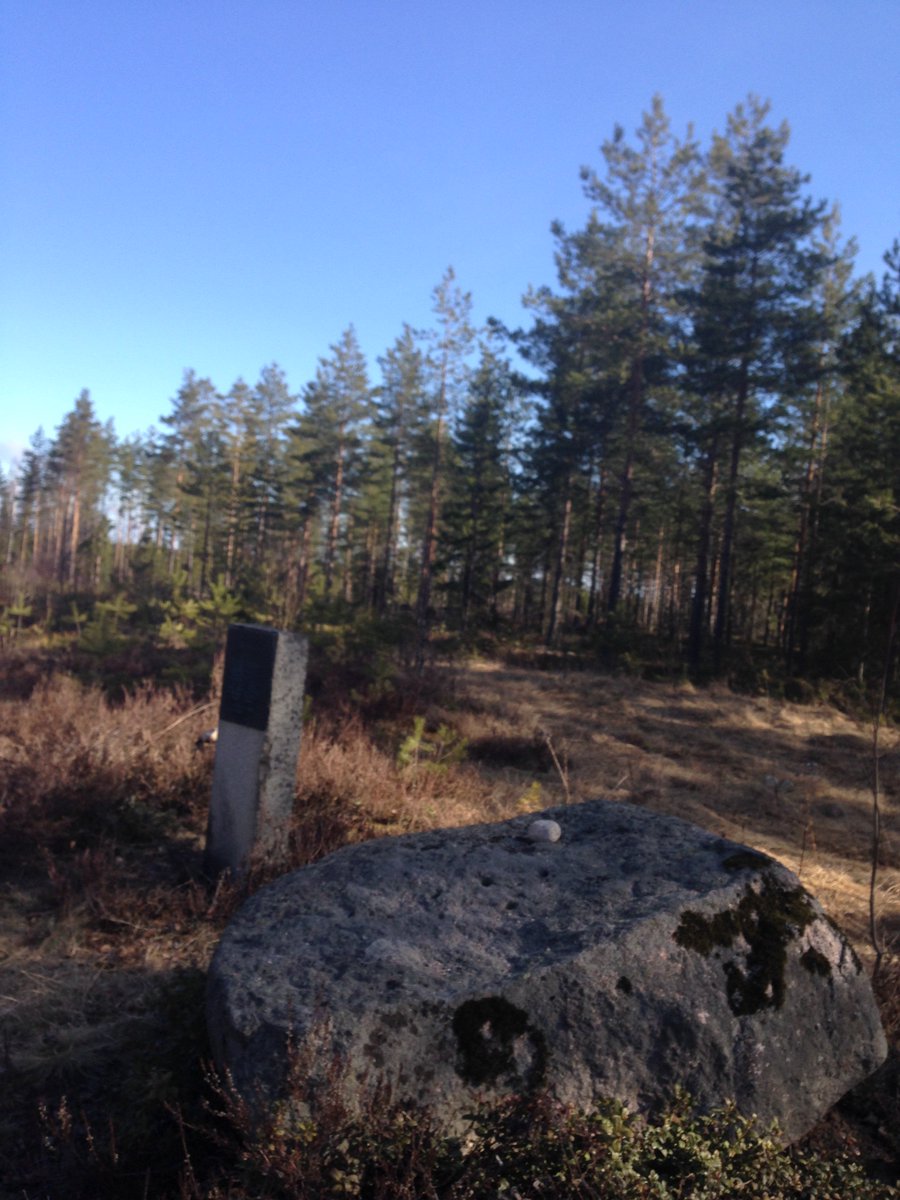



![FamineFinnish's tweet photo. [2/2] ...these huts became known as 'dairies' among the people, and this time of emergency got the name 'the dairy years' hereabouts. These rooms soon became overrun." (L. Pentzin, "1867-68 Katovuodesta Haapaveden Pitäjässä", 1914, p. 165) https://t.co/jEHrdY1eCX https://t.co/yMWkOvNavh](https://pbs.twimg.com/media/D3NU5Z8W0AAFCnn.jpg)
![FamineFinnish's tweet photo. [2/2] ...these huts became known as 'dairies' among the people, and this time of emergency got the name 'the dairy years' hereabouts. These rooms soon became overrun." (L. Pentzin, "1867-68 Katovuodesta Haapaveden Pitäjässä", 1914, p. 165) https://t.co/jEHrdY1eCX https://t.co/yMWkOvNavh](https://pbs.twimg.com/media/D3NUzhyWAAAF_Yx.jpg)
![FamineFinnish's tweet photo. [2/2] ...these huts became known as 'dairies' among the people, and this time of emergency got the name 'the dairy years' hereabouts. These rooms soon became overrun." (L. Pentzin, "1867-68 Katovuodesta Haapaveden Pitäjässä", 1914, p. 165) https://t.co/jEHrdY1eCX https://t.co/yMWkOvNavh](https://pbs.twimg.com/media/D3NUw8iWwAAWpAc.jpg)





![FamineFinnish's tweet photo. 69. Kauhajoki Cathedral, S. Ostrobothnia. "The town was in a tough situation. People ate emergency food prepared with lichen and pine phloem, and were trying to arrange relief work – bog drainage and the building of the [Tokerotie] “Slop Road”. https://t.co/FTqmJv9vfo https://t.co/drOvrI73H0](https://pbs.twimg.com/media/D2vEBJRWwAAZMTY.jpg)
![FamineFinnish's tweet photo. 69. Kauhajoki Cathedral, S. Ostrobothnia. "The town was in a tough situation. People ate emergency food prepared with lichen and pine phloem, and were trying to arrange relief work – bog drainage and the building of the [Tokerotie] “Slop Road”. https://t.co/FTqmJv9vfo https://t.co/drOvrI73H0](https://pbs.twimg.com/media/D2vEBJPX4AAs5Bg.jpg)



![FamineFinnish's tweet photo. 66. Aronkylä, S. Ostrobothnia - another ”famine road”: ”generally they mixed flour with water in a small basket, and warmed it over a weak flame for as long as possible. This dish has given one particular road a permanent name: Tokerotie [Slop Road]”. https://t.co/i0liLbQeic https://t.co/MEGqUW8QdJ](https://pbs.twimg.com/media/D2KAjcgWwAIa0ha.jpg)
![FamineFinnish's tweet photo. 66. Aronkylä, S. Ostrobothnia - another ”famine road”: ”generally they mixed flour with water in a small basket, and warmed it over a weak flame for as long as possible. This dish has given one particular road a permanent name: Tokerotie [Slop Road]”. https://t.co/i0liLbQeic https://t.co/MEGqUW8QdJ](https://pbs.twimg.com/media/D2KAjcfW0AAXqfk.jpg)
![FamineFinnish's tweet photo. 66. Aronkylä, S. Ostrobothnia - another ”famine road”: ”generally they mixed flour with water in a small basket, and warmed it over a weak flame for as long as possible. This dish has given one particular road a permanent name: Tokerotie [Slop Road]”. https://t.co/i0liLbQeic https://t.co/MEGqUW8QdJ](https://pbs.twimg.com/media/D2KAjcYWwAAgAVd.jpg)





![FamineFinnish's tweet photo. 78. Lahti, Päijät-Häme: "the bones of tens of thousands of citizens are bleaching in the trackbed of Riihimäki-St. Petersburg railroad" [W. Lindberg, Iitti, (SKS Archive,1935)] - memorial at the relief work's vast mass-grave site, est. 1953. https://t.co/4uOZsxxkL9 #luurata https://t.co/nujPwkyoZx](https://pbs.twimg.com/media/D4Hi8qlWwAALphH.jpg)

![FamineFinnish's tweet photo. [2/2] ...these huts became known as 'dairies' among the people, and this time of emergency got the name 'the dairy years' hereabouts. These rooms soon became overrun." (L. Pentzin, "1867-68 Katovuodesta Haapaveden Pitäjässä", 1914, p. 165) https://t.co/jEHrdY1eCX https://t.co/yMWkOvNavh](https://pbs.twimg.com/media/D3NU7opXoAAsb1f.jpg)
![FamineFinnish's tweet photo. 73. Haapavesi, N. Ostrobothnia [1/2]: "then came winter, accompanied by exceptional misery. Hunger started to spread. Many left for the south to find work building the railway... the town established poor- and workhouses, which in winter generally became hospitals... https://t.co/cgiuDNCJ6O](https://pbs.twimg.com/media/D3NSxdvW0AAS7ek.jpg)


![FamineFinnish's tweet photo. 69. Kauhajoki Cathedral, S. Ostrobothnia. "The town was in a tough situation. People ate emergency food prepared with lichen and pine phloem, and were trying to arrange relief work – bog drainage and the building of the [Tokerotie] “Slop Road”. https://t.co/FTqmJv9vfo https://t.co/drOvrI73H0](https://pbs.twimg.com/media/D2vEBJSWkAQjwaR.jpg)


![FamineFinnish's tweet photo. 66. Aronkylä, S. Ostrobothnia - another ”famine road”: ”generally they mixed flour with water in a small basket, and warmed it over a weak flame for as long as possible. This dish has given one particular road a permanent name: Tokerotie [Slop Road]”. https://t.co/i0liLbQeic https://t.co/MEGqUW8QdJ](https://pbs.twimg.com/media/D2KAjcgXQAAchVE.jpg)


