@OhioCRs@CollegeDemsOhio Violence in USA seems to be increasing. Another example is in the tweet below. Let's condemn all such hateful acts.
https://t.co/rIAsWPLSoX
#BREAKING — Horrific Graphic Visual. 50-year-old Chandra Nagamallaiah, Indian American, was beheaded at a Dallas motel on Wednesday morning. The police have arrested suspect as 37-year-old Yordanis Cobos-Martinez.
#India#NRI#US https://t.co/Td5VSovsGD
#BREAKING — Horrific Graphic Visual. 50-year-old Chandra Nagamallaiah, Indian American, was beheaded at a Dallas motel on Wednesday morning. The police have arrested suspect as 37-year-old Yordanis Cobos-Martinez.
#India#NRI#US https://t.co/Td5VSovsGD
More than 100 South Korean women forced to work as prostitutes for US soldiers stationed in the country file landmark lawsuit
https://t.co/BVbFuN4gn6
📸 A building slated for demolition that was once called a "monkey house", a clinic for sex workers hired to serve US soldiers
INDIA'S NAME AND SYMBOLS
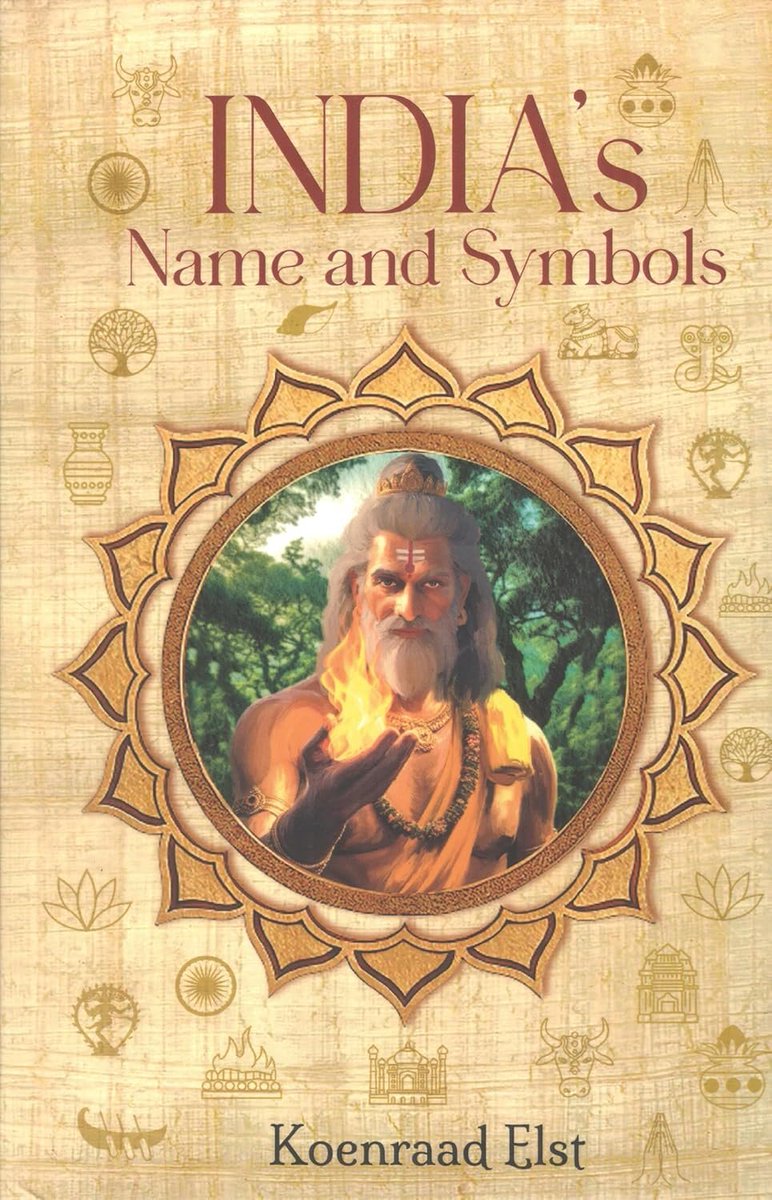
India’s Name and Symbols (Aditya Prakashan, 2025), authored by the eminent Belgian Indologist Koenraad Elst is a meticulously crafted exploration of India’s national symbols, their historical origins, and their enduring civilisational significance. This 197-page hardcover examines the cultural, historical, and political dimensions of symbols such as the names "India," "Bharat," and "Hindustan," the national anthem Jana Gana Mana, and the Wheel Flag. @ElstKoenraad, who holds postgraduate degrees in Indology, Sinology, and Philosophy, and a PhD in Oriental Studies (1998) for his dissertation Decolonising the Hindu Mind (Rupa Publications), brings his extensive scholarship to this work. A prolific author of over 30 books, including Ram Janmabhoomi vs Babri Masjid and The Saffron Swastika, Elst is a leading advocate of the Out of India Theory (OIT), which posits that Indo-European languages originated in India. His writings often defend Hindu cultural identity, portraying it as under siege from both internal and external forces. In India’s Name and Symbols, Elst delivers a compelling case for re-examining these symbols as repositories of India’s ancient heritage, challenging colonial and postcolonial distortions of their meanings.
Elst’s interdisciplinary approach, drawing on history, linguistics, comparative religion, and contemporary developments makes India’s Name and Symbols a significant contribution to Indological studies. His analysis of the names "India," "Bharat," and "Hindustan" is particularly insightful. Elst posits that "Bharat" embodies a civilisational continuity tied to India’s indigenous traditions, a theme consistent with his broader project of decolonising Indian identity, as seen in Decolonising the Hindu Mind. His examination of Jana Gana Mana and the Wheel Flag is equally rigorous, uncovering their historical and symbolic significance. Elst’s ability to contextualise these symbols within India’s civilisational framework is both erudite and accessible, making the book suitable for readers of teenage and up, as well as scholars of Indian history and culture.
Elst’s scholarship shines in his nuanced treatment of how symbols shape national consciousness. He argues that India’s symbols carry greater civilisational weight than those of most nations, a perspective informed by his extensive work in Indo-European studies and advocacy for Hindu causes. His skepticism of mainstream narratives encourages readers to critically reassess the historical and political forces that have shaped these emblems. The book’s accessibility, combined with its intellectual depth, positions it as a vital resource for those studying Indian identity, decolonisation, and cultural history.
While India’s Name and Symbols is a scholarly triumph in most respects, Section 8.6, titled "Father of Nehruism," warrants scrutiny for its alignment with a historically contentious narrative. In this section, Elst appears to endorse the claim, popular among Sangh Parivar supporters, that Mahatma Gandhi personally anointed Jawaharlal Nehru as India’s first Prime Minister, thereby marginalising Sardar Vallabhbhai Patel. This narrative, rooted in the Sangh Parivar’s pseudo-Hindutva perspective, portrays Patel as the "Iron Man of India," celebrated for his role as Union Home Minister and Deputy Prime Minister in unifying 562 princely states, in contrast to Nehru’s struggles with Kashmir’s integration. Sangh Parivar supporters often hypothesise that had Patel been chosen as Prime Minister, India might have avoided many of its contemporary challenges, cementing Patel’s image as "the best Prime Minister India never had." This sentiment is reflected in the BJP-led Gujarat State Government, headed by Narendra Modi, commissioning the Statue of Unity, the world’s tallest statue, on the banks of the Narmada River, overlooking the Sardar Sarovar Dam—both named in honour of Patel. However, Elst’s reliance on this narrative is problematic, as historical evidence indicates that Nehru’s selection as Prime Minister was driven by significant British preference, complex Congress party dynamics, and broader political considerations, rather than solely Gandhi’s personal choice. The claim that Gandhi, who, at the time of independence, was arguably a spent force and struggling for relevance—a view Elst himself endorses in Section 8.4, "Gandhi’s Decline"—had the authority to unilaterally "anoint" a Prime Minister is debatable. Indeed, it remains uncertain whether Gandhi merely aligned with British preferences. This section diverges from the book’s otherwise rigorous scholarship, risking an oversimplification of a complex historical moment. For more details, readers are encouraged to consult my article "Sardar Patel and Hindu Dhimmitude" at Pragyata (https://t.co/gC3aTzjovs).
Despite this critique, India’s Name and Symbols remains a landmark work in the study of Indian cultural identity. Elst’s erudition, rooted in his decades-long engagement with Indology, Indo-European studies, and Hindu cultural advocacy, is evident throughout. This book is highly recommended for scholars, students, and enthusiasts of Indian history, culture, and politics.His sentiment is reflected in the BJP-led Gujarat State Government, headed by Narendra Modi, commissioning the Statue of Unity, the world’s tallest statue, on the banks of the Narmada River, overlooking the Sardar Sarovar Dam—both named in honor of Patel.
Republic of Balochistan Wishes India a Happy 79th Independence Day
Mir Yar Baloch,
The Republic of Balochistan, home to sixty million patriotic Baloch, extends its warmest, most heartfelt congratulations to the 1.4 billion proud people of India on this glorious occasion of your Independence. We share in your joy as if it were our own, because your victory against colonialism is a chapter that inspires our own struggle for freedom.
Just as the courageous and self-respecting people of India refused to bow to British slavery, offering countless lives in sacrifice, so too did the people of Balochistan pay an immense price in blood and treasure to break the chains of imperialism. Together, we honor the memories of our fearless mothers, sisters, and every brave son of our soil who stood for freedom without fear.
We pay our deepest respects to the towering leaders and martyrs of India’s freedom movement, Mahatma Gandhi, Netaji Subhas Chandra Bose, Sardar Vallabhbhai Patel, Jawaharlal Nehru, Bhagat Singh, Chandra Shekhar Azad, Lala Lajpat Rai, Lokmanya Bal Gangadhar Tilak, Maulana Abul Kalam Azad, Rani Lakshmibai of Jhansi, Mangal Pandey, Sarojini Naidu, and countless others, who faced the gallows, endured brutal imprisonment, and suffered immense hardships to gift their people the priceless treasure of independence. Their courage lights a path not only for India but for every nation still yearning for freedom.
Neither India nor Balochistan was ever gifted freedom; it was earned with the sweat and blood of our ancestors. Our forefathers secured an independent Balochistan on 11 August 1947. A day later, on 15 August, India’s leaders declared the dawn of free India after enduring the agony of partition.
Today, as India celebrates its freedom, the people of Balochistan stand shoulder to shoulder with you. We send our deepest thanks and appreciations to your patriotic mainstream and social media, your both of the parliaments, fearless journalists, your visionary thinkers, your civil society, your doctors, farmers, business community, armed forces, scientists, teachers, students, people of every faith, our beloved mothers and sisters, and every Indian from every walk of life who has carried the message of Balochistan into every home across India. From morning tea to dinner tables, in schools, colleges, and gatherings everywhere, our friendship is being turned into a living, breathing bond of trust and solidarity.
We believe this friendship must rise to new heights. We call upon the Government of India to stand with Balochistan in real and tangible ways so that, together, we can crush any conspiracy against our two nations and answer Pakistan’s vile terrorism with the same determination India showed in Operation Sindoor, a blow so powerful that the wails of the Pakistani army and their terrorists still echo to the highest heavens.
Long live the eternal friendship between Balochistan and India!
Long live freedom!
@hyrbyair_marri@Humgaam_News@BaluchWarna@narendramodi@AmitShah@DrSJaishankar@rajnathsingh@gssjodhpur@airnewsalerts@RSSorg@DrMohanBhagwat@rahulgandhi@ombirlakota@loksabhaspeaker@DRDO_India@isro@_MukeshAmbani@gautam_adani@TataCompanies@TataMotors
I guess we have enough evidence by now that dual citizenship is harmful for India for now! Imagine Motwani ji kinda ppl trying to play on both sides of the net.
Only one person in this is being egotistic and it’s not Modi. Doesn’t behoove the leader of the world’s most powerful country to beg for a Nobel like this, that too by mischaracterising the role US played in the recent India-Pakistan conflict.
We’re faced with similar circumstances that we faced when the Rupee was depreciated under Indira to placate Americans for investment, only for them to back out
That spurred initiatives for domestic manufacturing but over-regulation & anti-capitalism led to stagnation
This time focus should be made on manufacturing & diversifying exports, while removing archaic domestic regulations
India learns “danda khane ke baad”. This is nothing but another golden opportunity.
I appreciate the efforts of Indian History Awareness & Research (IHAR) and its patron, Dr. Subroto Gangopadhyay. They have distributed many copies of my two books, The Majoritarian Myth and The Joy Bangla Deception, among the thinkers and activitists.
I hope that their efforts would awaken the civilization of Bharat, as Tagore envisaged.
@ankitatIIMA I don't think they are planning anything. As you said earlier, Last President of the Empire, he is just doing as much "hafta vasooli" from countries as possible before the collapse. No plans to build, or even maintain sanity, in the country long term.
India observes #PartitionHorrorsRemembranceDay, remembering the upheaval and pain endured by countless people during that tragic chapter of our history. It is also a day to honour their grit...their ability to face unimaginable loss and still find the strength to start afresh. Many of those affected went on to rebuild their lives and achieve remarkable milestones. This day is also a reminder of our enduring responsibility to strengthen the bonds of harmony that hold our country together.