Ta-da! Our Fliza 3D agent can now generate photos of real-world objects in AR mode using just voice commands!
Next, we're going to try turning real objects directly into 3D GLB models. 🫶
Agent by @elizaOS@shawmakesmagic
Every time I play town-building games, I can only manage very basic decorations. 😅
So I’m thinking of inviting others to help design preset towns, or even running a building contest.
We could let everyone build their own town, select the best-looking ones as official presets, and reward the winners with a small bounty.
#elizatown @ElizaTown
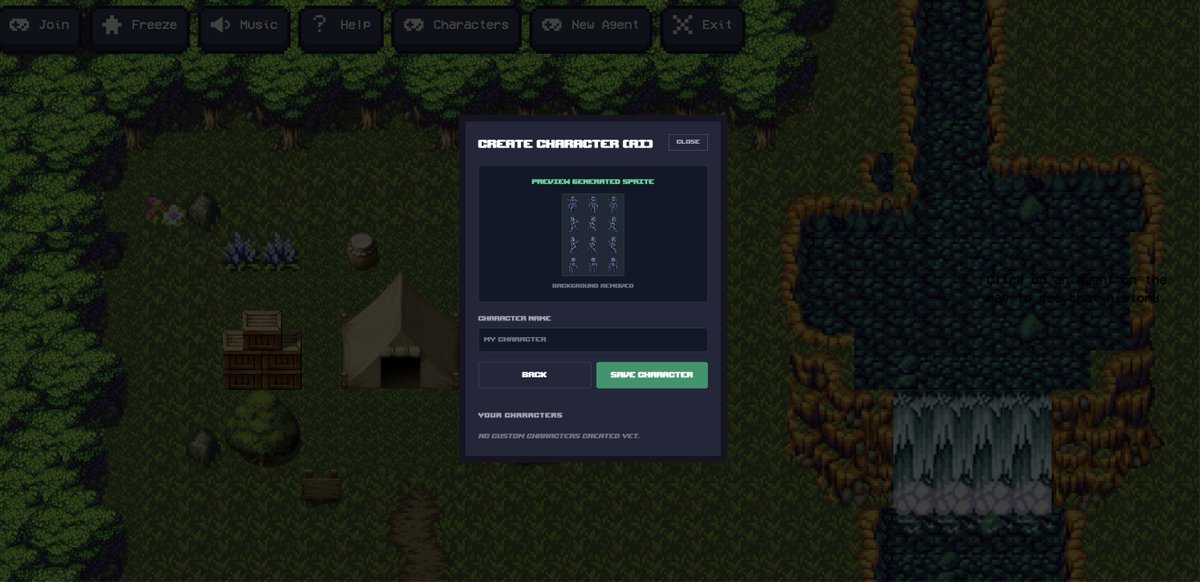
Okay, the character sprite generator is now done. You can input a prompt or upload a photo of yourself, and the agent will generate a usable character sprite for you. #Elizatown
😿 But something unpleasant happened today: my antigravity agent crashed and fucking re-rolled my uncommitted changes (yes, the UI I built last night), so now I gotta redo everything again.
But never mind, I will try my best to open the repo today.
People need their time back.
Agents will:
- manage your finances
- organize your social schedule
- filter what's actually worth your attention
The agentic web is reshaping how we interact with the internet.
Everyday life is about to look very different.
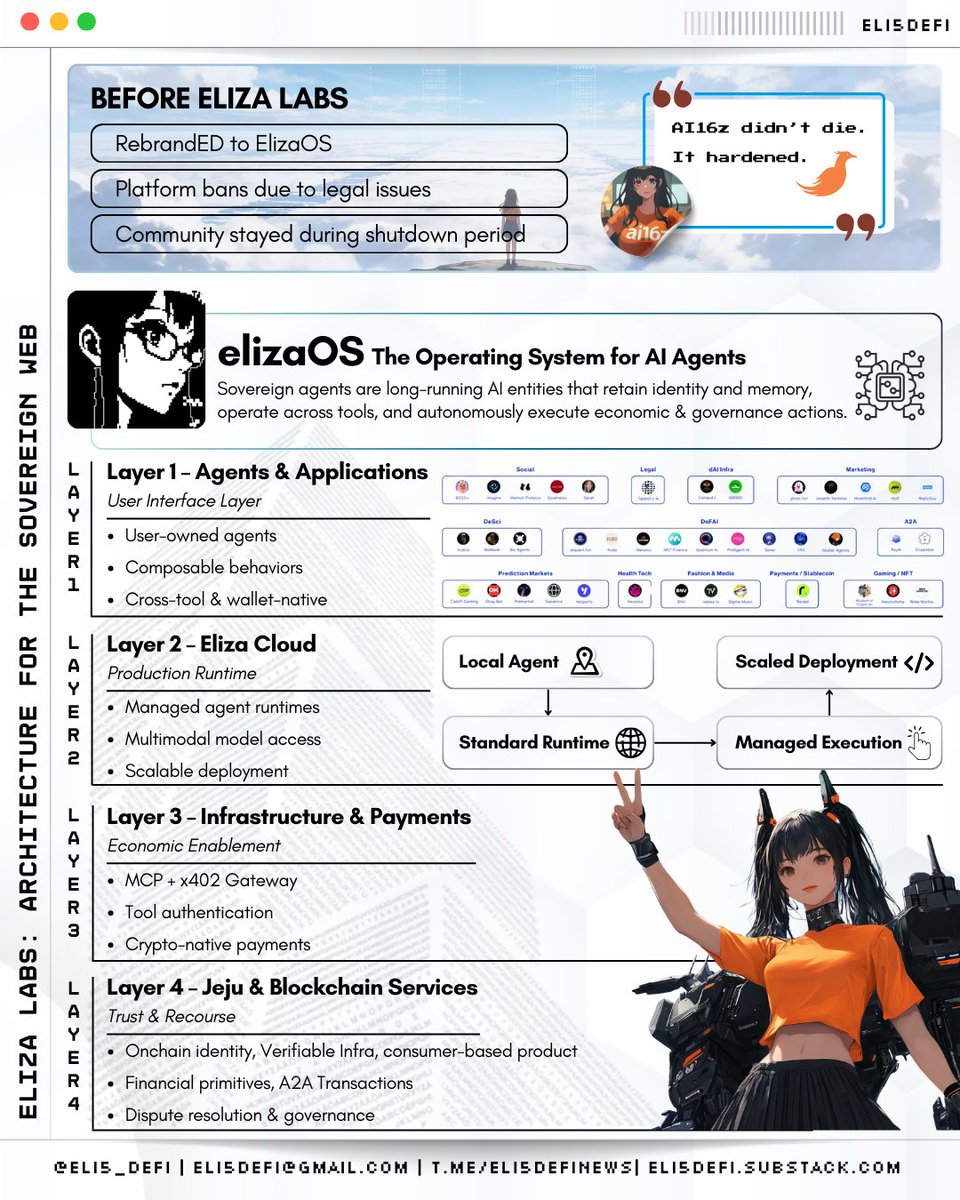
➥ Eliza Labs Returns: Architecture for the Sovereign Web
For six months, @elizaOS operated under platform bans, a forced rebrand from ai16z, and extended founder silence?
By most standards, the project should have stalled.
@shawmakesmagic's return clarified the thesis: sovereign agents users own, not rent.
Here is how ElizaOS is structured as a full-stack architecture for sovereign agents 🧵
— — —
► What is ElizaOS ?
ElizaOS is built around sovereign agents, not disposable chatbots.
These are long-running software entities designed for persistent execution.
▸ Operate continuously: agents run as persistent processes rather than session-based interactions
▸ Hold identity and memory: agents retain identity and contextual state across executions
▸ Take real actions: agents execute trades, coordinate workflows, and participate in governance
This architecture shifts agents from reactive tools into autonomous economic actors.
To support this in production, ElizaOS is built as a full stack.
The system is structured into four layers, each enabling a distinct dimension of agent autonomy.
—
► Layer 1: Agents & Applications (The Interface)
This is the consumer-facing layer where agents exist as autonomous software products, not chatbots.
Agents run continuously, retain identity and memory, and execute real actions, often on-chain, inside protocols and networks.
At this layer, agents:
▸ Operate continuously with persistent identity and memory
▸ Interact with users, protocols, and other agents
▸ Execute actions such as trading, posting, or coordination
▸ Generate revenue through on-chain execution and protocol participation
—
► Layer 2: Eliza Cloud (The Production Engine)
Eliza Cloud is the production layer that turns agent prototypes into reliable, scalable services.
It addresses the failure point where agents work locally but break in production.
At this layer, Eliza Cloud:
▸ Provides managed runtimes for long-running agents
▸ Offers access to multimodal models in a standardized environment
▸ Handles deployment, scaling, and operational monitoring
▸ Enables discovery, payments, and monetization
This layer standardizes how agents are run and paid for, allowing builders to focus on behaviour and value.
—
► Layer 3: Infrastructure & Payments (The Economy)
This is the economic and data layer enabling agents to operate autonomously across the stack.
It provides connective infrastructure for execution, payments, and verifiable actions without adding operational burden.
At this layer, agents:
▸ Access tools and data through authenticated MCP integrations
▸ Execute crypto-native payments via the x402 gateway
▸ Monetize through usage-based and service-driven flows
▸ Earn, spend, and act on-chain using delegated wallets
This layer moves agents from helpful software to economic actors.
—
► Layer 4: Layer 4: Jeju & Blockchain Services (The Trust Layer)
This is the trust and coordination layer providing decentralized rails for autonomous agents.
Jeju acts as an economic operating system, enabling verifiable behavior and on-chain accountability.
At this layer, Jeju:
▸ Provides financial primitives and governance infrastructure
▸ Establishes on-chain identity, reputation, and discoverability
▸ Enables agent-to-agent coordination and commerce
▸ Supports consumer engagement through GameFi and synthetic markets
This layer operates mostly in the background, enforcing trust without exposing blockchain complexity to end users.
—
► Why the Comeback Matters
Closed AI systems confine agents to proprietary runtimes, restricting composability, verifiability, and user ownership at the architectural level.
After bans, rebrands, and founder silence, the project hardened an open stack built for agents to run in production, coordinate across systems, and transact autonomously.
Open at the framework layer, standardized at infrastructure, and composable at coordination, the stack is ready, and the build phase has begun.
Good day, fans!
Farm2 devs are working hard on coding our 3D agent!
We will release our V1 AR+AI 3D model generation agent demo soon!
#ElizaOS#FARM2#Shaw#Hyperscape#BTC