John Stuber, DeSoto, Mo.: “I turned a rolling walker into a handy, portable workbench. It’s sturdy, lightweight, easy to maneuver, and quickly folds up for storage. I used a piece of scrap aluminum to make the 16 by 24-in. top and screwed wooden pieces onto 3 sides to contain the tools. https://t.co/hbp2ieCOjX
“I salvaged the hydraulic jack off an old dump trailer to build this infinitely adjustable roller stand. I use it with my lathe and mill, and sometimes my welding table when handling long material. It works great to move objects along as I work on them,” says Dennis Hartmann, Double D Machine Shop, Yankton, S. Dak. https://t.co/xrnUa8xP1R
At 35, Kenny Walthes already has more than 20 years of experience collecting farm tools and equipment. Touring the three sheds and the basement of his rural Illinois home is like stepping into agriculture’s past. https://t.co/636Td6knt0
“It really starts easy now,” says Carl Stamper, Olive Hill, Ky., who completely overhauled his 1952 Simplicity walk-behind garden tractor and added a homemade electric start. https://t.co/Boj4Ix3ltA
Derrick Mike gets twice the punch out of every pass with his trailing drill. Thanks to his dad Ken, the Case IH drill trails perfectly behind Mike’s Brillion culti-mulcher. https://t.co/vZSeI1Akcb
Steve Faber, Tiffin, Ohio: “I needed a swivel hook to use on my engine hoist so I made one out of a piece of heavy-wall steel tubing. I used a 2 1/8-in. long piece of 2-in. sq. tubing. I cut a slot in the top of the tubing for a chain link to slip through. The link is held in place by a 1/2-in. grade 8 bolt with a lock nut. https://t.co/wzVOB5K07b
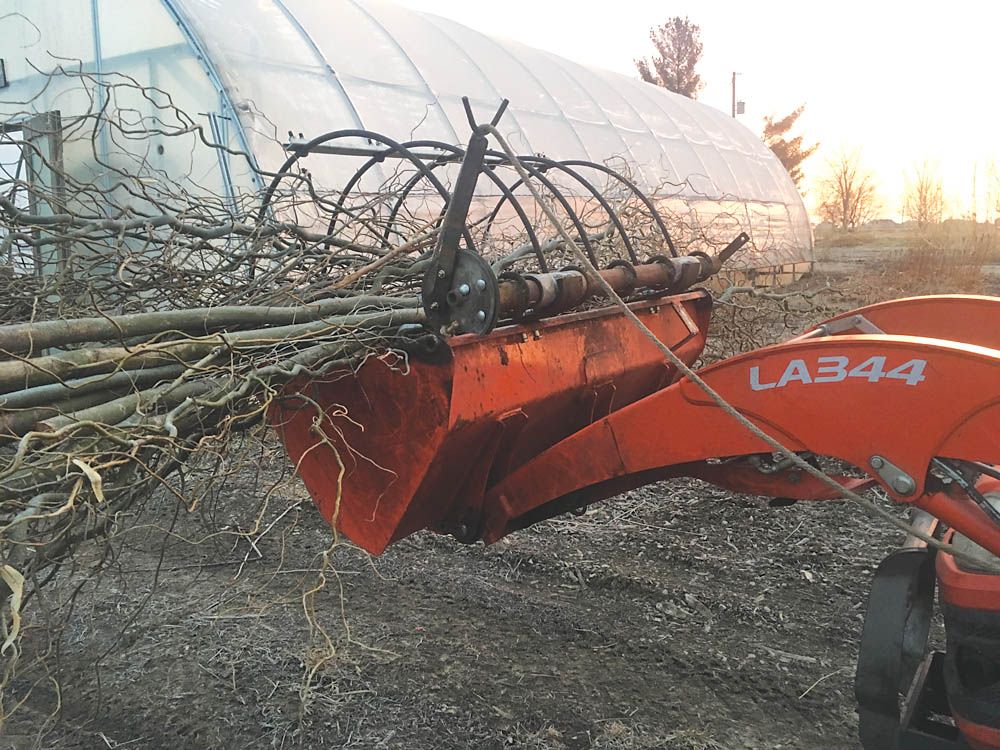
Quinton Tschetter’s five-tine passive grapples drop in place when he tips his loader bucket. Raising them is as simple as pulling on a rope. He says the Poor Man’s Grapples work even better than his first brush grabber (Vol. 45, No. 3) that used a length of railroad rail on chains to retain material in his 4-ft. wide loader bucket. These grapples are lightweight dump rake tines. https://t.co/ENEHrfSWTs
During his lifetime, Walter Umphrey built a huge collection of Western, pioneer and hunting artifacts at his Timberline Ranch north of Beaumont, Texas. He was known far and wide for his philanthropy and work as a personal injury lawyer. Umphrey died in September 2021, and family members held an online dispersal auction of his personal items. The sale included a large collection of wagons, carriages, farm tools, implements and equipment. https://t.co/ENEHrfTuJ0
Larry Moore, Wells, Vt., made an inexpensive cab heater for his Deere 420 garden tractor that lets him work in comfort when clearing snow. The unit takes heat from the tractor’s muffler and shoots it back into the tractor’s plexiglass cab. https://t.co/3X34gpAnfn
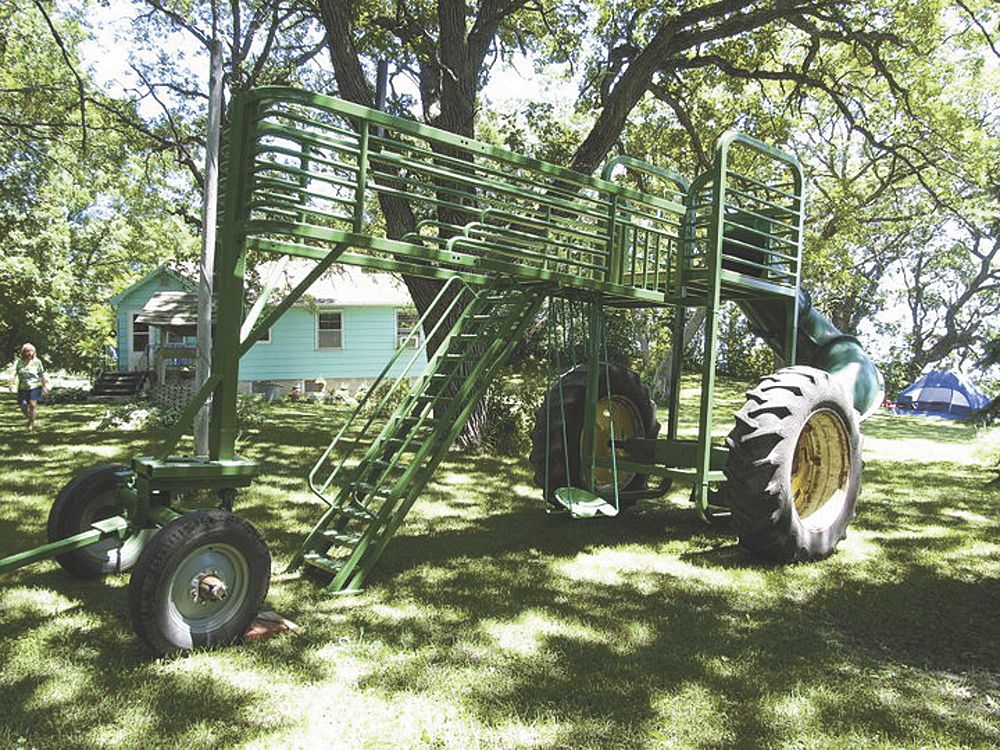
Grown men who would never go down a water slide might be tempted to try out David Seifert’s slide. The giant slide rolls on Deere tires and is shaped like a tractor with a big tube slide at one end. https://t.co/0KMXPcQoIc
A junked-out 1984 commercial van provided the chassis Roy Visser needed to create a 1940’s-style “Woodie”. The van’s unibody construction made it easy to strip down and rebuild with a roll bar framework and real wood exterior. The classic car is known for its look, but was discontinued in its earlier wooden version due to safety concerns. https://t.co/K71Q0CDE41
Mike Marshall, Orchard Park, N.Y.: "I injured my shoulder while lifting a full-size battery overhead to install in a Thermo King reefer unit on a semi trailer. I made up this lift jack using piping and an old car bumper jack. It works well and is easy on my shoulder. I put it on wheels so I can roll it under a Thermo King Super II reefer unit."
Among his large tractor and walk-behind mower collection, Jack Force of Canton, Penn., has a red 1940’s mower that always gets a lot of attention. https://t.co/P3upXRWPZU
"I turned my Ford Bronco into a ditching machine by removing the stock wheels and bolting on home-built 3 1/2-ft. high, 3-in. wide steel wheels. It lets me drive through rice and soybean fields making trench tracks that drain unwanted water off the fields," says Perry Smith, Church Point, La. https://t.co/sF8MljMTXj
Bill Fawcett, Edmonton, Alb.: "International Harvester made WD40, W40 and W30 tractor models, but they didn't make a WD30 like the one I made. I removed the engine from a Farmall MD and installed it in a 1938 W30 model. The engine fit almost perfectly. I had to extend the engine mounts and move the exhaust pipe from the left to the right side, and also move the air breather back." https://t.co/onQhBc4R0U
Ralph Volkman, Black Creek, Wis.: “The steel toes in my boots hurt my feet. Before throwing them away, I used a bearing press to bend them outward. It worked—no more sore feet!”
Craig LeHoullier doesn’t just like tomatoes. He lives tomatoes. He has more than 5,000 varieties and more come in all the time. Many of them are heirloom tomatoes that people have saved for years and then decided to send to The Tomato Man, as he’s known. https://t.co/10H9TYZa2Y
"As our hay hauling business grew over two years, we found we could no longer keep up using flatbed trailers and trucks so we built this self-propelled bale wagon that will haul up to 300 bales per hour," says 18-year-old Nathan Schnake who, along with three friends and his dad, Roger, used various truck and combine parts to put together what they call a "hay monster". https://t.co/QNwGgAtprn
Tim Kelly is one of those farmers who, if he can’t buy something at the right price, will make it himself. His grain drying system is a prime example. Read more in this weeks newsletter! https://t.co/fAryZd2egV
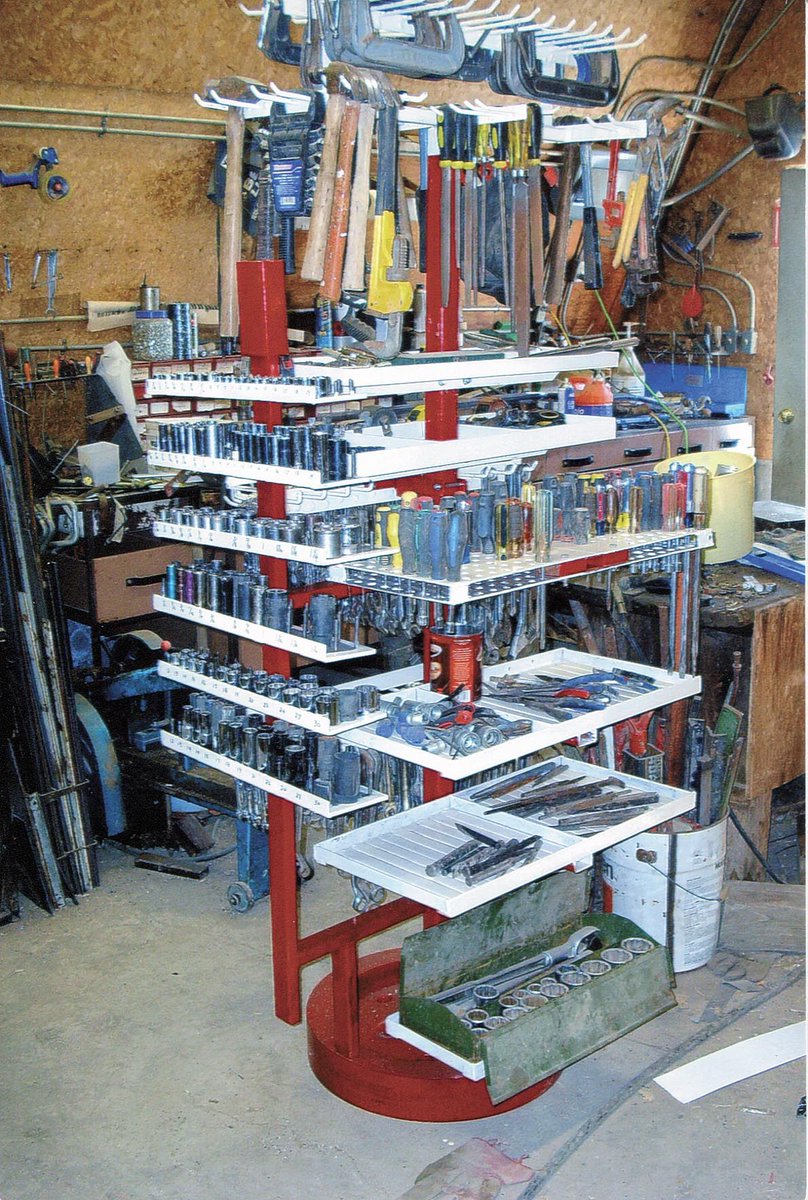
There’s no digging through cabinet drawers or toolboxes when Brian Haubrich needs a 3/4-in. wrench or socket. Every tool he needs is out in plain sight. “I built a tool tree with long hooks and shelves to hold practically every tool I have. The best part is I can reach most of my tools without moving far from my vise,” says Haubrich. https://t.co/67AnfdndXJ