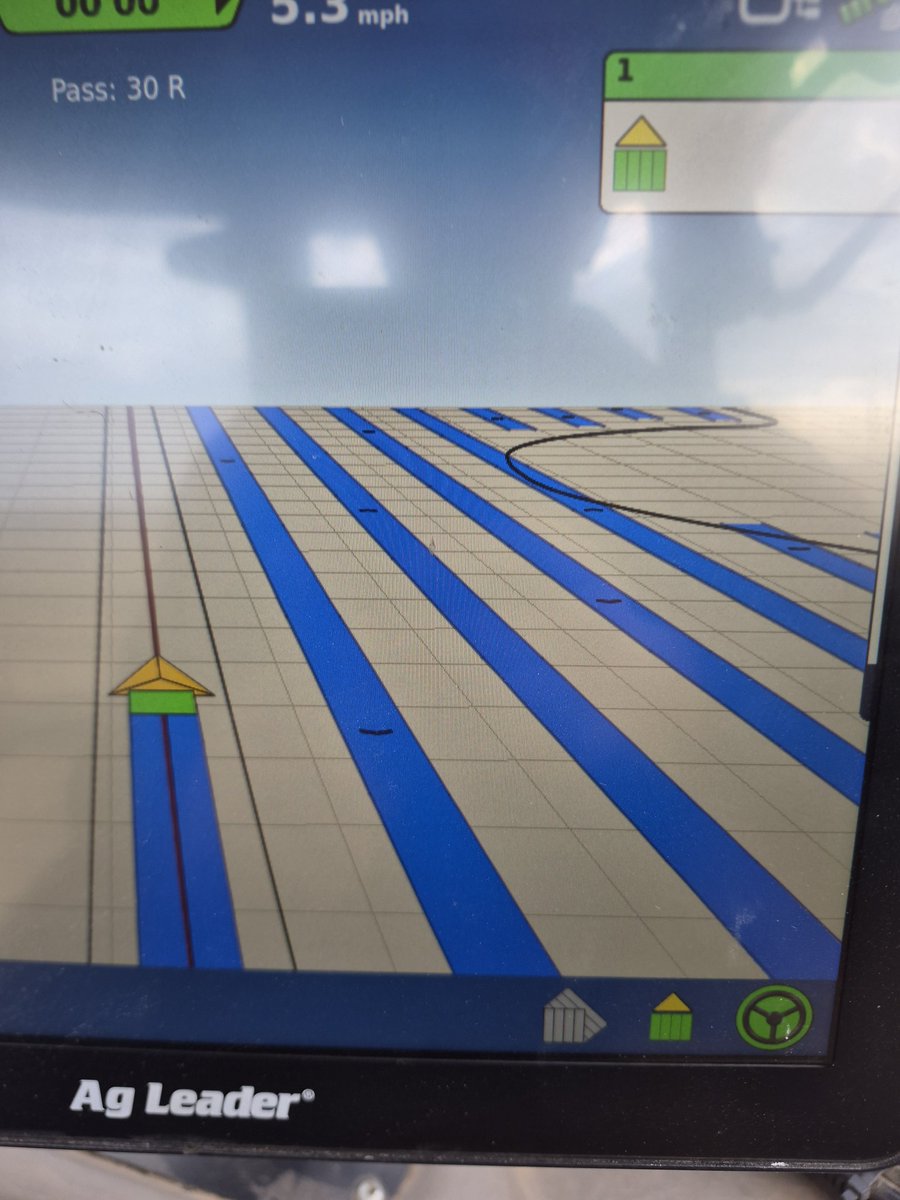
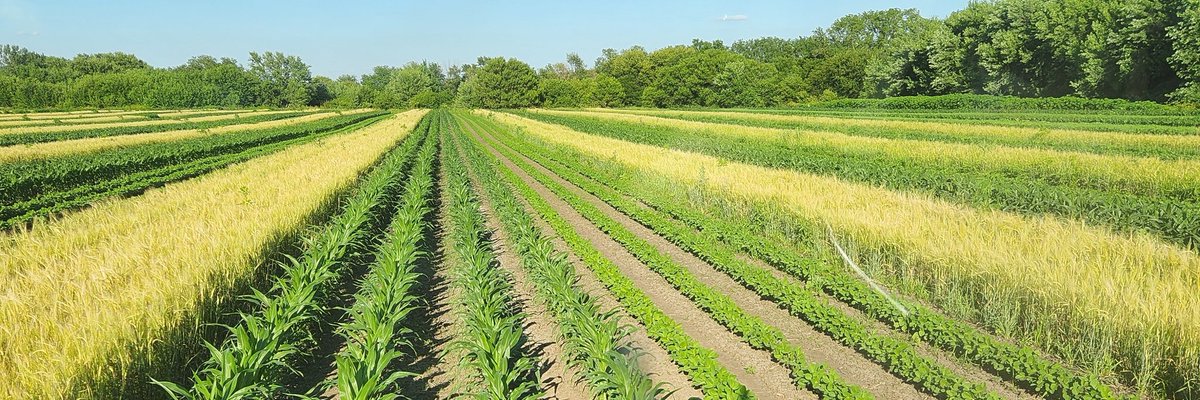
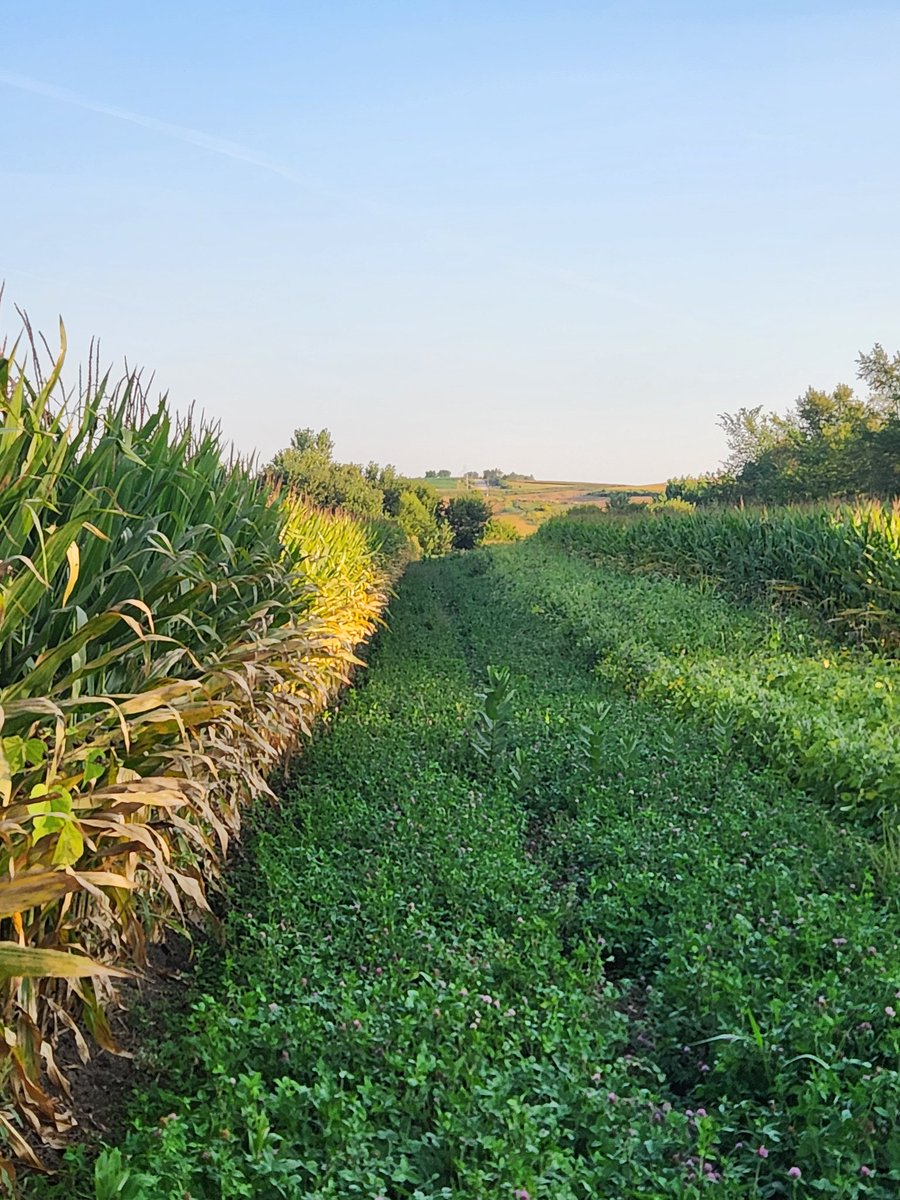
2025 we strip cropped all of our 400 organic acres to a 4 row-3 crop rotation. Corn, soy, barley/clover.
Southern rust kept the corn yields from reaching its full potential but the beans held their own and actually did better than our historical average. Going again 2026!
@m_hallstein Soil saver with overlapping sweeps instead of points. 4 inches deep. Disc or harrow after to seal in moisture. No till is a conspiracy, rotation and ruminants are the answer.
@braunfarm Dont waste time in wide strips. If you are going to limit efficiency, do it until it rolls over and becomes your bitch. Remove row units and scale accordingly.
@JacobShaner1456 I initially grew barley for feed to cull cows, now cull cows are unaffordable. Im going back to oats to background calves. Creating wealth from cows is better than piggy backing on old cows or calves right now. Sellers market.
Id say the top impediment to narrow row strip cropping is harvest technology and its affordability.
The norm for 6-12 foot harvest equipment is on par with $500k. They're made exclusively for universities and seed companies.
Go ask your local dirt contractor what the rate for usda waterway funded projects is and the alternative? The difference is both both double and predictable. #fuckRome. #cantkilladeadman #zachsmith #stockcropper
#jasonmauck
Top reasons to narrow row organic strip crop.
1. Efficiency of scale usually works against a small farmer. In contrast, the smaller the machinery you run strip cropping, the larger the reward.
2. Increased yield/maximum photosynthesis. When sunlight becomes abundant, it will be easier to achieve high yields with low inputs. My goal is to achieve 200+ field averages using clover and biologicals both in furrow and foliar. Organics that soley rely on conventional manure sources isn't good for the future of organics and becomes its limiting agent for wider adoption.
3. The boost in yields with a reduction in inputs could make organic transition a profitable enterprise rather than a drain on the balance sheet. Once certified, improved margins helps buffer against the waves of low priced fraudulent imports we compete against.
4. Incorporating a 3rd rotation helps alleviate the shading on soybeans that can usually erase gains made in a 2 crop system. It also opens the door for nutrient cycling and a forage/feed base for critters the markets are screaming for more of. We need to quit begging for markets to develop around small grains and feed alternate rotations to existing markets that want/need to expand. Feed your own small grains. Graze clover/foxtail hay.
5. Reason four is also reason five.
That 3rd rotation makes organic production viable in highly erodible landscapes. Which is also where the beef is. I have less erosion now than when i was no till. I dont care if you believe me or not. Sod on a 3rd of the field at any given time and cover crops incorporated into the rest is pretty great.
6. Smaller machinery is more affordable AND necessary for stripping. Tired of farming with 60 yr old tractors? You can buy 2.5 new 75 hp utility tractors for the price of one 200hp machine. Try upgrading anything on a 24 row planter right now without a bank note. Crazy. 4-8 rows can be played with just by taking the pop cans from the barn to the redemption center.
7. Ill cut this short as its already excessive and still lacking.
Small farms have the advantage of being able to trade labor for capitol in a business that doesnt like rewarding you for such. Again, that's not the case in narrow row strip cropping. The extra labor it takes to pull this system off pays big dividends.
Want your kids to come back to the farm but dont have anything for them to do? Here you go.
Ill try to follow up with drawbacks to the system but honestly the list is pretty lame and relies mostly on the word " can't". Followed by "dont want to".
@jasonmauck1@JWebsterAg@zebulousprime
@silvopasturist@iamyourfarmer Try growing tomatoes outside of town? Apple tree my kids and I used to pick in our fencerow mysteriously died the year dicamba was approved for use over soybeans. Why are we spending millions of tons of ordinance on Iran when our true enemy is corrupt Rome. #cantkilladeadman.
Captured agriculture says NPK are the most limiting factors to productivity. FALSE! Lack of understanding biological principals and our resistance to incorporate them into our operations are the only limiting factors. #farmweird#stockcropper#stripcropping#zachsmith #jasonmauck#@zebulousprime
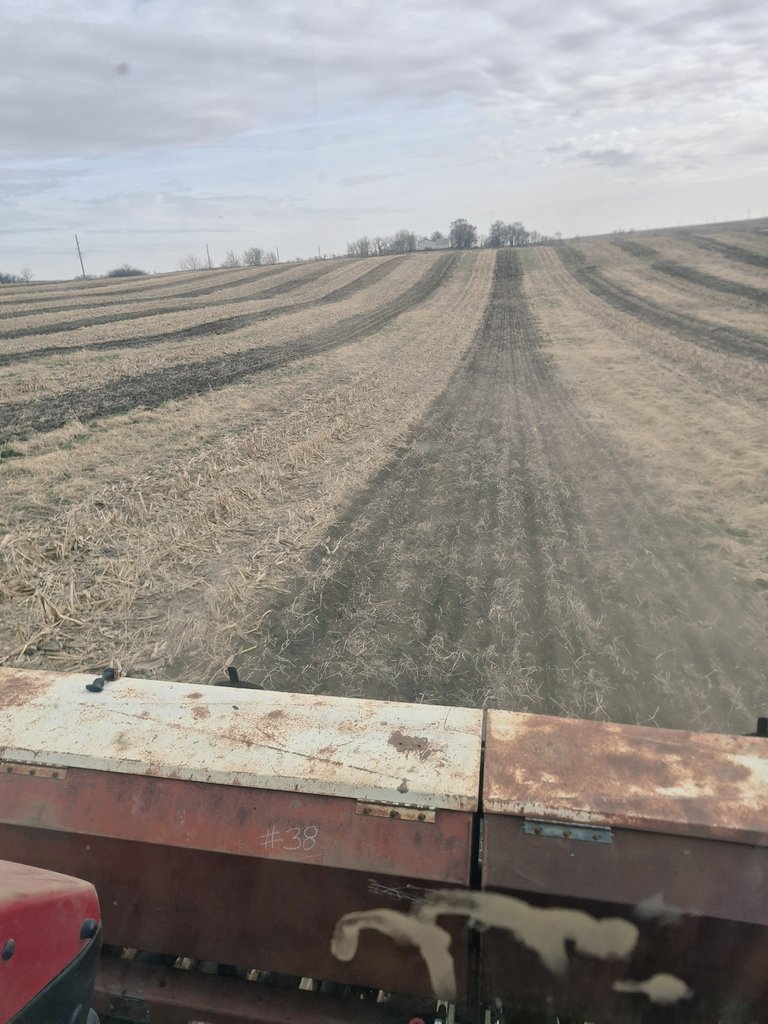
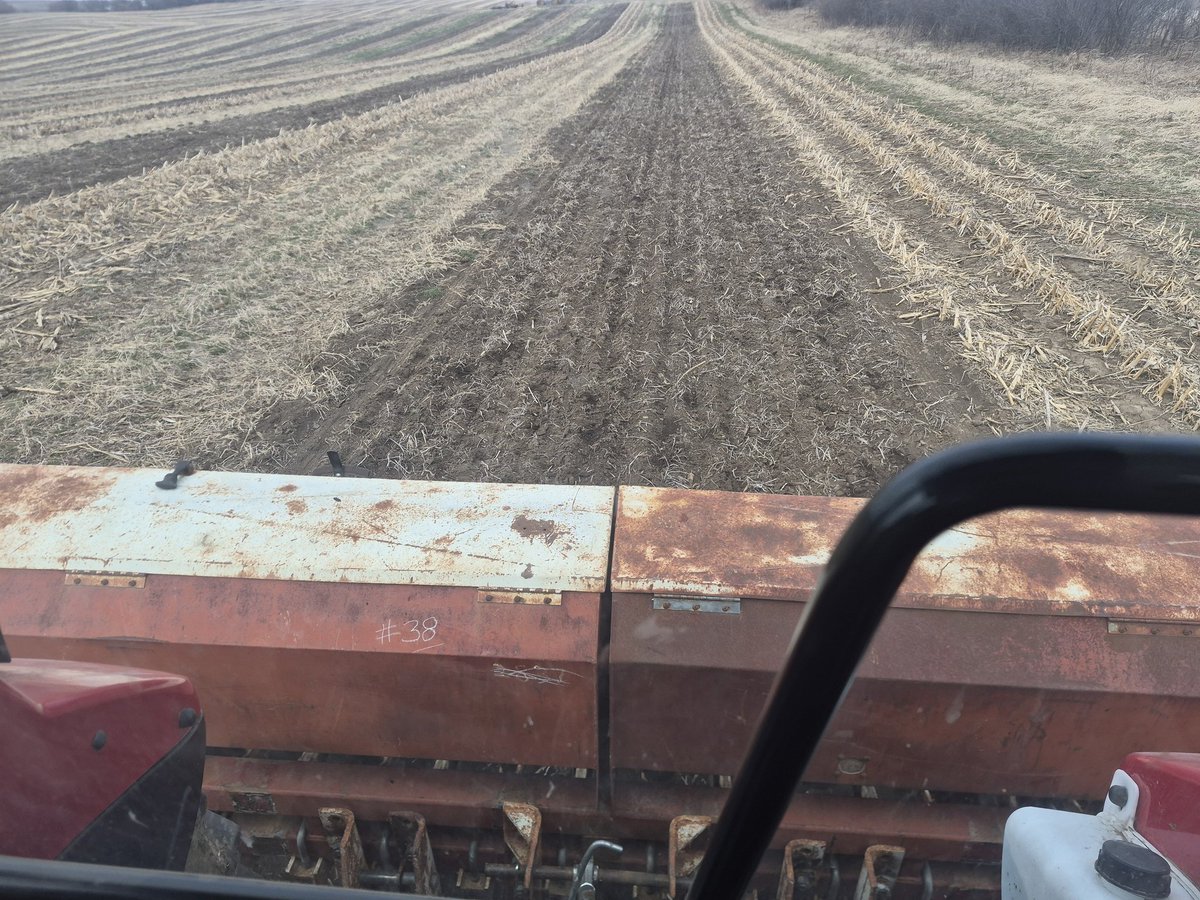
Oats and clover going into the soybean stubble strip today. Ideally this strip would have been air seeded from the clover strip beside it. A winter small grain and then frost seeded the clover to eliminate the tillage pass. This year is the year that happens. Organic strip cropping should also be called relay tillage. Only a third of the field is exposed at any give time.
Do any cattlemen out there have opinion on whether or not you could graze yearlings in these strips of clover?
Using e collars, maybe assign a smaller number of cattle to each strip to avoid crowding? Use the headlands as a common area for watering and across the field a group of 5 or 6 steers each has their own lane. Im thinking it would only work in a corn/clover system. I think they' be to tempted to reach and graze soybeans next to the clover.