🔥 “I Heart Horror Day IV: EyeGore’s 4th Score” returns Feb 21!
Special guest Father Evil — Horror icon and award‑winning cosplayer bringing his legendary presence to Sayreville.
Join us 11–7 at VFW 4699, 575 Jernee Mill Rd, Sayreville NJ!
https://t.co/zCcqOMHLgZ
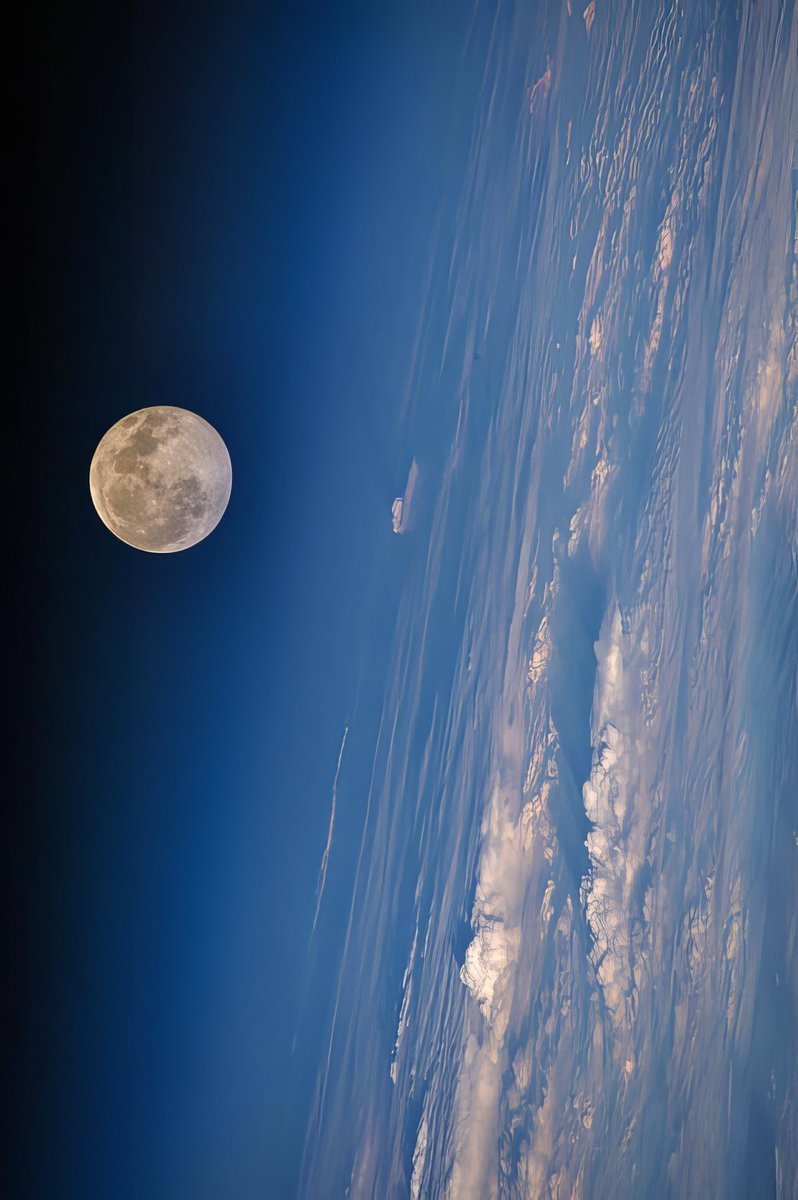
The Pacific Ocean, Atlantic Ocean, Chile, Argentina, Uruguay, Paraguay and in the background the silhouette of the moon.
Photo taken from the International Space Station
That story still gives me chills every time I think about it.Jocelyn Bell Burnell was 24 years old, building the actual telescope herself (hammering stakes, laying miles of wire across frozen fields), then sifting through 100-foot-long chart recordings by hand. When that first “bit of scruff” appeared every 1.337 seconds, she could have written it off as interference. Instead she traced it, re-observed it, and (crucially) demanded the equipment be checked and re-checked until there was no doubt.The precision was staggering: the pulses were stable to one part in ten million, better than most man-made atomic clocks at the time. The LGM joke only lasted a few weeks; once they found the second, third, and fourth pulsars in completely different parts of the sky, it was clear this was a natural phenomenon. The team published in February 1968, and the word “pulsar” was born.What’s often under-told is the human side: her PhD supervisor, Antony Hewish, and another colleague received the 1974 Nobel Prize for the discovery, while Bell Burnell was left out (still one of the most controversial omissions in Nobel history). She has handled it with extraordinary grace, saying she was “just a student doing her job,” and has since poured prize money she later won (like the $3 million Breakthrough Prize in 2018) into scholarships for underrepresented students in physics.Pulsars are now one of astronomy’s Swiss Army knives: they test general relativity in the strongest gravitational fields we can observe, they helped us discover the first exoplanets, they’re the backbone of navigation concepts for deep-space missions, and the very first detection of gravitational waves (indirectly) relied on decades of ultra-precise pulsar timing.All because one grad student in 1967 refused to ignore a suspicious little blip on a strip of https://t.co/NzDwdRAwR0 at its absolute finest. Thank you for reminding us of that quiet, world-changing day.
Back in 2019, the International Space Station captured a rare and mysterious phenomenon | a blue jet, a powerful burst of lightning shooting upward from a thundercloud into the stratosphere.
This otherworldly event was spotted high above Earth, revealing the strange and beautiful secrets of our atmosphere.
???
3I ATLAS – A Spaceship from the Future?
A new hypothesis about the interstellar object 3I ATLAS is being discussed on social media. Users believe it's not an alien probe, but rather a spaceship from Earthlings from the future who traveled to Alpha Centauri in 2115 and accidentally entered a time hyperloop.
It's believed that the crew has returned to the past and is hiding behind the solar disk to avoid disrupting the flow of history. This explains 3I ATLAS's disappearance from observational images and its strange maneuvers. Users are also mentioning signals at 1420 MHz – the "hydrogen line" used in SETI projects. However, scientists have not confirmed this information.
3I ATLAS is indeed behaving anomalously: activity began beyond the orbit of Jupiter, and its tail points not away from the Sun, but toward it. After some data on the object's spectrum was classified until 2099, these rumors only intensified. Thus, the version about the “ship from the future” became one of the most discussed legends about 3I ATLAS.
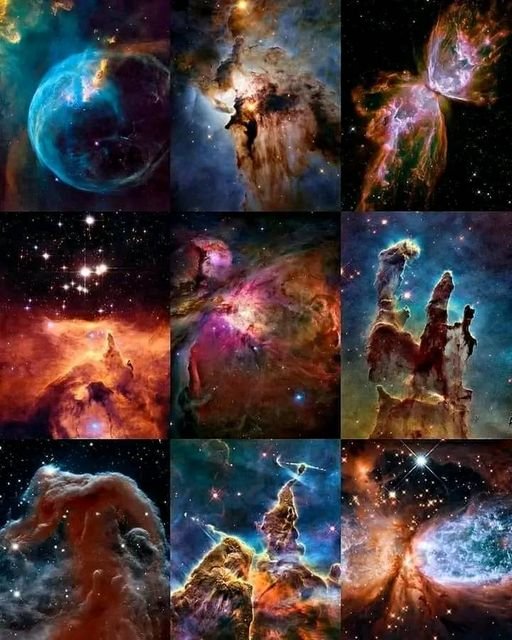
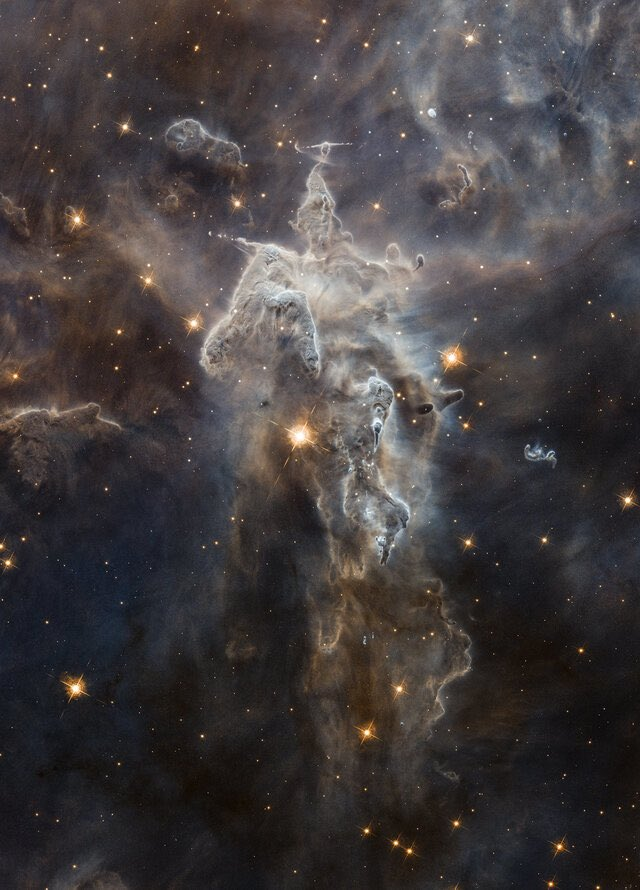
Nebulae:
Nebulae are vast clouds of gas and dust floating in space — the birthplaces and graveyards of stars. 🌌 Some nebulae glow brightly, lit up by nearby young stars, while others appear dark, hiding the secrets of new star formation within. They come in stunning shapes and colors, often formed from the remnants of dying stars or from interstellar clouds collapsing under gravity. Nebulae remind us how the universe recycles its matter — from death comes new cosmic life. ✨