Anyway—a perfect example of the issue with the current state of reading is addressed by Fran Lebowitz in conversation with Toni Morrison—people use fiction as a mirror to see themselves instead of using it as a doorway, or a window, as a way out.
This is really neat but it’s not a design tool as much as it’s a design _production_ tool.
The practice of design is mostly about what comes before production.
There’s no doubt in my mind that all parts of software production will become automated very soon. Writing code, making web pages, putting pieces of a design system together etc.
And that’s fine. I think few people actually enjoy this kind of production work. Wouldn’t it be better if we spent our precious time in life on what is more meaningful?!
At the core, the practice of design is methodical; like architecture, not like art. In a nutshell: We find constraints, form comprehension of the whole and propose solutions that honor those constraints. First after that do we enter some form of production phase, usually prototypes first, learn about some constraints that were hidden before, loop back, prototype and then build the production-grade “final” artifact.
These last few tasks are quickly losing value because AI tools can do it much faster (not yet better though) than humans. It’s simply just what has the best RoI for a business.
Some companies and individuals will continue to spend human time on certain parts of the “production line” as a market differentiator, but it will cost them a relatively high price compared to competitors.
Anyhow, I still haven’t seen a tool better than Figma that supports the actually-interesting part of the design process.
I wouldn’t be surprised if Figma focused their products on that, maybe separating “products for production” of “products for ideation & exploration.” The latter would obviously still leverage AI, but not to do the work for me but rather to support my efforts the way a therapist helps me live a better life (not living my life for me.)
Goosebumps! People often ask, is Shakespeare still relevant? Here is a great example, from the Steven Colbert Show, in which Sir Ian McKellen delivers an extraordinary speech. Shakespeare’s words are timeless, urgent and important.
#Shakespeare#ianmckellen#stevencolbert
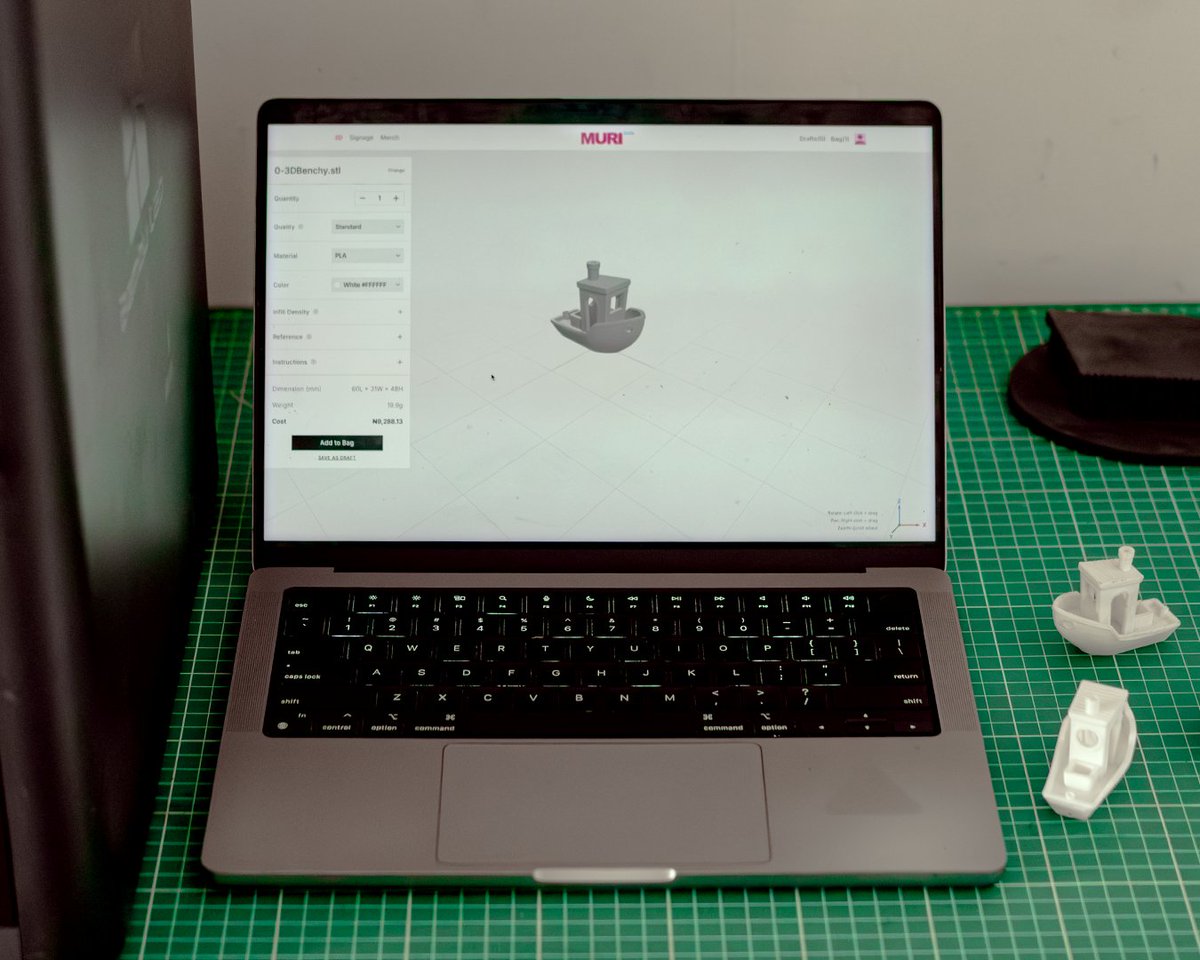
We've been building production tools that help to manage operations @Printwithmuri better. Our MVP allows creators & 3d printing enthusiasts upload their files, get an instant quote, and print their models easily without the hassle of owning a 3d printer. Muri is now in beta!
v2 of https://t.co/nZLxTlAsne is live!
- Moved from Airtable to self-hosted NocoDB. Saves ~ $3k yearly
- Manually reviewed all 5409 records and updated where applicable
- Redesigned to highlight images. Also, you can now jump quickly between years
- Better search + performance
There’s a whole generation of men, a dying breed, who live like kings without a kingdom. No responsibility to family or state yet demand respect and have strong opinions about a world they have been unable to adapt to.
When you smell a book, you’re perceiving the smell of the paper, ink, and binding glue. The characteristic smell of old books comes from those very same materials slowly breaking down. So that smell everyone loves is the smell of decay. The more you know 🙂
Pulse check, I'm thinking of bringing radar back. Heavy moderation for some time to establish a quality of thought and engagement. Focus on ideas and workings.