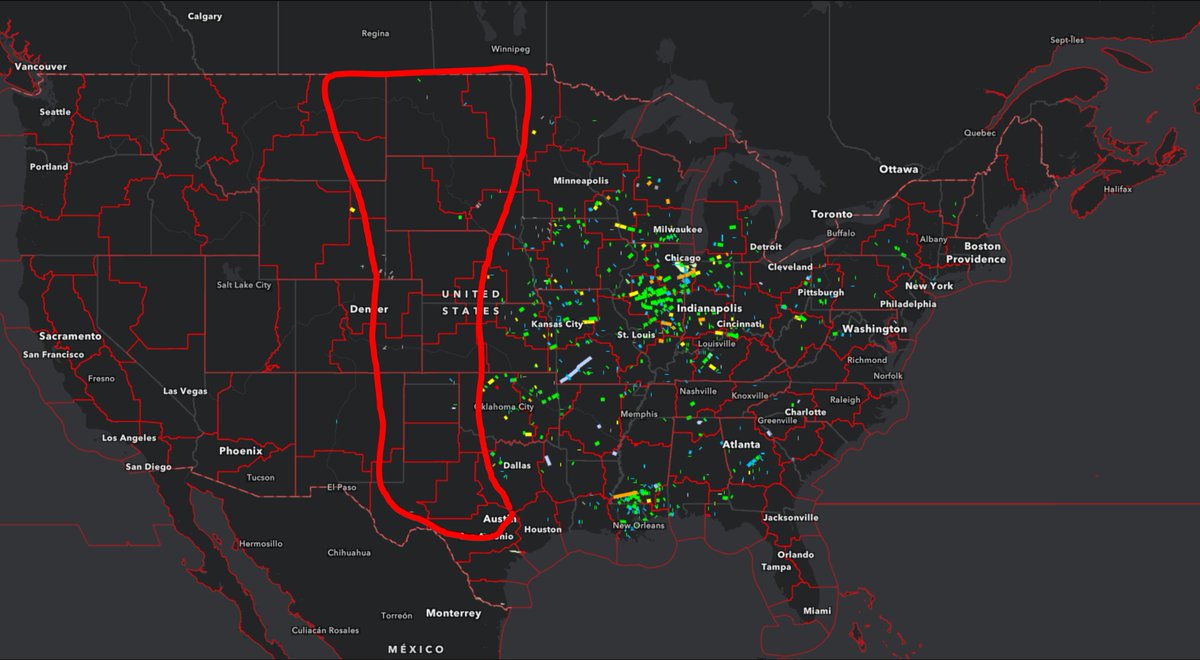
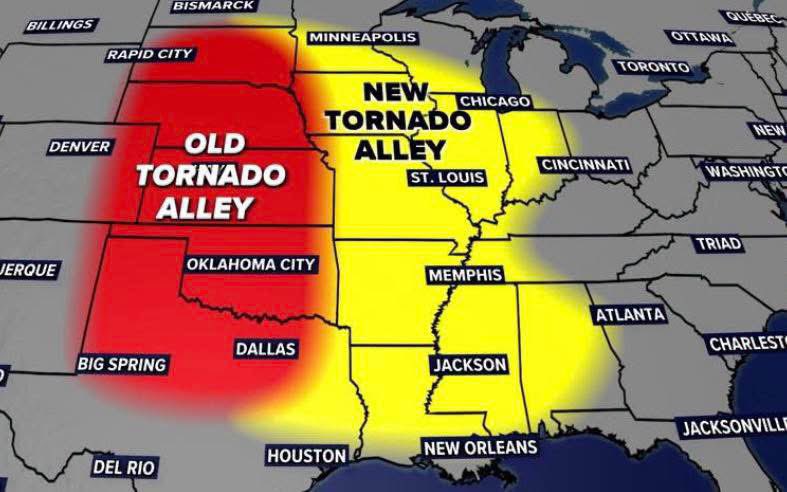
Good example of Americans’ retreat into private, suburban life, where all social interaction must be planned in advance, rather than spontaneous, impromptu. With everyone spread out, it’s less likely you’ll happen upon a friend’s house or just be in the neighborhood, and your friends are probably a 20 minute drive away. So if they happen to be busy when you pop over it’s a huge waste of time. That norm of mandatory planning means schedules have to be aligned, adding a layer of friction that makes frequent association less likely. And a couple free hours that you didn’t expect to have will probably be spent at home in front of the television instead of with friends, because getting together on a whim is such a hassle
Abdul El-Sayed is asked on MSNOW if he is worried that his anti-Zionist messaging "echoes an old antisemitic trope"
Abdul: "The idea that somehow we are going to use the spectre of antisemitism to defend what a foreign government is doing, does a deep disservice to the well-being of Jewish Americans in this country."
Jackie Alemany: "You haven't made that same tradeoff argument with regards to other items in the US's 800 billion dollar defense budget"
Abdul: "Oh I have, you just don't cover it. No, No, No. I have. You just don't cover it. I'll say the same thing about the money we send to Egypt, which is where my family comes from. So if you want to go ahead and call me anti-Egyptian, go ahead and do that"
There is one reason and one reason alone why the Dodgers are signing all the top players. Read below for the details:
The Dodgers are the only team in MLB that is not impacted by cord cutting. Cord cutting is when someone drops the cable TV bundle, meaning they no longer pay a monthly fee of $80-$100+ to Comcast, DIrecTV, YouTube TV etc. That money then gets paid to the content owners. Regional sports networks can be anywhere from $3 to $10 of that monthly bill, which is why YouTube TV dropped them for being too expensive.
The reason why cord cutting is so detrimental to regional sports networks is because their fees have to be extremely high in order for them to pay for escalating contracts signed years ago. This means 90%+ of channel revenue is from these fees called carriage fees, as compared to a more 50/50 split for non-regional sports channels. When cord cutting is around 10% annually, this means that these channels, even with price hikes, are seeing revenue decline every year, at the same time the fees to the teams for the rights to the games escalate. Lower revenue + higher costs = bankruptcy risk, which is exactly what happened with Diamond Sports (Bally's Sports owner).
MLB teams usually have one of two regional sports network arrangements. Some simply sell their rights to the highest bidder on a long-term contract. Think of the NBA's recent deal, but on a smaller scale and with one partner. Other teams own some or all of their regional sports network, wherein the team ownership benefits from owning the network and making money. However, their incentive here is not aligned with the team, which wants to make the most money on their rights fees. To better align incentives, often the team owns a % of the network. This creates a balance between a high fee to the team for rights, but not too high where the station can't make any money.
The big market teams, obviously, make the most money from these deals. They both have more fans and can charge a higher carriage fee to the video distributors. However, they are not immune to cord cutting issues. Take the New York Yankees. They own 26% of YES Network, the highest % out of several minority owners including investment firms and Amazon. These investment firms want the network to be profitable. YES Network, in 2013 - notably before cord cutting - signed a 30-year, $5.7 Billion deal to show Yankees games. While that is great for the Yankees, if that deal becomes unprofitable for the network, the 26% ownership could end up being worth nothing and in bankruptcy the team may be forced to accept lower payments. If cord cutting continues, regional sports networks bankruptcies could increase beyond the Bally's networks.
The Dodgers have a unique regional sports network deal that has two advantages over every other team. First, the deal is the largest. It was signed in 2014 at the absolute peak of cable TV. The Dodgers are getting $8.35 Billion over 25 years, or $334 Million annually. That compares to the Yankees at $190 Million annually and most teams around $100 Million. We can also compare it to the Mets: They signed a 25-year, $1.3 Billion deal in 2006, which amounts to $54 Million annually. They do have the benefit of owning 65% of SNY, but that doesn't make up for the massive $ differential.
The second advantage is the one most unique to LA and why they are able to outspend everyone. Their rights deal, because of the team and time it was up, was extremely competitive with many bidders. This resulted in not only the high-$ fee, but something entirely new in the business: Time Warner Cable, which won the deal, agreed to cover subscription fees from other video distributors even if those operators didn't carry the new network. They assumed they'd be able to get the other distributors on board, but most balked at the extremely high price the channel demanded to even break even on the high rights fee. Time Warner Cable was later sold to Charter Communications, the #2 cable company in the country with 30 million Internet subscribers. They generate over $50 Billion of revenue and $20 Billion of earnings annually, and long ago wrote off the annual losses they take from paying out the extremely high fees.
So, through the end of the contract in 2038, cord cutting simply does not impact the Dodgers. They are guaranteed the highest annual rights fee, by far, from a network inside of a massive cable company that derives their earnings from selling internet, not owning cable TV channels. This monetary advantage is why the Dodgers are going to be able to offer the highest $ amount for any free agent they want. The good news for the rest of MLB is that this ultimately will come to an end, in 2038. The bad news? The Dodgers know this, and thus the best way to help ensure a prosperous reign for the franchise beyond 2038 is to spend now to win as much as possible and create a winning legacy, memorable players, and as many Dodgers fans as they can.
Hard to even process -- a president selling market-moving information to banks and wealthy investors in advance of everyone else, and personally pocketing hundreds of millions of dollars from it. This alone is more worthy of impeachment than 100 Watergate cover-ups.
Something that radicalised me was learning that the "carbon footprint" concept was popularised by the fossil fuel industry to shift public focus on climate change towards individual consumers n their lifestyle instead of at the corporations that are knowingly destroying the earth
I don’t mean to sound melodramatic but do y’all ever think about how humanity used to navigate the world by the stars and now people can’t make a grocery list without help from AI.
Details on 'Heat 2'
• Starring Leonardo DiCaprio and Christian Bale
• Adam Driver and Stephen Graham are in talks for roles
• Production budget is reportedly ~$165M
• Filming starts in November
• Both a 'prequel and sequel'
• 'Heat 3' is reportedly being plotted
(via @TheWrap)
Charley Hull bought a fake lottery ticket in Blackpool last night and tricked her caddie into thinking he'd won $100,000!
"He's taken his hat off. He's taken his glasses off. He's literally running around the players lounge sayin', 'I've won $100,000. I'm taking today off.' His face looks so happy. He was sweating. He was trembling. He couldn't believe his luck, and we had to tell him it was fake and he nearly quit the job."