I’m obsessed with this quote
If the rain that touches your skin travelled miles to find you then so will everything that is meant for you
Maybe this is a sign to stop chasing what isn’t meant for you
What’s meant for you already knows the way to you
@melophile_279@glider__ This is the part I find most interesting tbh stocks being onchain is cool but using them across DeFi is where it gets really interesting
𝐀𝐮𝐭𝐨𝐧𝐨𝐦𝐨𝐮𝐬 𝐀𝐠𝐞𝐧𝐭𝐬 𝐀𝐫𝐞𝐧’𝐭 𝐓𝐡𝐞 𝐇𝐚𝐫𝐝 𝐏𝐚𝐫𝐭
letting an AI agent perform an action is relatively easy
the harder problem is deciding what that agent is actually allowed to do
what can it access?
how much can it spend?
and how do you know exactly what happened afterwards?
that's the problem Latch is designed to address
━━━━━━━━━━━━━━━━━━
𝐃𝐞𝐥𝐞𝐠𝐚𝐭𝐢𝐧𝐠 𝐖𝐢𝐭𝐡𝐨𝐮𝐭 𝐋𝐨𝐬𝐢𝐧𝐠 𝐂𝐨𝐧𝐭𝐫𝐨𝐥
Latch lets users delegate tasks to AI agents while defining boundaries around those actions
instead of giving an agent unrestricted authority you can establish:
→ what the agent is allowed to do
→ how much it can spend
→ which limits apply to its actions
→ what record is produced after an action
the goal is simple:
let the agent act without giving up control
━━━━━━━━━━━━━━━━━━
𝐖𝐡𝐲 𝐓𝐡𝐢𝐬 𝐌𝐚𝐭𝐭𝐞𝐫𝐬
autonomous agents change the traditional security model
a human can review an action before taking it
an autonomous agent may execute it on its own
that makes predefined permissions and enforceable limits much more important
with Latch:
→ permissions are defined before execution
→ spending remains within configured limits
→ actions produce receipts for transparency
→ security is enforced rather than left to assumptions
━━━━━━━━━━━━━━━━━━
𝐀𝐮𝐭𝐨𝐧𝐨𝐦𝐲 𝐍𝐞𝐞𝐝𝐬 𝐀𝐜𝐜𝐨𝐮𝐧𝐭𝐚𝐛𝐢𝐥𝐢𝐭𝐲
giving agents more autonomy without adding meaningful controls simply increases the consequences of mistakes
the better model is different:
delegate the work
define the boundaries
let the system enforce them
and keep a record of what happened
that's what makes autonomous execution easier to reason about
━━━━━━━━━━━━━━━━━━
𝐓𝐡𝐞 𝐁𝐢𝐠𝐠𝐞𝐫 𝐈𝐝𝐞𝐚
the future of AI isn't just about agents that can act independently
the goal isn't to remove humans from the loop
it's to make delegation safer when agents act on their behalf
that's the direction Latch brings to agent infrastructure
@RialoHQ@ericargent31113@IsmailPost49616
𝐀𝐈 𝐀𝐠𝐞𝐧𝐭𝐬 𝐍𝐞𝐞𝐝 𝐌𝐨𝐫𝐞 𝐓𝐡𝐚𝐧 𝐈𝐧𝐭𝐞𝐥𝐥𝐢𝐠𝐞𝐧𝐜𝐞
making an AI agent smarter is only part of the problem
the moment an agent starts interacting with real world systems new questions appear:
who is allowed to act?
what information can be exposed?
which actions are permitted?
and how do you enforce those rules?
that's where Rialo's IPC becomes important
━━━━━━━━━━━━━━━━━━
𝐈𝐏𝐂 𝐌𝐞𝐚𝐧𝐬 𝐈𝐝𝐞𝐧𝐭𝐢𝐭𝐲 𝐏𝐫𝐢𝐯𝐚𝐜𝐲 & 𝐂𝐨𝐦𝐩𝐥𝐢𝐚𝐧𝐜𝐞
these aren't optional layers once intelligent systems start interacting with real world applications
→ identity determines who is allowed to act
→ privacy protects sensitive information
→ compliance constrains which actions are permitted and under what rules
Rialo treats these capabilities as part of the protocol rather than something developers have to bolt on afterwards
━━━━━━━━━━━━━━━━━━
𝐖𝐡𝐞𝐫𝐞 𝐓𝐡𝐢𝐬 𝐁𝐞𝐜𝐨𝐦𝐞𝐬 𝐈𝐦𝐩𝐨𝐫𝐭𝐚𝐧𝐭
an autonomous agent may need to interact with:
→ APIs and external services
→ financial systems
→ sensitive data
→ other agents
→ multi step workflows
that means intelligence alone isn't enough
the surrounding infrastructure needs to control how those interactions happen
Rialo's architecture combines IPC with capabilities such as Edge for Web2 interaction Workflow for autonomous workflows and REX for confidential execution
━━━━━━━━━━━━━━━━━━
𝐓𝐡𝐞 𝐑𝐞𝐚𝐥 𝐂𝐡𝐚𝐥𝐥𝐞𝐧𝐠𝐞 𝐈𝐬 𝐂𝐨𝐧𝐭𝐫𝐨𝐥
agents can be given access to real world resources without simply handing them unrestricted credentials
Rialo's gateway model protects credentials limits access through policies supports scoped capabilities and records actions and denied attempts for auditing
that's a very different model from:
give the agent access and hope it behaves
━━━━━━━━━━━━━━━━━━
𝐓𝐡𝐞 𝐁𝐢𝐠𝐠𝐞𝐫 𝐈𝐝𝐞𝐚
autonomous AI isn't just about agents that can think
it's about agents that can act within defined boundaries
identity
privacy
compliance
connectivity
execution
automation
when these layers work together AI can move from generating outputs to operating in the real world with meaningful controls around its actions
that's the infrastructure Rialo is building toward
@RialoHQ@ericargent31113@IsmailPost49616
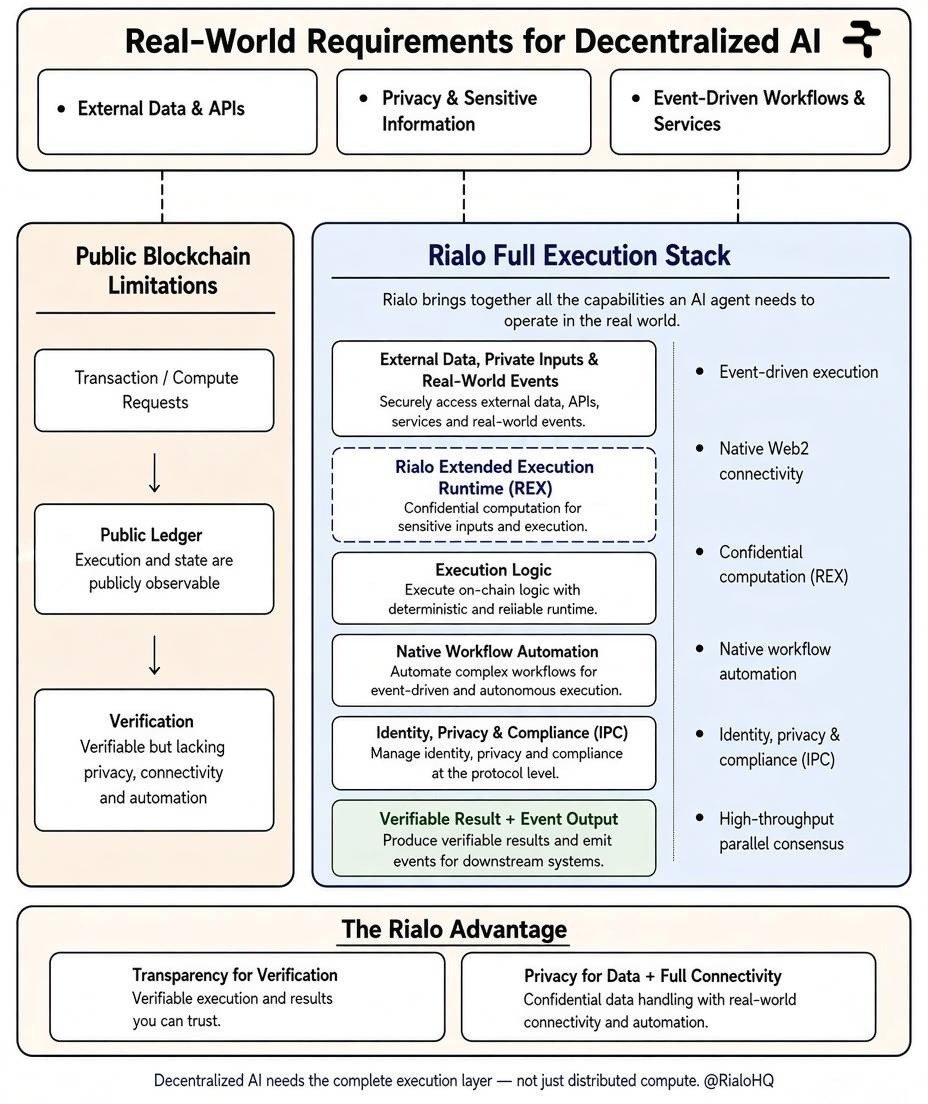
𝐃𝐞𝐜𝐞𝐧𝐭𝐫𝐚𝐥𝐢𝐳𝐞𝐝 𝐀𝐈 𝐈𝐬𝐧’𝐭 𝐉𝐮𝐬𝐭 𝐀𝐛𝐨𝐮𝐭 𝐖𝐡𝐞𝐫𝐞 𝐂𝐨𝐦𝐩𝐮𝐭𝐞 𝐇𝐚𝐩𝐩𝐞𝐧𝐬
AI agents don't operate in isolation
they need data from outside the chain access to external services execution environments privacy and workflows that can react to real world events
so the harder problem isn't simply distributing compute
it's connecting all the pieces required for an agent to actually operate
━━━━━━━━━━━━━━━━━━
𝐀 𝐅𝐮𝐥𝐥 𝐄𝐱𝐞𝐜𝐮𝐭𝐢𝐨𝐧 𝐒𝐭𝐚𝐜𝐤
Rialo isn't treating execution as an isolated blockchain function
its architecture brings together several pieces:
→ event driven execution
→ native Web2 connectivity
→ confidential computation through REX
→ native workflow automation
→ identity privacy and compliance through IPC
→ high throughput parallel consensus
each solves a different part of the problem
━━━━━━━━━━━━━━━━━━
𝐖𝐡𝐲 𝐓𝐡𝐢𝐬 𝐌𝐚𝐭𝐭𝐞𝐫𝐬
real world AI workloads don't exist inside one isolated environment
they need external data.
they interact with APIs and services
they may handle sensitive information
and increasingly they need to execute workflows that react to events as they happen
Rialo's Edge provides bidirectional Web2 interaction while its Workflow and Execution Engine are designed for event driven and autonomous execution REX adds confidential computing for sensitive inputs and execution
━━━━━━━━━━━━━━━━━━
𝐓𝐡𝐞 𝐑𝐞𝐚𝐥 𝐕𝐚𝐥𝐮𝐞 𝐈𝐬 𝐈𝐧 𝐓𝐡𝐞 𝐂𝐨𝐦𝐛𝐢𝐧𝐚𝐭𝐢𝐨𝐧
compute by itself doesn't create an autonomous network
the surrounding execution layer matters just as much
→ computation
→ connectivity
→ privacy
→ automation
→ coordination
when these capabilities work together at the protocol level developers don't have to build every piece as a separate layer around the chain
that's one of the bigger ideas behind Rialo's architecture
━━━━━━━━━━━━━━━━━━
𝐓𝐡𝐞 𝐁𝐢𝐠𝐠𝐞𝐫 𝐏𝐢𝐜𝐭𝐮𝐫𝐞
decentralized AI isn't only about where computation happens
it's about creating infrastructure where intelligent systems can access data execute logic interact with external systems protect sensitive information and coordinate workflows
that's the direction Rialo is building toward
not just decentralized infrastructure but an execution environment designed to connect onchain logic with the real world
@RialoHQ@ericargent31113
𝐑𝐢𝐚𝐥𝐨 𝐏𝐨𝐢𝐧𝐭𝐬 𝐀𝐫𝐞 𝐍𝐨𝐰 𝐋𝐢𝐯𝐞
Rialo is introducing Points as a way to recognize activity across its growing ecosystem
from building and testing to community participation different forms of contribution can now be tracked through Points
━━━━━━━━━━━━━━━━━━
𝐇𝐨𝐰 𝐓𝐨 𝐒𝐭𝐚𝐫𝐭
the first step is simple:
→ sign in to receive 20 Points
→ early contributors may receive retroactive Points
→ existing community roles continue to come with additional benefits
→ more ways to earn and use Points are coming
you can head to the Rialo Playground sign in connect your wallet and claim the first 20 Points
━━━━━━━━━━━━━━━━━━
𝐁𝐮𝐭 𝐓𝐡𝐞𝐫𝐞’𝐬 𝐌𝐨𝐫𝐞 𝐂𝐨𝐦𝐢𝐧𝐠
Rialo Predict is part of the current testnet activity alongside the return of Agent Grand Prix
both are currently listed as live on the Rialo testnet
so Points aren't limited to a single interaction
they're being introduced alongside different ways to participate across the ecosystem
━━━━━━━━━━━━━━━━━━
𝐖𝐡𝐚𝐭 𝐓𝐡𝐢𝐬 𝐌𝐞𝐚𝐧𝐬
Points are becoming a way to make ecosystem participation more visible and measurable
not just for one off actions but across:
→ building
→ testing
→ contributing
→ participating
as more parts of Rialo go live more ways to earn and use Points are expected to follow
it's still early but the direction is clear: participation is becoming measurable
@ericargent31113@IsmailPost49616
𝐑𝐞𝐚𝐥 𝐖𝐨𝐫𝐥𝐝 𝐖𝐨𝐫𝐤𝐟𝐥𝐨𝐰𝐬 𝐃𝐨𝐧’𝐭 𝐀𝐥𝐰𝐚𝐲𝐬 𝐅𝐢𝐧𝐢𝐬𝐡 𝐈𝐧 𝐎𝐧𝐞 𝐁𝐥𝐨𝐜𝐤
most smart contract execution is designed around completing within a transaction
but real world applications often depend on something that hasn't happened yet
an API needs to respond
a payment needs confirmation
a bank response needs to arrive
an external event needs to occur
so what happens when the next step can't happen yet?
Rialo’s async transactions are designed for exactly this kind of workflow
━━━━━━━━━━━━━━━━━━
𝐄𝐱𝐞𝐜𝐮𝐭𝐢𝐨𝐧 𝐓𝐡𝐚𝐭 𝐂𝐚𝐧 𝐏𝐚𝐮𝐬𝐞
instead of pushing the entire waiting process into external infrastructure a smart contract workflow can pause and continue once the required external input becomes available
that means a workflow can:
→ wait for an API response
→ pause execution
→ resume from where it stopped
→ complete once the required data arrives
the workflow doesn't have to pretend everything happens instantly
━━━━━━━━━━━━━━━━━━
𝐓𝐡𝐞 𝐏𝐫𝐨𝐛𝐥𝐞𝐦 𝐖𝐢𝐭𝐡 𝐄𝐱𝐭𝐞𝐫𝐧𝐚𝐥 𝐖𝐨𝐫𝐤𝐚𝐫𝐨𝐮𝐧𝐝𝐬
without native async execution developers may need additional components such as:
→ relayers
→ middleware
→ background services
→ custom automation
that can mean more infrastructure to build maintain and coordinate
━━━━━━━━━━━━━━━━━━
𝐖𝐡𝐲 𝐓𝐡𝐢𝐬 𝐌𝐚𝐭𝐭𝐞𝐫𝐬
real world workflows aren't always immediate
they wait for responses
they react to events
they depend on systems outside the blockchain
async transactions give developers a native way to represent that kind of long running workflow instead of forcing every step into a single immediate execution
the important shift isn't just that a smart contract can wait
it's that the workflow can continue when the world is ready for the next step
@RialoHQ@ericargent31113
𝐀𝐈 𝐀𝐠𝐞𝐧𝐭𝐬 𝐍𝐞𝐞𝐝 𝐌𝐨𝐫𝐞 𝐓𝐡𝐚𝐧 𝐀𝐜𝐜𝐞𝐬𝐬 T𝐡𝐞𝐲 𝐍𝐞𝐞𝐝 𝐀𝐜𝐜𝐞𝐬𝐬 𝐓𝐡𝐚𝐭 𝐂𝐚𝐧 𝐁𝐞 𝐂𝐨𝐧𝐬𝐭𝐫𝐚𝐢𝐧𝐞𝐝
as AI agents become capable of interacting with APIs digital assets sensitive data and real world services giving them access also introduces a different security challenge
the question isn't only what an agent can do
it's how that access is protected limited and accounted for
that's where Rialo's constrained delegation model comes in
━━━━━━━━━━━━━━━━━━
𝐏𝐫𝐨𝐭𝐞𝐜𝐭 𝐓𝐡𝐞 𝐂𝐫𝐞𝐝𝐞𝐧𝐭𝐢𝐚𝐥𝐬. 𝐂𝐨𝐧𝐭𝐫𝐨𝐥 𝐓𝐡𝐞 𝐀𝐜𝐜𝐞𝐬𝐬
instead of exposing raw API keys or cryptographic secrets to an agent Rialo uses gateways to mediate access to external resources
gateways can:
→ protect underlying credentials
→ control access to resources
→ enforce policies and restrictions
→ monitor agent interactions
these gateways run inside Rialo's confidential execution environment REX keeping credentials protected while allowing authorized actions to be performed
━━━━━━━━━━━━━━━━━━
𝐏𝐨𝐥𝐢𝐜𝐲 𝐁𝐞𝐜𝐨𝐦𝐞𝐬 𝐏𝐚𝐫𝐭 𝐎𝐟 𝐓𝐡𝐞 𝐀𝐜𝐜𝐞𝐬𝐬 𝐌𝐨𝐝𝐞𝐥
access doesn't have to mean unlimited permissions
Rialo supports controls such as:
→ quotas and rate limits
→ transaction and usage constraints
→ read-only access
→ content filtering
→ more complex policy rules
agents can also receive narrow scoped capabilities rather than unrestricted access to an entire resource
━━━━━━━━━━━━━━━━━━
𝐀𝐧𝐝 𝐓𝐡𝐞𝐫𝐞’𝐬 𝐀𝐧 𝐀𝐮𝐝𝐢𝐭 𝐓𝐫𝐚𝐢𝐥
Rialo doesn't stop at controlling the interaction
agent actions and attempted actions including denied requests can be recorded on chain
that creates a verifiable record of what happened while sensitive information can remain protected inside confidential execution
━━━━━━━━━━━━━━━━━━
𝐖𝐡𝐲 𝐓𝐡𝐢𝐬 𝐌𝐚𝐭𝐭𝐞𝐫𝐬
autonomous agents are increasingly interacting with systems that were never designed around autonomous decision making
that makes unrestricted credentials a difficult security model to scale
Rialo's approach is different:
protect the credentials constrain the access enforce the policies and keep the actions auditable
the goal isn't to give an agent unlimited authority
it's to give the agent the capabilities it needs with the controls required to keep those actions accountable
@RialoHQ@ericargent31113@IsmailPost49616@itachee_x
𝐀𝐧𝐨𝐭𝐡𝐞𝐫 𝐁𝐮𝐢𝐥𝐝𝐞𝐫 𝐇𝐮𝐛 𝐖𝐢𝐭𝐡 @RialoHQ
joined today’s Builder Hub and really enjoyed seeing different builders share what they’re working on
what stood out to me was the value of seeing ideas beyond just the final product the different approaches thought processes and directions builders are exploring
these sessions make it easier to learn from other builders exchange perspectives and understand what’s happening across the ecosystem
big thanks to everyone who shared their work and everyone who joined the conversation
always leaving these sessions with something new to think about
𝐓𝐡𝐞 𝐏𝐫𝐨𝐛𝐥𝐞𝐦 𝐖𝐢𝐭𝐡 𝐀𝐏𝐈 𝐊𝐞𝐲𝐬 𝐈𝐬𝐧’𝐭 𝐉𝐮𝐬𝐭 𝐓𝐡𝐞 𝐒𝐞𝐜𝐫𝐞𝐭
it’s what happens when possession of that secret becomes enough to access a resource
for years applications have relied on bearer API keys
if the credential is valid access is granted
but a key doesn't tell the system much about the context behind the request
𝐖𝐡𝐚𝐭’𝐬 𝐌𝐢𝐬𝐬𝐢𝐧𝐠?
a bearer key can confirm that the credential matches
it doesn't inherently establish:
→ who is actually making the request
→ what machine or agent is making it
→ whether the requested action fits the allowed policy
and reusable credentials can end up exposed through source code logs environment variables or compromised systems
once stolen the credential can potentially be used outside its intended context
the weakness isn't only that secrets can leak it’s that access can depend on possessing them
𝐀 𝐃𝐢𝐟𝐟𝐞𝐫𝐞𝐧𝐭 𝐖𝐚𝐲 𝐓𝐨 𝐇𝐚𝐧𝐝𝐥𝐞 𝐀𝐜𝐜𝐞𝐬𝐬
Rialo approaches this through gateways
instead of giving an AI agent direct access to sensitive credentials the credentials stay protected inside REX and can only be used through the gateway
the gateway can enforce policies around how that resource is accessed:
→ what is the agent allowed to do?
→ what limits apply to the action?
→ does the request satisfy the required conditions?
if it doesn't the action can be denied
instead of giving an agent the credential itself access can be limited to the specific capabilities and actions it is authorized to use
𝐖𝐡𝐲 𝐓𝐡𝐢𝐬 𝐌𝐚𝐭𝐭𝐞𝐫𝐬 𝐅𝐨𝐫 𝐀𝐈 𝐀𝐠𝐞𝐧𝐭𝐬
AI agents are becoming increasingly autonomous
they interact with wallets, databases APIs cloud infrastructure and sensitive services
giving an agent more long lived credentials also creates more opportunities for those credentials to be exposed or extracted
Rialo’s approach keeps credentials protected while gateways apply access restrictions and policies supporting more controlled and least privilege interactions
𝐓𝐡𝐞 𝐁𝐢𝐠𝐠𝐞𝐫 𝐈𝐝𝐞𝐚
security shouldn't only mean building stronger vaults around secrets
it can also mean changing the architecture so agents don't need to possess those secrets in the first place
that's the direction @RialoHQ is taking moving from giving an agent the credential to giving it controlled access to the capability
the secret stays protected
the action stays governed by policy
and the outcome can be recorded on chain for auditability
that’s the kind of security model autonomous agents need
@ericargent31113@IsmailPost49616
𝐑𝐢𝐚𝐥𝐨 𝐈𝐏𝐂: 𝐓𝐫𝐮𝐬𝐭𝐢𝐧𝐠 𝐖𝐡𝐚𝐭 𝐇𝐚𝐩𝐩𝐞𝐧𝐬 𝐎𝐧 𝐂𝐡𝐚𝐢𝐧
Web3 has gotten better at moving value
more throughput
more scalability
more transactions
but there’s still a bigger question:
can real world users and institutions actually trust the infrastructure?
that’s where IPC Identity Privacy & Compliance comes in
𝐈𝐝𝐞𝐧𝐭𝐢𝐭𝐲
a blockchain can recognize a wallet address
but real world applications often need to understand more about who or what is behind that interaction
Rialo’s IPC approach allows applications to work with verified identities while keeping users in control
that creates a stronger foundation for:
• Institutional participation
• Regulated financial products
• Reputation based systems
• Secure access controls
𝐏𝐫𝐢𝐯𝐚𝐜𝐲
not every piece of information should be visible on a public blockchain
businesses institutions and financial applications often deal with sensitive data that needs confidentiality
IPC makes privacy part of the infrastructure itself rather than something added through separate solutions
𝐂𝐨𝐦𝐩𝐥𝐢𝐚𝐧𝐜𝐞
real world applications don't operate without rules
yet compliance is often handled through multiple external services
Rialo brings compliance capabilities closer to the protocol layer making it easier to build applications around real world requirements
especially across:
• Stablecoins
• RWAs
• Payments
• Enterprise applications
• Institutional DeFi
𝐖𝐡𝐲 𝐃𝐨𝐞𝐬 𝐓𝐡𝐢𝐬 𝐌𝐚𝐭𝐭𝐞𝐫?
without Identity Privacy and Compliance:
❌ Institutions face barriers to entering on chain markets
❌ Regulated assets become harder to scale
❌ Enterprise adoption stays limited
with IPC:
✅ Applications can support both crypto native and real world users
✅ Developers can reduce dependence on external integrations
✅ Businesses and institutions get a clearer path to on chain adoption
the bigger picture is simple:
blockchains don't just need to move value
they need to make that value usable private and trusted in the real world
as more real world assets move on chain Identity Privacy & Compliance become foundational infrastructure
that’s the problem Rialo’s IPC is designed to address
@RialoHQ
A blockchain can verify what happened
But what if the information needed to make that decision should never be public?
That is one of the fundamental privacy problems with public blockchains
Real world applications often depend on sensitive inputs:
credentials personal information financial records API keys and proprietary data
Putting those inputs directly into a transparent execution environment can expose information that was never meant to be public
Moving the computation completely offchain solves the privacy problem but introduces another one
You lose the guarantees of onchain execution
Rialo takes a different approach
Its Rialo Extended Execution (REX) provides a private execution environment where sensitive inputs can be processed confidentially while the resulting computation remains verifiable
So the network doesn't need to expose the underlying data for others to verify that the computation was executed correctly
That creates a different design space for blockchain applications:
𝗽𝗿𝗶𝘃𝗮𝘁𝗲 𝗶𝗻𝗽𝘂𝘁𝘀
𝗰𝗼𝗻𝗳𝗶𝗱𝗲𝗻𝘁𝗶𝗮𝗹 𝗰𝗼𝗺𝗽𝘂𝘁𝗮𝘁𝗶𝗼𝗻
𝘃𝗲𝗿𝗶𝗳𝗶𝗮𝗯𝗹𝗲 𝗿𝗲𝘀𝘂𝗹𝘁𝘀
This matters far beyond private transactions
It can allow onchain applications to interact with real world systems handle sensitive information and enforce decisions without publishing the underlying data
The bigger idea is simple:
Blockchains don't have to choose between confidentiality and verifiability
Rialo is building both into the execution model
@RialoHQ
A blockchain can execute a transaction perfectly
But who tells it when to execute the next one?
That question is easy to overlook
Traditional blockchains are built around a synchronous model a transaction is submitted the chain executes it and the process ends
But real applications rarely work that way
A lending position may need to react when collateral falls
A payment may need to happen at a future time
A trading strategy may need to respond when a price changes
A workflow may need to wait for one event before starting the next
Today these conditions are often handled by bots keepers schedulers or other offchain automation
That creates an extra layer between the application and the chain
Rialo approaches this differently with reactive transactions
Developers define a predicate a condition that determines when a transaction should become eligible for execution
The predicate lives onchain
As blocks execute Rialo evaluates conditions whose dependencies have changed when a predicate becomes true, the associated transaction is automatically triggered by the network
No external actor has to notice the condition and submit the next transaction
The important shift isn't simply automation
It is moving the decision of when to execute into the blockchain's execution model itself
That gives developers a native primitive for building workflows that can wait react and continue across blocks
And that's a fundamentally different model from a chain that only acts when someone pushes the next transaction
@RialoHQ
Always find time for the things that make you feel happy to be alive
Btw I love connecting with new people too let’s connect and get to know each other
Lately I've been realizing how much my perspective on people has changed
I don't get upset over every little thing anymore
Sometimes people act differently sometimes they misunderstand you and sometimes you just grow apart
I used to overthink all of it
Now I'm learning to let things be without feeling like I need an explanation for everything
Maybe growing up is just learning what deserves your energy and what doesn't
𝗪𝗲𝗲𝗸𝗲𝗻𝗱 𝘁𝗵𝗼𝘂𝗴𝗵𝘁
You don’t need to have everything figured out keep moving keep learning and give yourself time to grow
Not every step will feel important in the moment but one day you’ll look back and realize how far you’ve come
Slow progress is still progress