Russland bestellt den deutschen Botschafter Lambsdorff in Moskau ein. Der Vorwurf: Roderich Kiesewetter, Obmann der Union im Auswärtigen Ausschuss, habe sich in Kyjiw mit Achmed Sakajew getroffen. Der ist Exilpräsident der Tschetschenischen Republik Itschkerien. Die hat der FSB Anfang April flugs zur „Terrororganisation“ erklärt. Sehr praktisch. Damit ist jeder Kontakt rückwirkend kriminell.
Kurzer Geschichtsunterricht, weil das offenbar schon in Vergessenheit geraten ist: Itschkerien war zwischen 1991 und 2000 ein de facto unabhängiger Staat. Nach dem Zerfall der Sowjetunion proklamiert, international wenig beachtet, aber faktisch souverän.
Russland hat diese Unabhängigkeit in zwei Tschetschenien‑Kriegen niedergewalzt – mit einer Brutalität, die an Mariupol erinnert. Putin hatte damals Grosny dem Erdboden gleichgemacht: Zehntausende tot, Filtrationslager, systematische Folter. Eine Ukraine in klein, nur ohne CNN. Putins gesamter Aufstieg gründet auf diesen Trümmern – der zweite Tschetschenien‑Krieg war seine politische Geburt.
Sakajew lebt seit inzwischen zwanzig Jahren im Londoner Exil. Großbritannien hat ihn nie ausgeliefert, weil offensichtlich war, was ihn in Russland erwartet: Folter, Tod.
Ramsan Kadyrow, Putins Statthalter im heutigen Tschetschenien, hat 2022 öffentlich zu seiner Ermordung aufgerufen. Straffrei, versteht sich.
Russland erklärt also dieses Opfer eines staatlich angedrohten Mordes zum Terroristen – und ist beleidigt, wenn ein deutscher Abgeordneter mit ihm spricht.
Das ist nicht Diplomatie. Das ist die Aufforderung, die Sprache des Täters zu übernehmen. Heute Sakajew, morgen jeder ukrainische Politiker, den Moskau nicht mag. Wer mitspielt, akzeptiert, dass Autokratien festlegen, mit wem Demokraten reden dürfen.
Ich glaub, mein Schwein pfeift.
Dass ausgerechnet Kiesewetter ins Visier gerät, ist keine Panne. Er fordert seit Jahren Taurus und scharfe Sanktionen, er war oft in Kyjiw, er ist genau der Typ Außenpolitiker, vor dem man im Kreml Angst hat: einer, der die Karten kennt. Die Botschaft an alle anderen lautet: Wir merken uns, wer in Kyjiw war.
Die Antwort darauf kann nur sein:
selbst den russischen Botschafter in Berlin einbestellen und solche Ansagen zu verbitten, dann noch öfter nach Kyjiw fahren. Noch mehr Treffen mit allen, die Russland auf seine berühmten Listen setzt. Noch mehr Sichtbarkeit.
Und das Russische Haus endlich schließen, in dem Russland-Helfer ein- und ausgehen, um weitere Schritte in ihrem hybriden Krieg gegen uns zu organsieren.
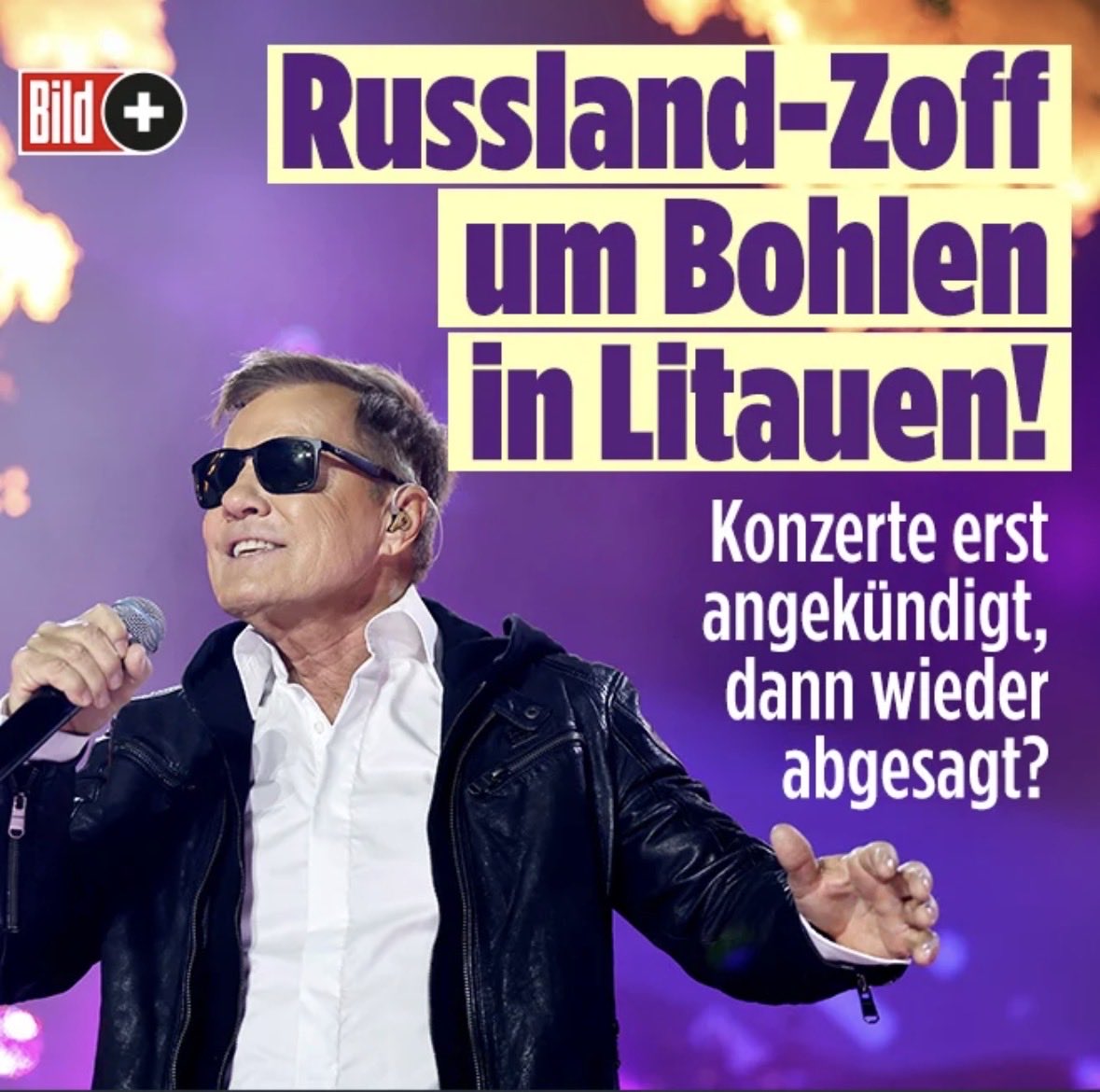
Nach heftigen Protesten sind zwei geplante Konzerte von Dieter Bohlen (72) in Litauen kurzfristig abgesagt worden. Wie der litauische Rundfunksender LRT berichtet, wurden beide Auftritte in dem Land gestrichen – nur einen Tag, nachdem sie überhaupt erst angekündigt worden waren.
https://t.co/01wTectIqj
🌍Top 10 countries in the world by unicorns per capita:
🥇 Estonia – 6.5
🥈 Israel – 3.4
🥉 Singapore – 3.0
4️⃣ Sweden – 2.6
5️⃣ Luxembourg – 2.0
6️⃣ Ireland – 1.9
7️⃣ Switzerland – 1.8
8️⃣ United Kingdom – 1.6
9️⃣ United States – 1.5
🔟 Netherlands – 1.2
@AlexanderDinger@corajamine@cturzer@welt Danke dafuer! Frage die die meisten in Litauen stellen- warum wird nicht in Szenario dargestellt, dass die litauischen Streitkraefte von ersten Minute (auch ohne Partner) sich verteidigen?
While Zelenskyy was receiving standing ovations in Davos, people in Ukraine were freezing in their own apartments.
This is the reality right now: millions of Ukrainians are facing -30°C without electricity, water, or heating.
We don’t need applause. We need generators, fuel, and food. WE ARE AT THE LIMIT.
The only signal we should be sending today is SOS.
Save our people.
35 years ago, Soviet tanks stormed the Vilnius TV Tower.
The lessons for today:
- the will for freedom can defeat tanks;
- Russian empire can be defeated.
- Russian empire is fighting same war in Ukraine;
- The Russian Federation remains a prison for many nations.
“Eventually, we accepted that, in the end, we might only be withdrawn when the war ends because there was no one to replace us.”
…
“Earlier, if we engaged in combat, we could jump out and act,” he said. “Now, everything is dominated by drones. So is there any point in having people just sit in a hole?”
https://t.co/4ufNTYkbd4
What is the ultimate luxury status symbol? Once upon a time it may have been a sports car or a flashy watch.
But with soaring costs of living, perhaps the most serious flex of wealth is something once considered a natural part of life: having kids https://t.co/9dmFphM0N0
I have reviewed the article “The Bear in the Baltics: Reassessing the Russian Threat in Estonia,” published by the European Council on Foreign Relations. Its authors, Jennifer Kavanagh and Jeremy Shapiro, conclude that Russia is currently incapable of carrying out a successful armed attack against Estonia and that the level of threat is exaggerated.
This is precisely where the core problem of this analysis begins.
The entire argument is built on theoretical models, force-balance calculations, and deterrence concepts, while completely ignoring the decisive factor of modern warfare: accumulated combat experience under real battlefield conditions.
Today, only two states in the world possess actual experience in conducting high-intensity interstate war — Ukraine and Russia. All others, including Estonia and the vast majority of NATO members, rely on exercises, staff simulations, and doctrinal assumptions that have not been tested in full-scale combat.
Estonia, despite its high level of preparation, lacks practical experience in:
•conducting operations under conditions of sustained enemy artillery dominance and high fire density;
•operating forces in an environment of persistent surveillance and strike capability enabled by tactical and operational-level UAVs;
•maintaining logistics and command-and-control resilience under systematic fire strikes against rear infrastructure;
•executing defensive operations and maneuver while continuously absorbing losses, degradation of units, and uninterrupted fire pressure;
•adapting tactics, force organization, and command systems in real time, rather than after a completed training cycle.
This is not a criticism of the Estonian Defence Forces. It is a statement of fact: combat experience cannot be substituted by doctrines, exercises, or alliance membership.
A separate and particularly dangerous error in the article is the emphasis on Russia’s “exhaustion” through personnel losses.
Russia is structurally insensitive to human losses as a constraint on warfare. Its military-political system is historically designed to:
•sustain mass mobilization;
•accept extremely high casualties as permissible;
•substitute quality with quantity through forced rotation and replacement.
Those who treat manpower losses as a decisive deterrent factor for Russia project Western assumptions onto an adversary to whom they do not apply — and this is precisely how wars are lost.
The greatest damage done by this article is that it fosters a false sense of strategic confidence. It reassures decision-makers that Russia is “not ready,” “not capable,” or “will not dare.” This same logic underpinned strategic failures in both 2014 and 2022.
The most dangerous assumption made by the authors is that war is the outcome of a rational cost-benefit calculation. In reality, Russia wages war according to a logic of political inevitability, imperial revisionism, and a willingness to accept virtually any cost.
Russia will attack — this is not a question of capability, but of timing and conditions.
And the longer European decision-making centers rely on such reassuring, detached analyses, the more severe the shock will be when reality disproves them.