Helping Nigerians embrace smarter living through Home Automation, IoT & Smart Technologies. Embedded Systems Engineer | Tech Educator | Building practical solut
Start with what matters most and grow from there
If you were given a smart home budget today, which area would you invest in first:
• Security
• Lighting
• Energy Management or
• Convenience?
"I Want a Smart Home, But I Don't Have Millions."
You don't need millions.
One of the biggest misconceptions about smart homes in Nigeria is that they're only for luxury properties.
The truth is that many homeowners begin with a few carefully selected upgrades....
#SmartHome
A well-planned starter setup can deliver immediate benefits while creating a foundation for future expansion.
Think of your smart home the same way you think about building a house.
You don't have to complete everything on day one.
For example:
• Smart outdoor lighting
• Video doorbells
• Smart plugs
• Wi-Fi-enabled switches
• Motion sensors
The secret isn't spending more money, the secret is spending wisely.
✅ Better management of short-let properties
But remember:
A smart lock should complement good security practices—not replace them.
Choose reliable brands and ensure professional installation.
Would you trust a smart lock on your front door?
Why or why not?
Product Spotlight: Smart Locks
Smart locks are among the most requested smart home devices today.
Benefits include:
✅ Remote access control
✅ Temporary guest access
✅ Access logs and notifications
✅ No need to hide spare keys
#IoT#SmartHome#BuildSmart
Not every smart home needs every smart device.
One of the biggest mistakes homeowners make is trying to automate everything at once.
The best smart homes are designed around lifestyle and needs.
For example:
• A family may prioritize security...
#IoT#smartHome
• A busy professional may value remote access.
• A short-let apartment owner may focus on smart locks.
• An elderly homeowner may need voice control and automation.
The goal isn't to have more gadgets.
The goal is to create a home that works better for you.
• Turning off standby devices when no one is home.
Small savings made every day can add up over time, with the cost of electricity every watt is precious.
Smart homes encourage smarter energy habits.
Comment "watt" to get an ebook on practical tips to cut down energy waste.
Can a smart home actually reduce electricity bills?
Yes—but not by magic.
Smart homes help reduce waste.
Examples include:
• Automatically switching off forgotten lights.
• Scheduling water heaters.
• Monitoring high-energy appliances...
#SmartHome#IoT#TechLifestyle
✅ Reduce unnecessary electricity usage.
✅ Monitor your home while travelling.
✅ Improve convenience for elderly family members.
✅ Increase your property's appeal and value.
Technology should make life easier—not more complicated.
Which of these benefits matters most to you?
Why are more homeowners beginning to consider smart home technology?
Home automation isn't about showing off technology.
It's about solving everyday problems.
Smart homes can help you:
✅ Know who's at your gate even when you're away.....
#IoT#smartHome#TechTrends
You don't have to automate everything at once.
The smartest homes often start with just one problem worth solving.
What part of your home would you love to control from your phone? Tell us below.
🏡 Smart Homes aren't just for luxury mansions anymore.
When many Nigerians hear Smart Home, they imagine an expensive house filled with futuristic gadgets.
The reality is much simpler.
#smartcity#smarthome#Iot
A smart home is any home where devices can help improve convenience, security, comfort or energy efficiency.
It could be as simple as:
• Turning your lights off remotely.
• Receiving a notification when someone rings your doorbell.
• Automatically turning on outdoor lights
Technology is a tool for development, AI inclusive, but if companies get carried away with trends, and the race to catch up, without clear systems and blueprints on how to integrate technology to the existing systems, all it would provide are buzz words and screen acts.
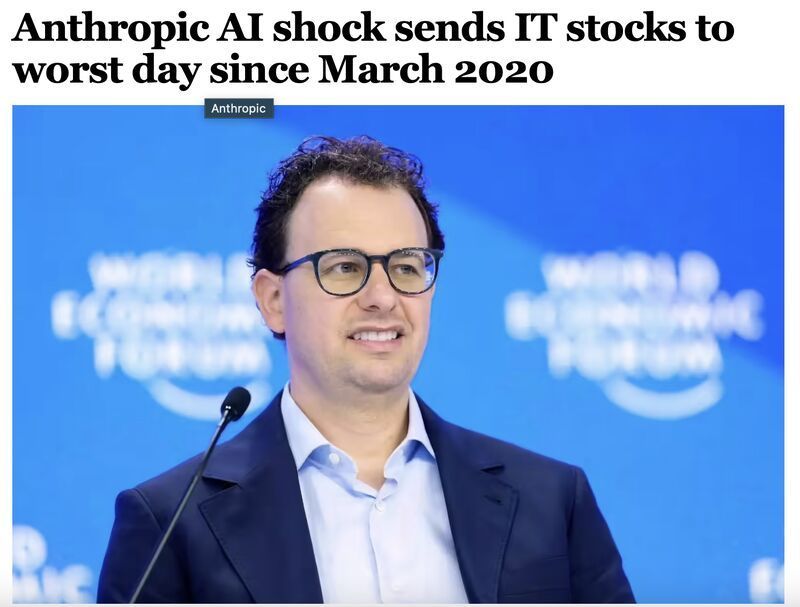
I'm pretty sure everyone at my company saw this article and now they all think we're in an AI crisis.
We're not in an AI crisis. We use Claude to summarize Slack threads.
But here's what's actually interesting: this whole panic reveals something nobody wants to admit.
Every company in America has been bullshitting about their "AI strategy" for two years.
We all saw the hype. We all knew we had to say something. So we rebranded our existing automation as "AI-powered" and called it a day.
My company isn't special. We're all doing the same thing.
The problem is now the executives actually believe their own bullshit. They think we have "significant AI exposure" because they've been telling investors we're "AI-first."
I just got pulled into an emergency meeting. Six executives asking me to explain our "AI dependency matrix."
There is no AI dependency matrix.
There's Claude for meeting summaries, there's some sentiment analysis in our support tickets that came free with Zendesk, and there's whatever Gmail is doing when it autocompletes my sentences.
But I can't say that in a room full of people who told their boards we're "transforming the business through AI."
So I said we have "distributed AI touchpoints across multiple vendors with no single point of failure."
Which is technically true. We use a bunch of different services that all have AI features we mostly ignore.
The CFO asked if we should "hedge our AI exposure."
I have no idea what that means. Neither does he.
What am I going to do: nothing. Because in three weeks, Anthropic will say something reassuring, the stocks will recover, and everyone will forget this happened.
But I'll have documentation showing I recommended a "risk assessment" that mysteriously never got prioritized.
The funniest part is that half these executives probably don't even know what Anthropic is. They just saw "AI" and "crash" in the same headline.
We're all pretending. The whole industry is pretending.
And articles like this just remind everyone how fragile the pretending is.