If you are a US enterprise are you going to pay tens of millions of dollars to Anthropic and Open AI and give them all of your business data to train their models on or are you going to download an open source Chinese model, host it yourself, fine tune it to your specific needs, and host it on your own hardware for far cheaper? The answer is obvious. Now you understand why they are begging for regulation and trying to give equity to the US govt.
My thoughts on how a secular political movement navigates the religious challenges in the American far right.
🔻If you want to avoid arguments on religion, make a clear statement on decorum, which was what Positive Christianity essentially meant.
🔻Hitler's solution was a perfect solution.
🔻A lot of people are waking up to being Nationalist and Christian. Eventually we will drown them out.
🔻If you're a Christian on the other side, you should swallow your pride and want their success. God can work though any man: See Constantine.
🔻The Conservative and judeo "Christian" attacks are failing, so they call out the online pagans. They attack on a spectrum.
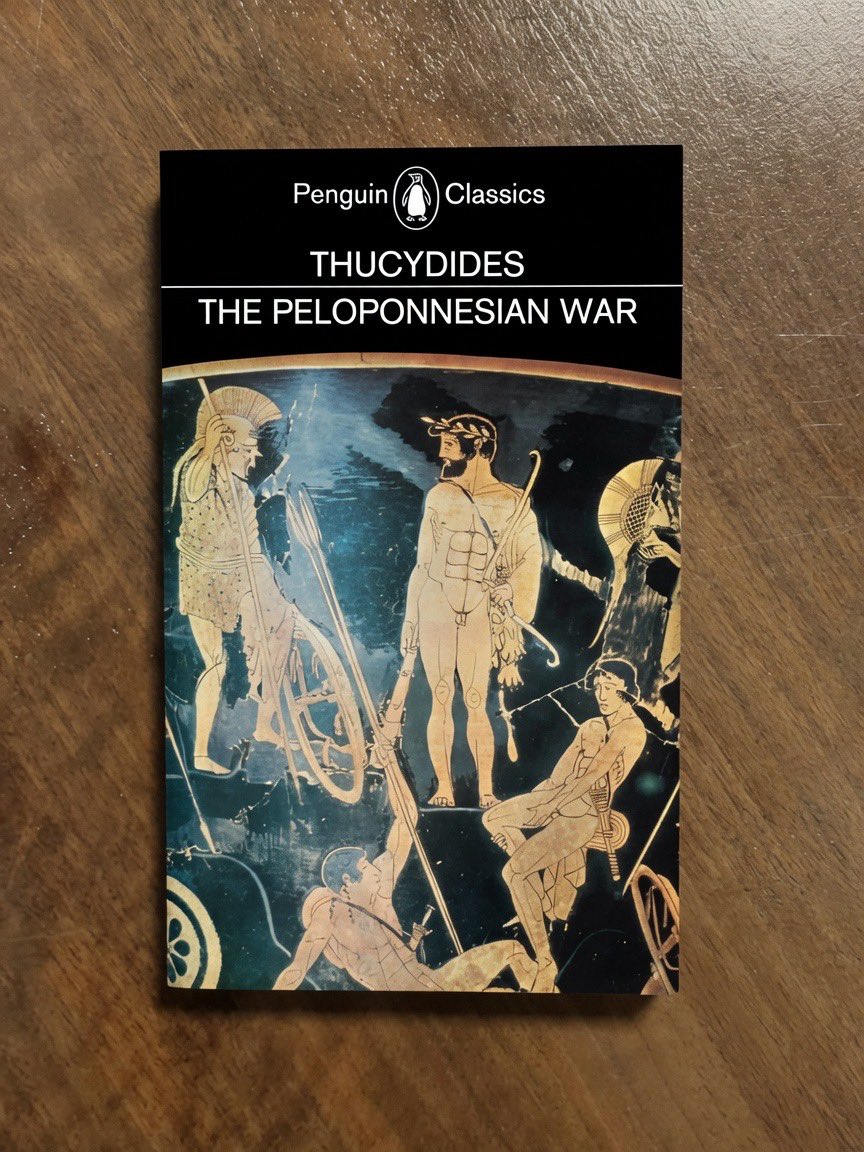
The Peloponnesian War is a good reminder that we have always found reasons to slaughter each other, often over very little to almost seemingly nothing.
Little has changed in 2,500 years.
The spark that helped ignite the great conflict between Athens and Sparta began far to the northwest, in the fractious colony of Epidamnus (modern Durrës, Albania). Internal strife had torn the city apart. The democratic faction, besieged by exiled oligarchs allied with local Illyrian tribes, first appealed to Corcyra (modern Corfu), their mother city, for help.
Corcyra refused.
Desperate, Epidamnus turned to Corinth, the original founder of both colonies and a bitter rival of Corcyra. Corinth leaped at the chance: not only did they send troops and new settlers, but they saw an opportunity to reassert influence over a wayward daughter city.
Corcyra, furious at this interference in what they considered their colony, blockaded Epidamnus and crushed the Corinthian fleet at the Battle of Leucimme. Corinth, humiliated and enraged, began rebuilding its navy for revenge.
Then Corcyra—previously neutral—went running to Athens.
Athens, at the height of its power and locked in an uneasy ‘Thirty Years’ Peace’ with Sparta, faced a dilemma.
Corcyra possessed one of the largest navies in Greece. If Corinth (a key Spartan ally) absorbed it, the naval balance would tilt dangerously against Athens. So Athens offered a defensive alliance and sent a small squadron of ships.
What followed was the massive naval clash at Sybota, one of the largest sea battles in Greek history up to that point. Athens’ involvement, however limited, was seen by Corinth as a direct violation of the peace.
Tensions exploded further with the revolt of Potidaea and Athens’ economic sanctions against Megara. Sparta’s allies demanded action.
The “truest cause,” as Thucydides famously observed, was the growing power of Athens and the fear it inspired in Sparta.
The lesson here, is that great powers rarely fight directly at first. Instead, they get pulled into the quarrels of smaller allies and clients, quarrels that are almost always framed as matters of honor, ancient rights, or “protecting our people.”
A local civil war in an obscure Adriatic colony became the pretext for a generation long war that devastated the Greek world.
Thucydides wrote not just to record events, but to reveal human nature under pressure: fear, honor, interest, and the recurring folly of escalation.
Reading him feels disturbingly modern.
A cycle that repeats itself all throughout history.
@RealDonMarshall It speaks volumes for PF when they have the neopagan-larpers and heretic "Christian" judaizers whining. I get to piss off TWO modern heresies by helping White communities?