9/Here's a manifesto exploring these ideas—feedback loops, Eroom's Law, AI-guided optimization, and what it means for the future of biotech.
If this resonates, I'd love to hear from you.
Personalized medicine (in nof1 world especially) is reinventing which IP is actually valuable.
The asset itself doesn’t really have a value prop like it would in off the shelf drugs
The thing that matters is the process and ability to run the pipeline fast & cost effectively
Flagship Pioneering has launched a new Substack: The Labs Report.
Early scientific progress. Original data. Technical breakthroughs. Perspectives from the teams transforming health, sustainability, and more.
Subscribe for a behind-the-scenes look at pioneering science as it unfolds: https://t.co/OmSbobImJa
Daraxonrasib quite rightly stole the show at ASCO, but there were lots of data on innovative approaches in pancreatic cancer
To highlight some others
First, this combination therapy: a PD1/CTLA4 bispecific + multikinase inhibitor + chemotherapy (4 complete responses, 76% objective response rate)
We’re building a new paradigm for autonomous tissue manufacturing and high-fidelity biological data generation.
It’s an incredibly relevant and challenging problem and we are expanding our team in NYC across stem cell bio, hardware eng, and AI research to solve it. if interested or know someone who could be, DM me!
We are hiring aggressively (across AI research/eng, automation, and wet lab) for top talent that’s passionate about engineering human tissue and producing the best training data for bio AI models - if that's you, DMs open or send me an email ([email protected])
[7/7] Perhaps understanding can be harder than solving. Nesterov’s AGD was discovered decades ago, yet interpretations came much later. @weijie444
Or perhaps understanding is something only humans need. Machines do not understand mathematics; they are just freakishly good at it.
[7/7] Perhaps understanding can be harder than solving. Nesterov’s AGD was discovered decades ago, yet interpretations came much later. @weijie444
Or perhaps understanding is something only humans need. Machines do not understand mathematics; they are just freakishly good at it.
Congrats to my former colleagues at Moderna! Hard to overstate the computational, logistic, manufacturing, and regulatory hurdles to get here
Expanded Access when?
Today we announced detailed results from a planned five-year follow-up analysis of the Phase 2b randomized KEYNOTE-942/mRNA-4157-P201 study evaluating intismeran autogene (mRNA-4157 or V940), an investigational mRNA-based individualized neoantigen therapy, in combination with KEYTRUDA® (pembrolizumab), @Merck's anti-PD-1 therapy, in patients with high-risk melanoma (stage III/IV) following complete resection.
These data will be presented today at the 2026 American Society of Clinical Oncology (@ASCO) Annual Meeting (May 29-June 2) and published simultaneously in ASCO’s Journal of Clinical Oncology.
Read more: https://t.co/y2kP02lSG0
Today we announced detailed results from a planned five-year follow-up analysis of the Phase 2b randomized KEYNOTE-942/mRNA-4157-P201 study evaluating intismeran autogene (mRNA-4157 or V940), an investigational mRNA-based individualized neoantigen therapy, in combination with KEYTRUDA® (pembrolizumab), @Merck's anti-PD-1 therapy, in patients with high-risk melanoma (stage III/IV) following complete resection.
These data will be presented today at the 2026 American Society of Clinical Oncology (@ASCO) Annual Meeting (May 29-June 2) and published simultaneously in ASCO’s Journal of Clinical Oncology.
Read more: https://t.co/y2kP02lSG0
I'm not very bullish on AI for novel drug discovery, but I am bullish on AI for drug optimization
There are plenty of slight tweaks that can be made to improve delivery, reduce rates and severity of side effects, etc. for tons of commonly used drugs
I've been shown good results
Great deep dive on isothermal PCR. One massive advantage not mentioned is that it would be super automation-friendly. Standard thermocyclers are a pain to integrate both digitally and physically
https://t.co/v0dhOVh6Pg
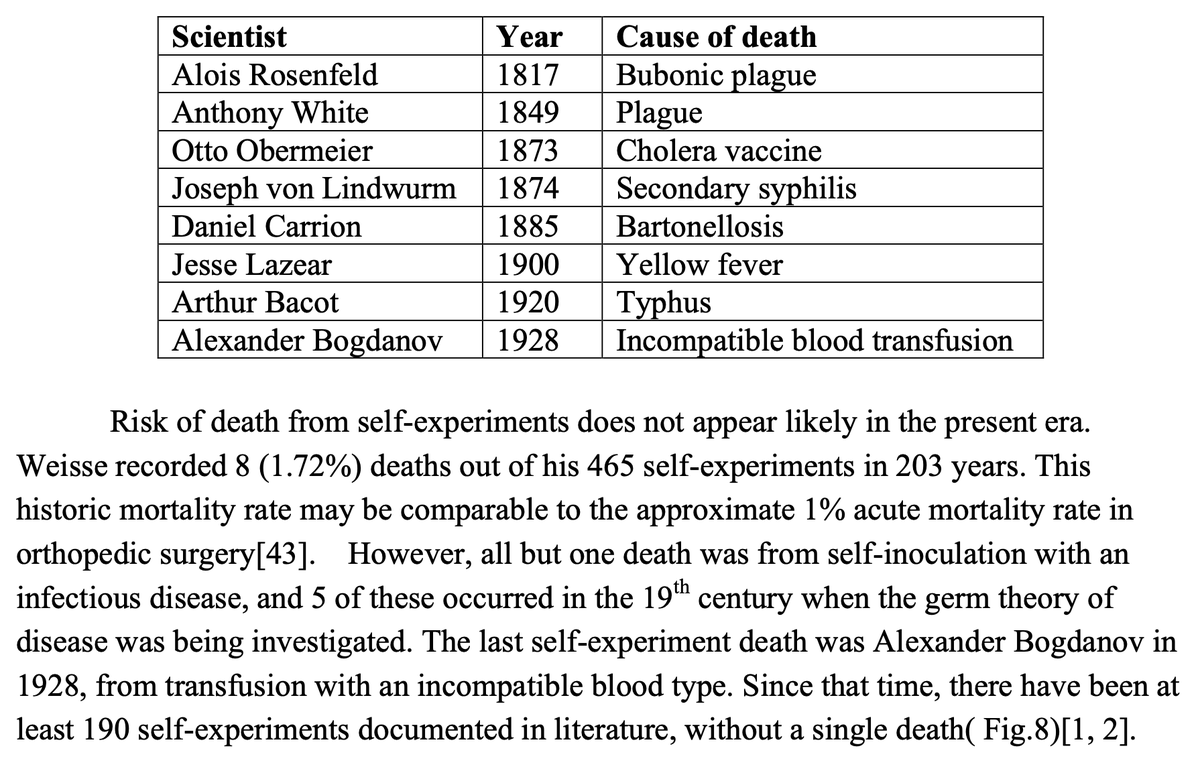
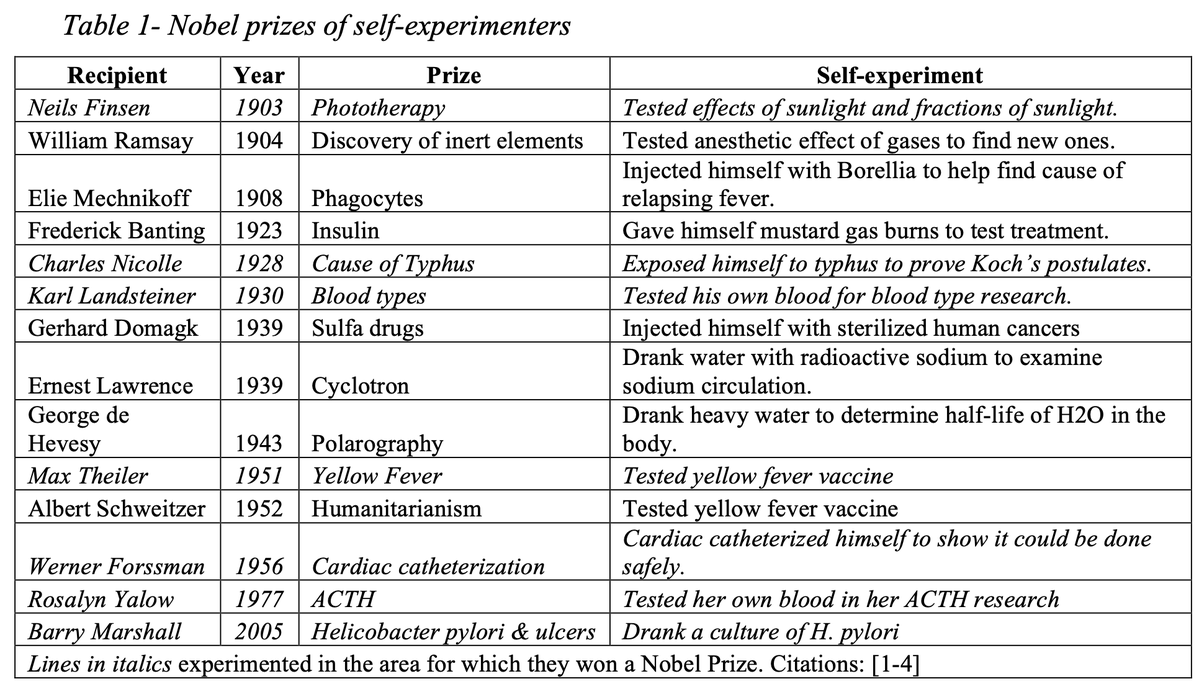
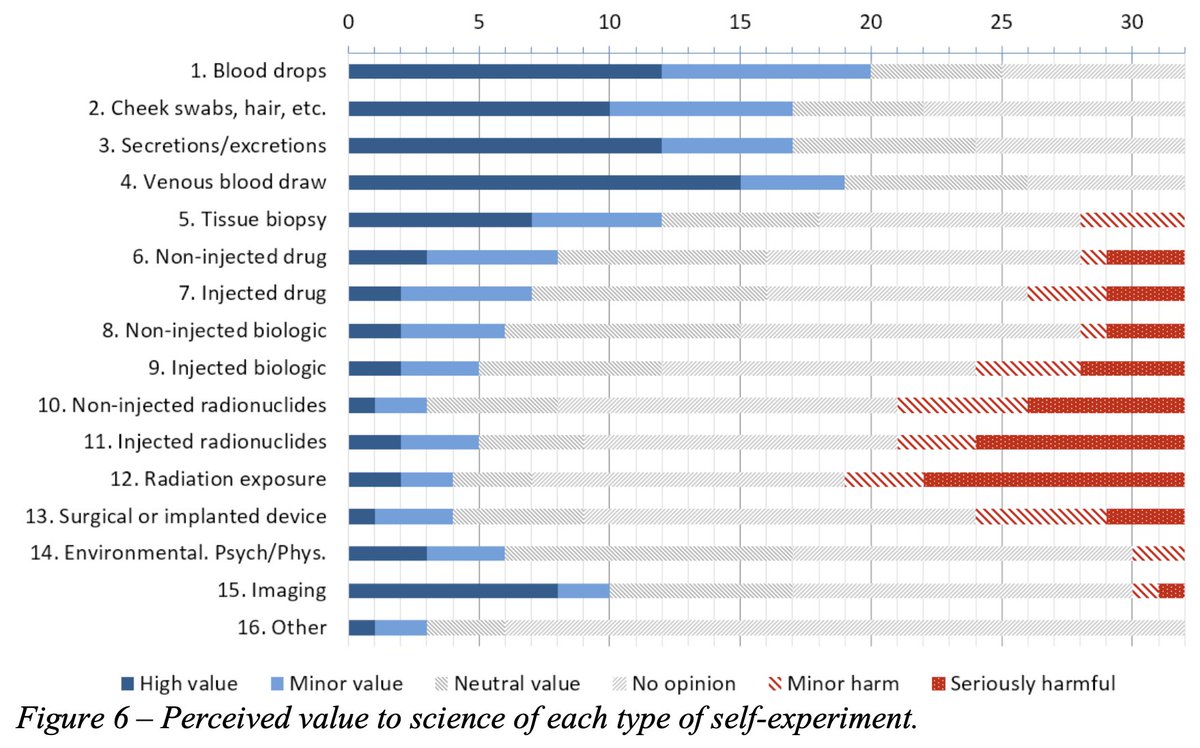
This paper is a goldmine on scientific self-experimentation.
-14 Nobel Prizes have gone to self-experimenters.
- Of 465 scientific self-experiments documented over a 203-year period, there have been 8 deaths.
- The most recent recorded death from a self-experiment was in 1928, when Alexander Bogdanov injected himself with an incompatible blood type.
- Many universities say that self-experimentation would require IRB approval because it violates "ethical norms for medical research," which is not true; the Nuremberg Principles make an explicit exception for people experimenting on themselves, and the Declaration of Helsinki just says the subject must consent. Also, "there is no law nor regulation identified that requires investigators experimenting on themselves to consult an ethics committee."
- There are lots of recent self-experiments; "In 2014, Philip Kennedy had electrodes implanted into his speech center to further his research on direct brain interfaces. In 2016, Alex Zhavoronkov self tested drugs which his software algorithms identified as likely candidates."
This paper is a goldmine on scientific self-experimentation.
-14 Nobel Prizes have gone to self-experimenters.
- Of 465 scientific self-experiments documented over a 203-year period, there have been 8 deaths.
- The most recent recorded death from a self-experiment was in 1928, when Alexander Bogdanov injected himself with an incompatible blood type.
- Many universities say that self-experimentation would require IRB approval because it violates "ethical norms for medical research," which is not true; the Nuremberg Principles make an explicit exception for people experimenting on themselves, and the Declaration of Helsinki just says the subject must consent. Also, "there is no law nor regulation identified that requires investigators experimenting on themselves to consult an ethics committee."
- There are lots of recent self-experiments; "In 2014, Philip Kennedy had electrodes implanted into his speech center to further his research on direct brain interfaces. In 2016, Alex Zhavoronkov self tested drugs which his software algorithms identified as likely candidates."
I've had a watch and ring for a while but CGM feels like a much bigger step into the world of biohacking. Time to do some science on myself, will report back