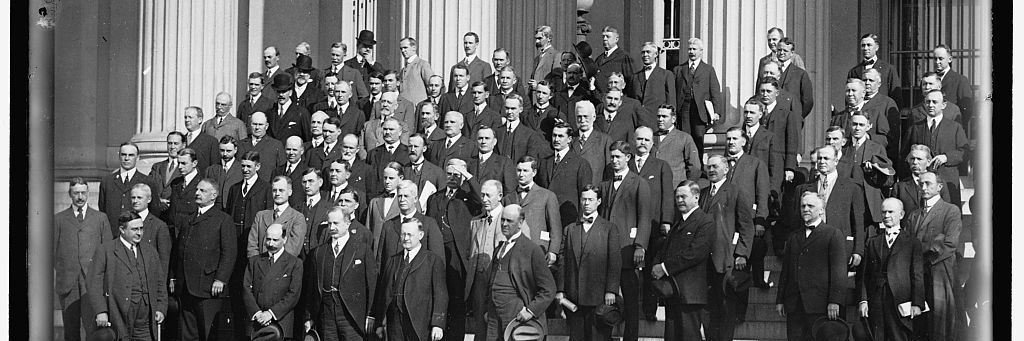
“The Americans of the Revolution planted financial corporations, private money, and financial exemptions from public burdens. In a word, they planted another revolution.”
— Alexander Del Mar
Quite a statement to make. 👇
The Americans of the Revolution had before them not merely the chimerical Utopias which were dreamed of during the Halcyon Age of Europe, they had the historical examples of Greece and Rome. In all of these states, the main contention from first to last between the aristocratic and popular factions, arose out of and centered in the monetary system; that greatest of all dispensers of equity or inequity.
In America there were no such difficulties in the way as those which had beset the great republics of antiquity, no dissonance of races, language or history; no conflicting religions; no constriction of territory; no fear of neighboring interference. The Colonists had practically an entire continent to themselves. They had only to take care that the seed they planted was genuine and uncontaminated. Nature was certain to do the rest.
Well, they planted; and now look at the fruit and see what it is that they planted! They planted financial corporations, a rotten seed that Rome had trampled under foot nearly two thousand years before; they planted private money, in which successively both Greece and Rome had found the germs of social decay; and they planted financial exemptions from public burdens, whose offspring has already become a tree so mighty that it casts a threatening shadow over the land. In a word they planted another revolution.
Del Mar, Alexander. The History of Money in America: From the Earliest Times to the Establishment of the Constitution. New York: Cambridge Encyclopedia Co., 1899.
The United States was on a bimetallic standard, with some interruptions, until 1900, when it officially adopted the gold standard.
In any case...
Nothing can be more conclusive of the incorrectness of the opinion that gold is always the standard of value.
—Comptroller’s Report, 1863
@USronaldcarter If the argument is that precious metals aren't rising in value but rather that the currency is weakening, it stands to reason that the currency is now strengthening, right?
@Actionjaxx5150@BrianKuszmar Anyone interested in buying precious metals should buy gold, not silver. Silver premiums are usually much higher than those of gold, and its resale value relative to the purchase price is significantly lower.
The monetary systems and conditions of these two eras are diametrically different. This is not a fair comparison.
The political, economic, and monetary history of the United States between 1850 and 1930 cannot be treated as a homogeneous period, given the profound institutional and structural transformations that took place during those eight decades.
@NewLowObserver What China has done 1973-now is what USA did 1850-1930
Trade breakdown back then drove deflation in creditor USA and currency weakness and inflation in indebted Europe
Same thing happening now with creditor China and debtor west
@NewLowObserver The political, economic, and monetary history of the United States between 1850 and 1930 cannot be treated as a homogeneous period, given the profound institutional and structural transformations that took place during those eight decades.
No sir, I haven't moved the goalpost. You have stated that the value of gold remains constant and that "it's shocking that everybody thinks of the value of immutable metal in terms of a falling and volatile currency." I respectfully challenge these views.
My question has remained the same throughout our discussion: if value is a relationship between commodities, how do you establish that gold's value remains constant while everything else's fluctuates? Isn't selecting gold as the constant arbitrary? Why not silver, fiat currency, or any other unit of account, for that matter?
This question remains unanswered.
This is not an argument against gold, which constitutes an important part of my portfolio.
I think this chart speaks for itself.
"Verily I say unto you, Except ye be converted, and become as little children, ye shall not enter into the kingdom of heaven." (Matthew 18:3)
"Neither shall they say, Lo here! or, lo there! for, behold, the kingdom of God is within you." (Luke 17:21)
Beautiful article.
In 1759 a 75 year old poet wrote a letter with one question in it that still holds:
"Born Originals, how comes it to pass that we die Copies?"
Give a 5 year old a box of crayons and the sky comes out purple. Hand business school graduates spaghetti and a marshmallow, and kindergarten kids build the taller tower.
Nobody takes our originality from us. We give it up, because doing what everyone else does comes with an alibi.
Now we have built the greatest imitator in history, AI. A competent copy costs almost nothing. Which makes Young's question more relevant than ever. The machine has borrowed all the knowledge there is.
What it cannot borrow is the child with the purple sky.👇👇👇
Born Originals
On crayons, courage, a letter from 1759, and a genius who does not go quiet.
https://t.co/CPCjCzPEzj
#Creativity #Genius #Children #Education #AI #ArtificialInteligence #ThinkDifferent
@goldbugger@LukeGromen@NewLowObserver Being a creditor nation does not inherently produce deflation, any more than being a debtor nation inherently produces inflation.