The analysis and conclusions set forth are those of the authors and do not indicate concurrence by other members of the research staff or the Board of Governors
Large incumbent service firms built the US service economy by opening new establishments. In a two-sector firm-dynamics model, cheaper replication costs + rising manufacturing productivity explain over 50% of US structural transformation. https://t.co/Ufu6iNfs8A #IFDPPaper
Effects are larger in low-income countries, for products where the U.S. was a key destination for Chinese exports, and in countries geopolitically closer to China. (2/2) https://t.co/Z8Qqtwj0QL #IFDPPaper
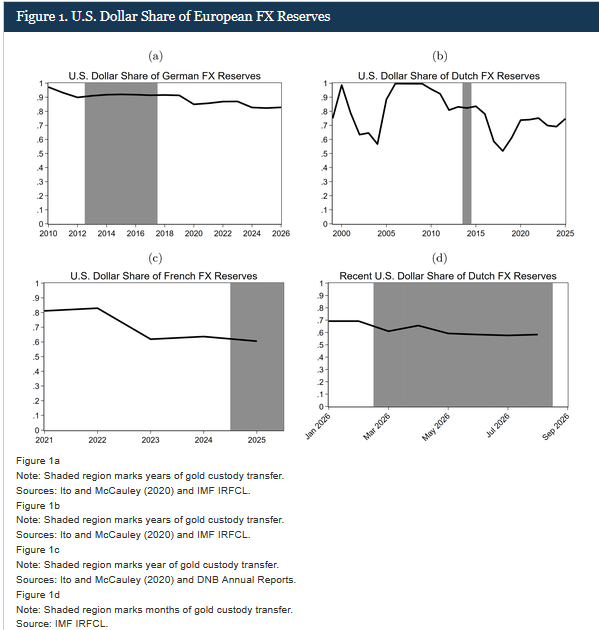
What happened to the US dollar share of Euro Area central banks' FX reserves when they moved gold reserves out of the US? A new #FEDSNote investigates. https://t.co/lHagPzocUu
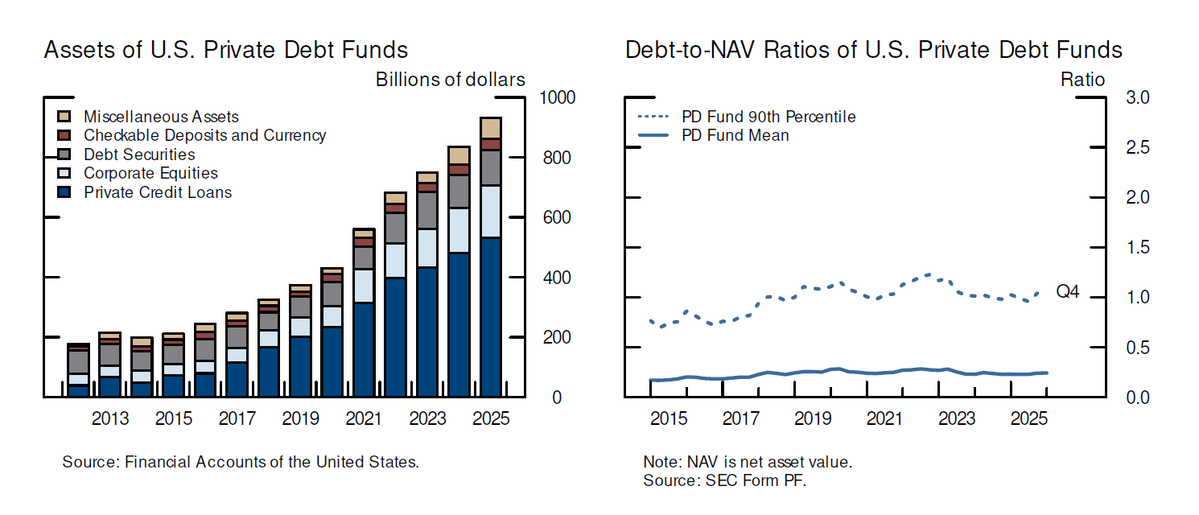
U.S. PD funds held about $530 billion of private credit loans in 2025Q4. Leverage (debt-to-NAV) at U.S. PD funds is low on average and relatively stable, at around 0.25. Funds at the 90th percentile have leverage ratios that are typically near 1. (2/2)
Following our first note, “Introducing Private Credit into the U.S. Financial Accounts,” this new #FEDSNote details the methodology and how leverage and portfolio concentration differ across vehicles, reflecting distinct institutional structures. (1/2) https://t.co/WQpcDzV8Q0
This #FEDSPaper constructs novel monthly county-level consumption measures from credit card spending data and shows how they enable analyses that are infeasible with traditional consumption data. https://t.co/IvIWH2Lyxa #EconTwitter
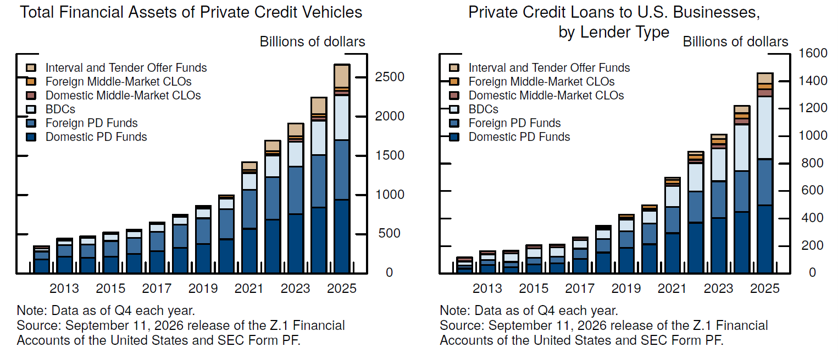
The September 2026 release of the Financial Accounts of the U.S. now integrates private credit. The charts show $2.6 trillion in assets across private credit vehicles & $1.5 trillion in loans to U.S. businesses. For more details: https://t.co/FKH37A8mvI
https://t.co/ZO4XK2AHS3
ICYMI New #FEDSNote: Convenience Yields, Risk Premiums, and the Interpretation of Oil Futures Prices During Times of Geopolitical Conflict: https://t.co/7VbTPjxncx