Kemi, congratulations on leading a major British party as a Black Woman. It takes real talent to rise to where you are and deceit is what it takes to rise as a Black leader in a western Conservative Party.
It is a pity the climb did not leave room for a history book and since you chose to argue in the language of history, let us do the history. Let’s dissect your verbal diarrhea point by point.
Everyone participated." Slavery existed on every continent. So did war, and nobody calls a village feud the World War. The transatlantic trade ran for 366 years (1501 to 1866) and put about 12.5 million Africans on ships, of whom about 1.8 million died before they saw the Americas, according to the Trans-Atlantic Slave Trade Database. It ran through joint-stock companies, chartered monopolies, Lloyd's underwriters and acts of Parliament. It was hereditary, because the law made the child of an enslaved mother property from birth. It was racial, because a whole continent was defined as chattel. No other system in history combined those features at that scale. Dissolving all of it into "people from every continent" is far worse than intellectual dishonesty.
Britain was a market leader, not a participant. British ships carried about 3.2 million Africans, second only to Portugal and Brazil. The Treaty of Utrecht (1713) gave Britain the asiento, a thirty-year monopoly to supply 4,800 enslaved Africans a year to Spanish America. The Royal African Company, chartered in 1672 and headed by the Duke of York, later James II, branded its captives "DY". During Edward Colston's years in its leadership it shipped about 84,000 people, and roughly 19,000 died on the way.
You say British taxpayers should not answer for what happened before they were born. They did. In 1833 Britain borrowed £20 million to compensate slaveholders, and taxpayers serviced that loan until 2015, including the descendants of the enslaved. So the principle you invoke was not applied when the cheque went to slaveholders. It only appears when the cheque changes direction.
"Navel-gazing" is a curious charge from someone whose party spends more energy on the past (Empire nostalgia, culture war crusades) than most of those you accuse. Defend Britain if you must. But do not use your Nigerian name as the permission slip for arguments Nigerians know better than anyone.
Now that I am not in banking, let me say what many bankers don’t want to talk about. They feel stuck in their banking career.
It is not true.
It actually prepares you for almost every other industry.
You can try this.
1. Retail banking
You know sales and how to handle difficult customers.
Target FMCG, telco and fintech.
Learn Power BI and CRM.
2. Corporate banking / Credit
You understand business and numbers.
You can go into a CFO’s office, private equity, consulting, chief of staff.
Add CFA and financial modelling.
3. Risk
You spot what can go wrong before it happens.
Oil & gas, tech, manufacturing, etc
FRM helps.
4. Compliance
You know regulations and KYC.
Fintechs will pay well for that.
Also data privacy and regulatory affairs.
5. Operations and Trade
You know process and settlements.
That’s operations and supply chain in logistics, e-commerce, manufacturing.
Learn PMP and SAP.
6. Treasury and FX
Few people understand liquidity and FX like you.
Every big company needs a treasurer.
Think Dangote, MTN, BUA.
ACI cert, CFA, CTP can help.
7. Internal Audit
You know controls and fraud.
You can be an auditor anywhere, or go forensic.
CIA or ACCA, ACA, CPA
8. Tech and Digital Banking
This is the biggest exit right now.
Product manager, business analyst, cybersecurity, brand, growth, comms etc
Your salary can double.
Learn Scrum, SQL, product management, Google Analytics and ads.
9. HR
Managing people in a bank is hard.
You can go into any HR.
So honestly most of these limitations are in our heads.
3 things that worked for people I know:
1. Rewrite your CV.
Don’t write your bank title.
Write what you delivered.
If you write “Relationship Manager, add “Managed 120 accounts worth N4.2bn, grew revenue by 23%”
2. Don’t chase 10 certificates.
Pick one that bridges your current job to your next job.
3. Help small businesses on the side.
Set up controls, review accounts, set up KYC, write credits, do financial analysis and so on.
Every serious company needs someone who understands money, risk and process. Many professionals don’t have this.
So package yourself well and give it a shot.
At 32 I was editing Papa Ajasco and Super Story, trying to become a director.
One night officers who had been drinking shot me through my car. I am 47 now. The hand is dead. I edit with my left hand for $10 and $20 so my children can eat. I won in court.
The police have ignored the judgment since 2015. The officer’s name is in their own report. Ayuba Philip ID 257745.
Please tag em until @TunjiDisu1 & @CspIniedu see this impunity. Thank you
https://t.co/oXBfP8Cx6I
A PERSONAL TRIBUTE
OLU JACOBS (1942 – 2026)
I first crossed paths with Oludotun Baiyewu Jacobs—fondly known to many of us as Uncle Olu Jacobs—in 1978. A small collective of Nigerian classmates at the London Film School, including Adefolu, George, Femi Aloba, and yours truly, had banded together for our final graduation project. We set out to adapt Amadu Maddy’s novel No Past, No Present, No Future into our diploma film, Trying Times. We were young, ambitious, and eager to carry home tangible proof of our training in the art and technique of cinema from that historic institution.
At the time, Olu Jacobs was a vibrant presence at the nearby Africa Centre in Covent Garden. From that very first encounter, he left an indelible mark on me: a consummate, classically trained actor with a commanding presence, yet generous enough to lead our student production without asking for a fee—his only condition being that we provide him a meal across our three-day shoot. Thanks to his compelling performance, Trying Times earned a coveted spot in the Governors’ Screening, affirming that we were truly on the right path.
One of the most treasured milestones of my career arrived years later through M-Net’s New Directions initiative, an innovative scheme designed to stimulate African storytelling that ultimately helped lay the foundation for contemporary African cinema. I was privileged to serve as director of photography on Twins of the Rainforest, framing Uncle Olu alongside his equally gifted wife, Joke Silva. Their on-screen chemistry as husband and wife was electrifying. The camera never forgets; it remains an unforgettable blessing in my life that I had the opportunity to capture that rare intensity on 16mm celluloid film. The imagery from behind that viewfinder remains etched permanently in my memory. I will forever remember his warm, reassuring smile, that booming baritone voice, and his unwavering instinct to uplift everyone around him, cast and crew alike.
It took extraordinary courage and vision for Uncle Olu to walk away from a flourishing career abroad. He had already established an enviable reputation across British stage, television, and international cinema—working on productions like Pirates under Roman Polanski—yet he chose to return home. At a time when shooting on analogue video seemed absurd to conventional filmmakers, he embraced the nascent Nollywood movement. He weathered every infrastructural limitation, pouring his immense craft and discipline into laying the bedrock of an industry that would command global attention.
They simply do not make them like him anymore. A proud son of the rock, hailing from the rolling hills of Egbaland in Abeokuta, Uncle Olu was honored as a Member of the Order of the Federal Republic (MFR) alongside countless lifetime achievement awards. Yet accolades alone cannot capture the magnitude of his legacy: Oludotun Baiyewu Jacobs stands unequivocally as a founding patriarch of modern Nigerian screen performance.
Thank you, Uncle Olu, for gracing my lens in Trying Times and Twins of the Rainforest, and for showing us what it truly means to serve the craft.
Sun re o. Goodnight, Uncle.
Tunde Kelani (TK)
The yummy white mustache
I have a bet that I am almost certain I would win: the majority of Lagosians have never tasted fresh cow milk. That thought was one of the starting points when we began working on the dairy project in Lagos. We wanted to change a reality that most of us had never really questioned: that in a city where milk is consumed every day, access to fresh milk is almost non-existent.
Most of us grew up on powdered milk, evaporated milk and condensed milk, and that was perfectly normal. You opened a tin, tore a sachet, added water where required, and got on with your milk-required meal – cereal, pap, oats porridge etc. Fresh milk belonged more to foreign films and advertisements, usually accompanied by that unmistakable white mustache left behind after a good gulp. Our objective from the beginning was to see whether we could change that.
Our experience is not necessarily the African experience either. In Kenya, for instance, fresh liquid milk has long been part of everyday food culture, so the idea that fresh milk should feel unfamiliar in a major African city like Lagos is unpalatable.
At Badagry, dairy being run by Origin farms is currently working towards producing about 1,500 litres of fresh milk every week from the Ayrshire cows. The milk is processed and bottled with trials being done, moving samples under cold-chain conditions to Lagos Island and Ikeja, and delivering them to select stakeholders for feedback.
It is one thing to produce milk on a farm and another to get it into a refrigerator several kilometres away in the same condition in which it left the dairy. The milk has to be processed and bottled, tested in a lab, kept at the right temperature and moved from Badagry into the city, and this is being done now on a relatively small scale before moving into the much larger operation planned for Epe.
The Lagos dairy farm and cattle feedlot in Epe sits on 250 hectares and is where the commercial scale of the dairy programme will eventually take place, with the land and infrastructure for the cattle, feed production and the wider livestock operation. Badagry and Epe therefore have different roles within the same plan: Badagry allows private sector to produce, test and understand the market now, while Epe is being developed for the volumes that a commercial operation will require.
The market is also an interesting one because we are not introducing Lagosians to milk; we are only giving access to a different form of something they have consumed all their lives. Fresh milk tastes different, has to remain refrigerated and has a much shorter shelf life than the milk most of us grew up with. This is part of why we are sending out samples now. We want people to taste it and tell us what they think before it gets anywhere near a supermarket shelf.
We have some distance to go before locally produced fresh milk becomes a regular sight in refrigerators across Lagos, but that is exactly the narrative we set out to change: that fresh milk is something Lagosians consume elsewhere, see in films or associate with other markets, rather than something that can be produced here and become part of everyday life here.
On a lighter note, I can’t wait to have a white mustache everyday.
The Jakande Interchange along the Lagos–Calabar Coastal Highway has now advanced to the decking stage, marking one of the final major phases before the structure is ready to start receiving traffic.
A whole lot has been achieved on this project
Expect more detailed updates soon.
This is why the Redeemed Christian Church of God is trending:
1. Donated three complete sets of dialysis machines to the University of Benin Teaching Hospital (UBTH).
2. Dnated $265,854 to support the evacuation of distressed Nigerians from South Africa.
3. Through the Redeemer’s Health Village, RCCG has invested $4M in its robotic surgery programme.
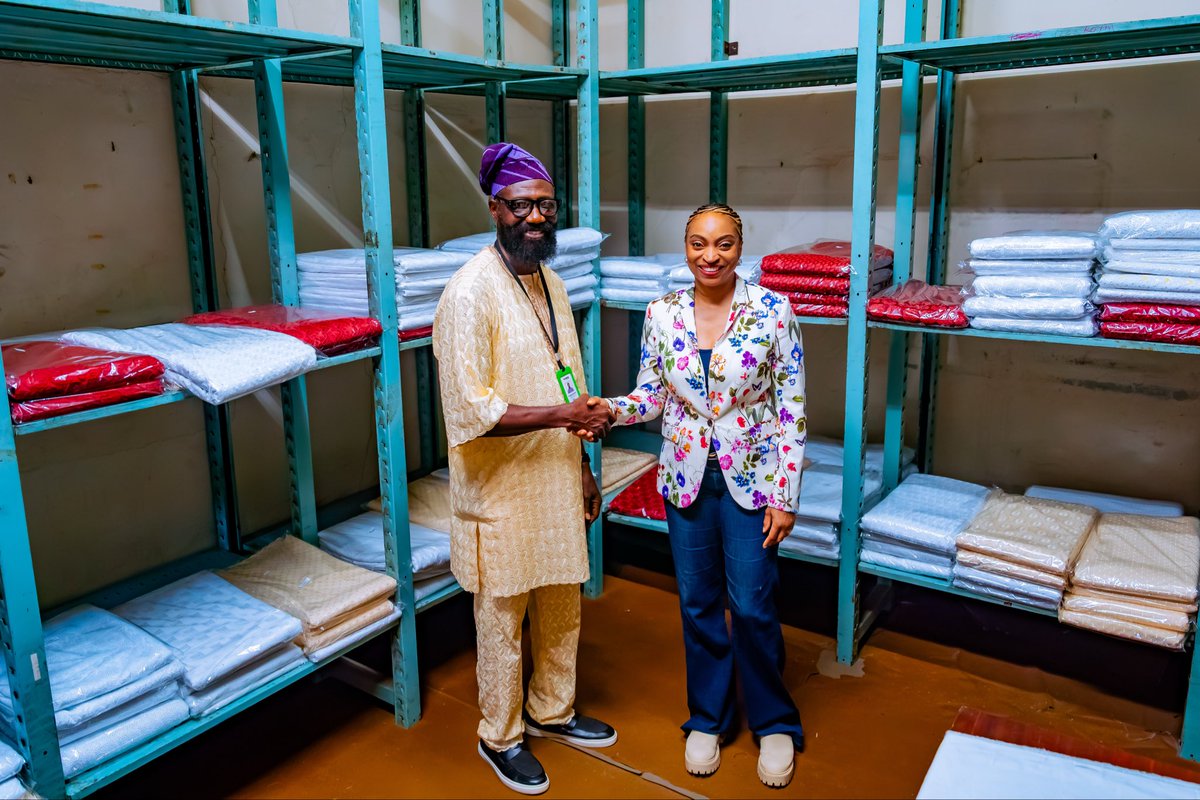
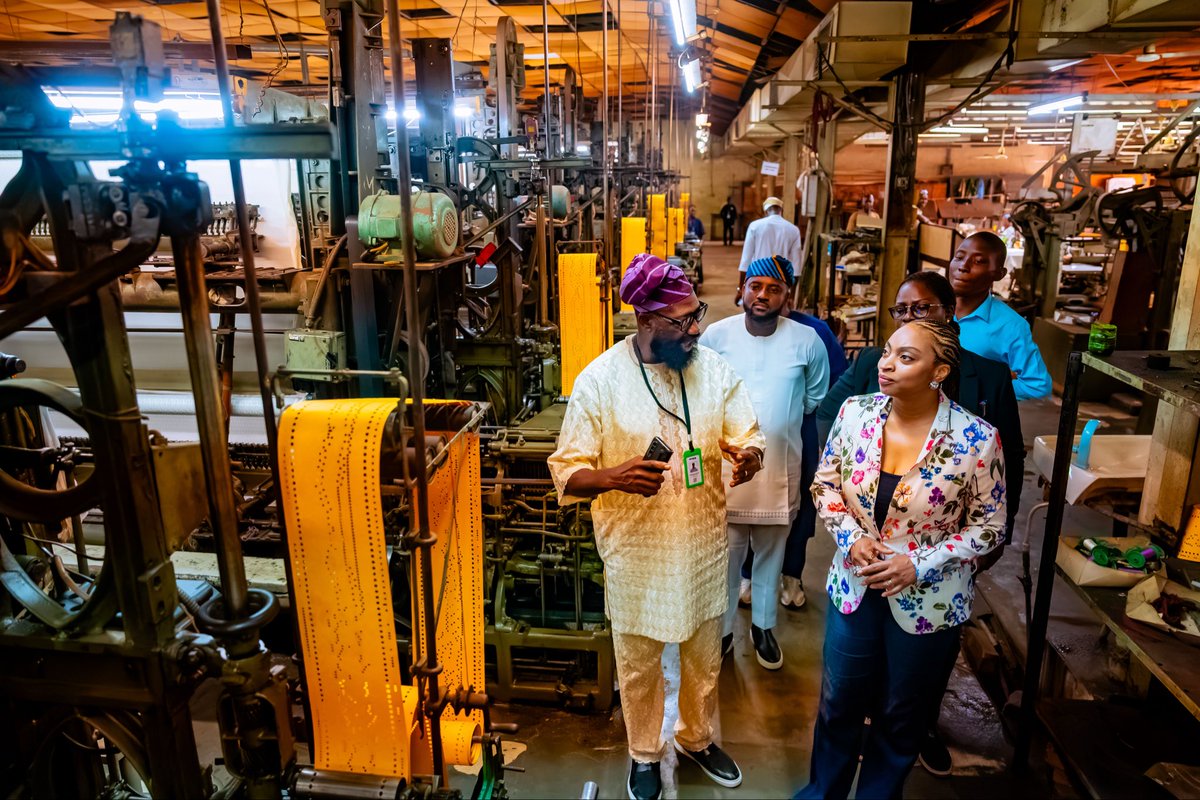
As part of ongoing efforts to support local manufacturing, I toured the historic Austrian Lace factory in Agege today - the last of its kind in Nigeria, producing world-class indigenous cotton lace for over 45 years.
I commend the management and staff for their exceptional discipline and decades-long dedication to keeping this heritage alive. Now more than ever, we must continue to champion our indigenous enterprises, patronize our own, and stand proudly behind Made in Nigeria textiles.
📸 @okeoluwasegunm
#WeMove 🇳🇬🇳🇬🇳🇬🌍🎯 #HMIndustryTradeInvestment #FMITI
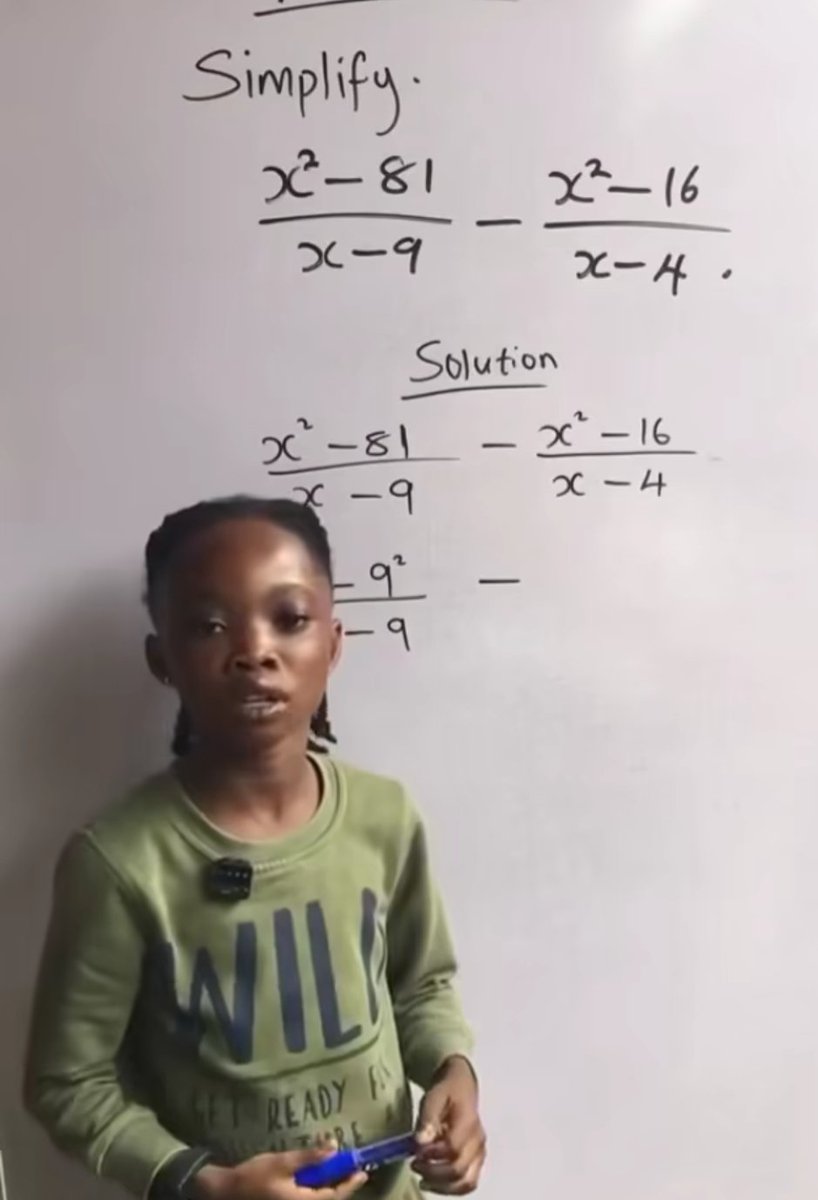
9-year-old Nigerian maths whiz Charlotte Muritala is using TikTok, where she has about 80,000 followers, for something remarkably different - teaching mathematics. 🧮🇳🇬
Her exceptional mathematical ability recently attracted the attention of Channels Television, which featured her inspiring story.
A JSS 2 student in Offa, Kwara State, Charlotte uses just a whiteboard, marker and smartphone to explain difficult mathematical topics to her followers. Her mother has also played a huge role in supporting her journey.
Indeed social media can be a platform for inspiring the next generation.
•Once upon a time, he was The Bridge between the UK scene and the Nigerian music industry.
•He gave D’banj his first major performance opportunity which announced him to the world.
•He gave the UK audience an undiluted taste of pure Nigerian music.
@AyoShonaiya is him!
Contrary to popular belief, progress on the LCCH is very impressive.
Construction is currently ongoing across multiple sections, but in this video, I’m covering Sections 1&2, where about 100 kilometres of concrete pavement has been completed, connecting Lagos towards Ogun State