#umushyikirano2026 Business/startup struggles aside, this umujene exchange with His Excellence ended up creating the most buzz and entertainment for the president and I love it.
What a meme and what a great president!
He listens even when you are babbling?
I love the president
From ideas to impact: Truly excited and honored to see my Artificial Intelligence recommendations (7months ago) now official NATIONAL POLICY. Kuko u Rwanda rukwiye ibyiza🇷🇼🩷
Life is a trip and the joy is in the journey.
It's not only the ugly roads that lead to beautiful places.
The road can be beautiful as well.
I reflected on this today while driving 80+ speed with a friend listening to our rock music en route to business.
#FelNiyoVentures
What an absolute HONOR today—people kept saying I look exactly like H.E😎😁
No I actually had a privilege talking business at UAE Embassy today, for the essence of fair trade and leveraging on UAE’s developed technologies like blockchain , AI, data centers, and cryptocurrency
“It was my privilege to share with African Business Communities under the Africa Trade Gateway on a critical AfCFTA challenge: our borders.
Our biggest hurdle isn’t just tech or tariffs—it’s just us. Let’s own it and unlock our $3.5 trillion market potential.
#FelNiyoVentures
proud to see DATA+ Rwanda's Vision soar in tech trainings. I always say Al is the future of everything and our goal should be just simple.
Interact with knowledge and capacities to know what questions to ask. Don’t just be Technical, Be an Al Dude.
Only tech dudes will lead the next economy. To ignite your untapped potential in data, @Excel@Power_BI
Click
https://t.co/yWqwEpDOuY
📍9 August 2025
K-LAB
Why I exited my consultant career and organizations to join businessmen?
CONSULTANTS is searching for what OTHER PEOPLES should do, so you can go inside and say it.
Business & Entrepreneurship is searching for what YOU can DO and then YOU go and Just Do It.
Honor Will Come!!
I believe AI is going to be the future of our daily life, especially in agriculture.
Farmers are now using AI to understand soil health, get crop recommendations, receive real-time weather alerts, track market prices, and even detect pests and diseases before they spread.
AI is turning farming from guesswork into smart work.
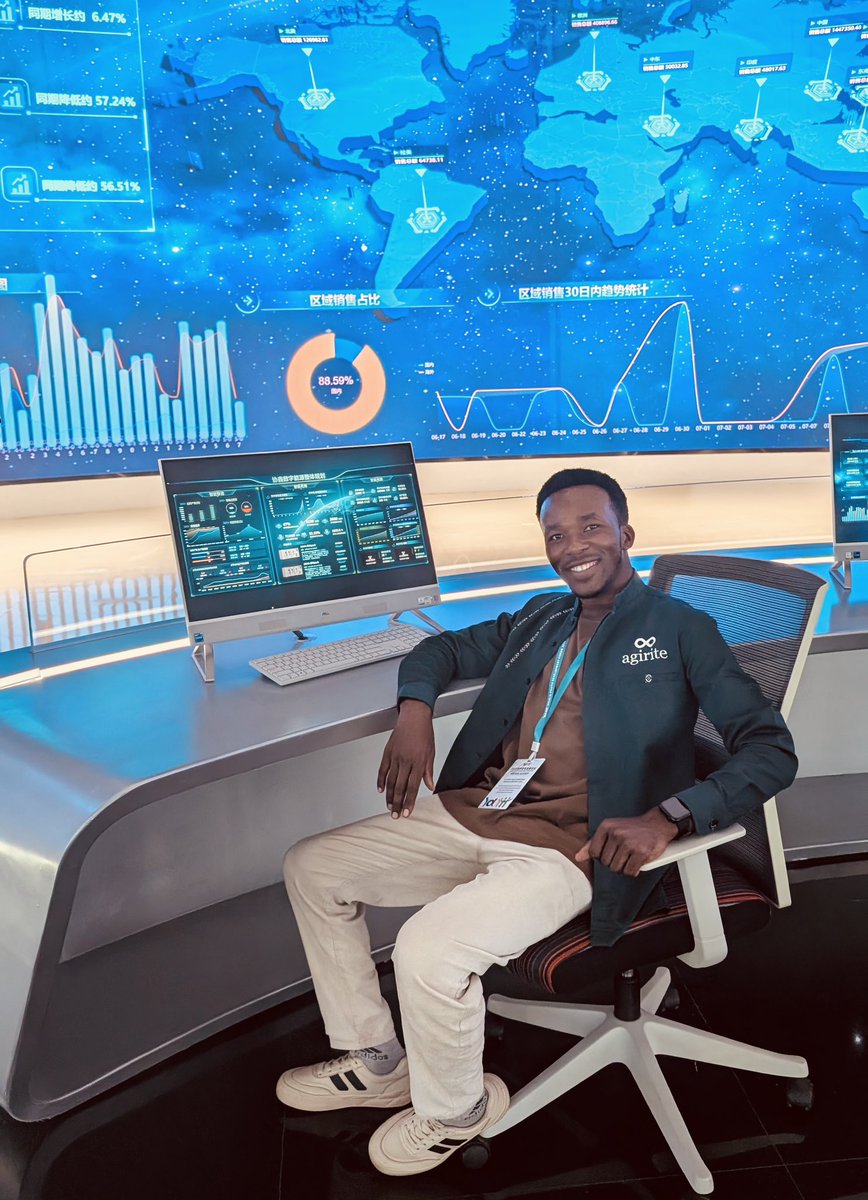
After learning how China is integrating AI into every corner of its economy, including agriculture, I truly believe Africa must act now to embrace this wave.
In China, I saw how farmers are using smart sensors in their fields to track moisture and nutrients.
Drones fly above rice paddies, collecting data on plant growth.
Applications powered by AI offer immediate suggestions on when to plant, what to plant, and how to increase yield while protecting the environment.
These are not future ideas.
They are already happening today.
The technology is available, and it is working.
As I walked away from the forum in Suzhou, I kept thinking about Africa, where seventy percent of our people depend on agriculture, and yet many are still farming as if it were the 1980s.
This is not because our farmers are lazy or unaware.
It is because access to tools, data, and training is limited.
Many farmers have never used a smartphone.
Some areas still do not have reliable electricity or internet.
Africa is a young continent, full of brilliant minds, growing technology ecosystems, and youth-led innovations in agriculture.
If we invest wisely, train locally, and work together, AI can transform African agriculture.
Imagine AI helping a smallholder in Kenya choose the best crop based on expected rainfall.
Or a cassava farmer in Rwanda receiving an alert when his field shows early signs of disease long before his eyes can detect it.
Or a cooperative in Nigeria using AI to track prices across several markets and decide where to sell for the best profit.
This is not science fiction.
This is possible if preparation is done.
However, we must be cautious.
AI must not increase the gap between rural and urban, rich and poor, connected and disconnected.
That is why we need policies that ensure digital tools are inclusive.
We need local languages in agricultural applications, farmer-friendly training programs, affordable internet, and youth-centered innovation hubs.
Young people must lead the way.
We are not just users of technology.
We are builders of solutions.
From AI-powered irrigation systems to mobile crop advisors, young Africans are already developing tools for their communities.
We must stop waiting for imported solutions.
We must build our own.
The future of African agriculture will not depend only on rain and land.
It will depend on data, intelligence, and courageous action.
AI is not coming to remove jobs.
It is coming to make agriculture smarter, more productive, and more sustainable for everyone.
We must embrace this opportunity.