Happy new month! No bad days in May.
May will bring us complete peace and happiness. May will make us laugh because God remembered us for good. I smell blessings and I see good news coming our way this month ✨🩷
May begins a season of answered prayers.
“NO BROMATE!”
Have you ever stopped to wonder why those words are boldly written on most bread nylons in Nigeria?
Today, let’s talk about it.
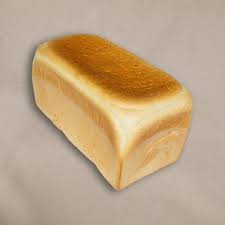
Potassium bromate (KBrO₃) was once a common ingredient in bread-making. Bakers used it because it helped dough rise faster, made bread softer, and gave loaves that attractive, fluffy look.
But there was a serious problem, a dangerous one.
When bread isn’t baked at the right temperature or for long enough, bromate may not fully break down. That means traces of it remain in the bread we eat.
Over time, it can accumulate in the body. Scientific studies revealed that bromate is carcinogenic, it can cause cancer and also damage the kidneys.
For years, Nigerians unknowingly consumed bread containing this harmful substance. It was widespread because it was cheap and effective.
Then, everything changed. A woman decided it was time to put a stop to it.
Her name was Professor Dora Nkem Akunyili, who served as Director-General of NAFDAC from 2001 to 2008.
When she assumed office, Nigeria’s food and drug system was in chaos — fake products, unsafe additives, and weak regulation dominated the market. But Dora Akunyili was not one to ignore such dangers.
She launched investigations, sending officials to bakeries across the country to secretly collect bread samples. The findings were alarming.
A large portion of bread in circulation contained unsafe levels of bromate. That was all she needed to act.
In 2002, under her leadership, NAFDAC officially banned the use of potassium bromate in bread production across Nigeria.
But she didn’t stop at policy. She took the fight to the public — speaking on air, addressing the press, and openly naming offenders. She warned Nigerians that the very bread many families relied on daily could be harming their health.
The resistance was fierce. Many bakers pushed back. But she stood her ground.
NAFDAC carried out raids, shut down non-compliant bakeries, and educated the public. Gradually, things began to change.
Bakers adopted safer alternatives like ascorbic acid (vitamin C), and the label “NO BROMATE” became a symbol of safety and accountability. Today, many people don’t realize the impact of that decision.
Dora Akunyili was more than a regulator, she was a defender of public health. Her courage and integrity forced an entire industry to choose human life over profit.
So, the next time you pick up a loaf of bread and see “NO BROMATE” on the nylon, take a moment to remember the woman behind it.
Her name is Dora Akunyili.
She didn’t just enforce a policy.
She saved a generation.
On this Good Friday, I join Christian faithful across Nigeria and beyond in solemn reflection on the ultimate sacrifice of our Lord Jesus Christ. His selfless love, humility, and unwavering obedience to the will of God remain timeless virtues that inspire us all.
As we commemorate His passion and death, let us be reminded of the boundless grace that flows from His sacrifice, a grace that calls us to live with compassion, forgiveness, and unity.
May this sacred day renew our faith, strengthen our bonds as one people, and guide us towards a future built on love and peace.
I wish all Christians a blessed Good Friday.