Thank you @ESOTtransplant for the invitation! I enjoyed the other presentations and there were lots of interesting questions from attendees and the panel too. Great workshop! 🙌
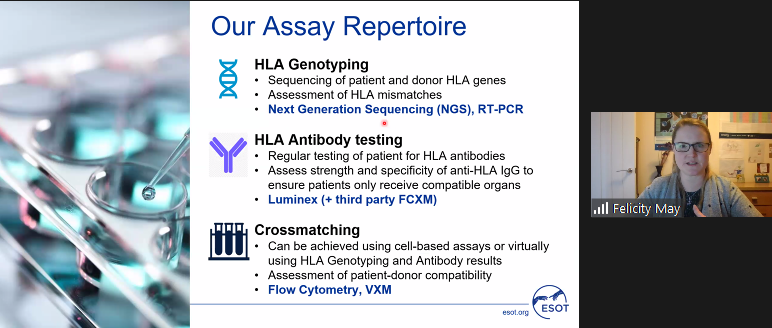
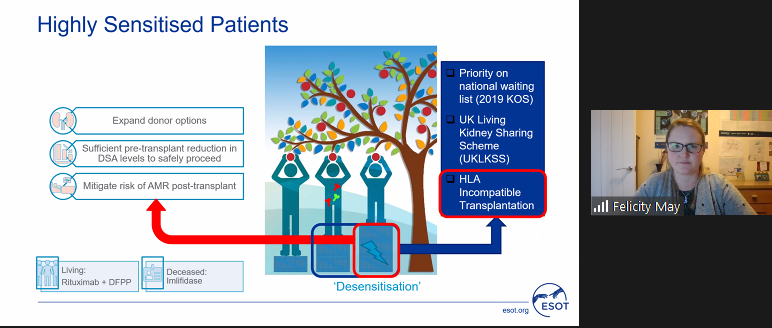
A remarkable presentation on Immunological risk stratification of highly sensitised patients by @FelicityNJMay NOW ➡️ online workshop "Decision making when transplanting highly sensitised patients" #ESOTeducation
Massive thank you to the organisers of #EFI2021 for a fantastic conference! I thought the scientific content was excellent this year, and I appreciate the hard work that must have gone into making this valuable learning opportunity happen during the pandemic 🙏👏🧬👍👩🏼🔬
After three fantastic days, it’s time for the closing lecture. It takes 10 minutes for an NK cell to kill another cell. What happens during this time? Prof Dan Davis uses super resolution images to show us the complex processes involved in immune cells killing.
Dr Mary Carrington presented this year’s BSHI Terasaki Award Lecture. HLA class I types vary in their ability to present peptides in the absence of tapasin, a component of the peptide loading complex. Variation in tapasin dependence may impact the strength of the immune responses
A major benefit of a virtual conferencing is on demand oral presentations so you can find content relevant to you. Today I’ve watched presentations on improving HLA matched platelet provision and development of an NGS test for HLA disease & drug hypersensitivity associations💻👍
It’s our final day of #EFI2021 😔 but there is still so much to come. NK cells, HLA and antigen presentation as well as poster and oral presentations on demand. Remember to visit our virtual exhibition hall too! @ConferenceEfi@EFI_Office @BSHI_transplant
Prof Stefan Ciurea presented his work on administration of donor-derived ex vivo expanded NK cells after haploidentical transplantation, with some promising results. NK cells are associated with lower rates of GVHD, TRM, and disease relapse and improved transplant survival.
Prof Salim Khakoo opens this morning’s NK Cells session presenting his work on KIR2DS2, an activating KIR that binds conserved viral peptides in the context of HLA-C and has been associated with higher levels of activity and protective responses to viral infections
Prof Maarten Naesens explains the impact of pretransplant HLA-DSA on transplant outcome. Antibody persistence and specificity for HLA-DQ are the biggest predictors of poor outcome.
Increasing access to transplantation though cellular therapies. MSCs, Tregs and regulatory macrophages have been investigated for their immunomodulatory properties to replace conventional immunosuppressive drugs.
Q&A in the solid organ transplant session at #EFI2021. Very excited to hear the speakers consider why patient response to treatment varies and whether this could be linked to different cytokine levels. Hopefully my research on response to desensitisation will help find answers!
Dr Georg Böhmig’s talk on treatment of late AMR was of great interest to me as it covers similar themes/treatments to my research project on desensitisation. In recent trials Daratumumab was shown to deplete bone marrow plasmas cells and successfully reduce DSA levels.
Dr Peter Nickerson presents the HLA-DR/DQ molecular mismatch score, based on the number of donor-recipient eplet mismatches, and how this can be used to predict risk of developing de novo DSA and AMR. Application of this score enables precision medicine for transplant patients
Prof Peter Conlon presents GWAS studies in kidney transplantation using high throughput SNP sequencing. A well designed GWAS must include very large numbers of patients and replicate significant findings.
Great talk on pregnancy-induced microchimerism. Bi-directional cell trafficking leads to maternal immune recognition of IPA and fetal recognition of NIMA. The latter results in production of Tregs, NIMA tolerance persisting to adulthood with implications for transplant tolerance
Dr Leigh Keen kicks off the chimerism teaching session describing current and new chimerism testing methods. The increased sensitivity of new techniques (NGS and ddPCR) enables detection of microchimerism (<1% chimerism) which has been associated with subsequent disease relapse.
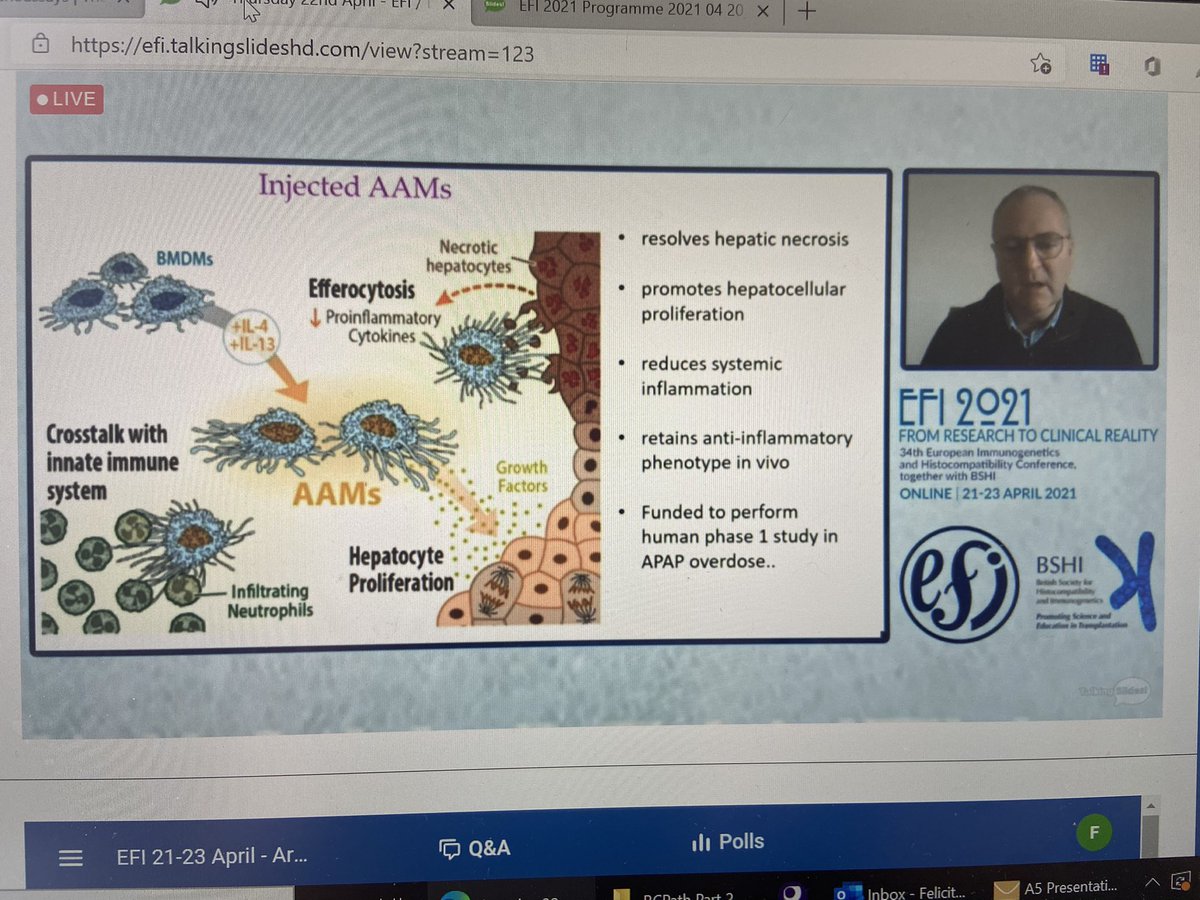
Prof Stuart Forbes presents his work developing macrophage based cell therapies to treat liver cirrhosis. Infused macrophages rapidly localise to the liver where they clear damaged tissue, reduce inflammatory cytokines and stimulate regeneration of liver tissue.