O governador Eduardo Leite criou o Conselho do Plano Rio Grande. Porém, dos 178 membros, apenas 4 têm relação com o meio ambiente. Especialistas e ambientalistas foram excluídos, enquanto empresários e setores que contribuíram para a crise dominam o grupo. #NegacionismoMata
Annie “Ancho” Choi is a brilliant young artist whose wonderful animations landed her a gig working for the famed Studio Ghibli. This is a short compilation.
[🎞️ anchoponcho]
https://t.co/UJ9kyafVv3
E aí, ambientalóides esquerdopatas! Já deram boa tarde pro @Alceu_Moreira hoje? O deputado do Rio Grande do Sul, autor do PL 364/2019, não vê problema algum em retirar a proteção de 48 milhões de hectares de campos nativos em todo o país. #NomeAosBois#PacotedaDestruição
Este é o senador ruralista @Heinzeoficial desfilando seu negacionismo climático ao @deolhonoagro em 2016.
Heinze foi eleito por 2,3 milhões de gaúchos para desmontar a proteção ambiental no país. Hoje a zona rural do RS sofre com as chuvas.
Lembrem-se disso na próxima eleição.
Rio Grande do Sul, o estado com mais afrorreligiosos do Brasil
"Por que o Rio Grande do Sul, que tem o segundo menor percentual de população negra do país e uma forte influência das imigrações europeias, é o estado com o maior número de pertencentes a religiões de matriz+
Silves, no Médio Rio Amazonas, tem uma população de mais de mil indígenas. Mas para o governo do Amazonas e a Eneva, cujo principal acionista é o BTG Pactual, não há indígenas. Desde 2021, a empresa explora gás sem consulta a indígenas e ribeirinhos.+ https://t.co/aMhB0cjsdk
The Lion Man - An Ice Age Masterpiece :
The Lion Man is a masterpiece. Sculpted with great originality, virtuosity and technical skill from mammoth ivory, this 40,000 year-old image is 31cm tall. It has the head of a cave lion with a partly human body. He stands upright, perhaps on tiptoes, legs apart and arms to the sides of a slender, cat-like body with strong shoulders like the hips and thighs of a lion. His gaze, like his stance, is powerful and directed at the viewer. The details of his face show he is attentive, he is watching and he is listening. He is powerful, mysterious and from a world beyond ordinary nature. He is the oldest known representation of a being that does not exist in physical form but symbolises ideas about the supernatural.
Found in a cave in what is now southern Germany in 1939, the Lion Man makes sense as part of a story that might now be called a myth. The wear on his body caused by handling suggests that he was passed around and rubbed as part of a narrative or ritual that would explain his appearance and meaning. It is impossible to know what that story was about or whether he was deity, an avatar to the spirit world, part of a creation story or a human whose experiences on a journey through the cosmos to communicate with spirits caused this transformation.
Obviously, the story involved humans and animals. Lion Man is made from a mammoth tusk, the largest animal in the environment of that time and depicts the fiercest predator, a lion, now extinct, that was about 30 centimetres taller than a modern African lion and had no mane. Distinct from other animals through their use of tools and fire, humans were nonetheless dependent on some animals for food while needing to protect themselves from predators. Perhaps this hybrid helped people to come to terms with their place in nature on a deeper, religious level or in some way to transcend or reshape it.
An experiment by Wulf Hein (Opens in new window) using the same sort of stone tools available in the Ice Age indicate that the Lion Man took more than 400 hours to make.
This was a lot of time for a small community living in difficult conditions to invest in a sculpture that was useless for their physical survival. Allowing this to be done might suggest that the purpose of image was about strengthening common bonds and group awareness to overcome dangers and difficulties. Some support for this exists at the cave itself.
Archaeological discoveries in other caves in this region include small sculptures as shown in the British Museum's 2013 exhibition Ice Age art: arrival of the modern mind. They were found in caves with large quantities of stone tools and animal bones that indicate people lived in the shelter of the daylight areas of these sites for repeated periods of time.
Stadel Cave, where the Lion Man was found, is different. It faces north and does not get the sun. It is cold and the density of debris accumulated by human activities is much less than at other sites. This was not a good place to live. Lion Man was found in a dark inner chamber, carefully put away in the darkness with only a few perforated arctic fox teeth and a cache of reindeer antlers nearby. These characteristics suggest that Stadel Cave was only used occasionally as a place where people would come together around a fire to share a particular understanding of the world articulated through beliefs, symbolised in sculpture and acted out in rituals.
Lion Man is the oldest known evidence for religious beliefs and Stadel Cave suggests that believing and belonging have a deep history crucial to human societies and originating long before writing. In 2017, UNESCO acknowledged Stadel Cave and other Swabian localities as World Heritage Sites of importance to all humanity and now Ulm Museum has loaned this important sculpture to the British Museum for the exhibition.
#archaeohistories
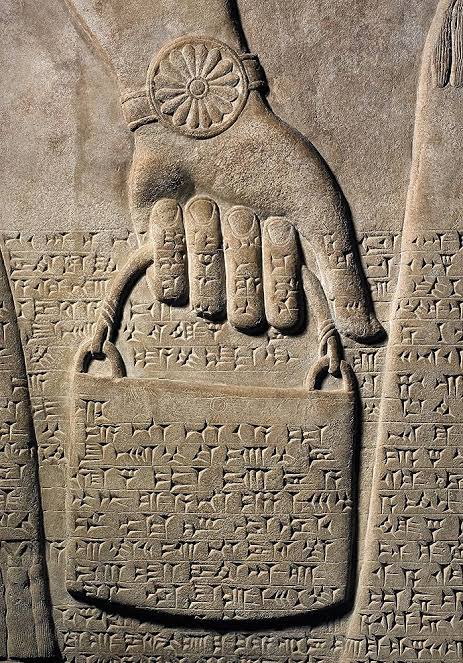
Earliest writing we know of dates back to around 3000 BC and was probably invented by Sumerians, living in major cities with centralized economies in what is now southern Iraq. Earliest tablets with written inscriptions represent work of administrators, perhaps of large temple institutions, recording allocation of rations or movement and storage of goods. Temple officials needed to keep records of grain, sheep, and cattle entering or leaving their stores and farms and it became impossible to rely on memory. So, an alternative method was required and very earliest texts were pictures of items scribes needed to record (pictographs). During its 3000 year history, cuneiform was used to write around 15 different languages including Sumerian, Akkadian, Babylonian, Assyrian, Elamite, Hittite, Urartian and Old Persian.
Writing, recording of a spoken language, emerged from earlier recording systems, 4th Millennium BC. First written language in Mesopotamia is called Sumerian. Most of early tablets come from Uruk, in southern Mesopotamia, and it may have been here that this form of writing was invented. These texts were drawn on damp clay tablets using a pointed tool. It seems scribes realized it was quicker and easier to produce representations of such things as animals, rather than naturalistic impressions of them. They began to draw marks in clay to make up signs, which were standardized so they could be recognized by many people.
From these beginnings, cuneiform signs were put together and developed to represent sounds, so they could be used to record spoken language. Once this was achieved, ideas and concepts could be expressed and communicated in writing. Cuneiform is one of oldest forms of writing known. It means “wedge-shaped,” because people wrote it using a reed stylus cut to make a wedge-shaped mark on a clay tablet. Letters enclosed in clay envelopes, as well as works of literature, such as Epic of Gilgamesh have been found. Historical accounts have also come to light, as have huge libraries such as that belonging to Assyrian king, Ashurbanipal.
Department’s collection of cuneiform tablets is among the most important in the world. It contains approx. 130,000 texts and fragments and is perhaps largest collection outside of Iraq. Centerpiece of collection is Library of Ashurbanipal, comprising many thousands of most important tablets ever found. Significance of these tablets was immediately realized by Library’s excavator, Austin Henry Layard, who wrote :
"They furnish us with materials for the complete decipherment of the cuneiform character, for restoring language and history of Assyria, and for inquiring into customs, sciences, and . . . literature, of its people."
Decipherment of cuneiform began in 18th Century as European scholars searched for proof of places and events recorded in Bible. Travelers, antiquaries, and some of earliest archaeologists visited ancient Near East where they uncovered great cities such as Nineveh. They brought back a range of artifacts, including thousands of clay tablets covered in cuneiform.
Scholars began incredibly difficult job of trying to decipher these strange signs representing languages no-one had heard for thousands of years. Gradually, cuneiform signs representing these different languages were deciphered thanks to work of a number of dedicated people. Confirmation that they had succeeded came in 1857. Royal Asiatic Society sent copies of a newly found clay record of military and hunting achievements of King Tiglath-pileser I to four scholars: Henry Creswicke Rawlinson, Edward Hincks, Julius Oppert, and William H. Fox Talbot. They each worked independently and returned translations that broadly agreed with each other. This was accepted as proof that cuneiform had been successfully deciphered, but there are still elements that we don’t completely understand and study continues.
#archaeohistories
Assista a 125.000 anos de migração humana em 1 minuto.
A propagação dos humanos ao redor do globo é prevista com base nas condições climáticas dos últimos 125.000 anos.
Via: Physics-astronomy
Créditos da animação: Tobias Friedrich
Gente sem querer estragar pra vocês…
Cerca de 90% das aves são monogâmicas, seja tendo um par aparente pro resto da vida ou um par aparente por estação.
Mas por que aparente?
Porque quando você faz exame genético nos filhotes, 30% não são do pai esperado
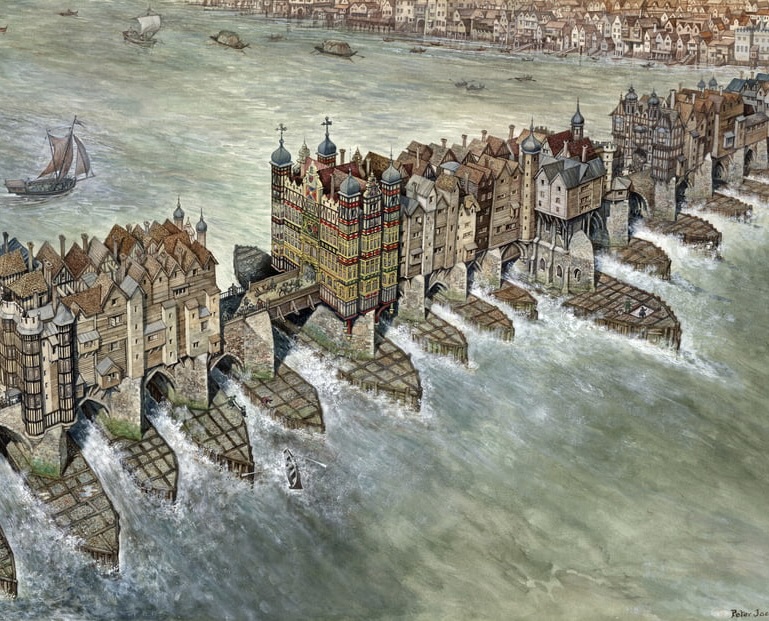
A thread of lesser-known architectural wonders that we lost over the ages (and what happened to them)... 🧵
1. Old London Bridge - the longest inhabited bridge in Europe