OHIO: Need help applying for @FEMA assistance? Our teams can answer your questions, help you complete an application, and upload your documents at a Disaster Recovery Center. No appointment is necessary. You can also apply at https://t.co/BUVaJIrJ6V or by calling 800-621-3362.
Colorado: Flooding threats will continue through this evening as more storms make their way through the area today. Make sure you have multiple ways to receive emergency alerts and follow local officials’ guidance. Stay safe & evacuate quickly if ordered to move to higher ground.
Colorado Daily Status Report: October 23, 2026
https://t.co/JUwkS1soKG
State Emergency Operations Center (SEOC)
▪️Response: Level 1: SEOC transitioned to Level 1 with multiple state agencies supporting flooding impacts in southwest corner of the state.
Thursday, October 23, 2026 at 8:36 pm, Governor Polis verbally declared a disaster emergency in response to flooding in La Plata, Archuleta, Montezuma, Dolores, Hinsdale, San Miguel, Ouray, San Juan, Mineral, Alamosa, and Rio Grande counties.
▪️Recovery Level 1: Activated to support recovery efforts from wildfires and flash flooding.
▪️State Level Lifelines: All lifelines are stable
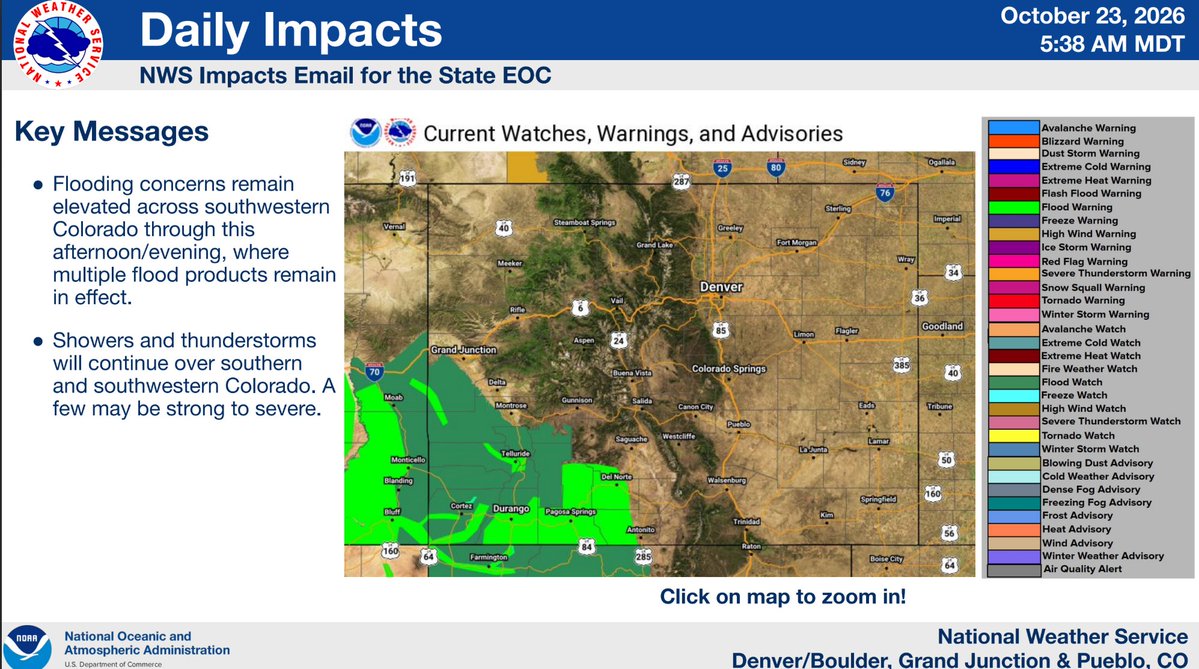
Key Weather Impacts from NWS
🔹Flood Warning in effect for southwest Colorado today through Friday morning.
🔹Flooding concerns remain elevated across southwestern Colorado through this afternoon/evening, where multiple flood products remain in effect.
🔹Showers and thunderstorms will continue over southern and southwestern Colorado. A few may be strong to severe.
Hurricane season isn’t over yet. Stay vigilant: Review your communication plan, build an emergency kit and track weather updates from your local @NWS office. Follow @Readygov for preparedness tips and visit https://t.co/GJ9nwOeyMp for resources.
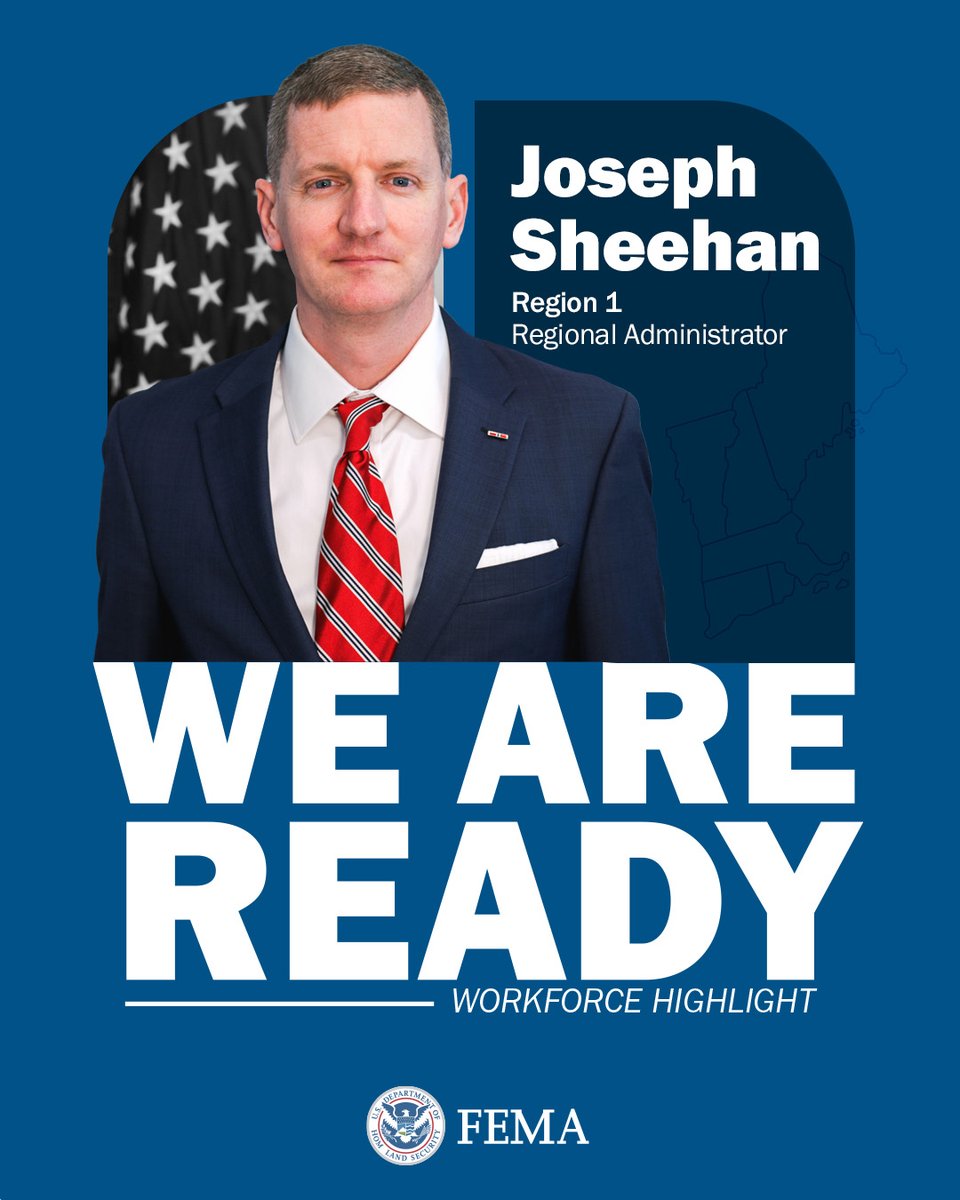
Welcome to FEMA Region 1, Regional Administrator Sheehan! We are proud to have a lifelong New Englander and experienced leader joining the team as we continue supporting our state, local and tribal partners across the region.
Floods are the most common & costliest natural disaster in the U.S. Take steps to protect what you’ve worked hard to build. The National Flood Insurance Program’s new tool lets residents in participating communities get a quote & buy a policy in minutes. ➡️https://t.co/VGFKdZuMWt
Today, @fema announced nearly $51 million in funding to help communities across Region 9 recover from recent disasters and strengthen resilience against future disasters:
🔗https://t.co/jb8IyKrV8v
FEMA is announcing a $400M funding opportunity to reduce flood risk nationwide. This funding empowers communities to invest in mitigation actions like property elevations and drainage improvements that will protect residents and cut future disaster costs.
https://t.co/UwmDJvIR8j
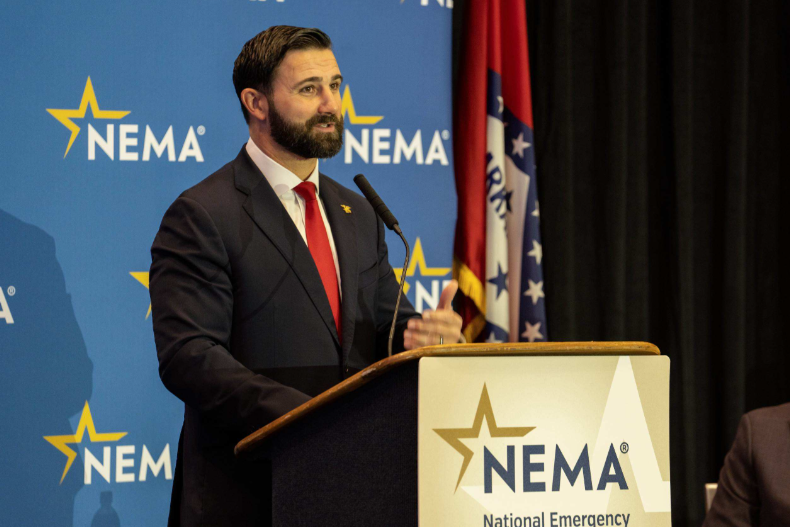
Great week in Little Rock speaking at the @NEMA_web Annual Forum. Thank you to NEMA President AJ Gary and state & territorial directors nationwide. Protecting disaster survivors and supporting communities takes a true partnership, and your leadership is vital.
Thrilled to welcome Joseph Sheehan as our new @femaregion1 Administrator! A Bronze Star recipient & New England native, Joe brings incredible National Guard & logistics experience to the region. We are lucky to have him on the team!
October is Cybersecurity Awareness Month. Scammers often take advantage of disasters. Before you click, donate, or share personal information online, verify the source. Remember: FEMA never charges a fee to apply for assistance. More from @CISAgov: https://t.co/SRhLMKNeyS
Arizona: @NWS predicts that severe storms will impact most of the state through this evening, bringing risks of hazards like tornadoes and hail. When thunder roars, go indoors! The safest place to be during severe weather is inside and away from windows.
A rare risk for tornadoes and severe weather exists across both the Desert Southwest and the Southern California Coastline today. Ensure you have multiple ways to receive weather alerts and warnings!
https://t.co/o5cxJlONPR
Recovery takes strong partnerships. We appreciate the nonprofit and voluntary organizations helping communities in Guam and the Northern Mariana Islands following Typhoon Champi.
Pictured: @RedCross delivers food and supplies at the St. Dominic's Senior Care Home.
Floods are the most common & costliest natural disaster in the U.S. Take steps to protect what you’ve worked hard to build. The National Flood Insurance Program’s new tool lets residents in participating communities get a quote & buy a policy in minutes.➡️https://t.co/T8exMAMSWh
A strong Pacific weather system will bring a deep surge of moisture to the southwestern US Wednesday and Thursday, with periods of widespread showers and thunderstorms expected. A Flood Watch is in already effect for Wednesday and Thursday in much of Arizona. Monitor https://t.co/qk3BcVP5M8 for the latest.
If your property was damaged by #Champi, wait until local officials say it’s safe to start a cleanup & be sure to take pictures for documentation. Wear protective gear, avoid damaged structures & downed power lines & watch for debris. Follow local updates for safety guidance.
FEMA is mobilizing equipment and emergency assistance to provide critical support where it’s needed most. We are committed to working alongside territorial and local leaders to support response efforts and help communities recover. More: https://t.co/3qRDX1HjCV
.@POTUS approved an Emergency Declaration for Guam and CNMI opening access to immediate federal resources to help save lives, protect public health and safety, and keep communities safe.
Guam: Although #Champi has passed, there may still be remaining hazards. Continue to follow guidance from local officials and use caution around downed power lines, debris and floodwaters.
For updates on storm impacts and safety information, follow @louleonguerrero and @GHSOCD.
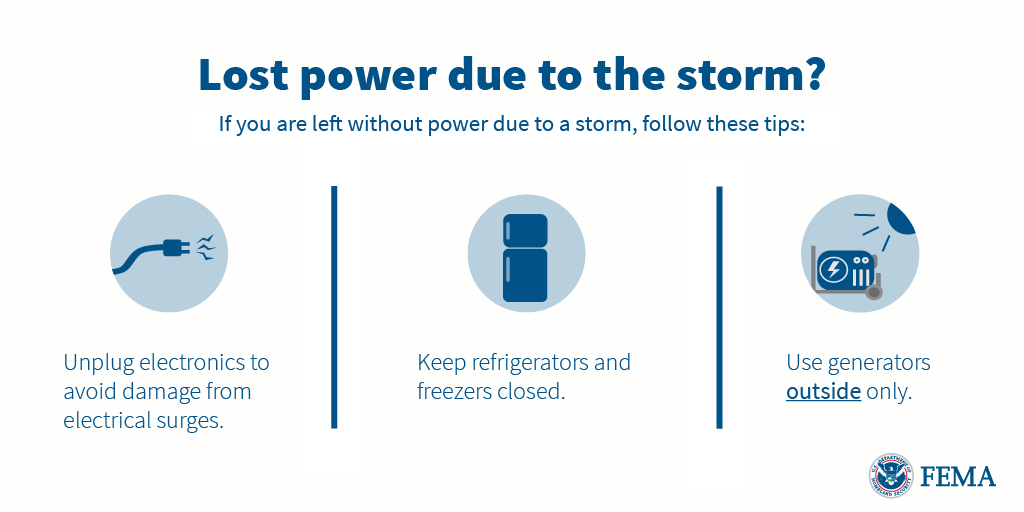
Power outage safety tips after #Champi:
Never touch or drive over downed power lines. Report them to Guam Power Authority at 671-475-1472.
Never use generators, grills or camp stoves indoors. Keep them outside, away from doors, windows and vents.
🔗 https://t.co/k4KFHWVZyJ