Your next robotics project could start with these steps.
Today, we're open-sourcing Asimov 1's locomotion policy and the training code behind it, giving developers a foundation to build on.
Alongside the trained policy checkpoint, we're sharing our Isaac Lab-based training code, including reward definitions, hardware-tuned actuator configurations, and domain randomization settings.
That foundation gives you a starting point for your own experiments. Adapt the training setup to hardware changes. Explore different walking styles. Build toward new capabilities.
We've taken the first steps.
Build what comes next.
Asimov 1 locomotion: https://t.co/CJazjU57z4
Foundational Robotics Models You Should Know
RT-1: https://t.co/u36kQlODZZ
RT-2: https://t.co/c4G0JCo2jw
RT-X: https://t.co/yGuJmzmox5
Octo: https://t.co/ngBLGT2Qlf
OpenVLA: https://t.co/94aGssT03j
π₀ Project
https://t.co/GcBSdroT4p
π₀.₅ Project
https://t.co/6xwWmNR5Sz
GR00T N1 by NVIDIA Research
https://t.co/1z9bdDlcSQ
SmolVLA by Hugging Face
https://t.co/EWIy7uaw4M
RDT-1B:
https://t.co/G4uVNAFuZk
Diffusion Policy:
https://t.co/tWzLqePVIz
ACT:
https://t.co/guKMXC7zhx
Gemini Robotics
https://t.co/rn2VF9S1QT
If you are serious about Physical AI, these are worth studying.
Incredibly excited to return to ETH Zurich as Assistant Professor of Robotics and Artificial Intelligence next summer. I'll be recruiting PhD students to build a new lab on general-purpose embodied intelligence for humanoid robots and dexterous manipulation. Details coming soon!
What If Your Robot Vision Pipeline Was Built for Real-Time?
This chapter is a practical guide to taking computer vision from a notebook and putting it on a real robot with ROS 2.
It covers camera nodes, sensor_msgs/Image, cv_bridge, YOLO, RGB-D synchronization, QoS, frame dropping, CPU vs GPU inference, FP16 and INT8, ONNX, TensorRT and edge inference.
One detail really stands out.
A pipeline with 69 ms end-to-end latency means a robot moving at 2 m/s has already travelled about 13.8 cm before the decision is ready. At 300 ms, that's 60 cm.
The chapter also explains why high FPS doesn't automatically mean low latency, and why real-time robots often need the latest frame, not a backlog of old frames.
If you are learning ROS 2, computer vision and autonomous robotics, this is a useful practical reference.
Read Robot Vision Zero to SLAM
https://t.co/WOiU35y8gH
Why your graduate trainee applications keep getting rejected might be because you're probably doing something wrong. Here's a powerful CV hack to start getting called up for assessments and interviews.
How to get a job as a Robotics Engineer:
robotics is the one frontier field where the entry level still doesn't ask for a degree
1 in 5 robotics jobs posted right now is a technician role, and most of them only need a certificate or a two year degree
so here's my workflow for getting a job as a robotics engineer:
1: pick one direction and drop the other two
robot learning pays the most and everyone wants it
autonomy and mobile robotics has the most openings by a wide margin
embedded and mechatronics is boring and you'll never be out of work
2: build things that moved, and write down the numbers
recruiters here open your github before they read your CV
what gets you through:
- a commit history where you're visibly fixing things, not one big final push
- real hardware with reliability numbers, sim doesn't count
- datasets on the lerobot hub
- commits to ROS 2, Nav2, MoveIt, Isaac Lab, LeRobot
3: build your hardware in public
the best way to prove your knowledge is the recognition of your skill from masses
just build anything you want and share it on X/IG/YT
good example of the guy who gets offers from Tier-S level robotics companies (you can copy his strategy):
go to IG
type in search: "aykhanium"
and check which rubrics he does to be recognized
repeat.
4: write down what broke
everyone posts the demo that worked
almost nobody writes up the four things that failed first and how they found each one
that's the part you can't fake from a tutorial, and it's the part that survives the third question in an interview
cheat-codes to stand out and get into the top 1%:
1. take the shift nobody wants
teleoperation pays around $28 an hour. figure posted a humanoid robot operator at $25 to $35 with no degree asked for
it's just driving a robot around a lab
but it puts you inside a frontier company with a badge on, and now you're a person they know instead of a CV in a pile
2. sell the integration, not the robot
the arm is about 25% of what a project costs
the other 75% is engineering, safety, and making everything talk to each other
a $35k arm turns into an $80k system, and that $45k is your job
3. go where nobody's competing
66% of robotics projects get delayed by certification
functional safety pays well and almost nobody bothers learning it
4. C++ and Python, both
every Figure and Skild listing I read asks for both, not one
5. delete the ROS 1 from your repos
recruiters call it out by name as a red flag
if there's still a catkin_make sitting in your github, that's the first thing they see
main insight:
$47.4B went into physical AI in the first half of 2026
the BLS still projects 1 to 2% job growth in the occupation
the money showed up years before the headcount will
so the people getting in right now aren't winning interviews, they're walking through the technician door and moving sideways once they're inside
that's like to be hired in OpenAI in 2019...
and one more thing
nothing you learn here goes stale
a PID loop works the same as it did in 1990, and the arm you fix this weekend teaches you something you'll still use in ten years
you can't say that about anything else in AI right now...
I've had the time to review your CV, and honestly, it's not bad. For a fresh graduate. A lot of people leave school with CVs similar to this.
However, there are some things you need to look out for when crafting a compelling CV. Remember, I said it's not bad, so I can be quite brutal when I'm reviewing things because I want the best.
To start with, your headline is okay, but it's not good enough. You can improve on it.
You have your name in bold and a bigger font size, which is good. Then underneath, you have your phone number, email address and LinkedIn profile.
Starting with the phone number, the format isn't really the best. I understand why you used dashes, probably to separate the numbers, but that's not the standard format I would recommend. You can simply use something like +234 followed by the rest of the number, or put 234 in brackets and then space out the remaining digits properly. The key thing is to keep the formatting clean and professional.
Then, regarding your Gmail and LinkedIn profile, make sure both are hyperlinked. If someone clicks on your email address, it should open an email, and clicking on your LinkedIn should take them directly to your profile.
Also, you need to customise your LinkedIn URL. You can only do this using a laptop. Go into your LinkedIn profile settings and look for the option to edit your public profile URL. You can also watch a quick YouTube tutorial if you're not sure where to find it.
At the moment, your LinkedIn link has all those random characters after your name. You don't need them. Make the URL as clean as possible, preferably something based on your name. After "https://t.co/QpF0nFr2rw", it should simply be your customised name.
Another thing I noticed is the arrangement of your contact details. Your phone number, email address and LinkedIn should ideally be on one line, rather than being scattered.
You also need a proper headline. Since you're an Economics graduate, you can have something along the lines of "Economics Graduate | Financial Analysis | Data Analysis | ICAN Student" or whatever best represents your actual skills and career direction.
The idea is that, at first glance, someone should immediately have an idea of who you are and what you do. Before they even start reading the CV, your headline should give them that picture.
Then, you need a professional summary.
I've seen some people mention this under your post as well, and I agree with them. You need a professional summary of about three lines at most. It's simply a concise way of telling the recruiter who you are, what you can do and what you're looking to contribute.
Now, regarding your experience, I wouldn't describe what you currently have as strong professional work experience yet. Most of what you've listed appears to be volunteering, campus ambassador roles and leadership experiences.
There's nothing wrong with that. You just need to categorise them correctly.
If you have internship experience, that should be highlighted under "Work Experience" because an internship is still professional experience. Your campus ambassador roles and similar positions can then go under something like "Leadership & Volunteering Experience."
Also, I would change the order of some of your sections.
After your professional summary, I would bring your skills section first. You're a young graduate, so recruiters want to quickly understand what you can actually do and what skills you have developed.
This is where you highlight things like data analysis, financial modelling, statistical analysis, Microsoft Excel, relevant software, research, or any other technical skills you genuinely possess.
Your skills are what you are selling, so present them properly.
After your skills, you can bring in your education. You have a good CGPA, so that's something worth showcasing. Highlight your 4.xx CGPA and make sure it is clearly visible.
After education, you can then bring in your work experience, followed by
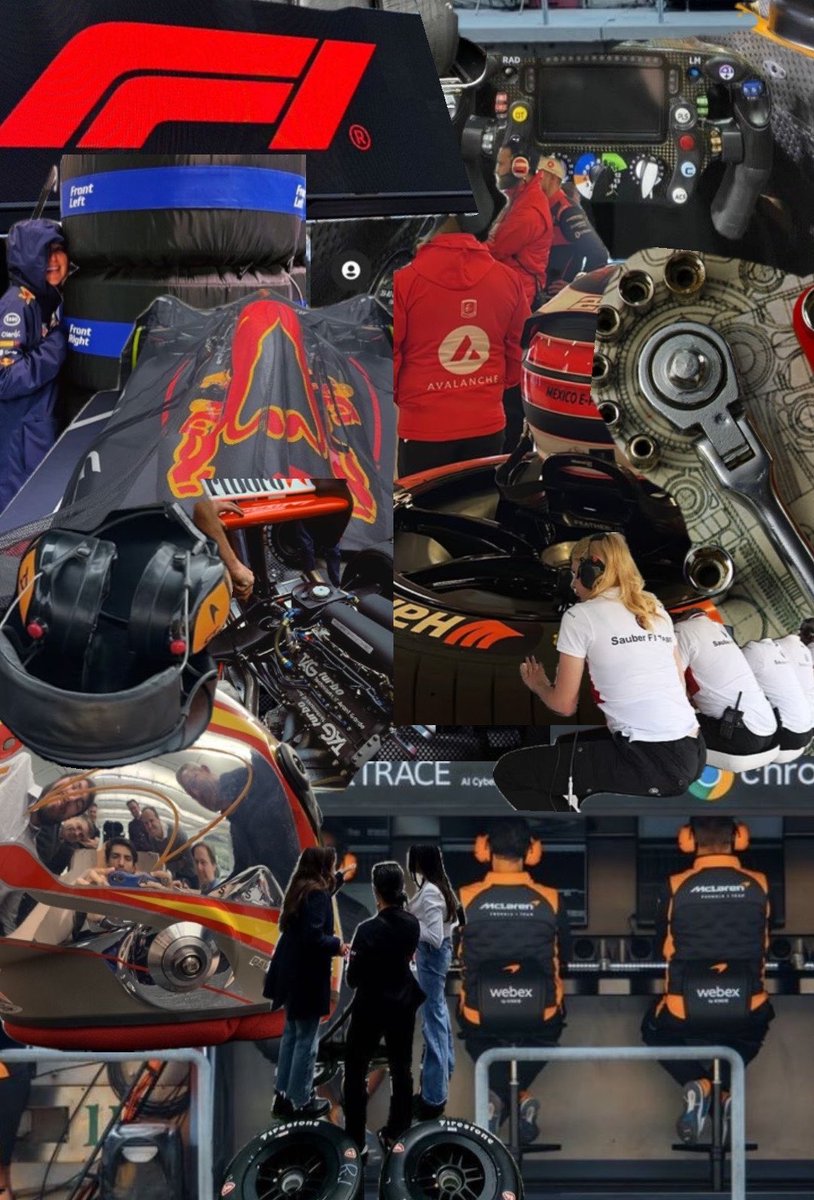
study f1.
not just as a sport.
study it as one of the best examples of systems engineering operating at the edge of physics.
an f1 car is basically thousands of engineering decisions fighting for milliseconds.
• aerodynamics → wings, floors, vortices, pressure fields, drag
• vehicle dynamics → grip, weight transfer, suspension, tire behavior
• thermodynamics → cooling brakes, power units, electronics, and fluids
• materials science → carbon composites, titanium, high-temperature alloys
• control systems → energy deployment, brake-by-wire, differential control
• electronics → sensors, telemetry, data acquisition, power systems
• simulation → predict behavior before expensive track time
• manufacturing → produce extremely complex parts quickly and precisely
• software → extract useful decisions from enormous amounts of vehicle data
• operations → coordinate drivers, engineers, strategists, mechanics, factories, and logistics
but the most interesting lesson is optimization.
you cannot maximize everything.
more downforce can mean more drag.
more cooling can mean worse aerodynamics.
less weight can mean less stiffness or durability.
a faster setup over one lap may destroy the tires over a race.
every subsystem interacts with another subsystem.
that is real engineering.
not finding the perfect component.
finding the best system under constraints.
study the car.
study the factory.
study the pit wall.
study how hundreds of specialists integrate their work into one machine.
f1 is systems engineering at 300+ km/h.
you need four hobbies. no more, no less.
create
bring something into existence. write, draw, build, code, cook. creation grounds you. it turns thought into reality.
consume
read books. watch films. study art. this feeds taste and perspective. good input sharpens good output.
cavort
move your body daily. walk, lift, run, dance. motion stabilizes the mind. a stagnant body distorts thinking.
commune
have a community. friends, family, peers. isolation corrodes judgment. shared reality keeps you sane.
miss one, and the system degrades.
keep all four, and life stays balanced, generative, and human.
On this day September 23, 1968, at the age of 81, Padre Pio died at 2:30 a.m. Witnesses unanimously say that his last words were: “Jesus, Mary, Jesus, Mary!”
St. Padre Pio pray for us, especially those who are wounded, traumatized and those who are silently fighting battles unknown to anyone else.
Saint Pio and Saint Pope John Paul II’s friendship dated back to 1947 when the young Father Karol Wojtyla was engaged in doctoral studies at Rome’s Pontifical International Athenaeum Angelicum, the future Pontifical University of Saint Thomas Aquinas.
He made a pilgrimage to the small town of San Giovanni Rotondo in southern Italy to meet Padre Pio and to have his confession heard by him. Father Karol Wojtyla spent nearly a week in San Giovanni Rotondo and had the opportunity to speak at length with Padre Pio, who called himself the “humble friar who prays.”
Indisputable proof of Pope John Paul II’s high esteem for Padre Pio was an event that took place in 1962, when young Bishop Wojtyla was in Rome attending Vatican II. He received a letter from Krakòw that informed him that one of his most important collaborators, Dr. Wanda Poltawska, was seriously ill with throat cancer. The doctors had decided to operate on her, but the hope of saving her was negligible.
Wojtyla learned of the news with great sorrow and thought about Padre Pio. He composed a letter, written in Latin and addressed to Padre Pio, and sent it to Msgr. Angelo Battisti, the administrator of the hospital “Home for the Relief of Suffering,” founded by Padre Pio. Msgr. Battisti personally delivered the letter to Padre Pio, who after having read it said, “Angelo, I cannot say no to this request.”
Eleven days later, Msgr. Battisti returned to San Giovanni Rotondo with a second letter from Archbishop Wojtyla, in which he thanked Padre Pio, saying, “The lady who was ill with cancer was suddenly healed before entering the operating room." Today, Dr. Wanda Poltawska is 101 years old, the recipient of a true miracle from the hand of God through the intercession of Saint Pio and at the request of the future Saint John Paul II.
Karol Wojtyla was repeatedly touched by Padre Pio and his legacy, first as a priest in 1947, then as a cardinal in 1974 when he visited San Giovanni Rotondo, and again in 1987 as a pope when he marked the 100th anniversary of Padre Pio's birth.
But it was that first encounter — along with Wojtyla's belief that it was Padre Pio's intercession that had cured his friend Wanda Poltawska from cancer in 1962 — that helps to explain why Saint John Paul II was undoubtedly so important in the canonization of Padre Pio.
Today we celebrate Saint Pius of Pietrelcina (Padre Pio), a Capuchin friar whose life of intense mystical union, bearing the visible wounds of Christ, and tireless ministry in the confessional drew countless souls back to God.
Padre Pio's extraordinary witness reminds us of the profound reality of Christ's Passion and the infinite power of divine mercy. Amid physical suffering and relentless spiritual battles, he remained completely abandoned to God's will, famously counseling the faithful to "pray, hope, and don't worry."
Here are 4 facts every Catholic should know about Padre Pio:
JAMB has introduced a secure process that allows eligible candidates to update their registered GSM number and/or email address.
But how does the process work? Who is eligible? What documents do you need, and where can you access the service?
In this JAMB Explained video, we take you through the process step by step, including the required documentation, biometric verification and what to expect when making the change.
📌 Remember: The service is available only at designated JAMB PTC/PRC Centres, can be accessed only once, and is strictly for candidates with genuine cases of lost access.
Watch to understand the process and follow the steps carefully.
#JAMBExplained #SIMSwap #EmailChange #JAMBUpdates #JCARE