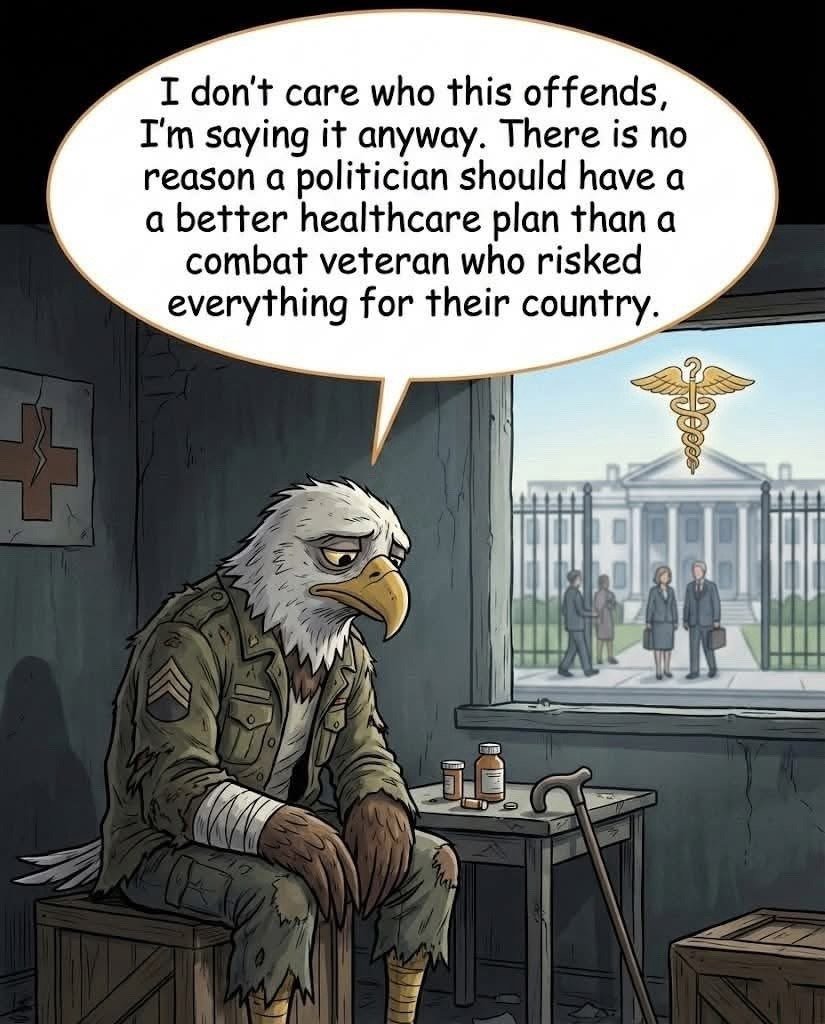
@Eadranai@burrito_capital Another issue is that oftentimes that wrong medical record follows you outside the VA. I hate the VA they are the bottom of the barrel. I will spend the rest of my life telling anyone who will listen how corrupt and satanic the VA is.
The Truth About Your VA Medical Records: How Unaccountable VA Doctors Use Secret “Disruptive Behavior” Files and Committees to Strip Veterans of Due Process and Rights Through Irreversible Opinion
https://t.co/PyIr473XIz
I read the whole thread, and honestly, none of this is surprising to patients who have been navigating this system for years.
Research doesn’t just follow evidence, it follows incentives.
Funding categories, congressional directives, and institutional politics shape the questions scientists are allowed to ask.
When billions are earmarked for “Long COVID,” the research ecosystem orients around that label, even though the underlying biology overlaps with ME/CFS, dysautonomia, POTS and post-viral illness that have been ignored for decades.
Patients have been pointing this out long before 2020.
The science wasn’t absent. The will to confront it was.
Long COVID didn’t create the problem. It pulled the curtain back on it.
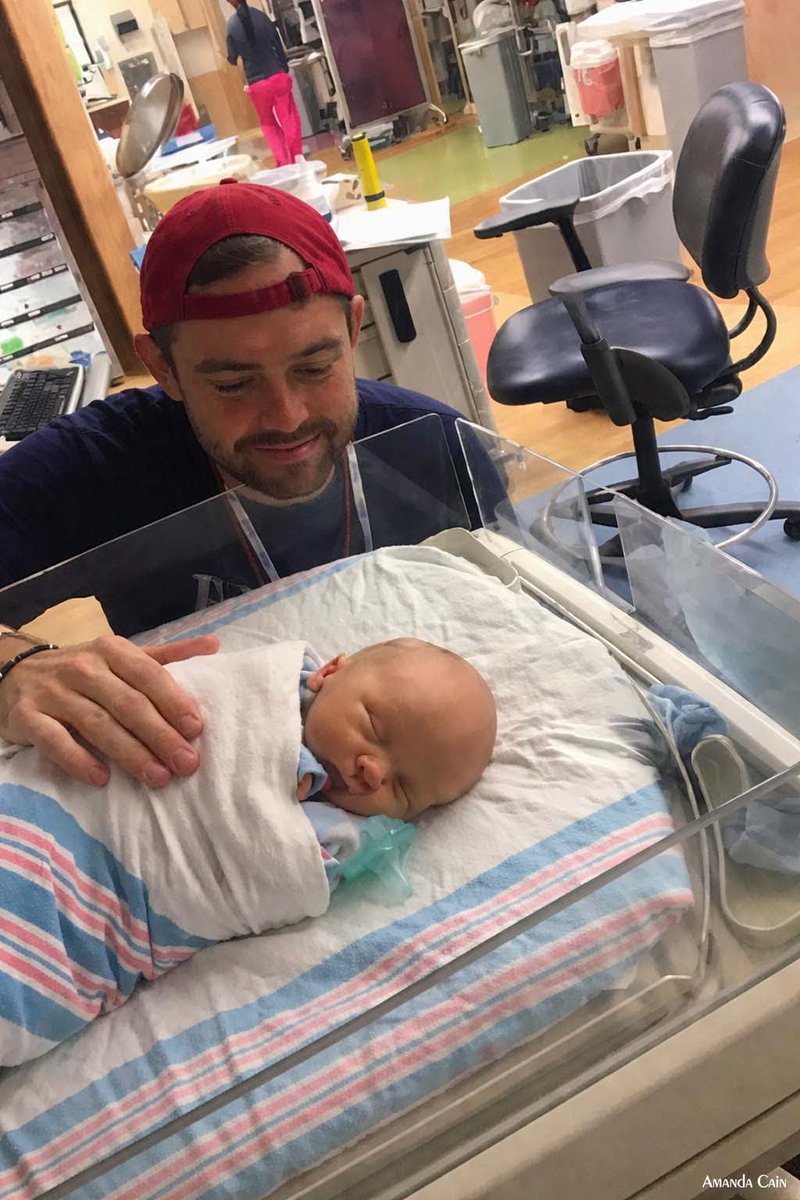
For nine months, my wife Brooklyn carried our baby boy knowing he was dying. Three months in, they told us he had severe hydrocephalus. Too much fluid crushing his brain. "Off the charts bad," the specialists at Cincinnati Children's said. So extreme they stopped measuring because it didn't matter anymore.
The MRIs were sickening to look at. They said over 90% chance he'd either die right after birth or survive with such severe brain damage that any quality of life was impossible. We had meetings about breathing tubes. About when to remove life support. About letting our son "pass peacefully."
Brooklyn moved to Cincinnati, lived in a hotel near the hospital in case she went into labor. I drove back and forth, working, trying to hold our family together while planning our baby's funeral. On July 8th, fifteen minutes before her C-section, we had another meeting about the breathing tube. About when we'd need to remove it and let him go to Heaven.
Then Charlie came out crying. The sweetest sound I've ever heard.
He stayed in intensive care until yesterday. Now he's home, doing everything babies do. Normal. Beautiful. The doctors have no medical explanation. His brain somehow cleared the blockage on its own, something they've never seen in a case this severe. Nurses with decades of experience kept saying "miracle" and "divine intervention."
Thousands of people were praying for us. Friends, family, strangers, people we'd never met. I'm practical, I believe in science, but I know God was involved in this. I give Him all the credit.
During those endless nights in Cincinnati, I started woodworking in the hotel parking lot just to keep my hands busy, to stop my mind from breaking. Made small toys hoping one day Charlie might hold them. Listed a few things on the Tedooo app where I'd been selling my work, and strangers started buying pieces they didn't need, sending messages saying they were praying for our son. That community held me when I couldn't stand.
Charlie's here. He's alive. Prayer is real, and miracles still happen.
By Amanda Cain
@VinoNStrosGal I'm going through this now, reinventing my once active life. How exciting I get to go to physical therapy today. But my vehicle is about to be repoed because I choose to either eat and good medical care or drive. I fear they will take my vehicle while I'm in the doctors office.
WHEN PATIENTS KNOW MORE THAN THEIR DOCTORS AND GET PUNISHED FOR IT ⚠️
Let me tell you exactly what happened last night.
I was taken to the ER because my blood pressure tanked, 82/59 and I felt myself sliding into that POTS spiral I know too well.
No ambulance, no drama, just the reality of dysautonomia when the bottom falls out.
During triage, the resident asked, “What do you normally do to manage your POTS?”
I told him the truth:
“I get weekly infusions. They stabilize my volume and keep me functional.”
He raised an eyebrow.
“Weekly? How many liters are you getting?
And who manages those orders?”
I explained my protocol, calmly, clearly, the way you do when you’ve been doing this for years.
And then the tone shifted:
“Well… with that frequency, we have to consider the possibility of fluid overload.”
Fluid overload.
From a treatment I’ve been safely receiving for YEARS.
From therapy approved by my specialists.
From the very protocol that lets me walk into an ER instead of being rolled in.
So I pushed back, respectfully, but firmly.
“My ankles aren’t swollen. No shortness of breath, no wheezing, no crackles, no chest tightness, no JVD. I know my baseline.”
He paused.
Then, as if I hadn’t just explained everything, he started lecturing me on my vagus nerve.
As if I haven’t studied the vagus nerve along with this particular diagnosis every single day since the very moment it wreaked havoc upon my entire life.
As if I haven’t managed POTS, orthostatic hypotension, MCAS, vEDS, neuropathic pain, and autoimmune-like flares long enough to earn a medical degree in management and survival.
And this is what people don’t understand:
Invisible illness patients become experts because our lives force us to.
POTS.
Raynaud's
Lupus.
Sjogren’s.
Lyme.
Crohn’s.
Fibromyalgia.
MCAS.
EDS.
CRPS.
Long COVID.
Chronic pain.
We don’t get the luxury of not knowing.
We don’t get to forget.
We don’t get to be casual about our symptoms.
We learn every inch of our conditions because we have no choice:
• what destabilizes us
• what puts us down for days
• what medications actually help
• what actually relieves severe pain (for many of us, full-agonist opioids, because nothing else touches connective-tissue or neuropathic pain)
• what signs mean crisis and what signs mean “push through”
But instead of being respected for that knowledge… we get punished for it.
Labeled.
Dismissed.
Second-guessed.
Every other patient population is praised for awareness:
• diabetics who know their patterns
• asthmatics who know their triggers
• cardiac patients who know their warning signs
But chronic pain and invisible illness patients?
We’re treated like suspects for having the same level of insight.
Here’s the truth:
We don’t challenge doctors to be difficult.
We challenge them because being wrong about us has consequences we have to live with.
Stop mistaking patient expertise for arrogance.
Stop mistaking survival skills for attitude.
Stop punishing the people who have no choice but to understand their own bodies better than anyone else in the room.
We didn’t ask for these diseases.
But we damn well learned how to survive them.