Scandicci (FI): due ladri georgiani vengono beccati “sul lavoro” da un gruppo di carabinieri e poliziotti fuori servizio. Uno dei due, il palo, viene subito bloccato dai militari in attesa dell'arrivo dei colleghi. L'altro, il topo d'appartamento, capisce quello che sta succedendo mentre si trova in una posizione decisamente scomoda: è su un balcone al terzo piano di un palazzo e sta forzando una finestra con un piede di porco. Decide quindi di lanciarsi in una fuga rocambolesca ma, mentre scavalca un cancello, un agente lo raggiunge e lo blocca afferrandogli la cintura dei pantaloni. La reazione è brutale: il ladro afferra il piede di porco e lo schianta in testa al poliziotto. Fortunatamente di lì a poco sopraggiunge una pattuglia di carabinieri che arresta il criminale e chiama i soccorsi. Il poliziotto ferito viene subito portato in ospedale: per fortuna se la caverà con "soltanto" qualche punto di sutura.
Fin qui, direte voi, ordinaria amministrazione: è la "nuova normalità" nelle nostre città divenute delle giungle grazie al multiculturalismo. E avete anche ragione ma - tenetevi forte - è adesso che arriva il pezzo forte di questa storia. Dopo tutto questo ambaradan, dopo che i due ladri sono stati colti in flagranza durante un furto con scasso, dopo la resistenza a pubblico ufficiale, dopo le lesioni ai danni dell'agente... Sapete cos'ha disposto il PM?
Liberazione immediata di entrambi i delinquenti.
Vi chiedete perché? È molto semplice: perché in Italia comandano i #giudicicontrolagiustizia. E ogni giorno, ogni singolo giorno, devono trovare il modo di ricordarcelo.
#LERCIOSTORY Ricerca shock: chi corre per entrare prima in aereo arriva comunque a destinazione con gli altri - di Alessandro Rossetti
--> https://t.co/cGKXTOnNAD
Italy’s "Piracy Shield" forces providers to block content in under 30 minutes without judicial oversight, which leads to overblocking (taking down legitimate websites alongside infringing ones).
We're appealing a €14M fine to protect the Internet from automated censorship and ensure infrastructure providers aren't forced to overblock.
https://t.co/hd7jMLH0lP
An engineer dies and ends up in Hell. 😈
Engineers don’t usually end up there, so the Devil is pretty surprised. Hell, as expected, is a mess — the AC is broken, the pool is empty, the roads are falling apart, and everything is miserable. 🔥
After some time, the engineer starts fixing things. The AC works again, the pool is full, roads are repaired, and suddenly Hell is… comfortable. 😳😄
Eventually, God looks down and notices people in Hell actually enjoying themselves. Confused, He calls the Devil and asks what’s going on.
The Devil replies,
“That engineer you sent us has been fixing things. He’s doing wonders down here!”
God exclaims,
“WHAT?! Engineers don’t go to Hell! That must have been a mistake. You have to give him back: he belongs in Heaven!”
The Devil crosses his arms and says,
“No way. We like our engineer.”
God says,
“If you don’t give him back, I’ll sue you!” ⚖️
The Devil grins and replies,
“Yeah, good luck with that? Where are you going to get a lawyer?” 😂
La vicenda è ormai certificata anche nei documenti interni. La cabinovia non entrerà in funzione in tempo utile per le gare, salvo ipotesi residuali e parziali legate a singoli eventi. Il responsabile operativo dei Giochi lo ha messo nero su bianco: il venir meno dell’impianto genera rilevantissime criticità organizzative, con effetti diretti sulla sicurezza, sulla gestione dei flussi e sulla tenuta complessiva del sistema. È la presa d’atto formale di un fallimento annunciato.
L’impianto avrebbe dovuto collegare il centro di Cortina alle aree di gara, funzionando come una metropolitana di montagna in una valle priva di ferrovia. Al suo posto arriva il “Piano B”: navette, mega-parcheggi, limitazioni alla circolazione privata e una richiesta che pesa come un atto d’accusa, la chiusura delle scuole secondarie nei giorni delle gare femminili di sci alpino. La soluzione tampone diventa così un costo sociale scaricato sulla comunità locale, chiamata a compensare un’infrastruttura che non c’è.
Ieri però la richiesta della Fondazione Milano-Cortina è stata rispedita al mittente dal Tavolo sulla sicurezza e l’ordine pubblico. L’istituto omnicomprensivo Ampezzo Cadore resterà aperto e farà lezione regolarmente.
Fino a pochi giorni prima, la stazione appaltante Simico aveva continuato a rassicurare sul rispetto del cronoprogramma. Il commissario straordinario Fabio Massimo Saldini parlava di lavori in linea con le previsioni. Il 28 gennaio, una comunicazione interna costringe la Fondazione Milano-Cortina a cambiare piano e a correre ai ripari. Ne nasce uno scontro istituzionale, con Simico che rivendica una competenza limitata alle opere fisse e respinge ogni responsabilità sulla logistica, definendo estranei al proprio perimetro temi come la chiusura delle scuole o la gestione dei volontari.
Trentacinque milioni per un’assenza
Il dato economico resta quando il resto si sfalda. L’appalto della cabinovia parte da una base di 22 milioni di euro. Nell’agosto 2025 sale a 28 milioni, ufficialmente per integrare monitoraggi geotecnici e prescrizioni ambientali. A febbraio 2026 arriva la stima finale: 35 milioni, un aumento di circa il 60 per cento. L’incremento viene collegato alle criticità del tracciato e agli interventi d’urgenza resi necessari dal cedimento del terreno nell’area di Mortisa, dove durante i lavori si è aperto un cratere di quindici metri. Problemi geologici noti da tempo, sottovalutati nella fase di progettazione.
A pochi giorni dalle gare, l’impianto non ha ancora ottenuto l’omologazione per il trasporto pubblico. L’ipotesi più realistica è un utilizzo posticipato, forse in occasione delle Paralimpiadi. Nel frattempo, l’opera simbolo della mobilità sostenibile olimpica resta inutilizzabile, mentre il sistema viario della valle del Boite si prepara a reggere flussi straordinari con strumenti ordinari.
Il quadro generale delle opere conferma che il caso Socrepes non è un’eccezione. Su 98 interventi previsti dal piano commissariale, solo 40 risultano conclusi; 29 sono ancora in esecuzione, 27 in progettazione, 2 in gara. Le infrastrutture considerate essenziali hanno viaggiato a lungo sotto il 20 per cento di completamento, costringendo a consegne in extremis e test ridotti al minimo.
La cabinovia da 35 milioni che non c’è diventa così una sintesi del modello Milano-Cortina: opere dichiarate irrinunciabili, tempi compressi, costi che lievitano, responsabilità che si disperdono. Alla fine resta una certezza aritmetica e una domanda politica aperta: chi doveva garantire che quell’impianto fosse davvero necessario e davvero pronto?
(il mio articolo per @LaNotiziaTweet)
https://t.co/b6Wv48bjiJ
I am a Microsoft security architect.
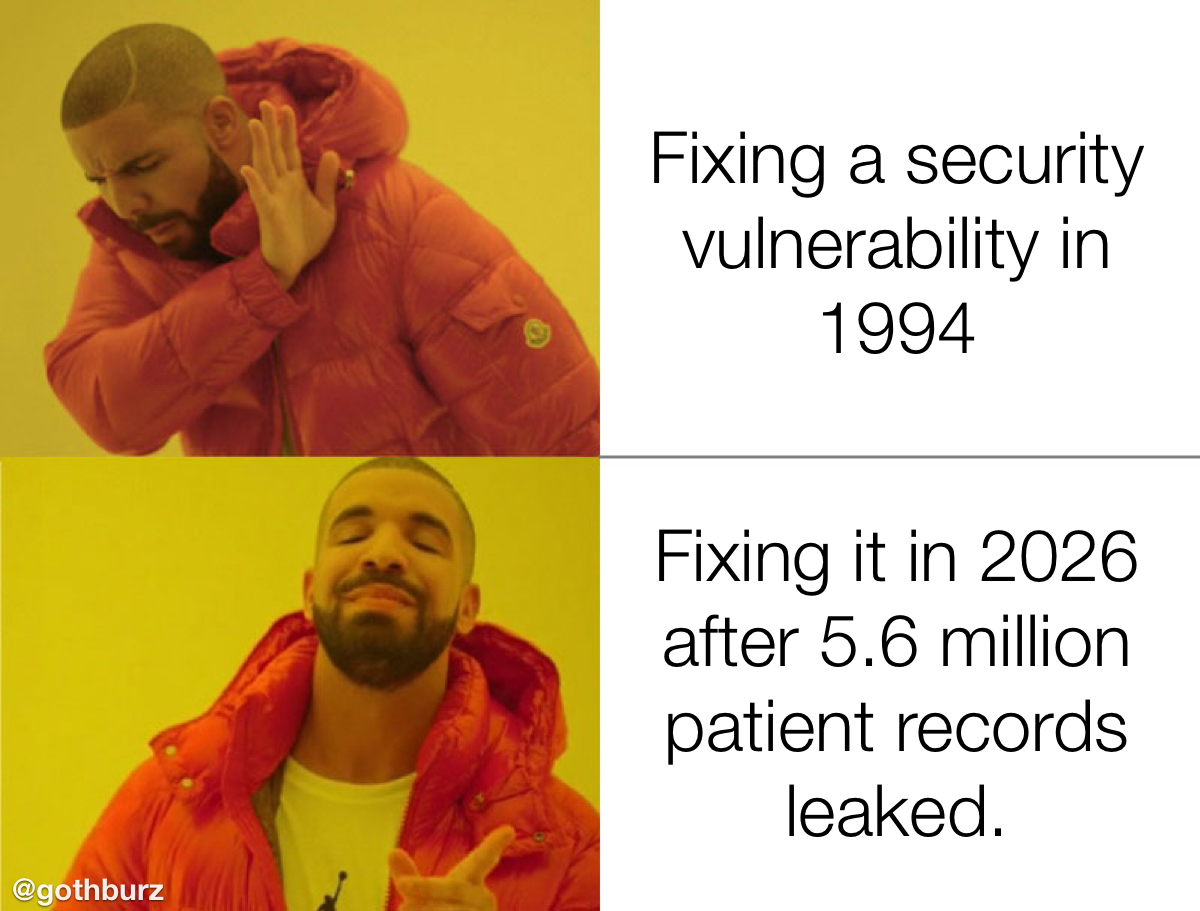
In 1994, researchers discovered RC4 was fundamentally broken.
We made it the default cipher in Windows anyway.
By 2000, every machine on Earth was running it.
We called it "battle-tested."
Technically true. It lost every battle.
In 2013, more researchers confirmed it was still broken.
We published a knowledge base article thanking them for their passion.
In 2015, the entire industry formally deprecated it.
We kept it enabled by default.
Compatibility is more important than security.
Security is just compatibility with not being hacked.
Hospitals ran their patient records through it.
Banks authenticated their transactions with it.
Fortune 500 companies trusted their crown jewels to it.
The Ascension breach happened. 5.6 million patient records. 140 hospitals offline.
Ransomware walked through our cipher like it wasn't there.
It basically wasn't.
Senator Wyden called it "gross cybersecurity negligence."
He demanded an FTC investigation.
We released a statement thanking him for his continued partnership.
After 26 years of careful consideration, we've made a decision.
We're going to disable RC4 by default.
In mid-2026.
We're giving everyone 18 months notice.
Because we believe in thoughtful transitions.
We've been thoughtfully transitioning since the Clinton administration.
Two Clintons could have run for president in the time we've been "evaluating options."
Some things are just hard to kill off.
Like a legacy cipher.
Or institutional momentum.
Or the phrase "we take security seriously."
We do take it seriously.
We just don't take it urgently.
Urgency is for startups.
We're a mature organization.
We mature our vulnerabilities like fine wine.
26 years.
That's not negligence.
That's commitment.
Day in the life of a European entrepreneur:
You wake up, it’s August and 29°C, your apartment has no AC because you live in a climate conscious building
You open LinkedIn to see Americans half your age raising $50M Series A, while you’re on the month 4 of due diligence for a €100k bridge round
You take a lunch break at 12pm because the restaurant closes at 2pm, reopens at 6pm, and is closed on Mondays
You eat bread with cheese for the third time this week. “This is the European lifestyle”, you tell yourself
Back in the office, you try to hire an engineer and discover it costs €90k to employ a person who receives €42k
Your accountant charges €400 to tell you that you owe €6,000 in unpaid VAT obligations you didn’t know existed
You google “Delaware corporate tax rate” in incognito mode
5pm, time to call it a day. You open up LinkedIn again to see that the candidate you wanted to hire just joined an AI startup in SF. His salary is higher than your entire seed round
You take the bus home, but need to get out early to not interrupt the cultural integration process of two friendly dark-skinned passengers (they are breaking windows)
You finally get to your 38 sqm apartment that costs €1,900, and you’re exhausted
Fortunately, tomorrow is Friday and your country just introduced a 4-day work week. You can finally rest
There is nothing better than life in Europe
Last quarter I rolled out Microsoft Copilot to 4,000 employees.
$30 per seat per month.
$1.4 million annually.
I called it "digital transformation."
The board loved that phrase.
They approved it in eleven minutes.
No one asked what it would actually do.
Including me.
I told everyone it would "10x productivity."
That's not a real number.
But it sounds like one.
HR asked how we'd measure the 10x.
I said we'd "leverage analytics dashboards."
They stopped asking.
Three months later I checked the usage reports.
47 people had opened it.
12 had used it more than once.
One of them was me.
I used it to summarize an email I could have read in 30 seconds.
It took 45 seconds.
Plus the time it took to fix the hallucinations.
But I called it a "pilot success."
Success means the pilot didn't visibly fail.
The CFO asked about ROI.
I showed him a graph.
The graph went up and to the right.
It measured "AI enablement."
I made that metric up.
He nodded approvingly.
We're "AI-enabled" now.
I don't know what that means.
But it's in our investor deck.
A senior developer asked why we didn't use Claude or ChatGPT.
I said we needed "enterprise-grade security."
He asked what that meant.
I said "compliance."
He asked which compliance.
I said "all of them."
He looked skeptical.
I scheduled him for a "career development conversation."
He stopped asking questions.
Microsoft sent a case study team.
They wanted to feature us as a success story.
I told them we "saved 40,000 hours."
I calculated that number by multiplying employees by a number I made up.
They didn't verify it.
They never do.
Now we're on Microsoft's website.
"Global enterprise achieves 40,000 hours of productivity gains with Copilot."
The CEO shared it on LinkedIn.
He got 3,000 likes.
He's never used Copilot.
None of the executives have.
We have an exemption.
"Strategic focus requires minimal digital distraction."
I wrote that policy.
The licenses renew next month.
I'm requesting an expansion.
5,000 more seats.
We haven't used the first 4,000.
But this time we'll "drive adoption."
Adoption means mandatory training.
Training means a 45-minute webinar no one watches.
But completion will be tracked.
Completion is a metric.
Metrics go in dashboards.
Dashboards go in board presentations.
Board presentations get me promoted.
I'll be SVP by Q3.
I still don't know what Copilot does.
But I know what it's for.
It's for showing we're "investing in AI."
Investment means spending.
Spending means commitment.
Commitment means we're serious about the future.
The future is whatever I say it is.
As long as the graph goes up and to the right.
Last week our CISO asked me to present on “zero trust architecture.”
I don’t know what that means.
I make $340,000 a year.
I haven’t touched a firewall since Obama’s first term.
But I have a CISSP.
I passed by memorizing acronyms.
I still don’t know what half of them stand for.
I opened my presentation with “assume breach.”
Everyone nodded gravely.
I said “defense in depth” three times.
The board was captivated.
Then a junior analyst raised her hand.
She asked how we’d implement microsegmentation.
I felt a cold sweat.
I said, “Great question. Let’s take that offline.”
She persisted.
I said we should “leverage AI-driven solutions.”
She asked which ones.
I said, “The cloud-native ones.”
She looked confused.
I told her confusion was natural.
I said, “Security is a journey, not a destination.”
The CEO started clapping.
I don’t know why.
But others joined in.
The analyst stopped asking questions.
I ended with “security is everyone’s responsibility.”
This meant it was no one’s responsibility.
Especially not mine.
We got breached two weeks later.
I blamed the analyst for “creating a culture of doubt.”
She got put on a PIP.
I got promoted to VP.
Resilience isn’t about preventing failure.
It’s about surviving it.
Preferably while others don’t.