Labels fade. Logs get misplaced. But hazardous materials do not forget. Durable identification and aligned records help protect maintenance teams, support renovations, and preserve compliance long after projects end.
#FacilitySafety#BuildingManagement#EnvironmentalCompliance
How a project starts matters. Day one verification confirms controls before disturbance, protecting adjacent spaces, timelines, and confidence. Plan a formal start up check with qualified environmental professionals.
#FacilityManagement#EnvironmentalSafety#Compliance
Silence during environmental work often creates more concern than the work itself. Clear notices and a known contact reduce rumours, protect trust, and help contained projects run smoothly in occupied buildings.
#FacilityManagement#OccupantSafety#EnvironmentalWork
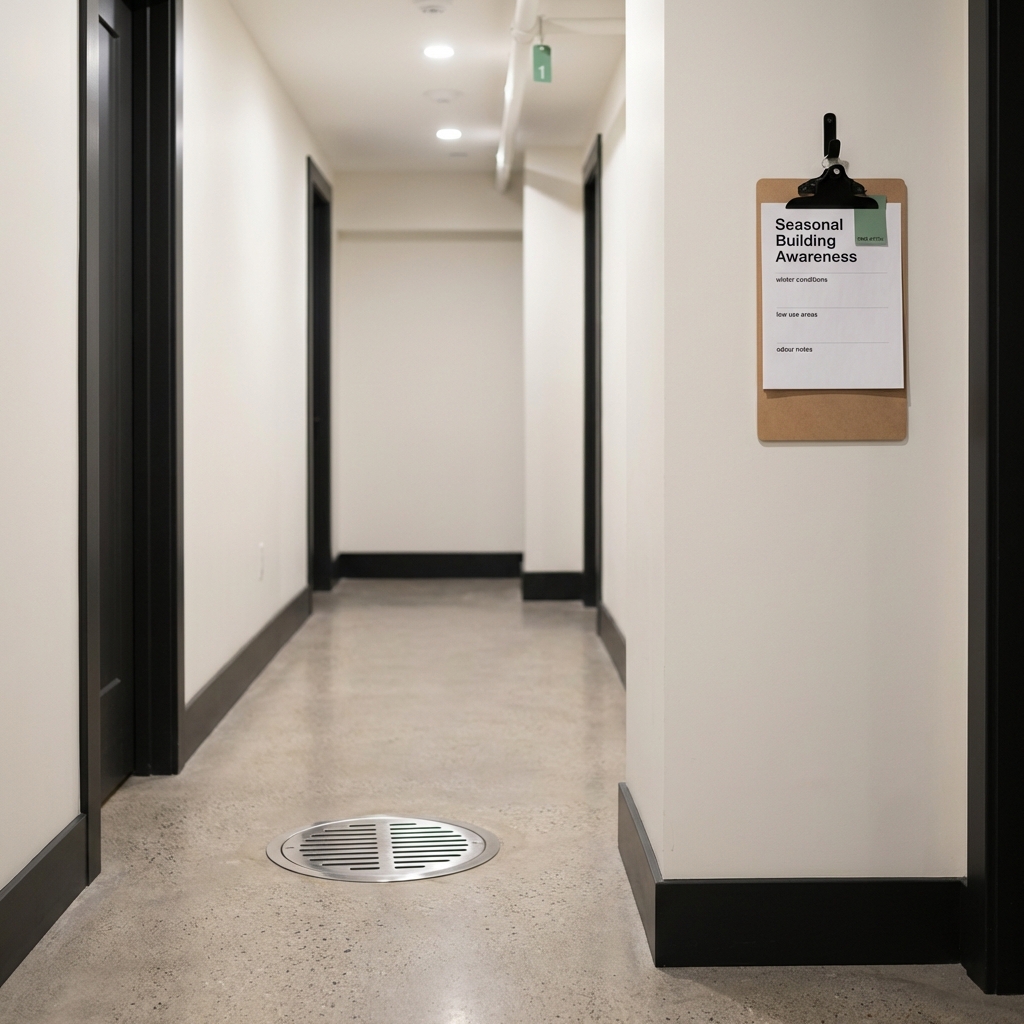
That floor drain no one notices can quietly affect indoor air. In winter or low occupancy, dried out traps can lead to odours and comfort complaints that look like IAQ issues. Seasonal awareness helps teams respond early.
#IndoorAirQuality#Facilities#BuildingSystems
Water incidents rarely wait for a drill. In the first hours after a leak, coordination and role clarity matter more than speed alone. Clear decisions help limit secondary damage and downtime.
#FacilityManagement#WaterDamage#Preparedness
Sometimes the safest call on a job site is to pause. Unknown materials in older buildings are common, and visual checks are not enough. A brief stop protects people, compliance, and timelines while qualified assessment happens.
#SafetyFirst#Facilities#RiskControl
Snow stays outside, but moisture does not. Winter entrances are key pressure points where tracked in water and temperature shifts can affect floors, air quality, and safety. Seasonal planning helps keep conditions stable.
#winterfacilities#buildingsafety#environmentalservices
When corridors get quiet, risks can get louder. Low use spaces can develop stale air, dust, and moisture drift if systems are scaled back too far. Stable ventilation and monitoring keep them ready for re use.
#FacilityManagement#IndoorAirQuality#BuildingCare
Dry winter air is not always the goal. In cold weather, higher indoor humidity can lead to quiet condensation on windows and perimeter areas. Monitoring trends and aligning comfort with building conditions helps reduce moisture risk.
#IndoorAirQuality#Facilities#BuildingCare
Odors are often dismissed as comfort issues, but recurring smells in facilities can be early indicators. Document patterns, note building conditions, and investigate calmly if concerns persist with qualified professionals.
#IAQ#FacilityManagement#BuildingSafety
Containment is not just barriers, it is airflow control. Negative air pressure pulls air into the work zone, helping keep contaminants from migrating to occupied spaces. Ask how airflow will be verified by qualified professionals.
#FacilitySafety#EnvironmentalWork#IndoorAir
After the holidays, buildings do not just turn back on, they wake up. Winter restarts can mean stagnant air, condensation, and hidden moisture. Plan a gradual restart and monitor conditions. A qualified assessment can help.
#FacilityManagement#IndoorAirQuality#WinterBuildings
Environmental work is not just about containment. It is about communication. Clear updates before and during remediation reduce confusion and keep occupants confident. Plan messaging with the same care as safety controls.
#FacilityManagement#HealthyBuildings#SafetyFirst
Don’t wait for the inspection notice—schedule a proactive abatement inspection now and avoid fines, downtime, and compliance headaches! #Abatement#Compliance#ProactiveManagement
Safe, certified, and by the book—our abatement team brings top credentials and safety standards to every project. Trust Ferro Canada for peace of mind. #CertifiedAbatement#SafetyFirst#FerroCanada
Sustainable facility upkeep = green cleaning, waste reduction, energy efficiency, and smarter maintenance. Good for business and the planet! #FacilityManagement#Sustainability#EcoFriendly