Every royal family in history was created by the people and supported by the people. We built the throne, paid for the palace, and agreed to bow.And once it's crowned, it may be difficult to dethrone. If we ever decide to dethrone , the longer we wait, the harder it's going to be
@njomomugane As you wait.
Add this to your list and earn $1.5 for every successful 10 captcha. Repeat after 5hrs.
It allow use your smart phone.
https://t.co/a3Ry1t31ch
@NytoP2PMwangi Many be @HELBpage has also put him in crb for failure to pay.The bank can't lend him money.On the other hand when you're 35 years old the government can't employ you let alone give you attachment.This country need a reset. It's painful and demoralizing.
Here's to all the places I went. And here's to all the places we'll go X has been my true North? It's now 12 calenders and I am happy to celebrate #MyXAnniversary
What if we came up with a list of people we believe have the qualifications, integrity and track record to lead a new government, similar to the students’ list in Serbia? No legacy politicians, just a dream list of credible professionals, reformers, technocrats and public servants who could bring fresh thinking to government. Who would you put on it and why?
What if we came up with a list of people we believe have the qualifications, integrity and track record to lead a new government, similar to the students’ list in Serbia? No legacy politicians, just a dream list of credible professionals, reformers, technocrats and public servants who could bring fresh thinking to government. Who would you put on it and why?
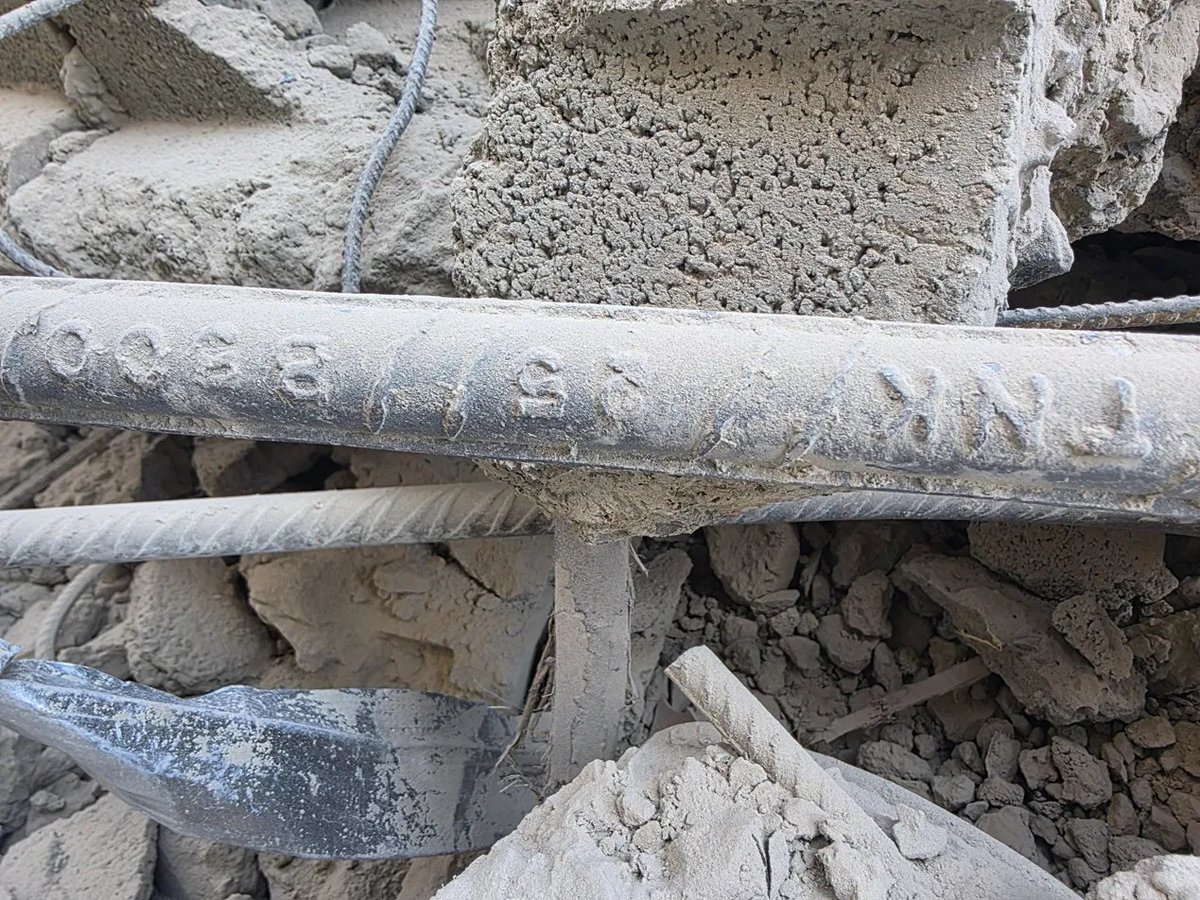
TMT, TMX, TM-WHATEVER: THE BUILDING DID NOT FALL BECAUSE OF THREE LETTERS.
Every taxi in the park has EXPRESS painted on its side. Yet the journey from Kampala to Mukono, about 22 km by road, can still take three hours. Labels are a promise, not a performance. Steel is the same.
After the recent Eastleigh collapse in Nairobi, photographs began circulating from the pancaked pile of concrete slabs and steel. The exposed bars then triggered instant verdicts on X, and we all suddenly became metallurgists.
“They used TMT bars,” said some, while others insisted that TMX is the superior, newer steel. It is a confident argument over three letters, but the letters are not where the engineering decision is made. I know what salesmen from Ugandan steel companies tell us at the conferences they sponsor: TMX is the new thing. As if every building we put up ten years ago is now a death trap.
TMX is not a separate standardised class of reinforcing steel. It is usually a trade label for a TMT bar made through a particular quenching system, commonly Thermex.
A short history helps. We began with plain round bars, smooth as a politician’s promise and not very good at gripping concrete. Then came cold-twisted bars, which raised strength but reduced ductility and introduced residual stresses. The industry moved on, for good reason, to hot-rolled ribbed bars strengthened through controlled cooling. That is TMT: thermo-mechanically treated steel.
As the hot bar leaves the rolling mill, water rapidly cools its outside, then heat from the still-hot core tempers the surface. The result is a strong outer zone around a tougher, more ductile core.
TMX is one branded route to make that kind of TMT bar. TMT is not an old steel that TMX replaced; it is the family of steel to which TMX belongs.
So ignore the fashionable three letters and read the rest of the stamp. On a marking such as B500CWR, 500 is the strength promise: a 500 MPa characteristic yield strength. The ductility class, A, B, C or D, tells you how much the bar should stretch and deform before failure, while W means weldable and R means ribbed. These are the performance classes recognised under EAS 412. TMX is not one of them.
A stamp is the CV; the laboratory is the interview. In the laboratory, the bar is pulled until it breaks to establish its actual yield strength, tensile strength and elongation. It is bent and rebent to see whether it cracks, weighed per metre, and checked for chemistry, including carbon, sulphur and phosphorus. These are standard tests under EAS 412, and UNBS or a properly equipped university or materials laboratory can run them.
You do not need a laboratory for the first screening check. Take a one-metre offcut and put it on a scale. A nominal 12 mm bar weighs about 0.89 kg, while a 16 mm bar weighs about 1.58 kg. There are permitted tolerances, but if yours is noticeably lighter, do not argue with the stamp; send it to me and buy popcorn and watch a storm.
For now, as a developer, just ask for a mill test certificate for every batch, send samples for independent testing, and weigh before you pay. A “16 mm” bar that weighs like a 14 mm bar has quietly stolen your steel before the concrete is even mixed.
Buildings rarely fall because of the name printed on a bar. They fall because poor materials, weak concrete, undocumented alterations, bad workmanship and empty inspection hide behind confident labels. The bar can say whatever it likes; only the laboratory can say whether it is true.
@ecoconcreteUG leads with knowledge, material testing and evidence. Inbox for a quick review/appraisal of your building project.
You livestream your political rallies, your PR stunts, and every little thing you want Kenyans to see. Lakini when it comes to live streaming elections to guarantee transparency, suddenly it becomes a problem. Hawa politicians wanatubeba aje?