Old world: giant data center, racks of GPUs, power/cooling/water/land, $200M gatekeeping.
Parallax world: distributed GPUs, regular machines, no training data exposed to workers, same time target with ~82% less hardware/resources.
Proof of Parallax.
$TAO
What does it look like when a network starts paying for itself?
A year ago we earned almost nothing per token we served.
Today the platform earns around $280K for every trillion tokens that move through it, and that number has climbed all year while we cut models and tightened compute.
Same work, more revenue per unit of it. That is the line that matters.
It is on our public dashboard, updated live:
https://t.co/pYds1pviSd
One more thing. That revenue does not sit idle. It flows back into buying and staking the token itself.
What would you want to see us prove next?
$TAO
Chutes @chutes_ai $TAO's SN64 just ranked #3 in global DePIN revenue. $5.4M annualized. Behind only Helium and https://t.co/l56XLGqdPh. Ahead of Akash, Render, Filecoin, Livepeer. Congrats to them all.
But Read that again.
Not Bittensor.
One of 128 subnet's.
These are entire standalone decentralized compute protocols, some with own chains, own tokens, own governances, own validator's sets.
Chutes is a Bittensor subnet.
Not on a separate chain.
No separate governance to build.
It's own Token $CHUTES on Bittensor and Just product.
And it is doing 3x Akash’s revenue.
The model is working.
Competing against the system itself is difficult. Bittensor provides the infrastructure Yuma Consensus, emissions, cross-subnet composability, Community, $TAO liquidity, validator networks, AMM pools, on-chain governance as protocol-level defaults.
A subnet inherits all of that on the first day. A standalone protocol spends years and tens of millions building the same stack from scratch, then tries to compete.
But a market that already has 128 subnets with network effects, real revenue, and compounding liquidity. Thats advantages.
Every AI-driven project that raises a round, launches a separate token, and builds its own validator set in 2026 is making the same mistake. The infrastructure already exists.
The collective already has the network effects. The emissions already flow to the best products.
You beat them by not needing to build one. And joining into the strongest community in the world.
Join the collective or get left behind. The ones that understand this early compound inside the network.
The ones that do not fight for the advantages that Bittensor already has.
Chutes proved it.
Only 96M Mcap.
$5.4M annualized.
Third in the world.
Built on Bittensor.
@Chutes_ai
$TAO
DYOR.
Another friendly reminder that TEE only matters if the code/workload is attested, AND you aren't just calling a proprietary AI lab like claude, chat gpt, gemini, etc. which 100% DEFINITELY store your data.
- https://t.co/pPU9tDnMSO ("abuse monitoring")
- https://t.co/T7hp5ANzEM ("safety" 2+ YEARS??)
- https://t.co/Fhajg8zShR even says "Please don't enter confidential information that you wouldn’t want a reviewer to see or Google to use to improve our services" lol
If it's not fully open source and end-to-end client side encrypted AND not going to data-hungry AI labs with contractors and reviewers and safety teams and so on, there's no privacy. Careful out there!
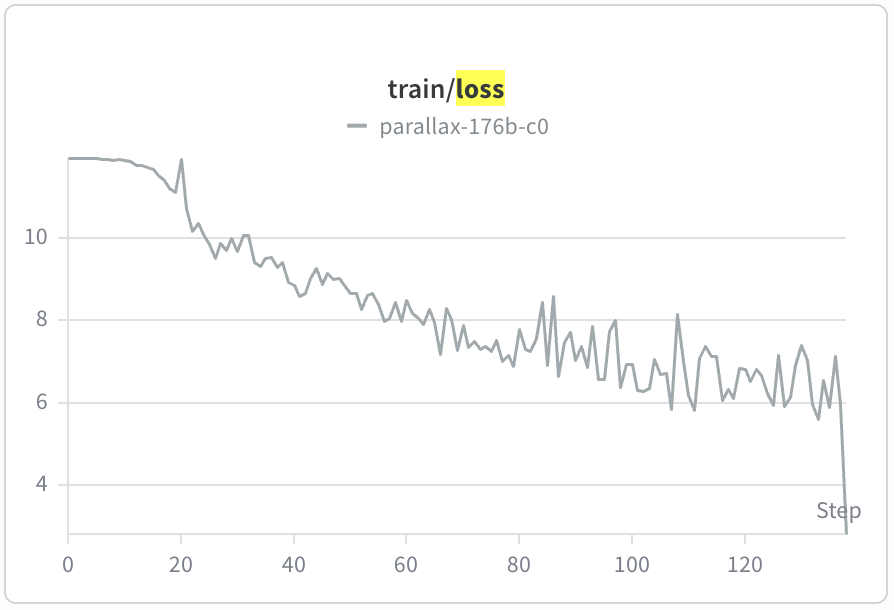
Just for fun I kicked off a run of a 176b parameter model on ~140 steps to prove feasibility - 4 separate nodes across the internet using the "Parallax" method, works like a charm.
Still need a more concrete plan on dataset curation, phases, context elongation, etc. etc. before a full run is ready of this scale, but at least we know 176b should be no problem at all.
We have run four sessions in our Malaysia Build Week so far. 1,000+ participants.
The APU AIC AI Marathon is the main event we're sponsoring here in Malaysia. Workshops on building with open-source models, on-chain inference, agentic workflows, and integrating Sign in with Chutes.
The marathon runs through next week, so there's still time to get involved.
We're also running a second hackathon with Nyala Labs where participants have about a month left to work on their projects.
A few things from the APU sessions that stuck with us:
Students asking specific questions about how TEE enclaves prevent GPU operators from reading prompts. Not surface-level questions. Technical ones about Intel TDX and attestation.
Teams building agents that route different subtasks to different models through our model routing system.
Participants who started the week unfamiliar with open-source AI and left with working API integrations they can keep building on.
The marathon continues next week.
→ https://t.co/SMATu20nZ4
Have you been to a hackathon that changed how you think about building?
@RvCrypto veryy true, most people are still navigating $TAO subnets through vibes and price action, not actually tracking usage metrics or reading docs
@AlgodTrading labs are already picking specific workloads to run on subnets rather than going all-in on decentralization. and the hard to decentralize parts will probably shrink as incentive design matures
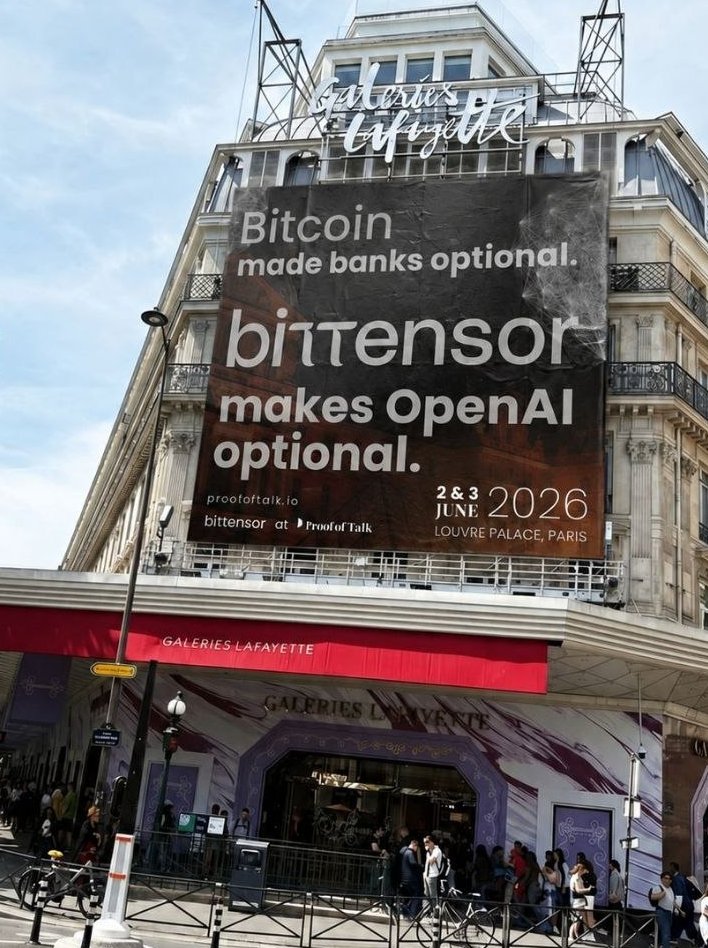
'Bitcoin made banks optional. Bittensor makes OpenAI optional'
This line is more literal than people think.
Chutes (SN64) runs the same models, same API format. You just swap the endpoint and pay a fraction of the cost. most devs using it have never touched a crypto wallet.