😡💢🐵 Una salvaje bestia de origen sub-sahariano cometiendo actos aberrantes en una playa pública familiar en Italia. En frente de NIÑOS.
Un grupo de patriotas se hartó y le dio una dosis de paloterapia (Final feliz). 🇮🇹💪
SpaceX, asset vero con sotto un'azienda vera che fa dei bilanci veri, pompa e dumpa di un trilione di capitalizzazione di giorno in giorno
oro, riserva di valore che si tocca vecchia come il mondo e asset piu capitalizzato della terra, perde quasi il 30% del suo valore dopo aver fatto x4 negli anni prima
però bitcoin è troppo volatile quindi è scam
Justin Sun si è infuriato con il team di WLFI dopo averci pesantemente investito perché il progetto è centralizzato e sfruttato (in ultima analisi dalla cricca di Trump) per profitto personale
THEY DID IT.
The SEC and CFTC just dropped a landmark document that officially classifies crypto assets.
They're actually telling us which crypto assets are securities and which ones aren't - by name!
THIS IS SOMETHING GENSLER REFUSED TO DO
(he focused on prosecuting crypto out of existence)
This rule doc gives crypto many of the benefits of the clarity bill - it lifts us out of the gray market - it gives every asset a path.
It's almost like the Clarity act just passed by way of regulator.
(of course, the actual clarity act will harden all this into legislation and make it irreversible in the event we get another Gensler, we still want it)
This rule says there's 5 categories for crypto assets:
1) Digital Commodities - assets tied to a functional, decentralized crypto system (e.g., BTC, ETH, SOL, XRP, ADA, DOGE). Not securities. (yes, they name them on page 14)
2) Digital Collectibles - NFTs, meme coins, artwork tokens, in-game items. Not securities (fractionalized collectibles may be an exception).
3) Digital Tools - membership tokens, credentials, domain names (e.g., ENS). Not securities.
4) Stablecoins - payment stablecoins under the GENIUS Act are not securities. Other stablecoins, it depends.
5) Digital Securities - tokenized versions of traditional securities. Like tokenized stocks. Always securities.
Amazing! This makes so much sense I can't believe it's coming from a regulator.
No more enforcement threats to Ethereum developers and crypto exchanges.
How about the Howey test?
More common sense! If an issuer makes specific promises of managerial efforts from which buyers expect profits, the offering is a security until those promises are fulfilled. Then it's a commodity. The asset itself was never the security, the deal around it was. (E.g. XRP was a security pre launch, became a commodity after).
How about stuff like staking and mining?
Mining? Not a securities transaction.
Staking? Also not a securities transaction, that includes custodial and liquid staking even with LSTs!
How about wrapping BTC? Not a securities transaction.
Airdrops? NOT SECURITIES. NO MORE GEO BANS PROTECTING AMERICANS from free airdrops.
Remember this is a joint doc from the SEC and CFTC, They're actually cooperating on this, no internal strife, this is binding to both.
SEC regulates $80-100 trillion assets
CFTC regulates $5-10 trillion assets
Both of the world's largest capital markets are showing us that crypto assets are here to stay and they're welcome alongside traditional assets.
Every country will follow.
This is the biggest move toward legitimacy I've seen in all my time in crypto. Maybe bigger than the genius act since is covers all crypto assets.
Well done @MichaelSelig and @SECPaulSAtkins.
And especially well done to the indefatigable @HesterPeirce. Her fingerprints are all over this, couldn't have happened without her eight years of principles-based curiosity.
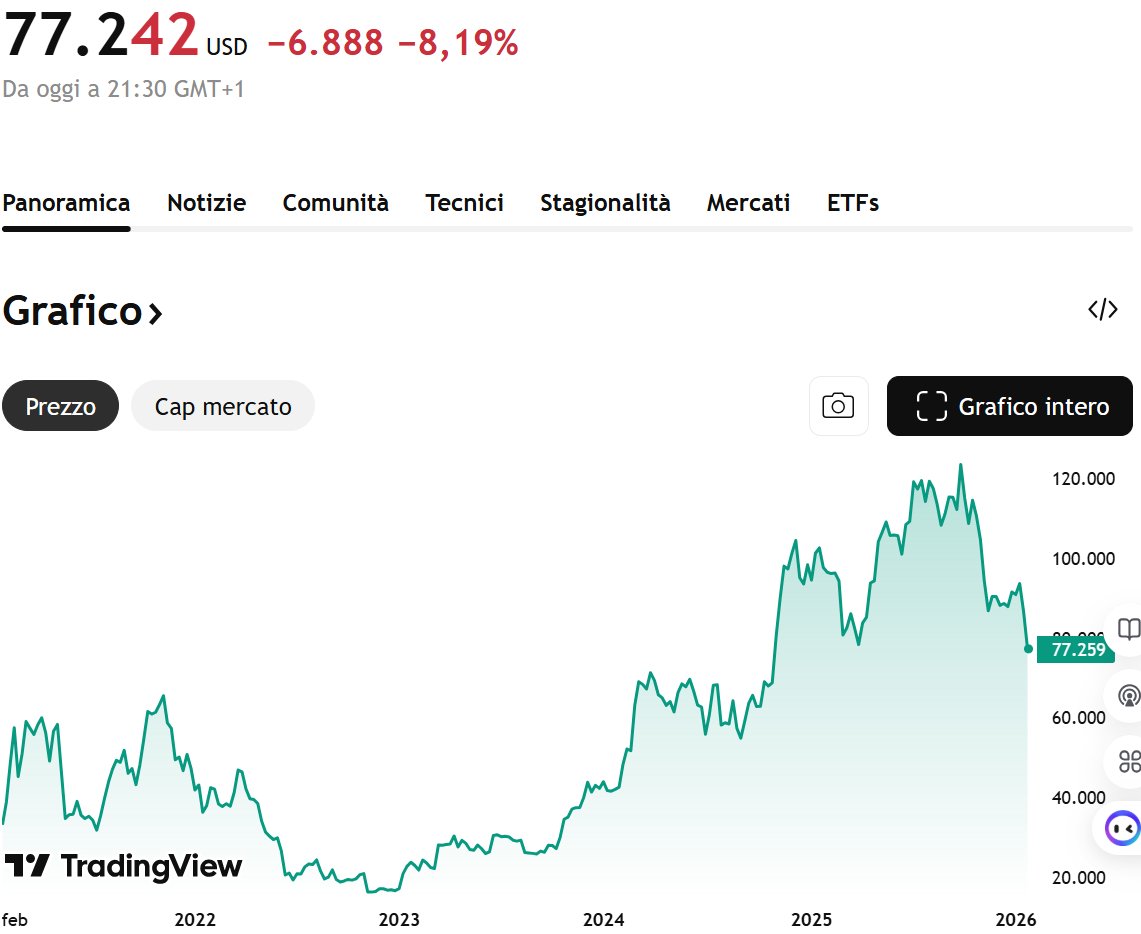
Oggi è sabato, ma il #Bitcoin non smette di far perdere soldi ai pirla: -8% oggi.. Siamo a 77,200 $, era arrivato a 121,000 $. Dico "ai pirla", perchè ho scritto almeno 10 volte perchè il Bitcoin non sia una moneta, come l'Oro, ma un gioco speculativo.
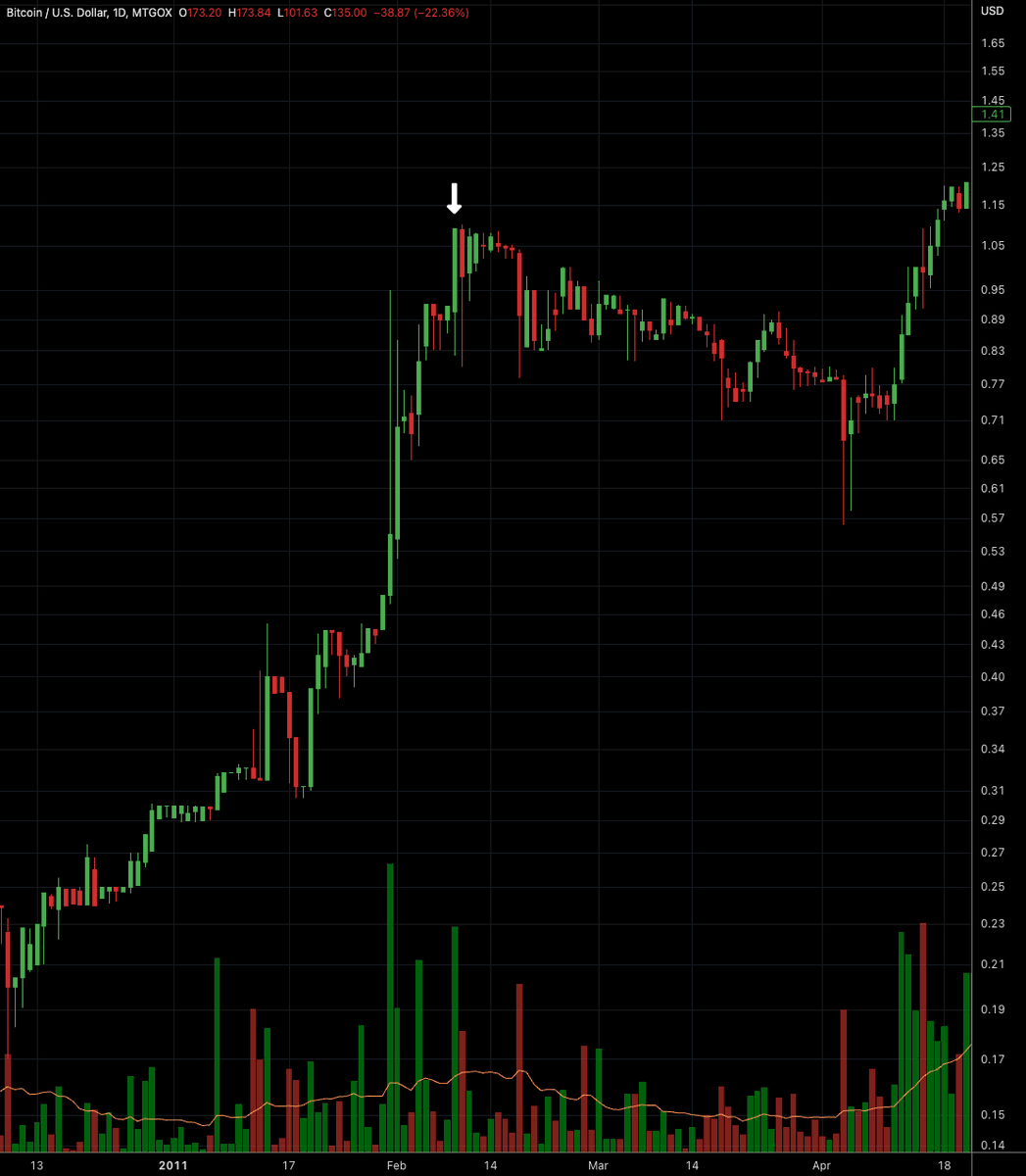
Tieni presente che ha avuto due crash del -78% e -81% negli ultimi dieci anni. Dal massimo di 121 mila può crollare almeno della metà, perchè il "tono" del mercato è pessimo da mesi.
Michael Saylor in questa intervista afferma che "finché bitcoin sale del 1.25% l'anno possono tranquillamente pagare i dividendi per sempre" (dal minuto 4:25)
aggiunge "se salisse dello 0% per sempre, avremmo circa 80 anni per capire cosa fare"
"la nostra azienda è ingegnerizzata per assorbire un drawdown anche dell'80-90%"