Most sensor problems start as chemistry problems. Drift, contamination and cross-sensitivity all begin at the sensing surface, and no amount of firmware filtering recovers a signal the chemistry never produced.
A CNC cutter is round, so it can't cut a sharp internal corner. Design the radius in, keep pockets shallow, machine from as few sides as possible, and only tolerance the faces that matter.
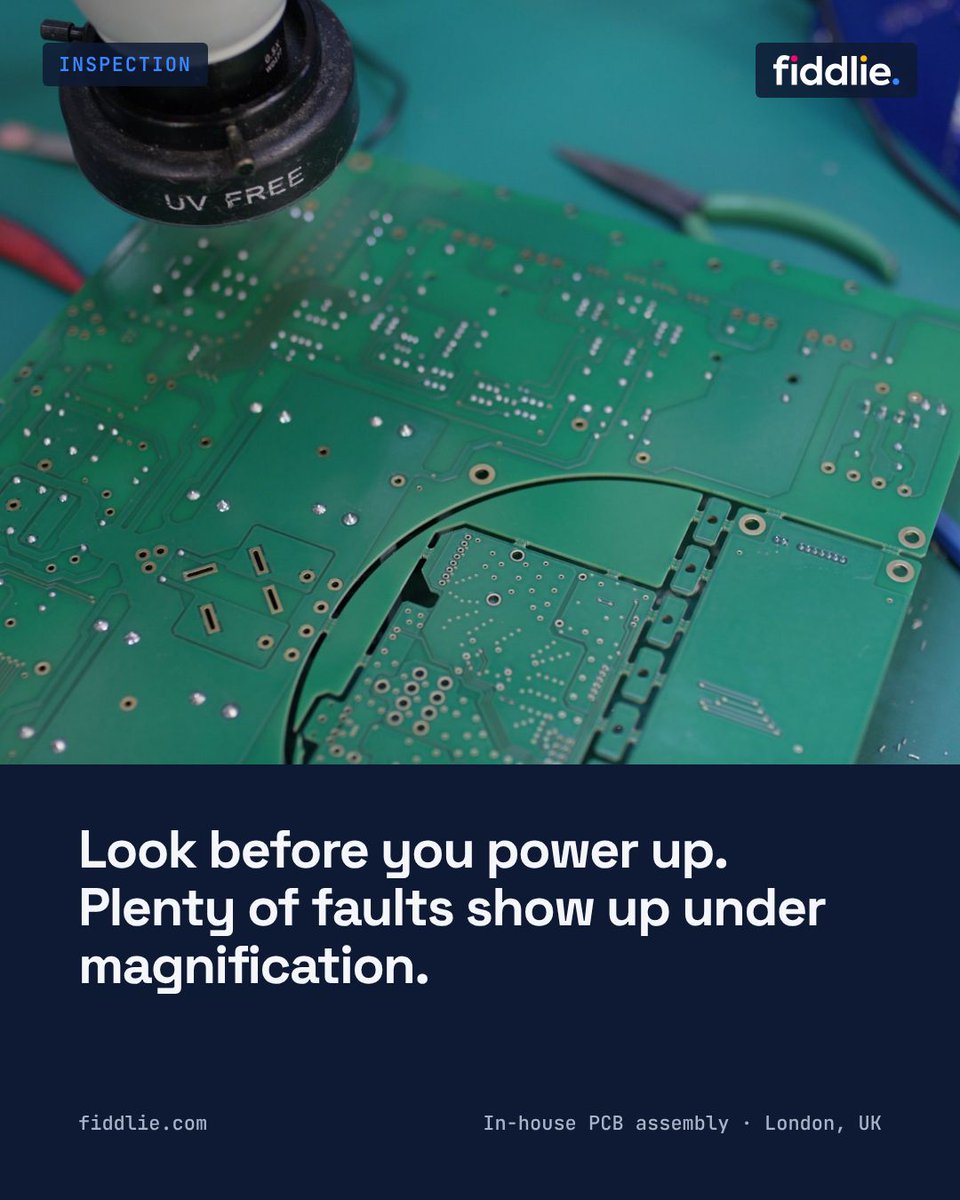
Before a new board gets power, look at it under magnification. Solder bridges, tombstoned parts, components rotated 180°. Two minutes with a microscope beats an afternoon debugging the wrong problem.
A render can't tell you whether a part will mould. Draft on every vertical face, even wall thickness, no undercuts you haven't budgeted for. Cheap to fix in CAD. Expensive to fix in steel.
A hardware product is more than a PCB. Firmware, software, industrial design and materials all have to work together, so we do all of them in one lab in London, UK. Fewer handovers, fewer things lost between suppliers.
Your board at assembly: files cross-checked, paste stencilled, parts placed by fiducials, reflowed, then inspected (AOI for visible joints, X-ray for BGAs). A BOM that doesn't match its footprints stalls it at step one.
Machines place most parts. Hand soldering still earns its place: big through-hole connectors, rework after a design change, and the bodge wire that proves a fix before the respin.
Got a hardware question you've been meaning to ask an engineer? Batteries, microcontrollers, enclosures, patents, prototype counts. Reply or DM us and we'll answer the best ones in upcoming posts.
Plenty of enclosure respins start as a PCB decision nobody told the designer about. Agree board outline, mounting holes, connector positions and antenna clearance before layout starts.
Roughly half the products we deliver go on to a patent filing, and the IP is assigned to the client. Building hardware? Ask your engineering partner who owns what they invent for you. Get it in writing.
First power-on of a new board should be boring. Rail-to-ground resistance first, current-limited supply, one rail at a time, then firmware. Slower than plugging in and hoping, and far cheaper than smoke.
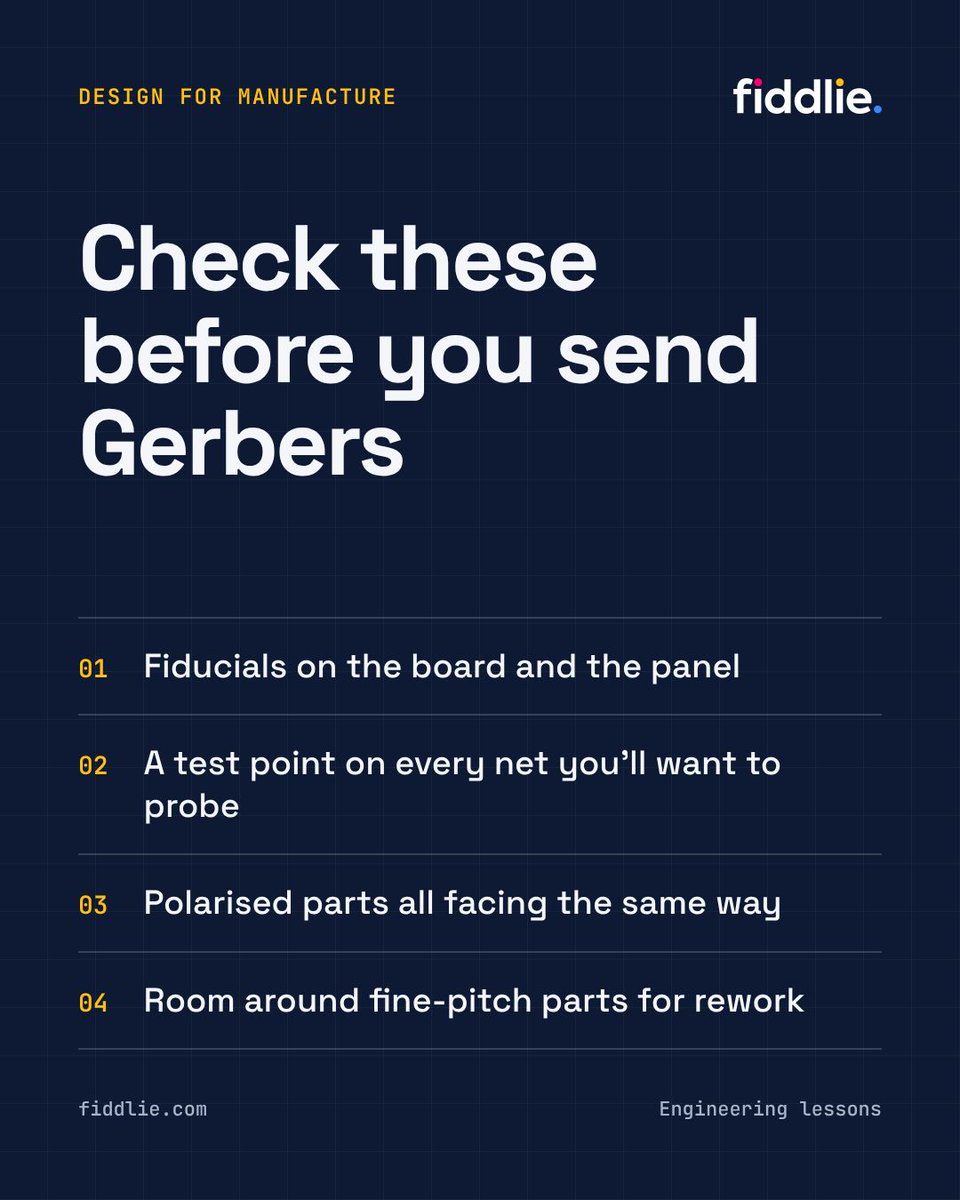
Before you send Gerbers: fiducials on board and panel, a test point on every net you'll probe, polarised parts facing one way, room around fine-pitch parts for rework. Minutes in layout, days saved later.
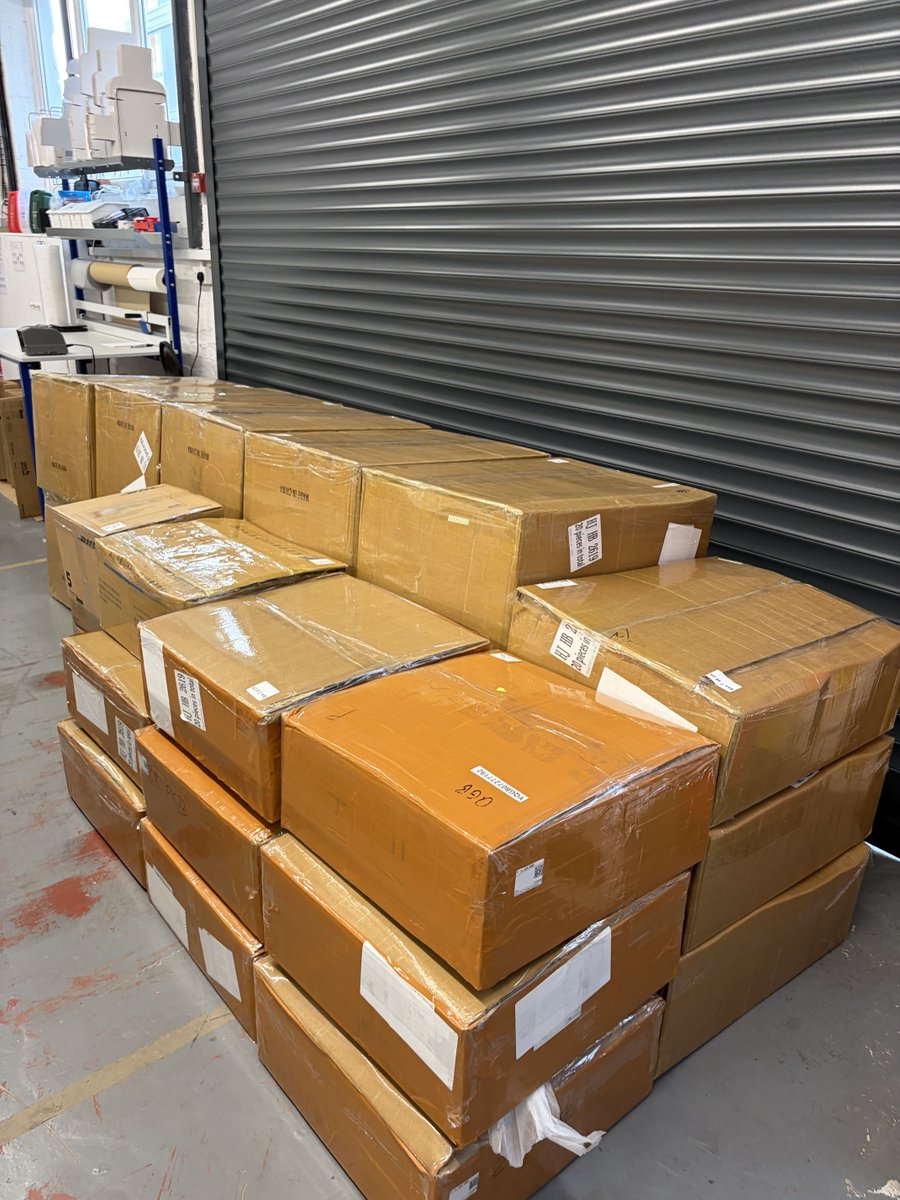
Always feels good to be shipping out the first batch of a new product to one of our clients - a big moment for us and for any startup at the end of months of hard work 💪
Lithium cell checklist people skip: UN38.3 reports before anyone will ship it, capacity checks at the coldest temperature you'll see, room for pouch swelling, and a protection circuit. Always a protection circuit.
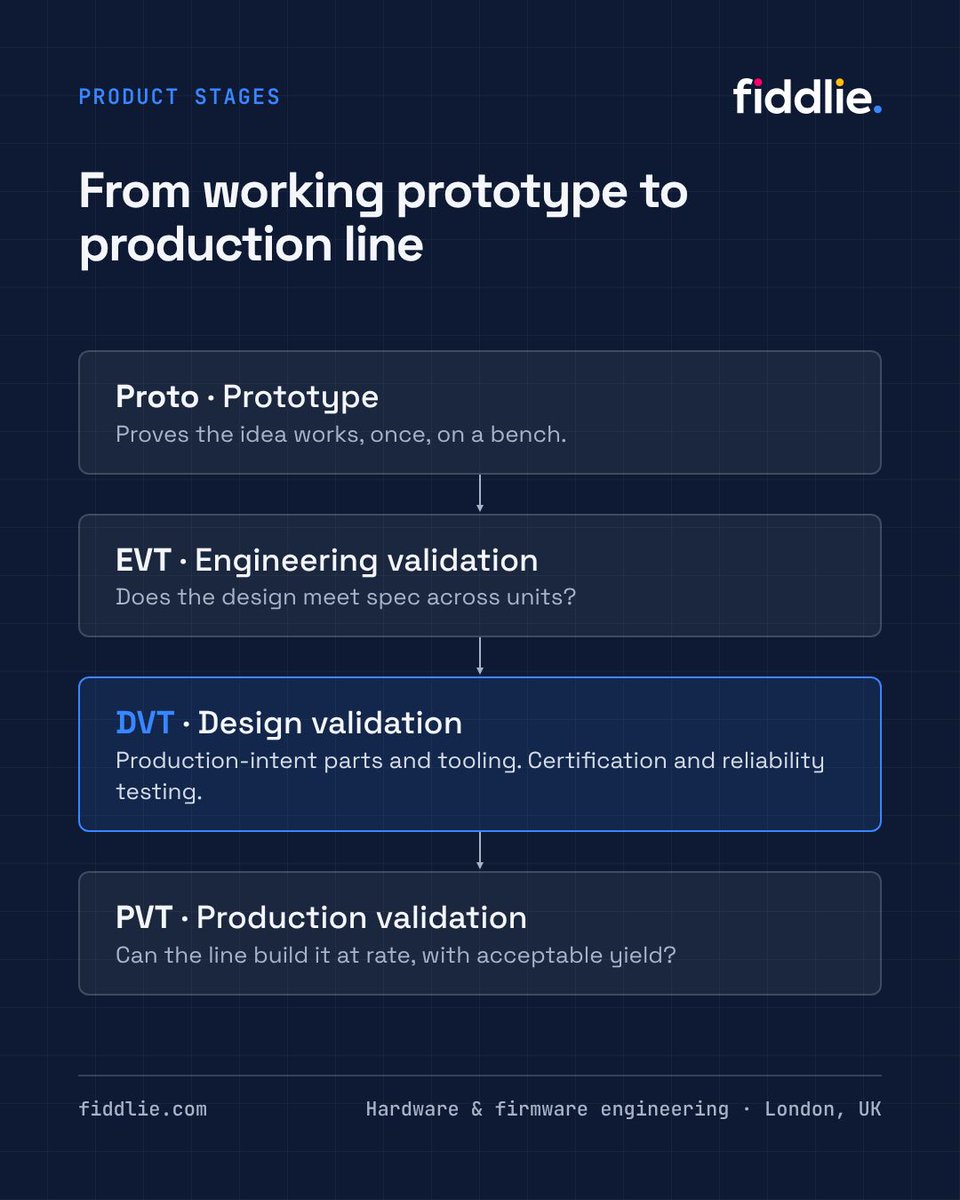
Prototype, EVT, DVT, PVT. "It works" and "it's ready to manufacture" are different milestones, with two more in between. Skip EVT to save a few weeks and you'll usually pay for it in DVT.
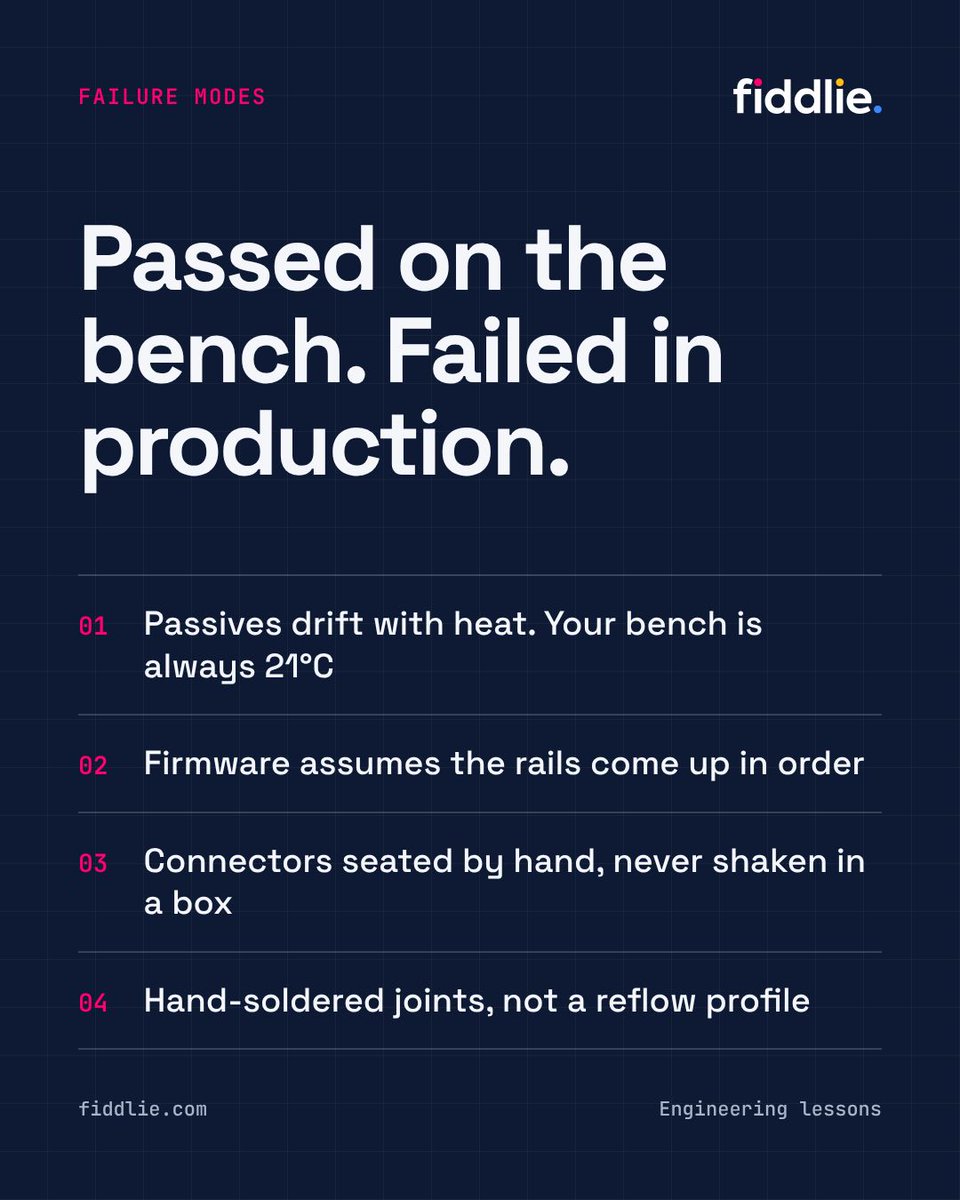
A prototype that works on your desk has passed one test: your desk. Heat drifts passives, firmware assumes rail order, hand-seated connectors shake loose, and reflow isn't hand soldering. None show up in a demo. All show up in returns.
Big news. Fiddlie is growing and growing in a new direction. 🧪👩🔬
We are happy to share we are now taking on chemical engineering projects. This is an expansion long in the planning.
We've always believed that the most exciting innovations live at the intersection of disciplines and chemistry is no exception.
Adding chemical engineering to our capabilities means we can tackle harder problems, build more sophisticated products and contribute meaningfully to a field ripe for disruption
Sensing The Wind.
@SKNSystems is Bringing Real-World Aerodynamic Data to the Race Track.
To learn about how this technology was developed, check out our latest blogpost:
https://t.co/h6uDOVAnQw