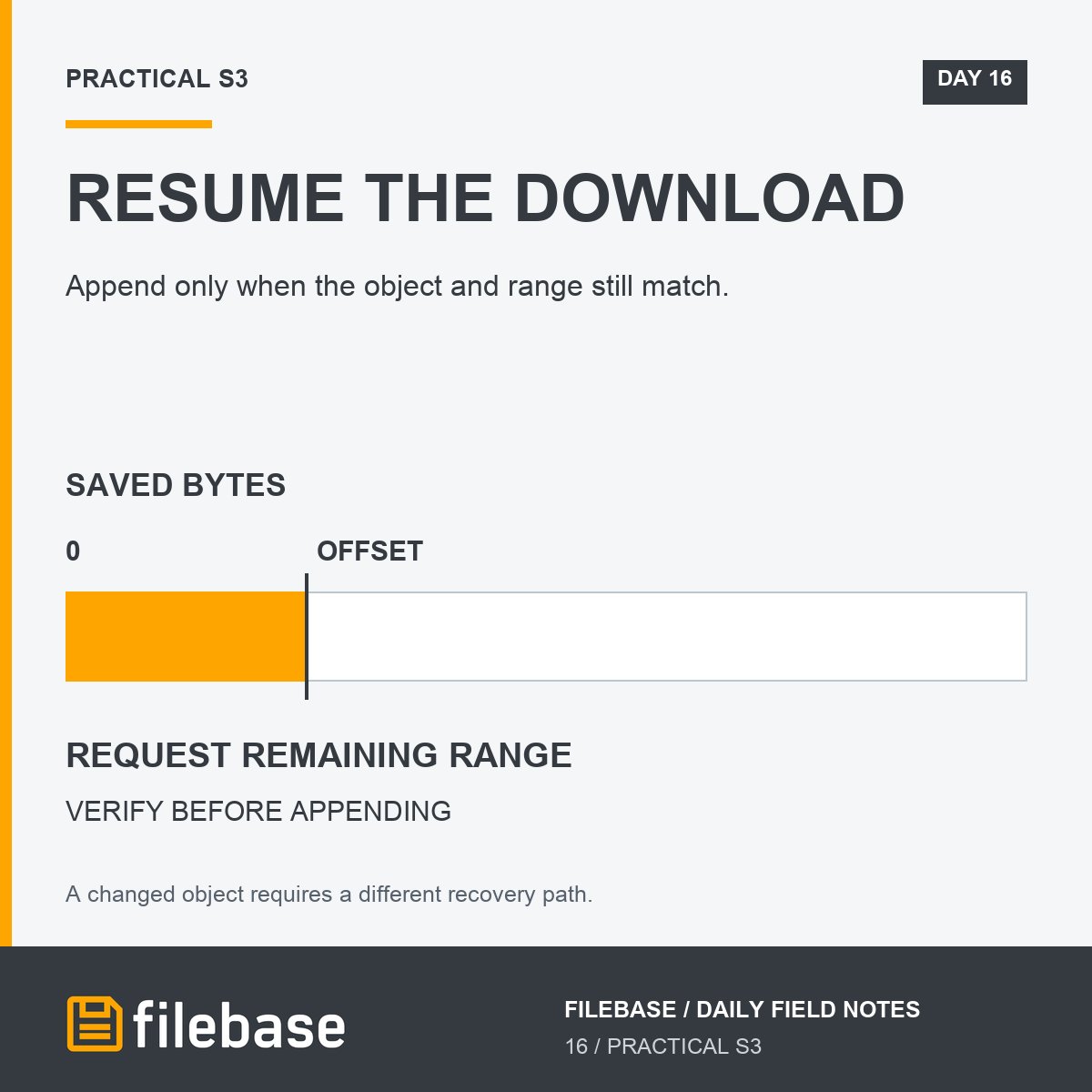
A failed download need not restart at byte zero. Filebase supports Range GETs. Resume from the saved byte offset, check Content-Range, and confirm the object hasn't changed before appending. Supported operations:
https://t.co/jqPmxZuXq6
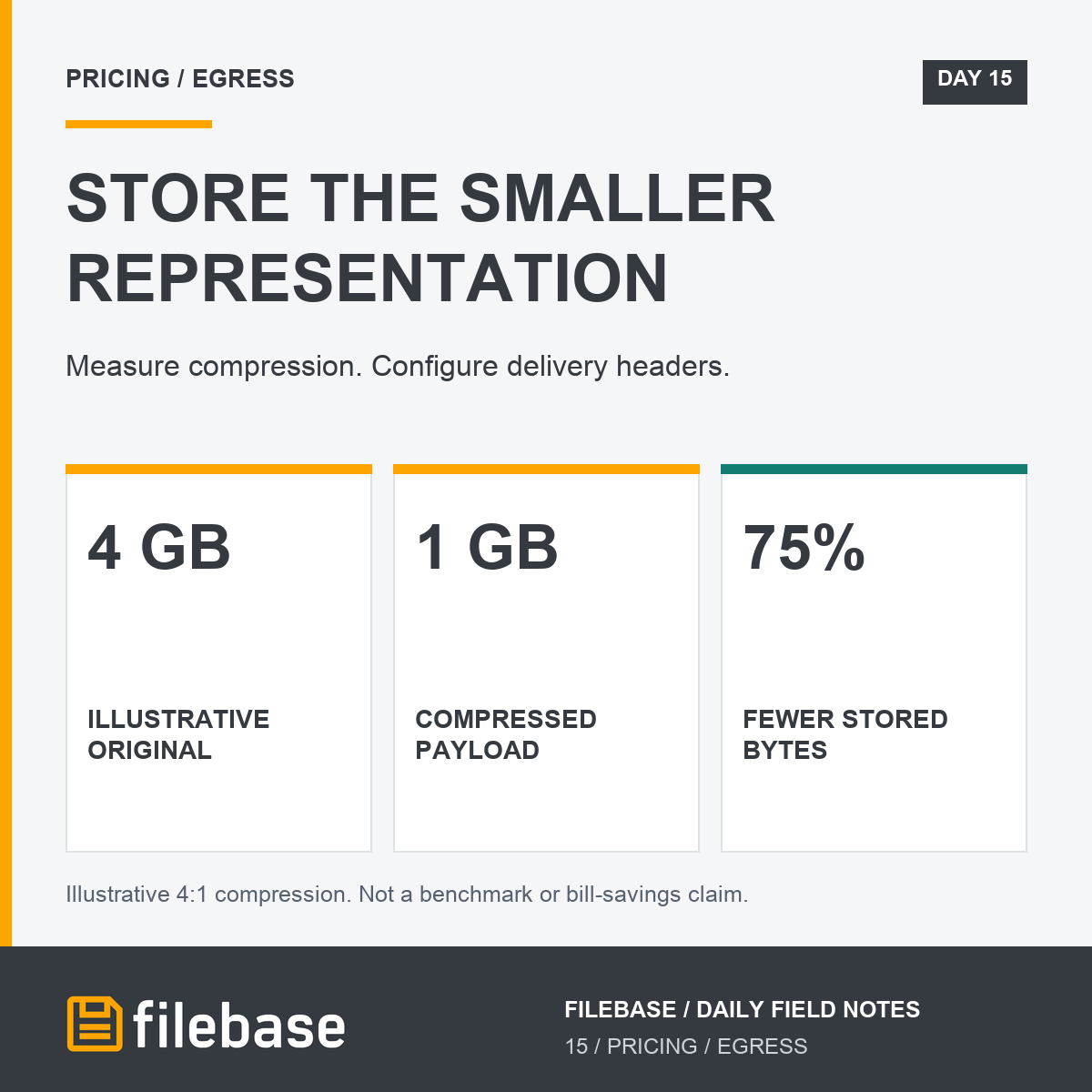
An illustrative 4 GB text export compressed to 1 GB uses 3 GB fewer stored bytes. Filebase does not automatically transcode gzip/Brotli delivery; set Content-Encoding when serving compressed content. Check the header guidance:
https://t.co/X5VFnaU0SE
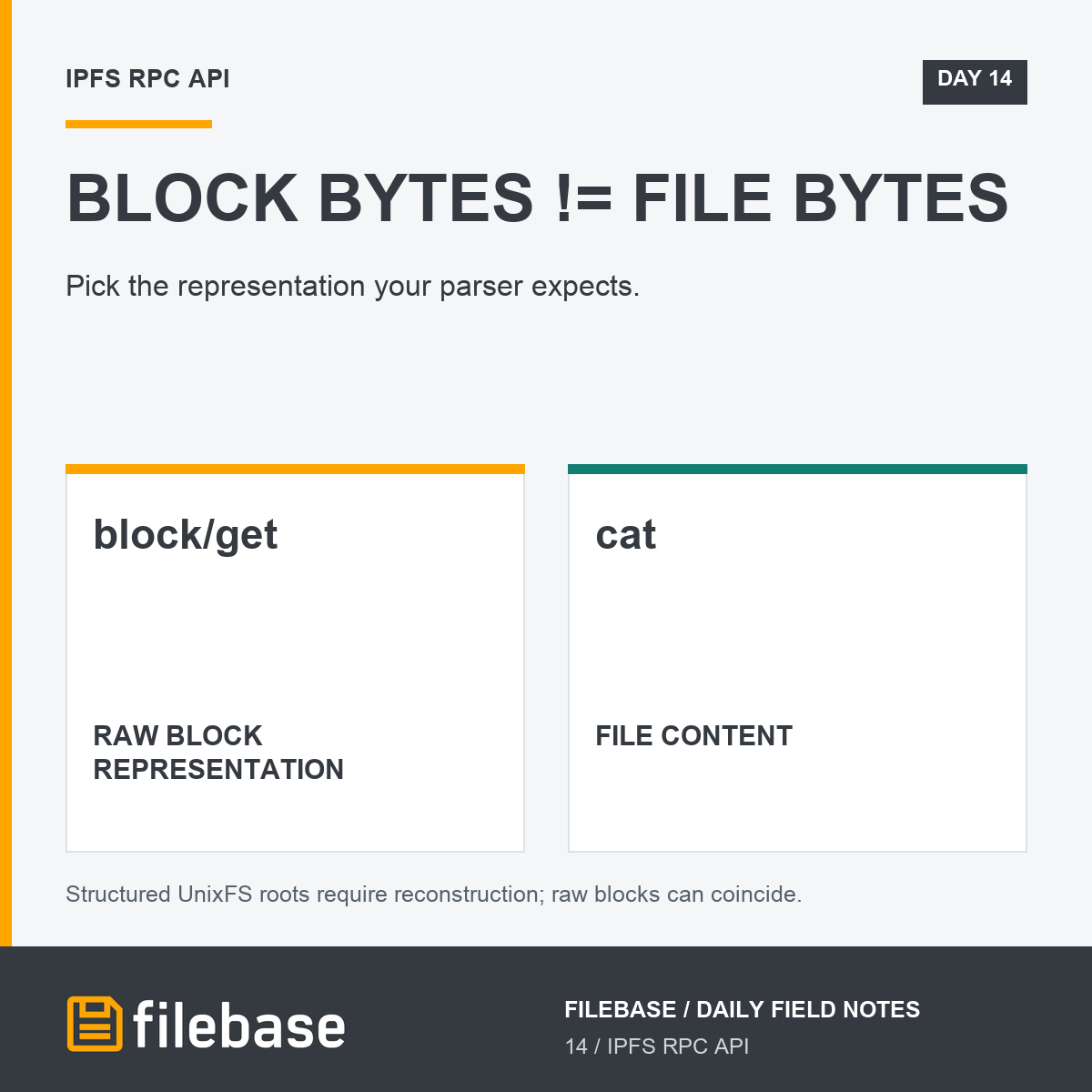
Raw block bytes are not necessarily file bytes. Filebase RPC block/get retrieves a block; cat returns a file's contents. For a UnixFS file with a structured root, pick the route that matches the bytes your parser expects. RPC reference:
https://t.co/b2d5hSiLIx
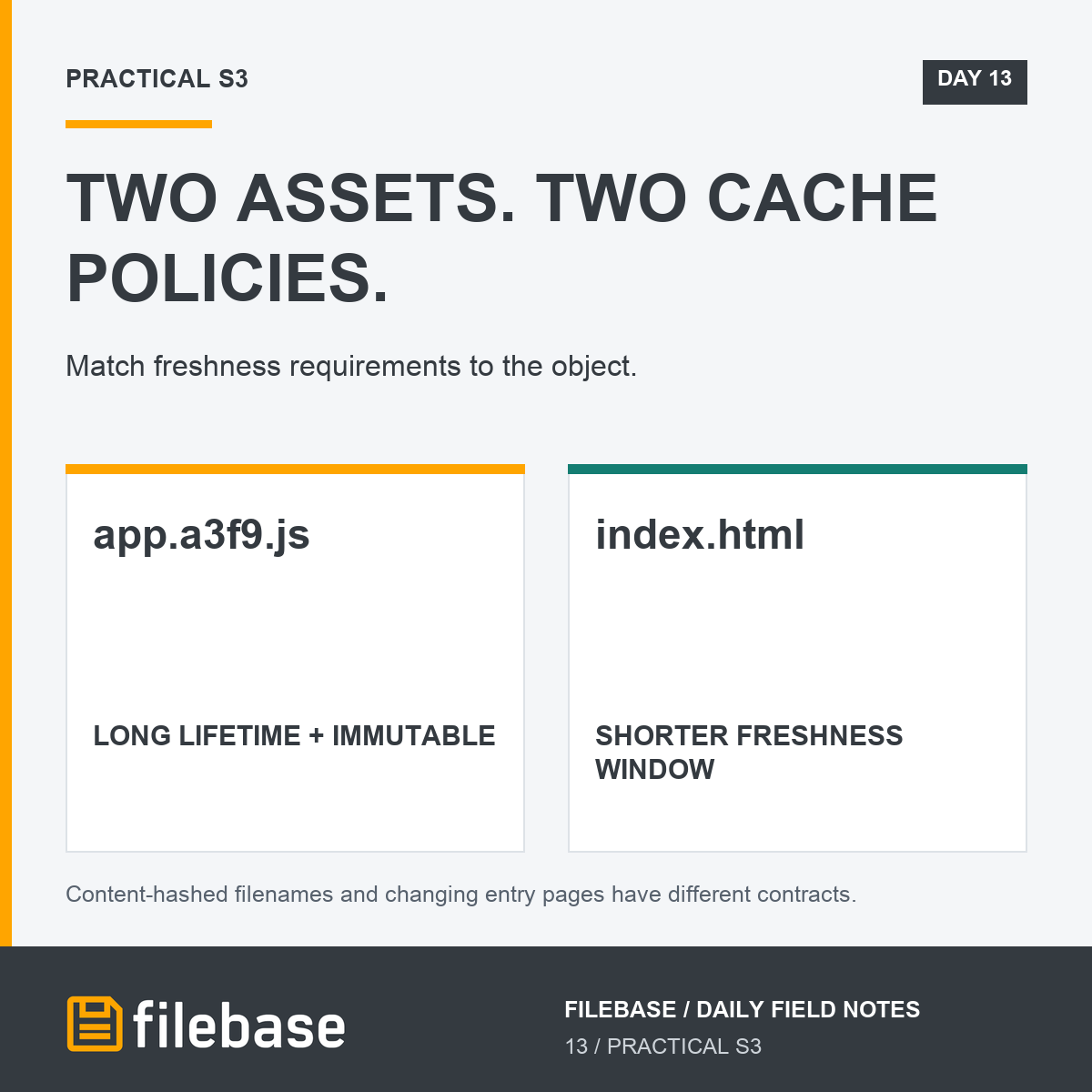
Hashed JS and changing HTML need different cache policies. Filebase respects Cache-Control: use long-lived immutable caching for content-hashed assets and a shorter policy for changing entry pages. Configure each upload deliberately:
https://t.co/uapkjYeJAX
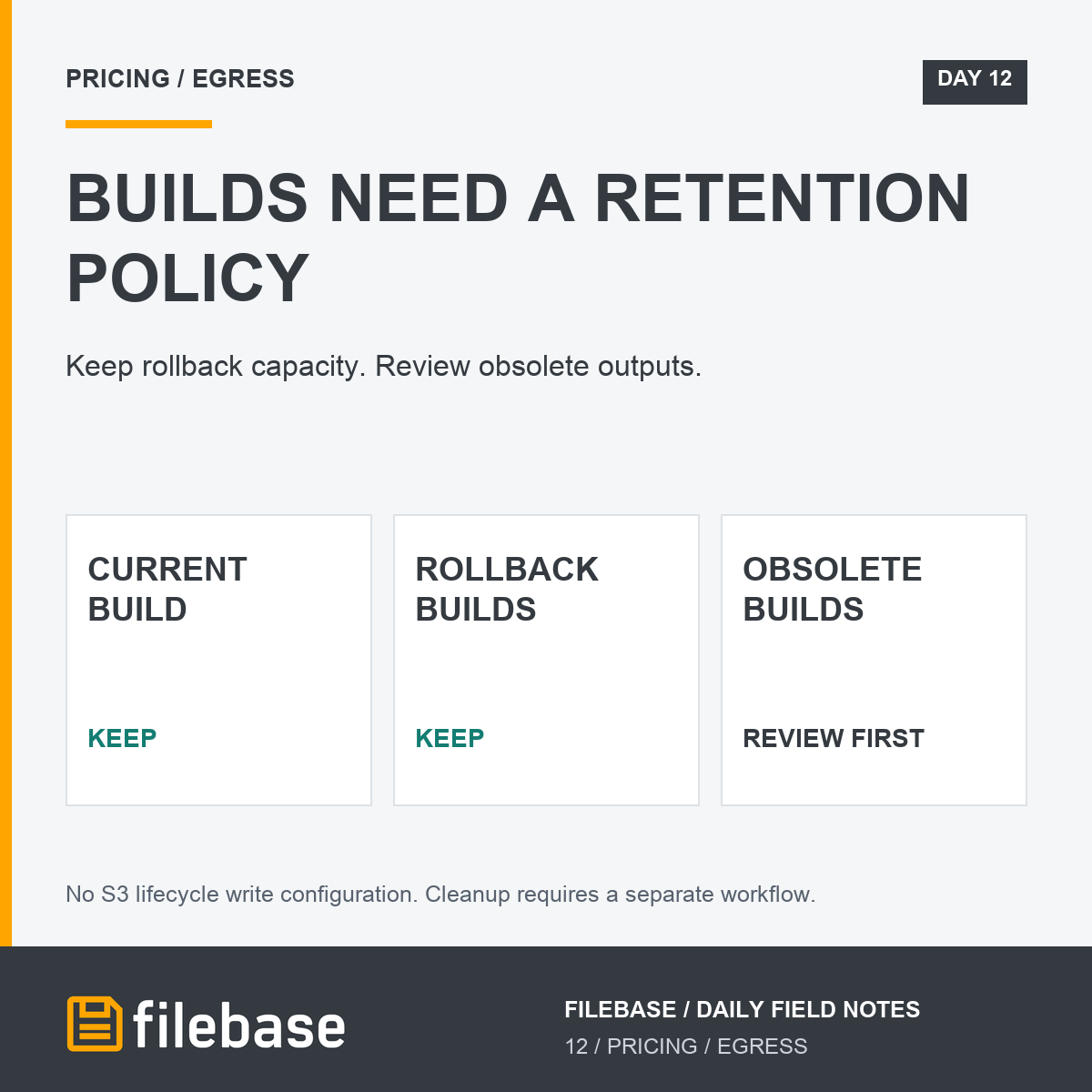
Old builds can outlive their usefulness. Keep needed rollback versions, inventory the rest, and approve cleanup before deletion. Filebase does not support S3 lifecycle write configuration; use an explicit retention job. Check compatibility:
https://t.co/3edT6qI2U4
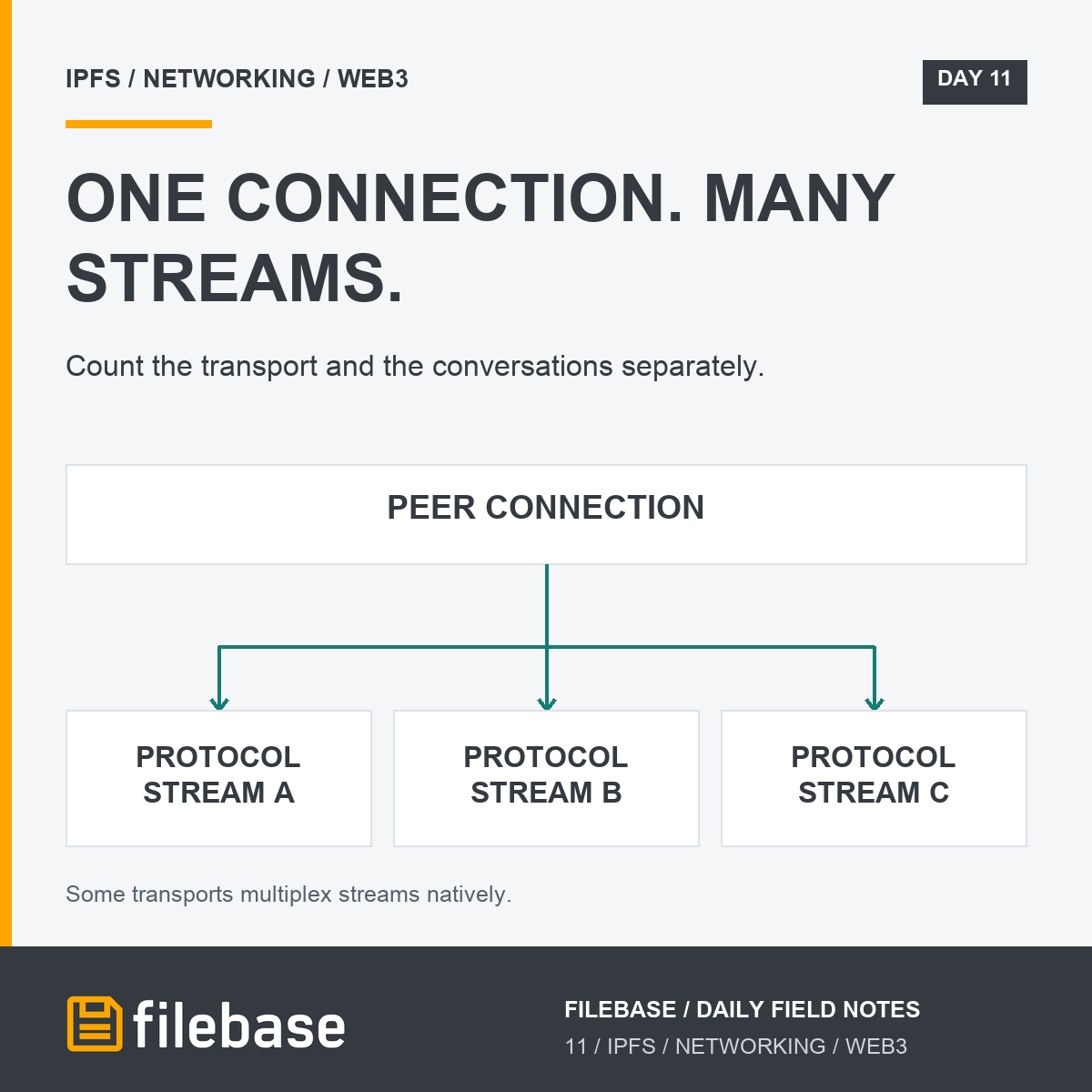
One peer connection can carry multiple protocol streams. libp2p stream multiplexing separates those conversations without requiring a new connection for every exchange. Stream count and connection count are different operational metrics. #libp2p
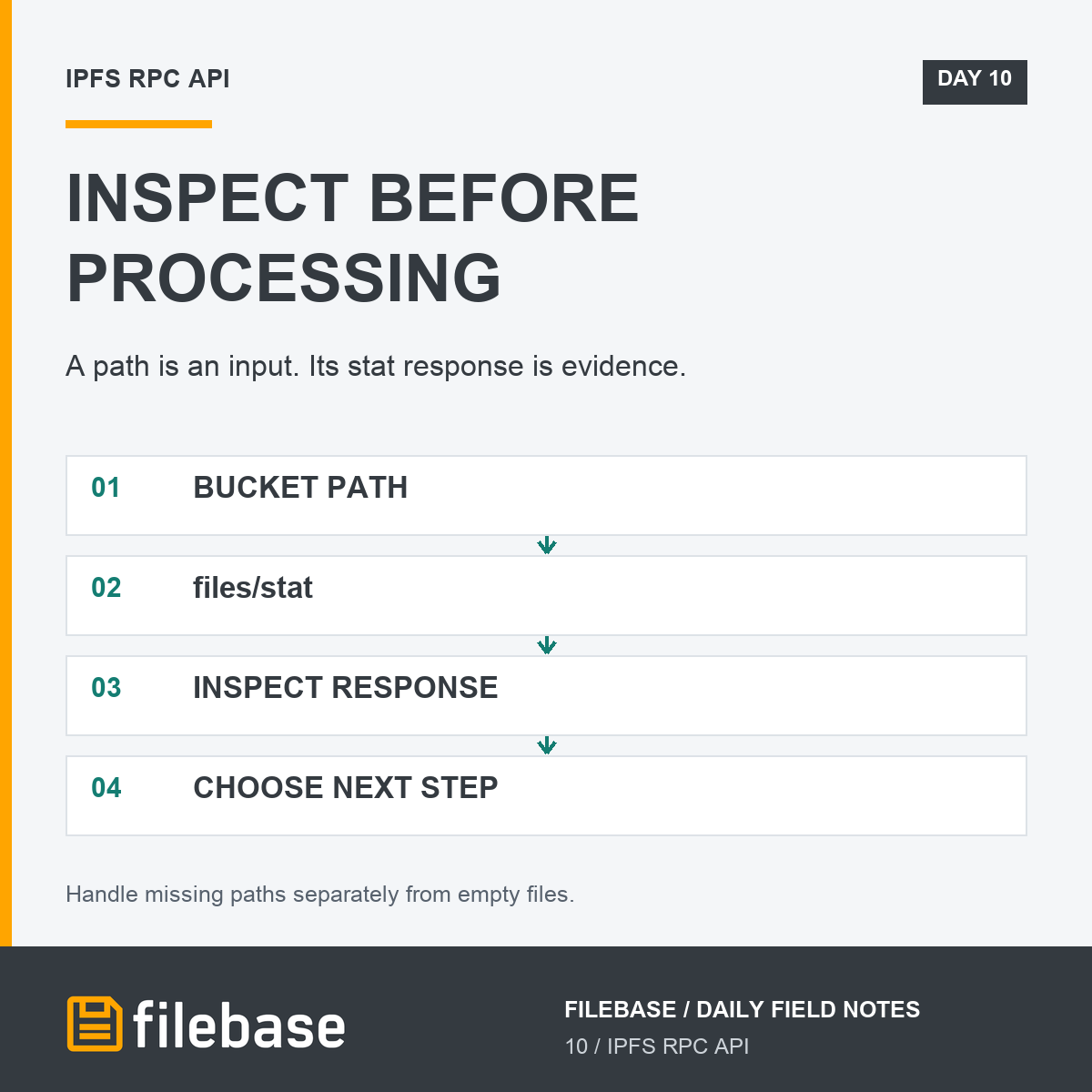
Before parsing an IPFS bucket path, inspect it. Filebase RPC files/stat returns stat information without making a file-read request. Build the processing branch from the actual response, not from a filename guess. Route details:
https://t.co/fjiw3cS7jZ
Keep the object key machine-friendly and the download name human-friendly. Content-Disposition can suggest a filename without renaming the stored key. Set it in your S3 upload metadata and check the browser's result. Filebase operations:
https://t.co/5Bma18qRQF
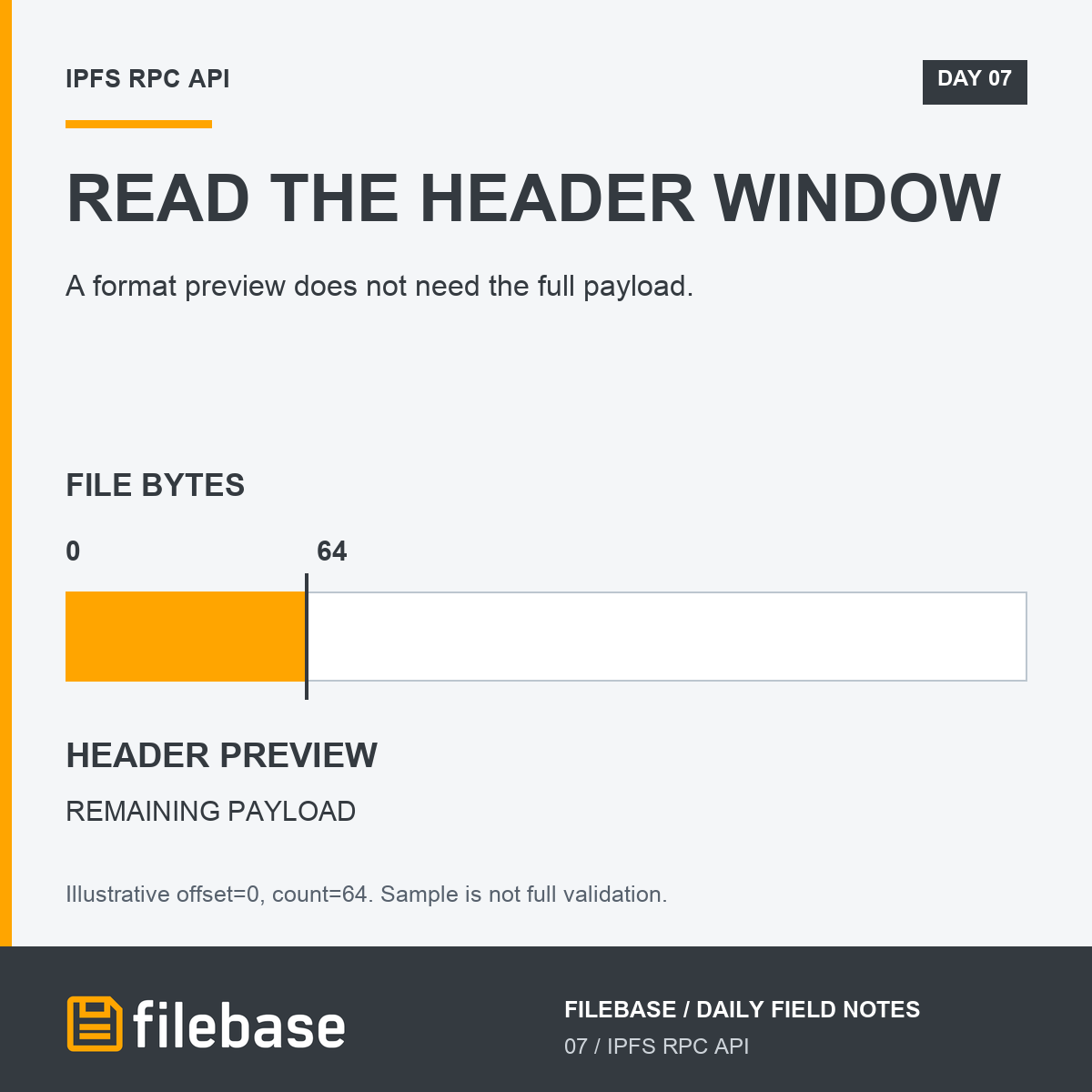
Previewing a file header should not require a full-file read. Filebase RPC files/read accepts offset and count. Request a small byte window, then handle binary data as bytes rather than assuming text. Check the parameters:
https://t.co/54Y7haKSrM
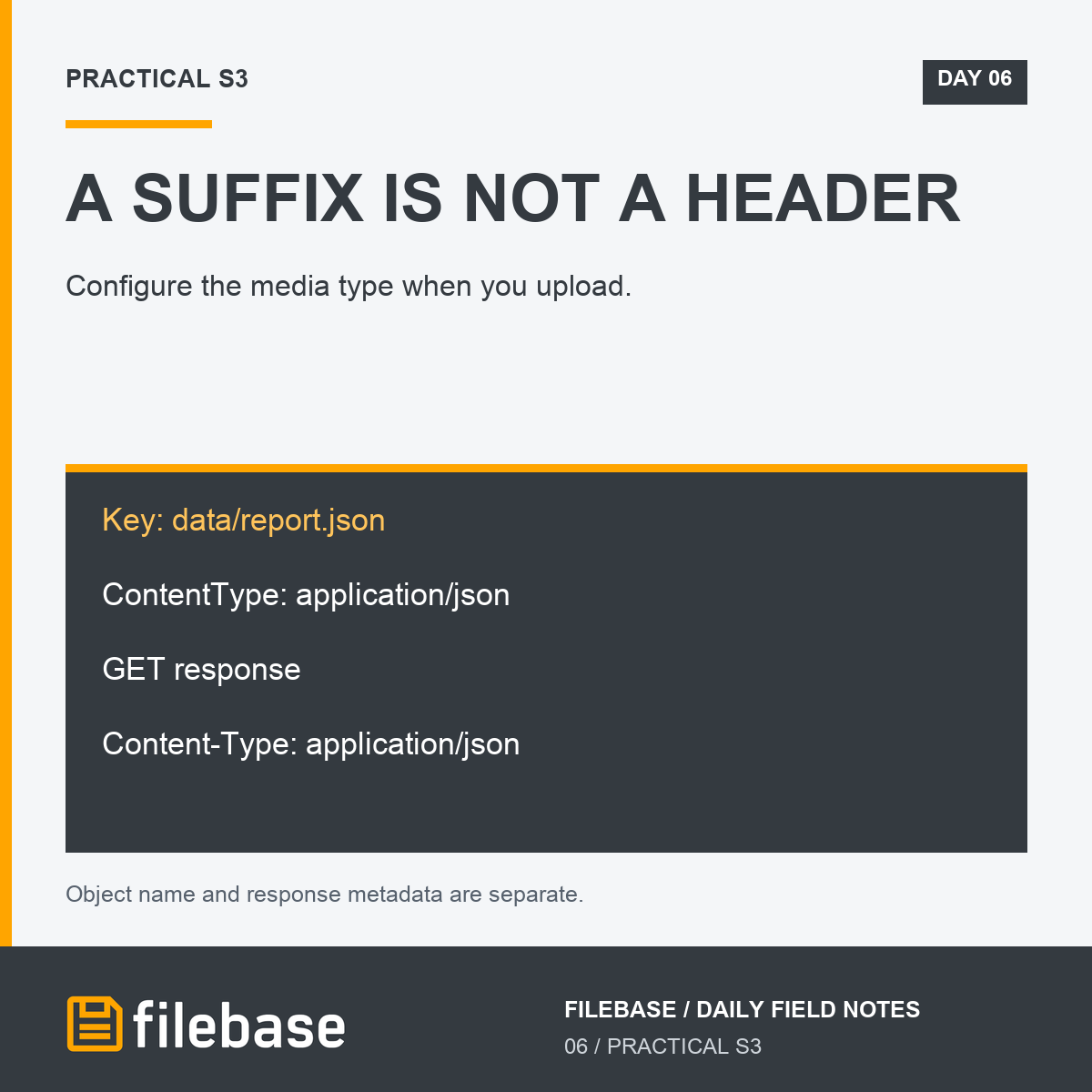
A .json filename is not your Content-Type configuration. Set application/json when uploading JSON to Filebase, then inspect the returned header. The object key names the asset; the media type tells clients how to interpret it. Details:
https://t.co/d00jDNqNa2
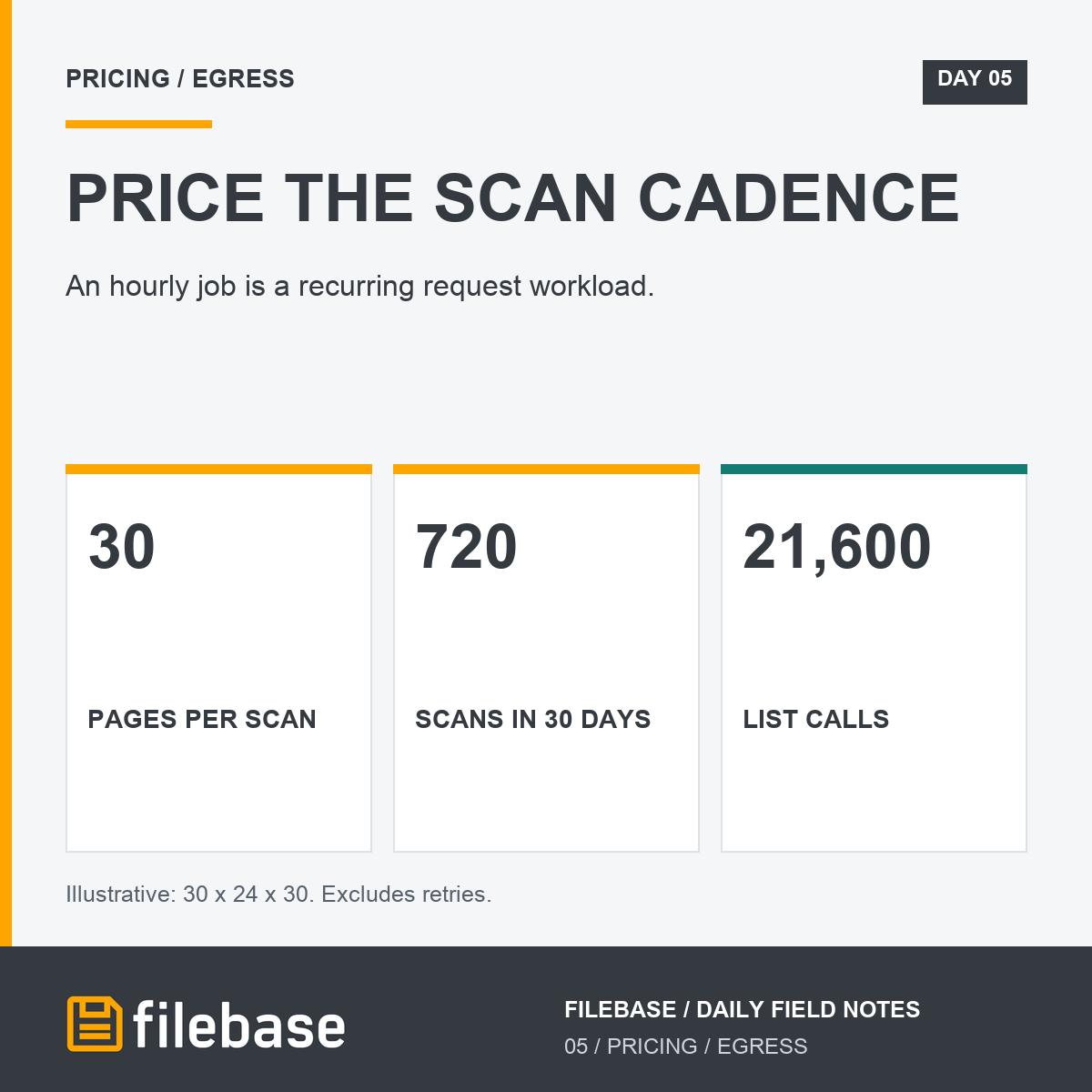
An hourly inventory job has its own request budget. At 30 listing pages per scan, 24 scans/day for 30 days means 21,600 list calls. That's an illustrative Class A workload before other operations. Check Filebase allowances:
https://t.co/4NZQWbDR7Y
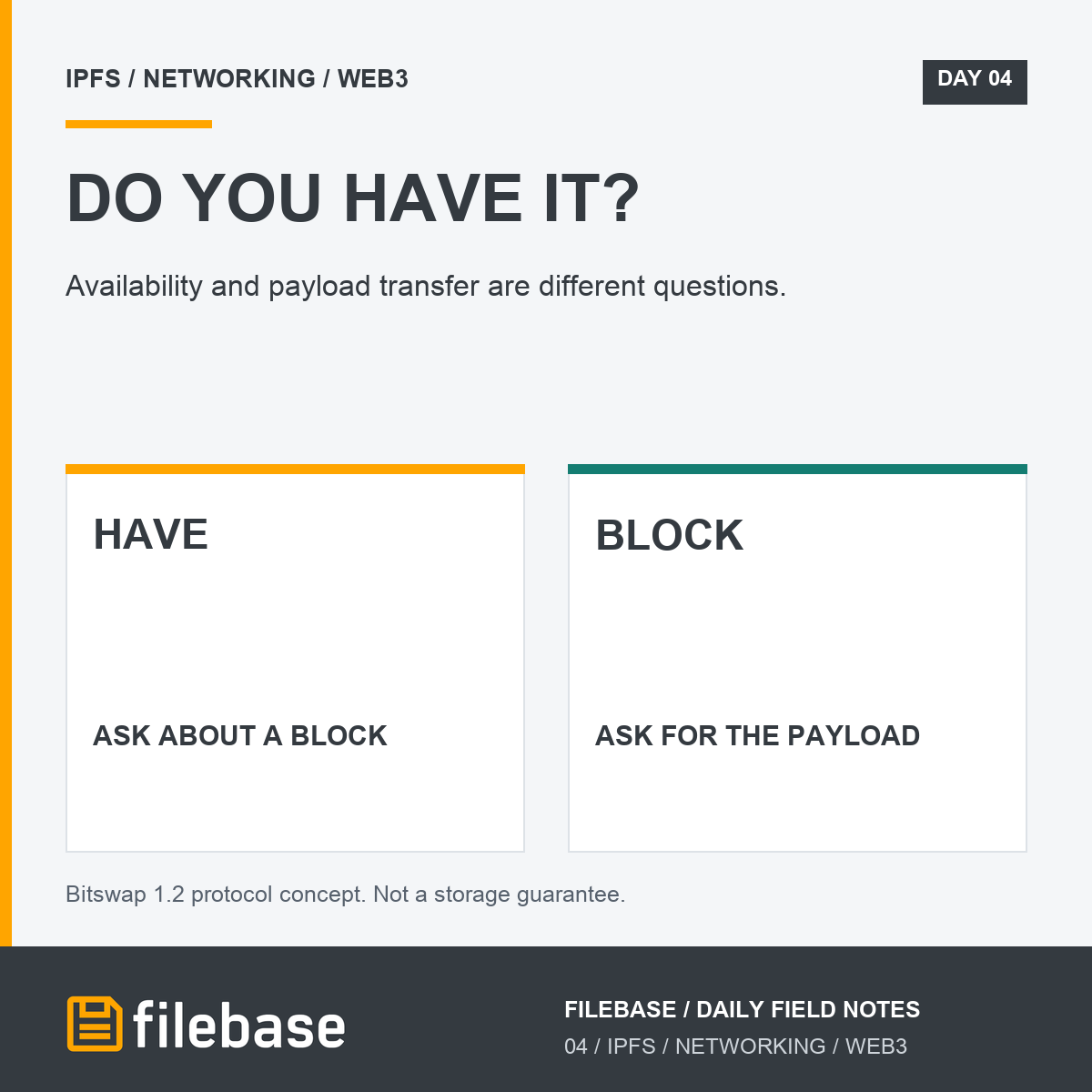
Bitswap can ask two different questions: HAVE asks whether a connected peer has a block; BLOCK asks for the block itself. Availability information and payload transfer are different messages, not different storage products. #IPFS
One JSON document and NDJSON need different parsers. Filebase RPC pin/ls can stream results with stream=true. Buffer incomplete lines, parse complete records, and handle the final line at EOF. Check the route:
https://t.co/Tg1kS3ug6t
Need an object's size or Content-Type, not its bytes? Use HeadObject before GetObject. Filebase supports HEAD metadata reads. A metadata check is still an operation, not a free download shortcut. See the supported calls:
https://t.co/v6XPMLxaz8
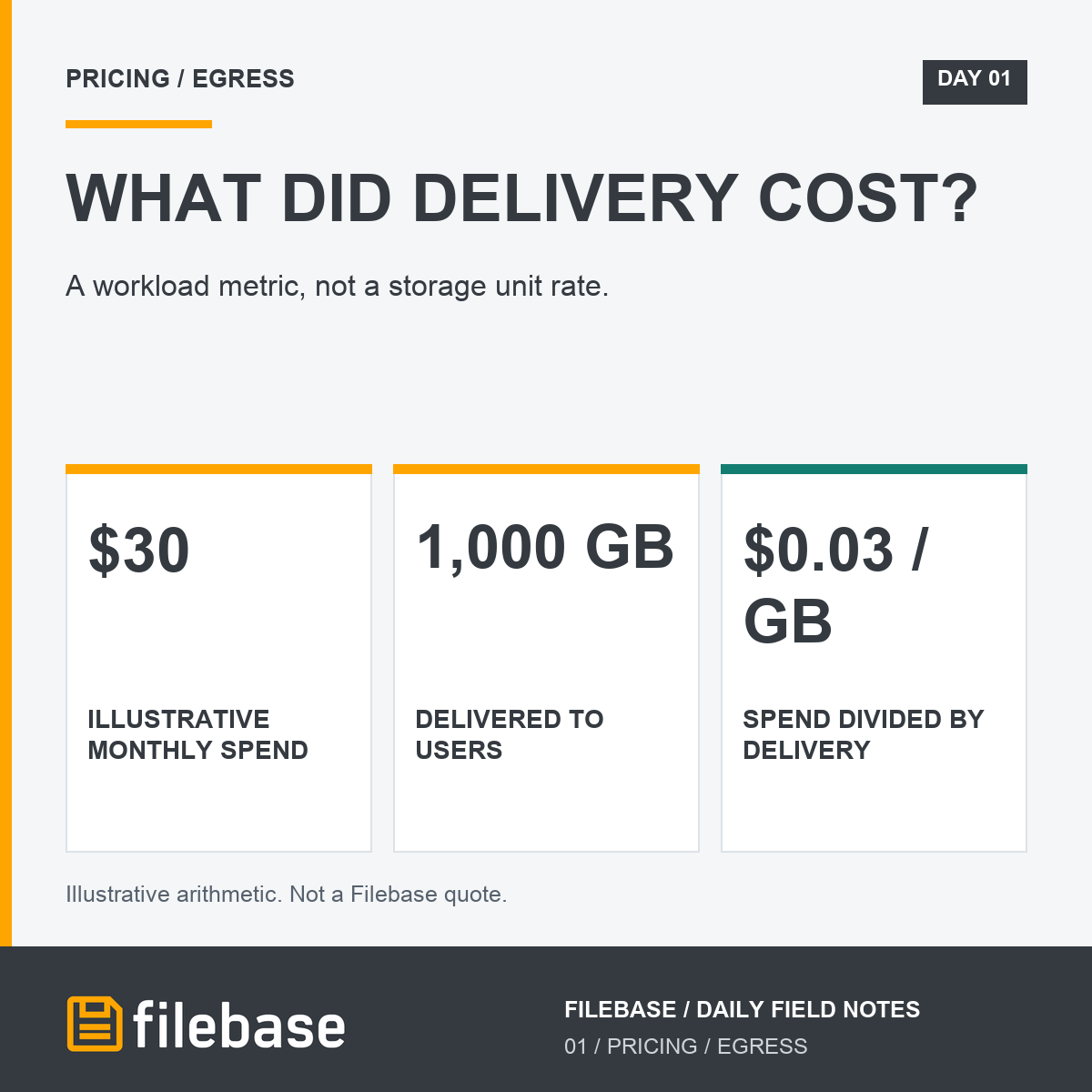
A storage rate is not a delivery metric. Divide monthly workload spend by GB actually delivered: $30 / 1,000 GB = $0.03/GB in this illustrative example. Filebase object egress is free; the full workload still has costs. Start here:
https://t.co/oaZ707CAkw
IPFS public gateway not working? Here’s why - and what to do next.
We explain the service worker transition and how to keep your IPFS application online with a Filebase Dedicated Gateway.
https://t.co/WeP1dN9Kxx