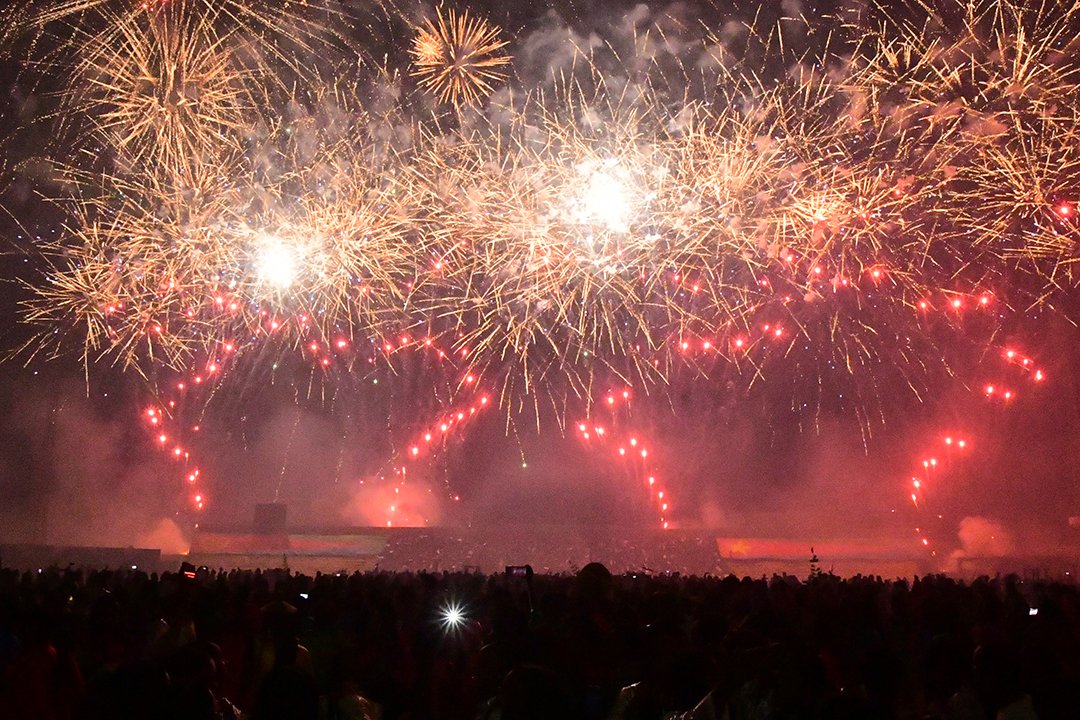
Eritrea @35: Progress, Resilience, and Pride
by Bana Negusse
*"...Over the past month, Eritreans at home and across the diaspora have been enthusiastically celebrating the 35th anniversary of the country’s independence. And so they should. Freedom was not handed to Eritrea on a silver platter. Rather, it was won through immense sacrifice during one of Africa’s longest and bloodiest liberation struggles".
*"...Notably, many of Eritrea’s development indicators and broader social trends compare favorably – sometimes considerably so – with those of numerous countries across Africa and the wider developing world. Moreover, these achievements, impressive as they are in their own right, become even more significant when viewed against the backdrop of the immense challenges that Eritrea has faced, including external aggression, sanctions, regional instability, economic constraints, and climate-related pressures".
*"...The strong sense of social cohesion, peace, and harmony that prevails across Eritrea is also something that distinguishes the country positively. For many years, much of Africa, the developing world, and indeed many other parts of the globe have been affected by internecine conflict, sectarian violence, and recurring instability. Sadly, in many areas, safety and security are luxuries. In this regard, Eritrea stands in notable contrast".
*"...Beyond the above, there are many other qualities and values that Eritreans can take pride in. These include a deep respect for nature and the environment, as well as a strong culture of humility, modesty, and simplicity that continues to characterize much of Eritrean society. In many communities, ostentatious displays of wealth and status are discouraged, while values such as dignity, mutual respect, hospitality, and collective responsibility remain highly regarded. Together, these qualities form an important part of Eritrea’s social fabric and national character".
*"...The resilience of the people, the spirit of self-reliance, the strong sense of social cohesion, the commitment to equality and national ownership, and the developmental gains achieved under difficult circumstances together provide a solid platform for future progress. As Eritrea marks 35 years of independence, there is ample reason not only for reflection, but also for confidence, pride, and hope in the country and its people".
https://t.co/kBvGCRjicK
#Eritrea: The Long Road to Independence (part III & Final); by Shabait Staff
*"...A decisive turning point came in March 1988 during the Battle of Afabet, where Eritrean forces inflicted a crushing defeat on Ethiopia’s Northern Command Headquarters. Often compared to battles such as El Alamein and Dien Bien Phu for their strategic significance, the Battle of Afabet became one of the largest and most consequential military engagements fought in Africa since the Second World War".
*"...Then, in February 1990, the EPLF launched Operation Fenkil, a meticulously coordinated land-and-sea offensive that liberated the strategic port city of Massawa. The operation severed one of Ethiopia’s most critical military supply routes and inflicted devastating losses on Ethiopian forces, with thousands killed, wounded, or captured. More importantly, it signaled that Eritrean independence was no longer a distant aspiration, but an approaching reality".
*"...With Massawa secured, only Asmara and Assab remained under Ethiopian control. In May 1991, Eritrean forces defeated Ethiopian troops at Dekemhare before rapidly advancing through surrounding towns and entering Asmara on May 24. Assab, along the Red Sea, fell the following day. Remnants of the demoralized Ethiopian soldiers, which had long been regarded as part of Africa’s largest and best-equipped military force, surrendered in tens of thousands. Just days earlier, on May 21, Mengistu Haile Mariam had fled into exile in Zimbabwe".
*"...Eritrea’s path to nationhood remains one of the most determined and resilient liberation struggles of the twentieth century. Against immense military odds, constantly shifting geopolitical alliances, and prolonged international indifference, Eritreans fought, endured, and ultimately prevailed. Their victory represented not simply the defeat of an occupying power, but the realization of a collective aspiration for sovereignty and dignity that generations had struggled to achieve".
*"...Today, more than three decades after independence, the legacy of the liberation struggle continues to shape Eritrea’s national identity and historical consciousness. It remains a powerful reminder of the sacrifices demanded by freedom; the consequences of the flagrant breaches of international law; and the enduring determination of a people unwilling to surrender their national rights. As Eritreans commemorate the 35th anniversary of independence, the history of that long struggle continues to stand as both a source of national pride and a defining chapter in the broader history of liberation movements".
https://t.co/ONShXfUbGu
#EidMubarak - Eid Al Adha celebrations held at Bahti Meskerem this morning in the presence of senior Government and PFDJ officials, Members of the Diplomatic Corps and the faithful.
Prayers and blessings presided by Eritrea's Mufti, Sheikh Salem Ibrahim Al-Mukhtar.
In the religious sermon that he delivered, Sheikh Salem paid homage to Eritrea's Martyrs and underlined that those who cherish peace are those who know full well, and have suffered, the agonies and devastation inculcated by war. The Mufti also conveyed his congratulations to the Eritrean people and its Defense Forces.
You are a clueless who lives on another planet. And of course, money talks as they say. So, perhaps it is the ugly hired lobbyist in you that is on display!
The Struggle for Independence: A Legacy of Resilience
By : - Dr. Tsegai Medin
Every May, Eritrea honors its independence, offering a profound tribute to the martyrs who sacrificed their lives for the cause. This historic milestone marks the culmination of over sixty years of struggle against formidable global forces to secure the right to self-determination. The Eritrean independence movement stands as a testament to unbreakable resistance against multifaceted, orchestrated external hostilities. Under determined leadership, Eritrea’s heroes and heroines gave their lives to transform the dream of a sovereign nation into a reality. The unwavering commitment shown by both fighters and the fearless populace serves as a unique historical lesson to oppressors worldwide.
While the struggle was grueling, it was fueled by the vision of a prosperous, rising nation. That dream was realized through massive popular participation on May 24, 1991. Over the past 34 years, Eritreans have celebrated their independence with deep-rooted pride and cultural identity. These celebrations magnify the homegrown values of communalism, resilience, and sacrifice, forged during the long liberation war.
For the Eritrean people, resilience is not merely a reaction to hardship; it is a fundamental cultural pillar. It is a collective identity forged over decades of systemic colonial oppression, external hostilities, and an unwavering commitment to self-reliance. A succession of colonial administrations marks Eritrea’s history, each attempting to reshape the land and its people to serve external interests.
Italian Colonialism (1890–1941): While this period saw infrastructure development, it was built on a foundation of racial segregation and the exploitation of Eritrean labor and resources.
British Administration (1941– 1952): Following WWII, the dismantling of industrial assets and the uncertainty of the post-war settlement created a volatile environment for the Eritrean people.
The Ethiopian Annexation: The forced federation and subsequent unilateral annexation of Eritrea by Ethiopia ignited a thirty-year struggle for independence. Severe hostilities, including the suppression of cultural identity, language, and political rights, characterized this era.
Faced with overwhelming military odds and a lack of significant international support, the Eritrean movement for independence had to innovate to survive. This necessity gave birth to a sophisticated culture of Self-Reliance. During the Thirty Years’ War, resilience was both physical and psychological. The Eritrean People’s Liberation Front (EPLF) constructed entire hospitals, schools, garages, and factories underground to protect them from aerial bombardment… etc. This ‘hidden state’ proved that the people could provide for their own needs — medical, educational, and industrial — even under the most dire circumstances.
Colonial powers often used ‘divide and rule’ tactics. In response, Eritrean resilience manifested as radical social cohesion. By bridging ethnic, regional, and religious divides, the movement ensured that the struggle was a national endeavor rather than a factional one.
In the post-independence era, the concept of Self-Reliance remains a central tenet of the Eritrean spirit. It is a philosophy that views external dependency as a threat to sovereignty.
Community Labor: The tradition of communal contribution to national projects — whether in soil conservation, dam building, or infrastructure — is a modern expression of nation-building mobilization.
Educational Endurance: The focus on vocational training and domestic capacity building reflects the belief that the nation’s future must be built by its own hands.
Cultural Preservation: Despite decades of foreign influence, Eritreans have maintained a fierce pride in their traditional music, languages, and social customs, using them as a shield against cultural erasure. Resilience is the ability to maintain one’s core identity while adapting to the harshest of environments. For Eritrea, it is the victory of the human spirit over the machinery of oppression.
Ultimately, the Eritrean story is one of persistence against the odds. The hostilities of the past did not break the national character; instead, they tempered it, creating a society that values independence not just as a political status, but as a cultural way of being.
This year, marking the 35th anniversary, Eritrea prepares to celebrate under the theme ‘Our Resilience: Our Guarantee’. Over the next two months, the nation will commemorate both Independence Day and Martyrs Day, reaffirming its ongoing commitment to the legacy of our martyrs and the responsibility of nation-building.
The transition from Independence Day (May 24) to Martyrs’ Day (June 20) symbolizes a triumph of solidarity. These occasions foster a unique sense of togetherness vital to the nation-building process. Eritreans take immense pride in their ethical foundation, asserting that their dignity, fairness, and nationalism distinguish their society.
The thirty-year struggle for independence, followed by thirty-five years of defending self-reliance, has left an indelible mark on society. This history is built upon several key pillars:
1. Total Inclusivity: Every family, ethnic group, and religious denomination participated without discrimination.
2. Mass Participation: Success was driven by the people and a dynamic and selfless leadership.
3. Defiance of Denial: The struggle overcame the international community’s long-standing denial of Eritrea’s right to sovereignty.
4. Social Transformation: The struggle dismantled the colonial era’s religious and ethnic divisions and secured gender equality, marking the first time women held a prominent role in the nation’s political history.
5. Democratic Mandate: The 1993 referendum, in which 99.83% of voters chose independence, solidified the unity of Eritrea’s nine ethno-linguistic groups.
The Eritrean people have forged a harmonious identity, cultivating a homegrown brand of democracy rooted in self-reliance and cooperation. This model of development and peace provides an exemplary record for the region and beyond. However, this path has often been viewed as a threat by external interests. Hostile forces have frequently attempted to undermine Eritrean self-reliance by imposing external political agendas. These ‘imported’ frameworks, often implemented by regional proxies, are seen as attempts to return the populace to a state of dependency. In response, the Eritrean people reaffirm a clear message: ‘If containing Eritrea was difficult yesterday, it is impossible today’. Eritrea’s greatest resource is its people, who have historically defended their identity with ‘sweat and blood.’ Just as they persevered when ‘the stones were burning’ during the war, they continue to challenge modern geopolitical pressures with dignity.
The struggle continues today through the same spirit of vigilance and resilience. The goal remains a better #Eritrea — sustaining the well-being and quality of life for all citizens through unwavering solidarity.
Happy 35th Independence Anniversary and Eternal Glory to our Martyrs!
Congrats: Another good day for #Eritreancycling. Monalisa Araya's maiden Podium Finish (3rd) in Vienna, Austria, can indeed be seen as a trail-blazing event. Best wishes for greater success in the period ahead to Monalisa/#Eritreancycling!
https://t.co/7uFUoRsqTs
Mr. Hudson, this is the reason.
https://t.co/jewvf1vKS2…
Now, why are you so obsessed with Eritrea?
And why are you on an overdrive in your defamation camapaign this time of the year?
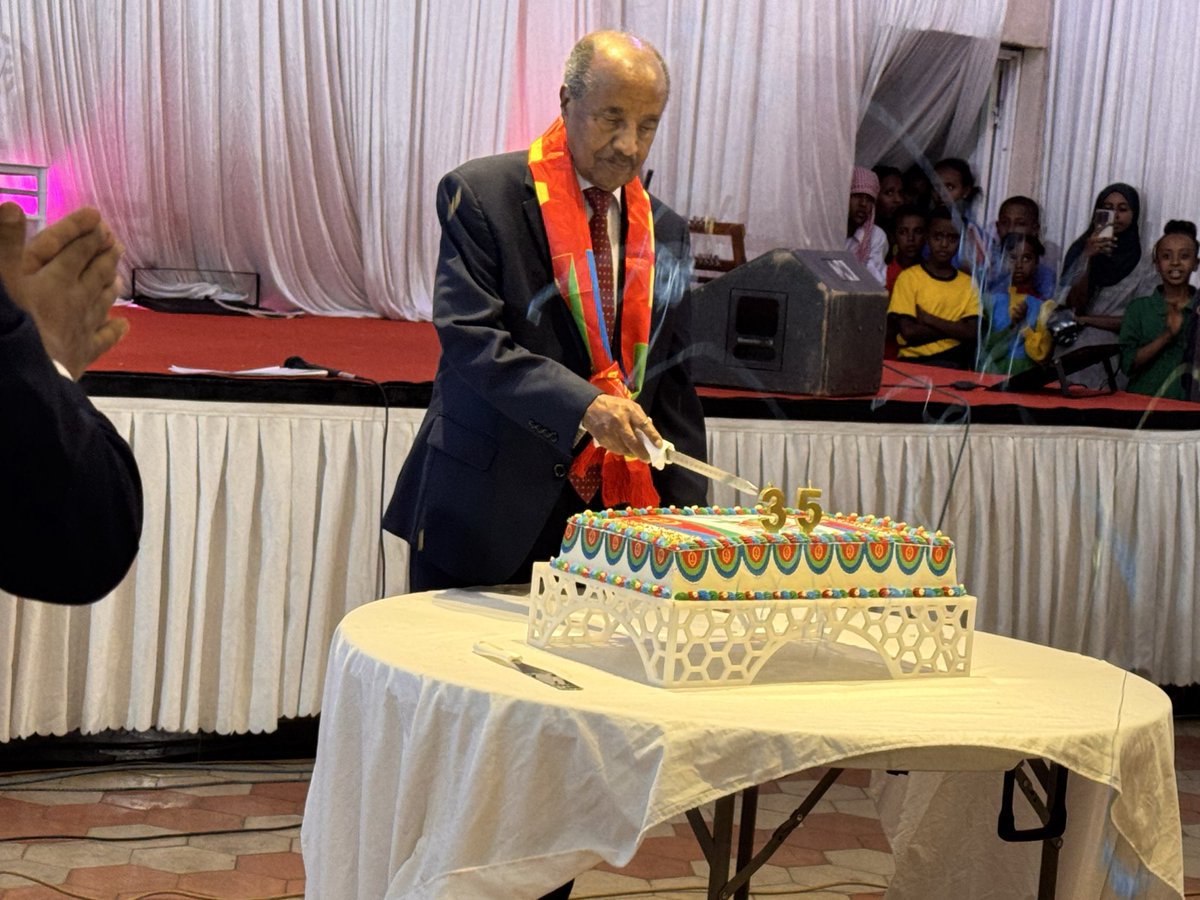
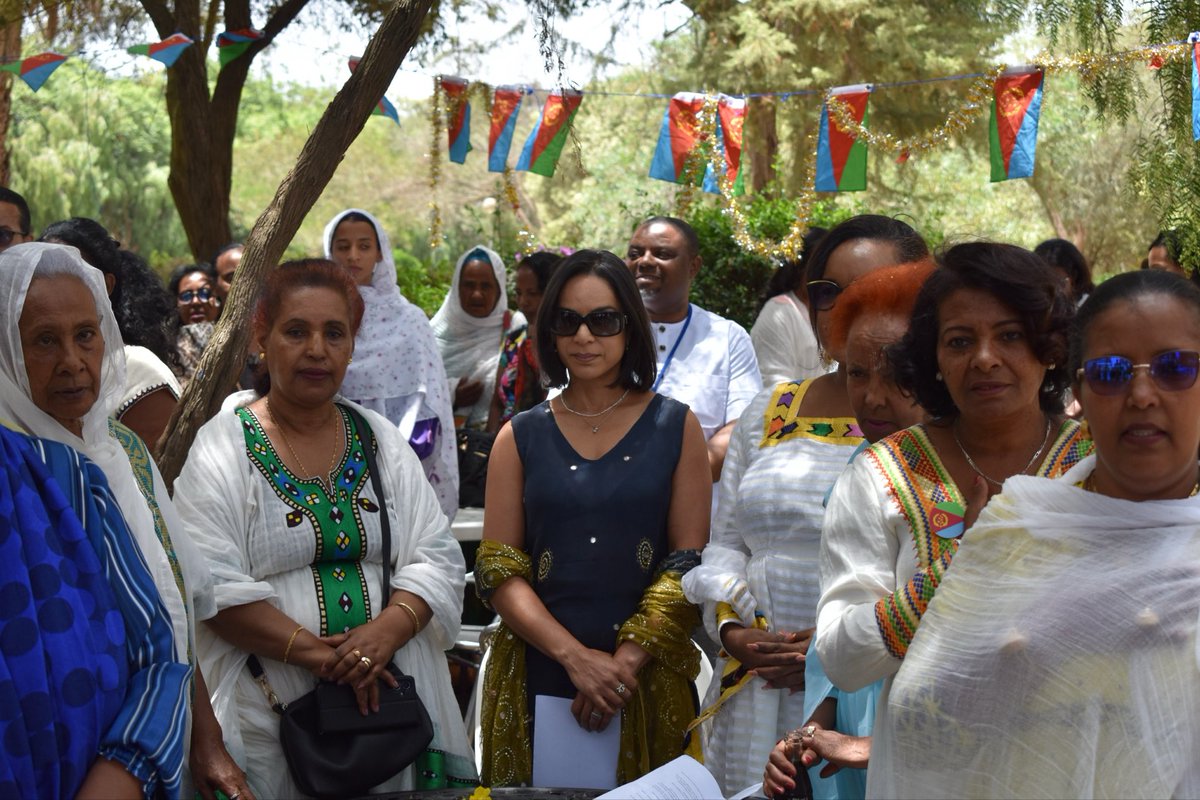
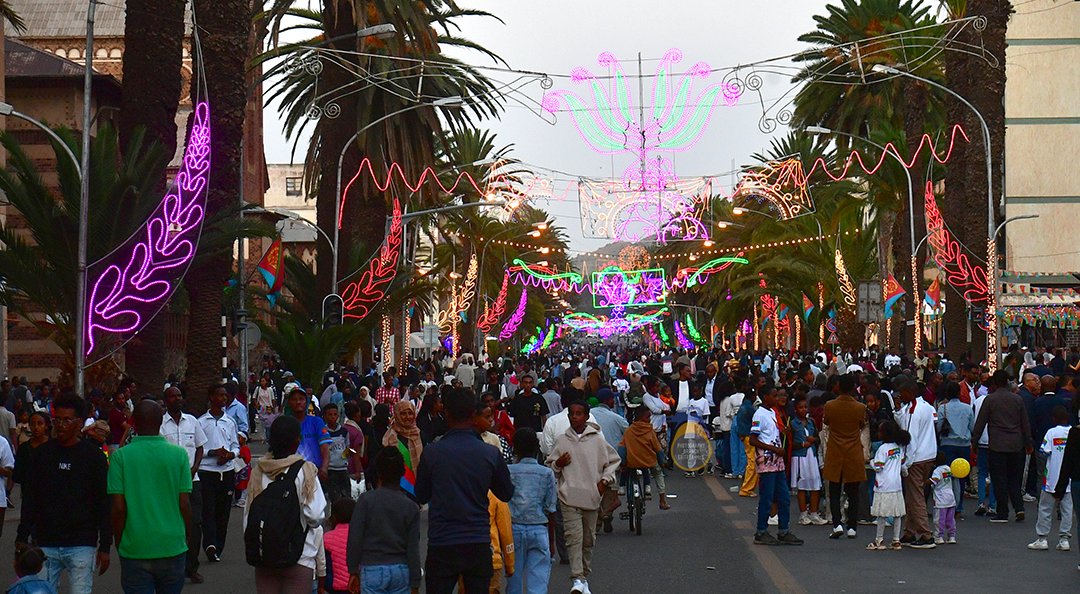
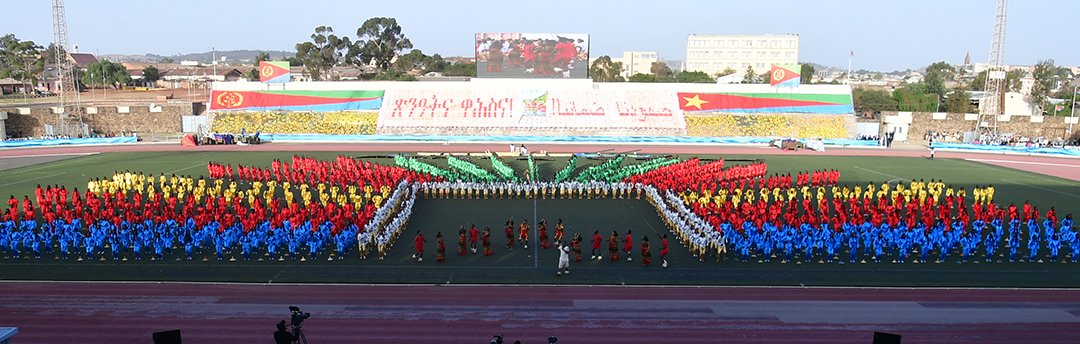
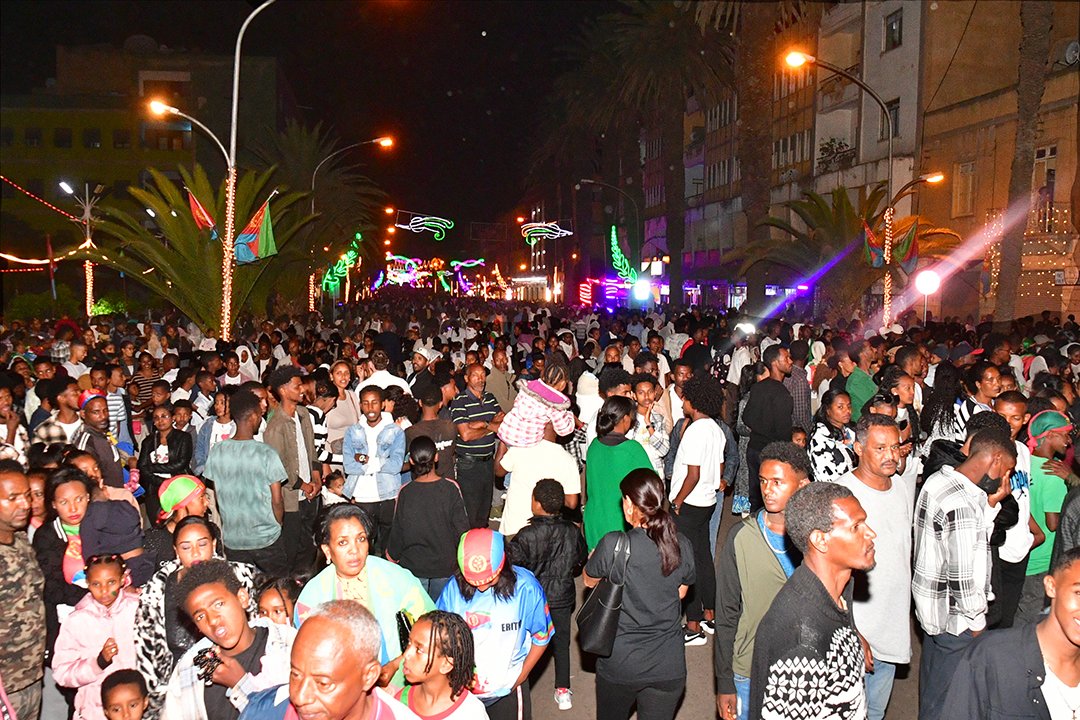
Incredible week - as #Eritrea celebrated its 35th Independence Day the sense of joy and national pride were everywhere. Sharing some pictures of the week…
From the official reception of the Minister of Foreign Affairs
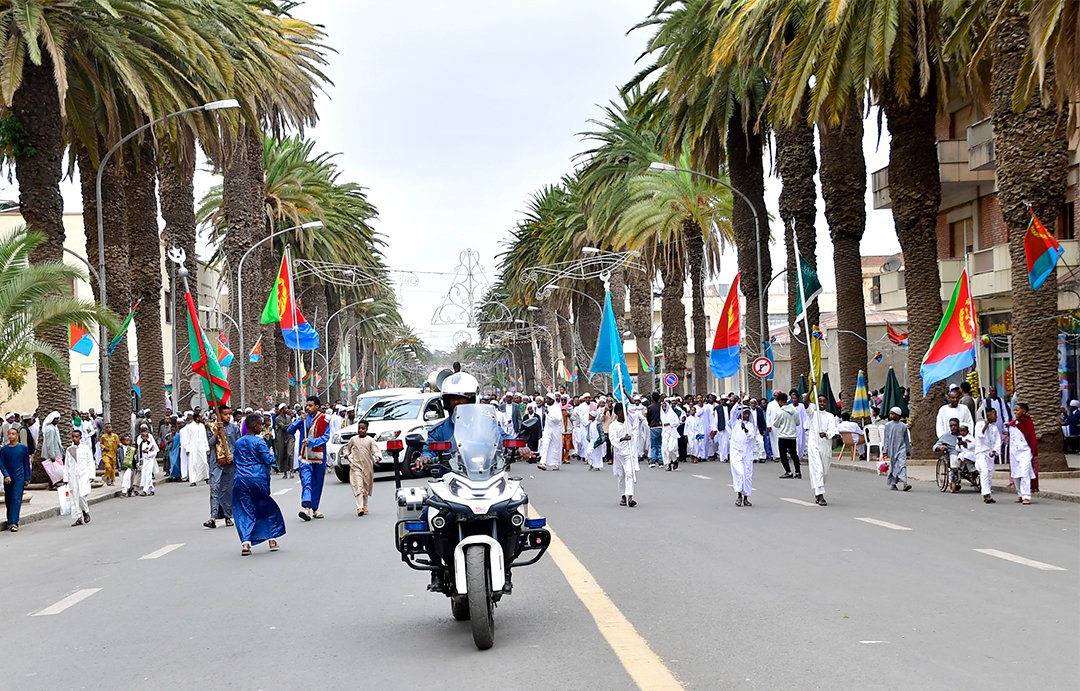
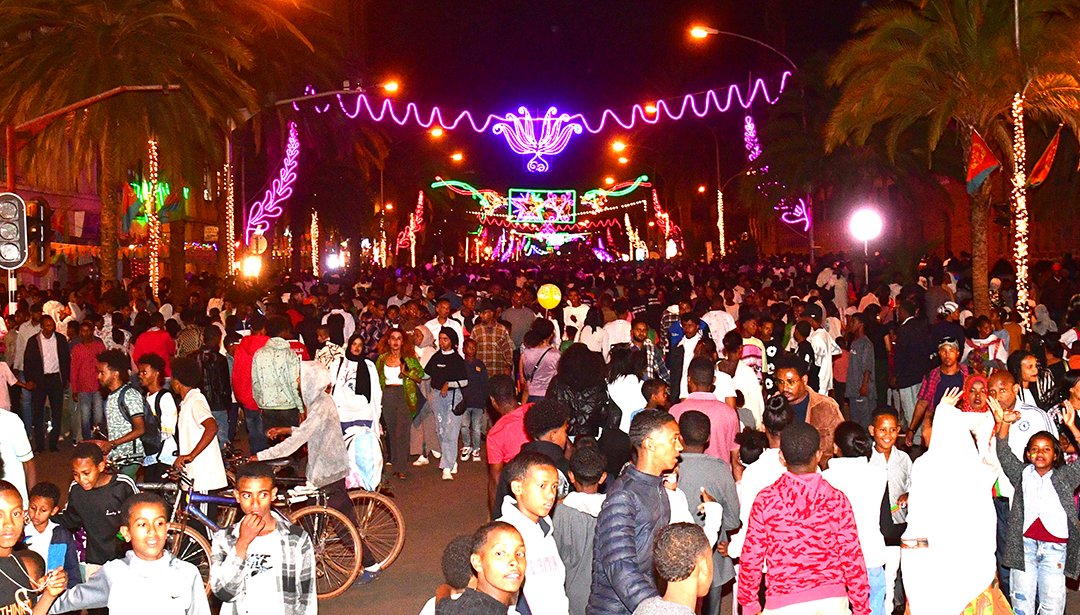
Residents of Asmara have poured, in their hundreds of thousands, on Liberation Avenue and Martyrs Street in celebration of #Eritrea's 35th Independence Anniversary for the last two nights in a row.
The jubilation, the fervor and passion of patriotism, vibrant as ever!
Both events broadcast live on Eri-Tv.
Keynote Address by President Isaias Afwerki on the Occasion of 35th Independence Anniversary
Asmara, 24 May 2026
*"...The establishment of a new global order founded upon fairness and justice must be regarded as one of humanity’s foremost missions and should not be relegated to the side-lines".
*"...Last year, I addressed issues in what we call our neighbourhood; specifically, the Nile Basin, the Horn of Africa, the Red Sea, and the Gulf, with particular reference to Ethiopia and the Sudan. Because the global vulnerability of the region has worsened, following the crisis surrounding the Strait of Hormuz, the importance of collective security mechanism based on an agreement and cooperation among the States in the neighbourhood – rather than the normalized interventionist policies of self-proclaimed regional powers and external actors – that we have been advocating for long has, once again, become abundantly clear. It is high-time that serious efforts are exerted towards this end".
*"...As it will be recalled, I had elaborated, during last year’s Independence Day celebrations, on our development programmes and priorities across various sectors. While the concept itself is not new, the short-term objective remains improving our people’s livelihood, with priority to marginalized and underserved regions. The broader and long-term development programme consists of extricating the country from subsistence economy. It encompasses strengthening productivity, ensuring sustainable growth in production, laying the foundations for advanced processing and value-added industrial manufacturing, and service sectors. Beyond the economic dimension, these priorities also extend to encompass the diplomatic and informational domains".
*"...Road and transportation projects will be expanded according to plan. Extensive housing programmes will also proceed in parallel. Implementation of projects aimed at expanding electricity and water services will start within this year in spite of potential delays in supply chains. In the sphere of social services, particular emphasis will be placed on education, beginning from the pre-school level with broad popular participation. Likewise, the expansion of quality healthcare services will be pursued vigorously".
*"...Kudos to the dedicated, hardworking, courageous, patient, and steadfast people of Eritrea, along with the ever-present Defense Forces; the kernel, strong shield, and cornerstone of our development programs. Even if obstacles are encountered, there is no cause for apprehension. Rest assured!"
https://t.co/8Bzy0sNhJ9
Independence Day Anniversary Celebration in New York
Eritrea’s Permanent Mission to the United Nations enthusiastically celebrated the 35th Independence Day anniversary at the UN Headquarters in New York on 21 May.
The celebratory event, conducted under the theme “Our Resilience: Our Guarantee,” was attended by permanent representatives of various countries, diplomats, senior UN officials, representatives of regional organizations and media outlets, members of civil society and friends of Eritrea, Eritrean workers at the UN, as well as Eritrean nationals residing in New York and its environs.
The event featured programs reflecting the culture and diversity of the Eritrean people, as well as the history and national values of their country.
Noting that Eritrea’s independence was the culmination of the heavy sacrifice paid and perseverance demonstrated by the Eritrean people, Ms. Sophia Tesfamariam, Eritrea’s Permanent Representative to the UN, underlined Eritrea’s commitment to sovereignty, self-reliance, as well as regional peace and stability.
She also noted the significance of enhancing cultural diplomacy in creating common understanding and strengthening relations between countries and peoples. #Eritrea
Independence Day celebration in Southern Region
The 35th Independence Day anniversary was colorfully celebrated on 22 May at Mendefera Stadium at the Southern Region level under the theme “Our Resilience: Our Guarantee.”
The celebratory event, which was attended by Government and PFDJ officials as well as a number of Mendefera city residents, featured cultural programs reflecting the steadfastness and resilience of the Eritrean people, as well as circus shows.
Mr. Habteab Tesfatsion, Governor of the Region, underlined that the Eritrean people have foiled the open and covert hostilities perpetrated against the country and ensured their sovereignty and existence. He urged the strengthening of participation in transferring the noble values and resilience of the Eritrean people to generations.
Stressing the need for committed work to realize national development programs, just as that in realizing the national independence, Mr. Habteab said that doubled efforts are being exerted to enable the public in various parts of the region to become beneficiaries of available resources.
Mr. Abraham Yohannes, Chairman of the Holidays Coordinating Committee in the region, said that the celebratory events across the region, which started on 15 May, included children’s programs, painting and poetry competitions, street music performances, mass sports activities, as well as official Independence Day celebrations.
Similarly, the 35th Independence Day anniversary was enthusiastically celebrated at Adi-Keih College of Education and Languages under the theme “Our Resilience: Our Guarantee.”
he celebratory program, conducted from 7 to 21 May, featured popular campaigns, cultural competitions, experience-sharing programs, sports activities, as well as a photo exhibition.
Explaining the resilience and steadfastness of the Eritrean people, and the heavy sacrifice they paid to realize national independence and sovereignty, Dr. Woldetensae Tewolde, Dean of the College, called on the students to strengthen participation in the nation-building process with the knowledge they gained from their education.
Similarly, Mai-Nefhi College of Science colorfully celebrated the 35th Independence Day anniversary, featuring sports and educational competitions among the students.
At the event, Prof. Gebray Asgedom, Dean of the College, explained the resilience of the Eritrean people, especially the youth, in overcoming the challenges the country has faced over the past years, and called for conscious participation in national affairs. #Eritrea
Keynote Speech by
Mr. Biniam Berhe, Chargé d’affaires en pied of the Embassy of the State of Eritrea to the F.D.R. of Ethiopia and Permanent Mission to the AU and UNECA
at the Reception held on the Occasion of
Eritrea’s 35th Independence Anniversary
22 May 2026, Addis Ababa
You Excellency, Ambassador Selma Malika Hadadi, Deputy Chairperson of the African Union Commission
Your Excellency Commissioner Moses Vilakati, Commissioner for Agriculture Rural Development and Blue Economy of the AUC
Excellencies Ambassadors, other Heads of Diplomatic and Consular Missions,
Officials and Staff of the AU, UNECA and other Regional and International Organizations,
Members of the Diplomatic Corps,
Eritreans Compatriots,
Invited Guests,
Ladies and Gentlemen,
On behalf of my colleagues at the Embassy and on my own behalf, I wish to express my heartfelt gratitude to each and every one of you for joining us today to celebrate the 35th Anniversary of Independence of the State of Eritrea.
As you may have noticed from the posters, this year’s Independence Day is celebrated under the deeply meaningful theme: "Our Resilience, Our Guarantee."
It was precisely this resilience—demonstrated by our liberation fighters and the entire population—that brought an arduous, three-decade-long struggle for independence to a triumphant end. Likewise, it is this same enduring spirit that has enabled Eritrea to navigate a turbulent regional and international environment, firmly securing its sovereignty and territorial integrity.
Our domestically owned, development agenda relies on the unwavering will of our people to persist when challenges arise. The enduring lesson from a half-century of political and armed struggle, as well as our ongoing nation-building process, is clear: the ultimate guarantee for success is staying the course, come rain or shine.
Today, Eritrea's national priorities remain entirely aligned with the immediate needs of its citizens, with a laser focus on rural communities and the underprivileged sections of our society as we pursue a broader development agenda anchored on the country’s enormous endowments and comparative advantages. The latter includes judicious investment in, and exploitation of, the blue economy, the extractive industry, and manufacturing among other prospective sectors. Investment in human capital has been and remains an over-arching objective for very palpable reasons and considerations.
Our mission is clear: to ensure our people live in peace, have access to water and nutritious food, quality medical care, education necessary to reach their full potential, just to mention a few.
At first glance, our national theme and the African Union’s theme of the year “Assuring Sustainable Water Availability and Safe Sanitation Systems to Achieve the Goals of Agenda 2063” may seem distinct. Yet, a closer look reveals they speak to the exact same core truth. For Eritrea, resilience is the driving force behind our massive efforts to ensure water security, and other basic services across the nation.
Located within the Sahelian belt and characterized by arid and semi-arid conditions, Eritrea faces considerable environmental and climatic challenges. Consequently, water management sits at the very top of our national priorities. Through sustained national investment and robust community participation, we have achieved encouraging results. At independence in 1991, a mere 13 percent of our population had access to safe and clean drinking water. Today, that number has risen to approximately 85 percent.
This remarkable progress has been underpinned by major investments in critical infrastructure. While Eritrea possessed only 138 dams and ponds at independence, today that number exceeds 850. Shortly, we will screen a brief video showcasing the backbreaking work, collective toil, and community solidarity that go into constructing these vital structures.
Thanks to monumental investments in soil and water conservation, alongside the modernization of agriculture, our domestic food production has grown many folds.
Access to education and healthcare has been expanded tremendously. Education from primary to tertiary levels is provided free of charge, and medical services at nominal cost, and those who can’t afford the payments are exempted. This has translated into significant increase in quality of life and life expectancy at birth.
While we safeguard the peace and security of our own land, sea, and airspace, Eritrea does not live in isolation. We are deeply affected by developments beyond our borders. Therefore, we remain firmly committed to contributing our share toward promoting lasting peace, stability, and security across the Horn of Africa and the Red Sea regions; and for the creation of a fair, just, and participatory global order.
Eritrea is also committed to engage constructively with countries in our continent and beyond, as well as with regional and international organizations. Eritrea will continue to contribute its share for our continental organization AU’s realization of its vision. Eritrea is desirous to expand its engagement with ECA.
The journey of the last 35 years proves that when a people are united, their resilience becomes an unbreakable guarantee for the future. As we look ahead, we remain committed to building a prosperous, self-reliant, and harmonious nation. #Eritrea
Awet n'Hafash!
Victory to the Masses!