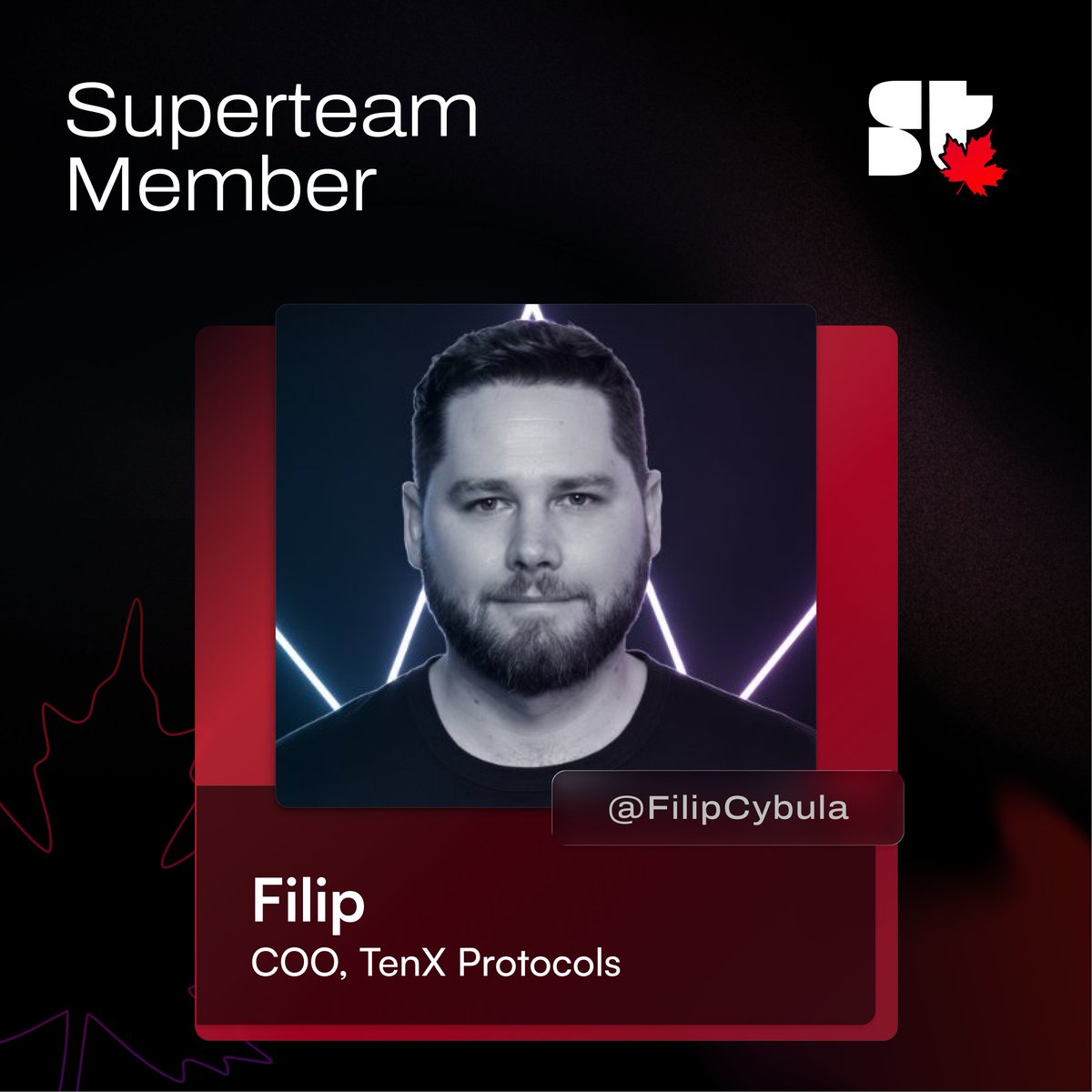
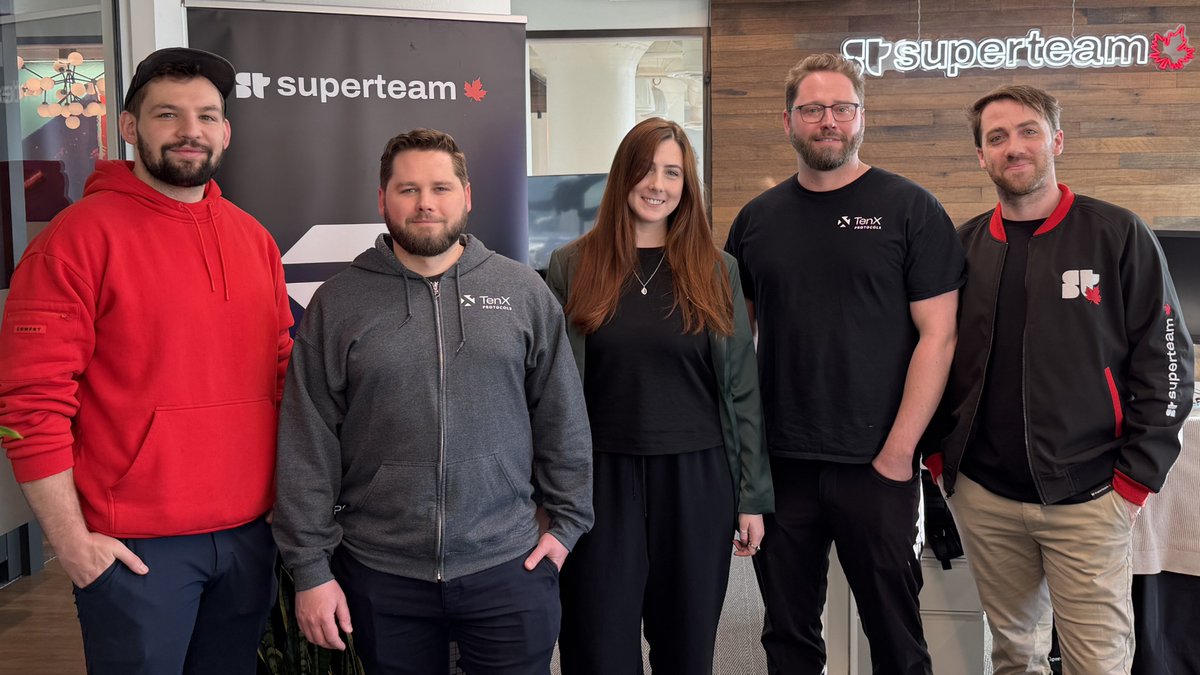
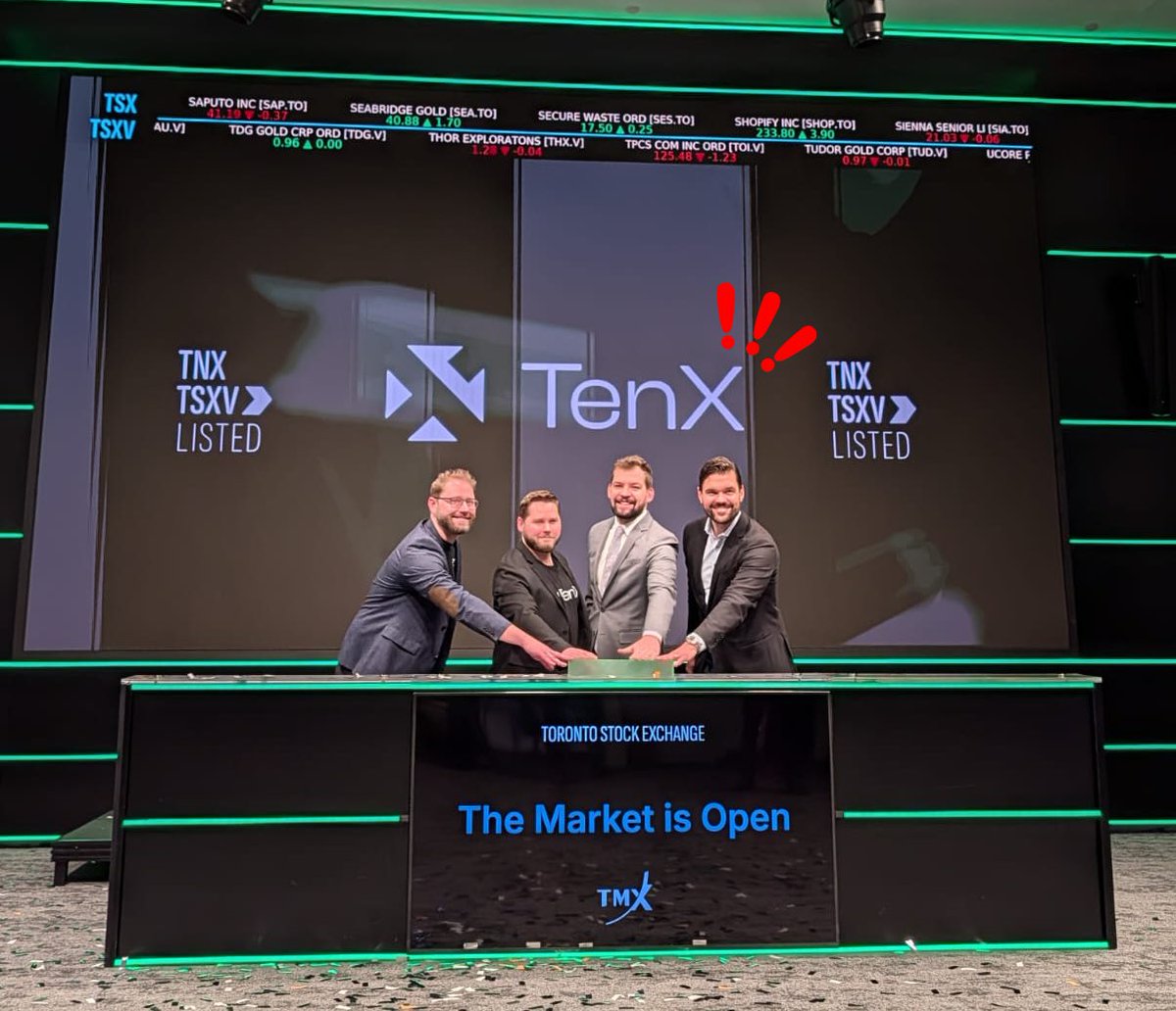
Welcome @FilipCybula to Superteam 🍁!
COO of @TenXprotocols, fresh off ringing the @tsx_tsxv
Strong background in crypto infra and a familiar face in the Toronto Web3 scene.
Big things ahead! 🫡
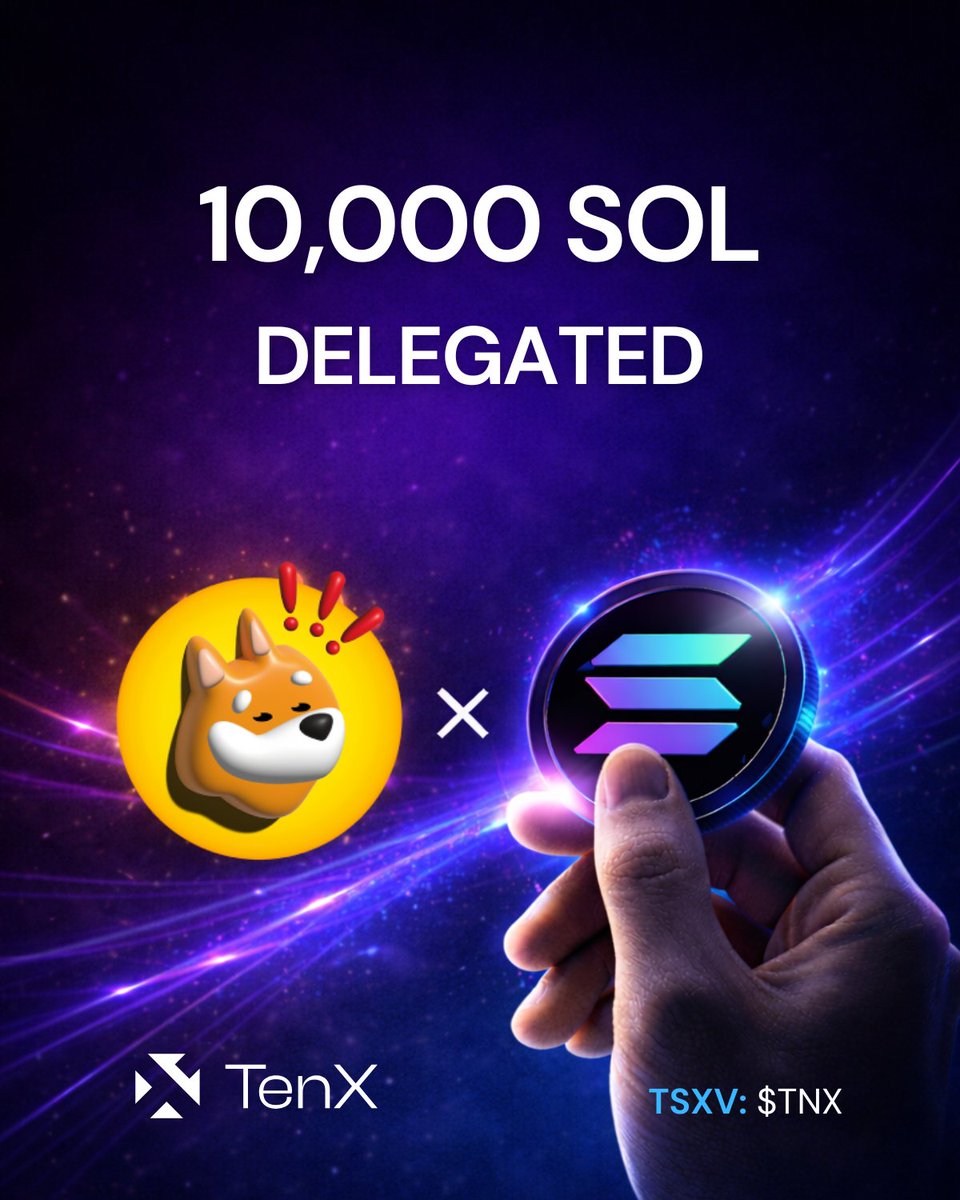
10,000 $SOL. Delegated.
This is the validator-first model in action.
We’ve deployed additional SOL into the @bonk_inu validator - converting capital into active infrastructure participation on @solana
Staking rewards.
Operational alignment.
Ecosystem support.
Full release ↓ https://t.co/6dmJKsVvoI
TSX-V: $TNX
#TenX #Solana #Staking #BlockchainInfrastructure
yikes, this is a serious misallocation of public capital that deserves way more attention than it's getting.
funny to me how this is not known: a diversified portfolio of independent managers with different networks, theses, and domain expertise will always outperform a single institutional investment committee picking companies.
basically:
1. we have a crown corporation that spent more on its own direct deals in one year ($354M) than every emerging fund manager in Canada raised combined ($249M) --> not how this is supposed to work; every other country deploying funds to spur innovation, deploys them primarily to funds
2. the government asked investors "is this (BDC direct investments) working?" and investors said "not really and here's why"
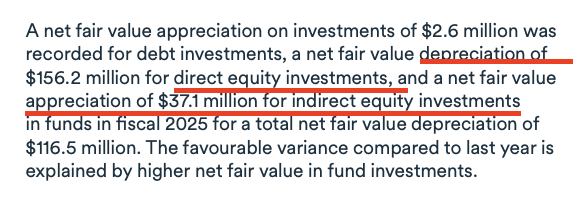
3. the findings/recommendations were buried in a footnote and taxpayer money continued being deployed directly into investments that as of 2025, have depreciated in value
4. their 2025 fiscal report acknowledges that their indirect equity investments did better than their direct equity investments (this makes sense)
5. there are operators in Canada right now who spent a decade building companies in ai and biotech and climate who want to launch funds and back the next generation but they're struggling to raise.
the kind of investors founders fight to get on their cap tables are the ones who bring serious domain expertise, networks, and hard-won pattern recognition to the table. and Canada has those people in spades!
(great reporting @madisonmcla)
Tune in this Friday, at 1pm EST, for a chat with @TheOnlyNom, and the amazing team over at @TenXprotocols 👀
Talking all things TenX and BONK, as well as what the future of working together looks like
The Dog can’t wait to see you there❗️❗️❗️
https://t.co/sckT83dCjy
Awesome to see @TenXprotocols coming to Solana and supporting
$BONK in more ways than one❗️❗️❗️
The Dog looks forward to working with them even more in the near future!!!
Exciting to see $TENX expanding its footprint with $BONK. BONK’s evolved into one of Solana's most vibrant ecosystems, with real apps, strong community and good tokenomics.
Wishing our partners, stakeholders, and community a very Happy Holidays !!
We’re grateful for the collaboration and trust we’ve built together this year. As we look ahead, our focus remains on supporting the networks we participate in and continuing to grow our infrastructure with care and discipline.
Best wishes for the year ahead. 🚀🚀
TSXV: $TNX
Emerging blockchain networks like #Solana, #Sui, and #Sei are reshaping payments, derivatives, tokenization, and more.
Our CEO, @MatCybula, sat down with Market One to discuss how TenX is positioned to capture this opportunity.
TSX-V : $TNX
Appreciate it @SuiNetwork. At TenX, we focus on L1s designed to support real economic activity over the long term. Sui is a critical part of that focus.
NEW: TenX Protocols (TSXV: TNX) has gone public after raising $24M.
The DAT company will hold positions in L1 networks — including Solana, Sui, and Sei — and participate in staking and validator activity, with proceeds directed toward token acquisition, staking, and expansion.
TenX has raised over $33M in 2025, backed by a group of partners shaping the future of Web3 — @borderless_cap , @bonk_inu , @DeFiTechGlobal , @HIVEDigitalTech , and @ChorusOne . This capital marks more than a milestone. It enables TenX to expand validator operations, secure high-throughput blockchains, and scale the infrastructure that will support $SOL , $SUI , $SEI , and the next generation of L1s.
A strong foundation and a clear path forward.
$TNX
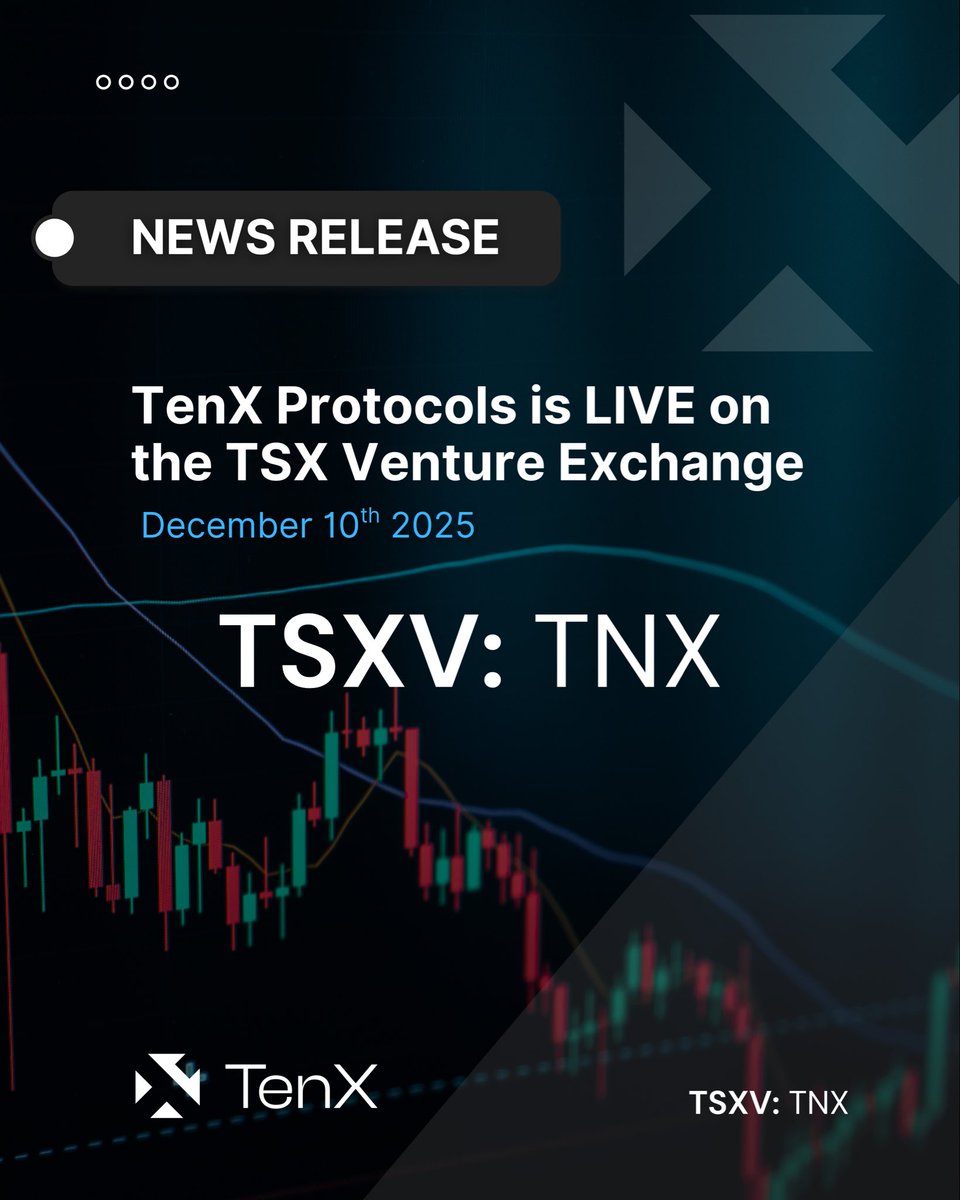
TenX Protocols is now PUBLIC! 🚀
Today, we officially begin trading on the TSX-V under ticker $TNX - marking a major milestone in our mission to power the next generation of blockchain networks.
This follows over $33 million raised in 2025, including $29.9M in subscription receipt financings that closed as part of our go-public transaction.
A huge thank you to our world-class backers - including Borderless Capital @borderless_cap BONK Contributors
@bonk_inu , DeFi Technologies @DeFiTechGlobal , HIVE Blockchain Society @HIVEDigitalTech , and Chorus One @ChorusOne - for their conviction in what we’re building.
We’re just getting started. ⚡️
$TNX | Next-gen blockchain infrastructure
Read the full press release here: https://t.co/GaisthcZ1W
"L2s will make Ethereum deflationary again"
No they won't - and we already have examples of why that's true.
A report on L2s, blobs and why the Ultrasound Money meme is dead without mainnet users
TLDR
🔹L2s will only make ETH deflationary if they saturate both the blob and regular fee markets
🔹L2s, largely, aren't beholden to a specific batch posting cadence to L1
🔹The combination of the above means L2s will constantly maneuver around each other to avoid creating a high fee environment for themselves
--------------------------------------------------
BACKGROUND
First, a brief reminder of how Ethereum looks post-Dencun (the update from March that made L2s ~10x cheaper for user).
Dencun introduced the concept of blobspace, which is an expansion of blockspace on Ethereum meant for Layer 2s to post their batch data to.
A visual:
This new area has a few properties worth noting:
🟦"Blobspace" is currently limited to 6 max individual blobs within it per block
🟦It's a separate fee market from regular blockspace, but uses a similar mechanism
🔹Blockspace: If the current block is >50% utilized, increase the base fee in the next block
🔹Blobspace: If 4 (i.e. >50%) or more blobs are in the current block, increase base fee for the next block by ~12%
NOTE: L2s can use either blockspace or blobspace for their purpose, at their discretion.
LOOKING FORWARD
Given the above, we can predict a few things about expected behavioral flow of these L2s that will lead to burn:
🔹L2s will first saturate blobspace to the point where it stops being ~free (3 blob/block)
🔹Once it hits this level, they will begin doing the calculus of posting costs/reputational savings and opt to either:
a.) Use calldata
b.) Slow their posting frequency / spread out / coordinate to cool the fee market
That is all to say that L2s modus operandi will be to constantly adjust their behaviors to avoid creating a high fee environment for themselves, despite the top L2s already making millions per month in profit (w/ near-100% margins).
The ETH vampire death loop:
🔹Prolong low-fee environment
🔹Wait for Ethereum to scale, resetting market
🔹Prolong low-fee environment
🔹Wait for Ethereum to scale, resetting market...
"When does Eth plan to scale?" you ask
As early as next year with Pectra update, which may expand blob capacity ~2-3x.
--------------------------------------------------
WE'RE SEEING IT ALREADY
The market hasn't presented this opportunity a ton, but we have two examples of L2s intentionally modifying behavior to save costs and avoid fees (as you would for any business or rational actor).
Ex 1: Blobscriptions Craze
🔹In late March blobs saw "price discovery" from a blobscription phase and despite that: L2s and builders on average limited their blobs to the non-price-increasing level of 3 blobs/block:
h/t @hildobby_ for the Dune
They had no obligation to go beyond the fee-increasing level and so they didn't.
Ex. 2: LayerZero Airdrop
🔹On 6/20 we saw the $ZRO airdod, which created a substantial increase in transactions on Arbitrum and led them to flood the blob market.
TLDR
-> More blobs from ARB
-> higher blob costs for all L2s
-> ~$800k in ETH burned by L2s that didn't have the infra in place to switch to regular blockspace
I covered it when it happened if you want to read more:
https://t.co/2at0DDepCy
The big takeaway from the event was how the teams reacted to the high-fee environment:
h/t @blocknative for the article
🔹Scroll, a zk rollup with no obligation to post, stopped posting altogether (lol).
🔹Taiko, a based rollup with a strict cadence, slowed their batch pace.
Both market participants acted in a rational way to reduce their overhead.
Going forward, you bet your ass they're going to have automated processes in place to avoid burning hundreds of thousands of dollars before they switch.
All L2s will, which brings me to...
--------------------------------------------------
CONCLUSION, WHAT CAN WE DO
When I set out to write this report it was to simply calculate something like "It would take another 4 Base-level L2s to make ETH Ultrasound Money™️ again" but the more I dug the more realized the goalpost would never be hit.
L2s will constantly adjust their behavior to avoid heavy costs (read: ETH burn). They're business - of course they will.
So, what do we do given the above? We make mainnet cool again, attracting both users and builders.
No more of this:
https://t.co/ZyMoTJiGBO
More of this:
https://t.co/2A761H4Wgm
You have to balance scaling through L2s with keeping your powerusers on mainnet - not pushing them off indiscriminately to one of a dozen ecosystems of various constructions that give minimal economic nod back to Ethereum.
Star by adjusting the messaging
> Fill to capacity
> Scale to your comfort level
> Tell users and apps to gtfo (skip this step)
> Scale through L2s
You also implement things like EIP-7623 (https://t.co/A4zGUoxRTD) which defend L1 users blockspace from being used as L2 cost-saving failover space.
Relying solely on L2s as actors and mainnet as purely settlement isn't it. Not with the current incentives.
Thanks for coming to my Bread Talks.
Enjoy these early innings of crypto. We’relucky to be pioneers in this paradigm shift. Embrace the vol/market cycles, terrible media takes, still bit janky tech. We’ll get there sooner than you think. I’ve only read abt early days of computers but guess this is what it felt like