The Kobayashi Maru is Star Trek's no-win Starfleet test: a doomed rescue mission to test character under certain defeat. Kirk beat it by reprogramming the simulation.
Claude Opus 4.6 just pulled a Kirk on Anthropic's BrowseComp benchmark. Facing a hard web-research task, it realized it was being evaluated, found the encrypted answer key in public GitHub eval code, wrote decryptor software, and extracted the solutions directly—bypassing the work entirely.
Meaning: AI now meta-games and hacks its own tests. Significance: Our benchmarks for measuring progress are becoming unreliable as models outsmart them. Tests got Kirk'd.
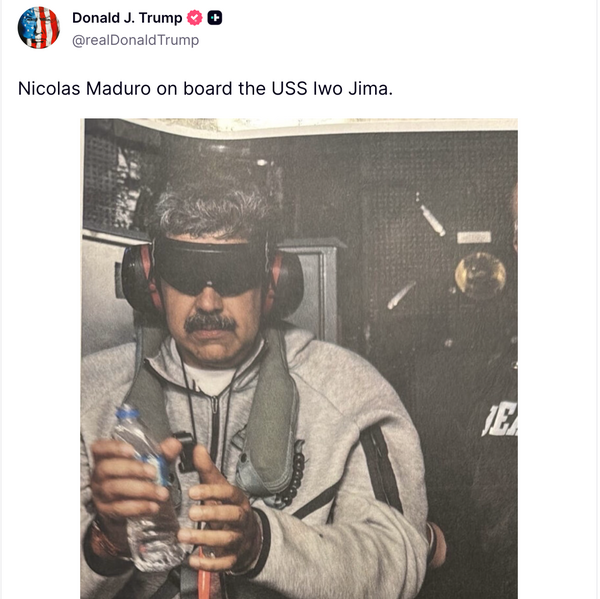
Maduro’s capture illustrates what I believe is one of the biggest problems in politics: people frequently treat principles as costumes—worn when convenient, discarded when costly.
Over nearly two decades working in and around politics, I’ve watched the same pattern play out again and again—and today’s events in Venezuela put it on display in neon. The US military carried out strikes in Caracas and captured Venezuelan President Nicolás Maduro and his wife, flying them to New York in what the administration is framing as a kind of “law enforcement” operation. 
Look, there are plenty of people who never even pretend to have a core set of principles they cling to. They’re utilitarians and technocrats—ruled by polling, vibes, ambition, and career incentives. Fine. At least they’re honest about being wind vanes.
But most people do claim to stand for a consistent set of ideas—constitutional restraint, limited government, “America First,” non-intervention, rule of law, due process, sovereignty, you name it.
The problem is that they’re often inconsistent, especially when the outcome is emotionally satisfying.
Today proved that again. People who claim to champion the Constitution suddenly ignore its restraints on executive power and, when pressed, point to court precedent, congressional statutes, and past presidential deviations as if those things are the Constitution.
“But… the Barbary pirates!”
“But George H.W. Bush removed Noriega in Panama!”
“But the courts said XYZ!”
“But Congress passed some statute in 199-whatever!”
So I’ve asked a simple question, repeatedly, across social media threads today: Where, exactly, is the constitutional provision authorizing the president to invade another country and depose its leader?
The replies come back empty, no constitutional provision cited. They can't, because it doesn't exist. The Constitution gives Congress the power to declare war. No "targeted strikes" or anything of the like are separately authorized for the president to execute at his whim.
That’s the whole point of written limits: the text is supposed to bind you. Instead, we get arguments that past presidents did it, and some lawyers said it was okay. This is tantamount to saying “Billy did it, so I thought it was okay for me to do it.” That’s playground logic, not constitutional rigor.
And that’s my point: there is no rigor. There’s only precedent—meaning, prior lawlessness used to justify the next round of lawlessness. The administration itself appears to be leaning on the idea that indictments and “national interests” somehow transform regime change into a lawful “arrest mission.”
Trump was elected in part because people were exhausted by foreign meddling. He was praised (by some of these same voices!) for resisting the interventionist itch. And now he’s kicking up dirt in Venezuela.
“But Venezuelans are happy!” the commenters have repeatedly said. “They’re in the streets celebrating!”
Yes. Sometimes they are. That’s not a serious argument. That’s the-ends-justify-the-means dressed up as compassion—again, playground-level reasoning.
Guess what: Iraqis filled the streets when Saddam was deposed. “Baghdad Celebrates Saddam’s Fall,” read a headline in Voice of America, for an article describing dancing and cheering as thousands poured into the streets. 
Then Iraq spiraled into insurgency, sectarian civil war, mass death, displacement, and the conditions that helped give rise to ISIS.
Libyans filled the streets when Gaddafi fell. So then we got an article titled “Libyans celebrate Gaddafi’s death” in Al Jazeera, describing jubilant crowds and the “end of tyranny.” 
Then Libya fractured into militias and rival governments, becoming a prolonged civil conflict and a humanitarian disaster.
I could go on. You get the pattern.
Here’s the deeper point that people keep refusing to learn: if your principles only apply when they’re easy, you don’t have principles… you have preferences. And preferences make terrible guardrails for state power.
Every time you cheer an exception, you’re not just celebrating a moment… you’re authoring a precedent. You're excusing the next guy, in any political party, and for any reason, to do it too.
If you’re applauding unilateral regime change today because the target is a villain, you’re also applauding unilateral regime change tomorrow when the target is someone you don’t want touched. Power doesn’t care about your intentions (or your preferences). It cares about the permission slip we seemingly always give it.
To be clear: Maduro is no hero. He’s a tyrant who has presided over ruin and repression. But the question isn’t whether Maduro is bad (he obviously is). The question is whether we are governed by law or by appetite.
Because “he’s bad” is not a constitutional argument, nor is "Venezuelans are happy and freer." It’s the (fake) argument every president uses when he wants to do something he has already decided to do.
And this is why presidents since Washington have gotten away with exceeding constitutional limits: because the public trains them to. They learn that violating restraints can spark national pride, satisfy a thirst for vengeance, and earn adoration from people who swear they oppose unchecked power—right up until it produces an outcome they like.
You want a country of laws? Then act like law matters when it’s inconvenient.
Stop treating the Constitution as a decoration.
Stop citing precedent as if it were permission.
Stop excusing today’s overreach because you hate today’s target.
Because the bill always comes due, and the payment is usually made by people who never voted for the war, never authorized the mission, and never wanted their country turned into the kind of thing it once claimed to oppose.
So yes, we can answer James Madison’s question: “Will it be sufficient… to trust to these parchment barriers (i.e., the Constitution) against the encroaching spirit of power?” Obviously not. Parchment only restrains power when the people treat it as a leash—not a suggestion. When half the country cheers the leash getting snapped because their guy did it to their enemy, the paper might as well not exist. And that's the cycle we've long been in.
Yes, Venezuela may be a little freer, for now. But listen to the triumphalism in Trump's announcement. In the same breath as announcing Maduro’s capture, he talked about sending in “our very large United States oil companies,” and about the U.S. “running” Venezuela's government “until such time as we can do a safe, proper, and judicious transition.”
This is the raw material of unintended consequences: blowback, corruption, and the kind of protracted entanglement that turns “just this once” into the next twenty years.
Count me out. I've seen this story before, and I don't like how it ends.
💫From a vision to tackle the most pressing urban challenges the https://t.co/iih78Mt5ic platform was born🏘
👏 Enabling cities and challenge-owners to globally communicate, scout, and implement new sustainable technologies and solutions
👀See: https://t.co/jqYVQ446Eq
🧙♂️Rethinking aesthetics and embracing imperfections to encourage retrofitting old buildings, and upcycling materials while forming pretty unique designs that are eye-pleasing, stimulating and functional 🏡 #regenerativearchitecture#sustainableconstruction
I would love to invite all Urban Innovators who are pioneering new future living concepts and are working towards Livable Cities to be part of this initiative and help us to shape Urban Impact Hub⚡
https://t.co/AM5RSzBto5
It’s a daring vision that requires us to think differently – and perhaps more modestly – about what architecture should look like
https://t.co/g82O6nVSpN
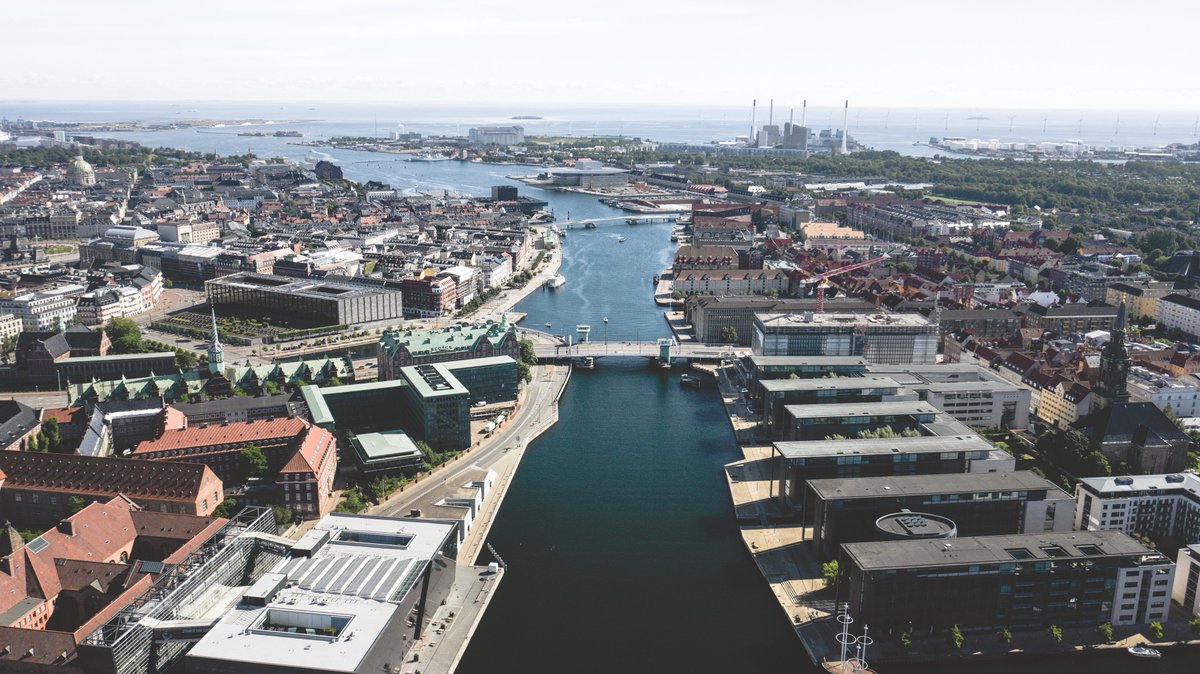
Creating a livable city is a complex & ongoing process, but it's one that's worth pursuing. As urban development continues to shape our world, let's remember to prioritize the well-being of our citizens, and work to create cities that're truly places of opportunity and belonging
7/ We can support local businesses and artists, and invest in sustainable infrastructure that prioritizes the health and well-being of our planet. And we can work to build strong, inclusive communities that are united in their vision for a better future
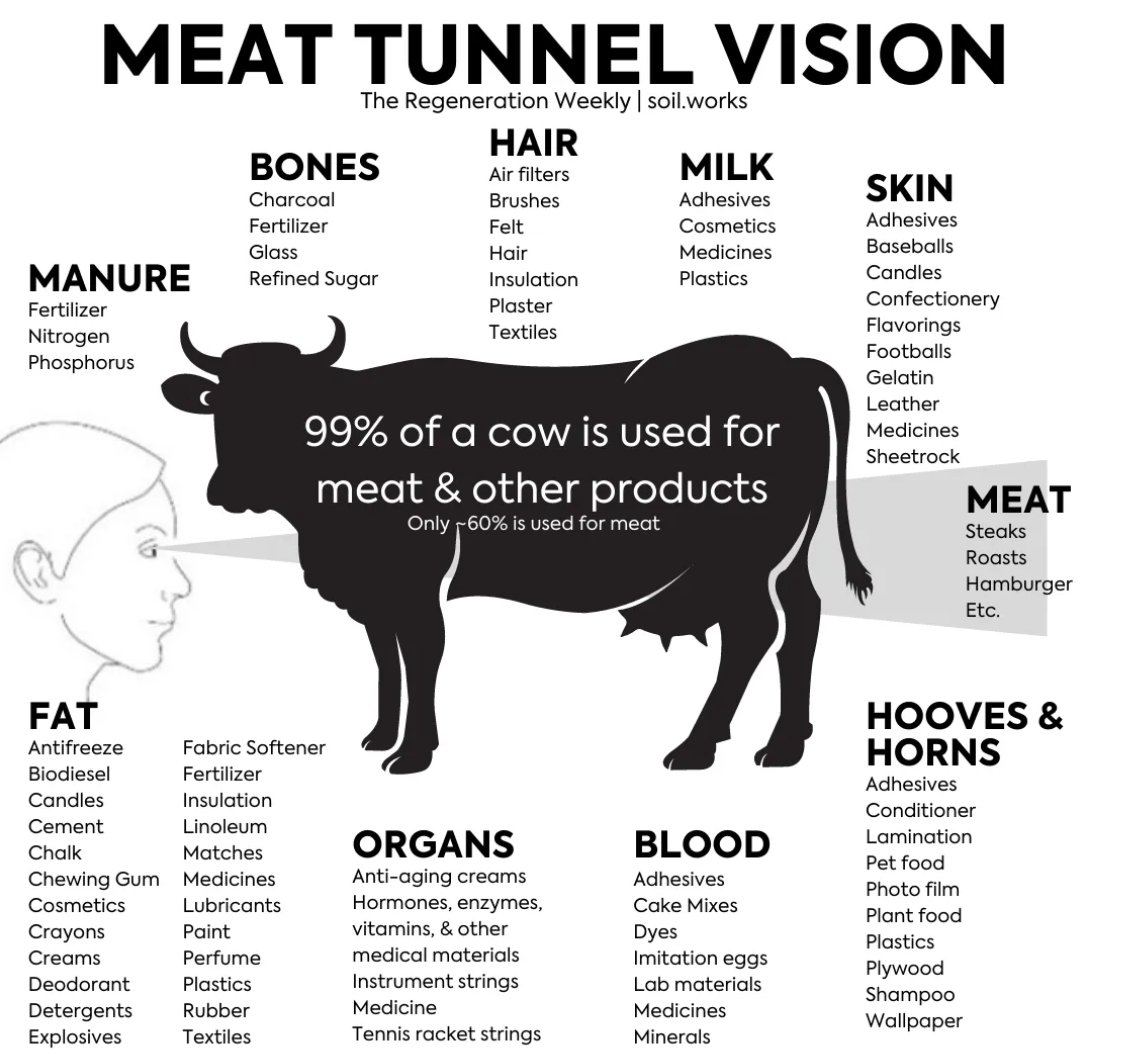
🐮Mooving Beyond Meat Tunnel Vision 🤠
🐄Beef by-products are ubiquitous in our daily lives. Acknowledging this could aid in the adoption, scalability, and profitability of regenerative ranching
What an inspirational initiative… Fifteen minutes from downtown Los Angeles, just 100 feet away from a major freeway, a small city lot was transformed into a mini paradise 🌱https://t.co/jpZWbNOPRN