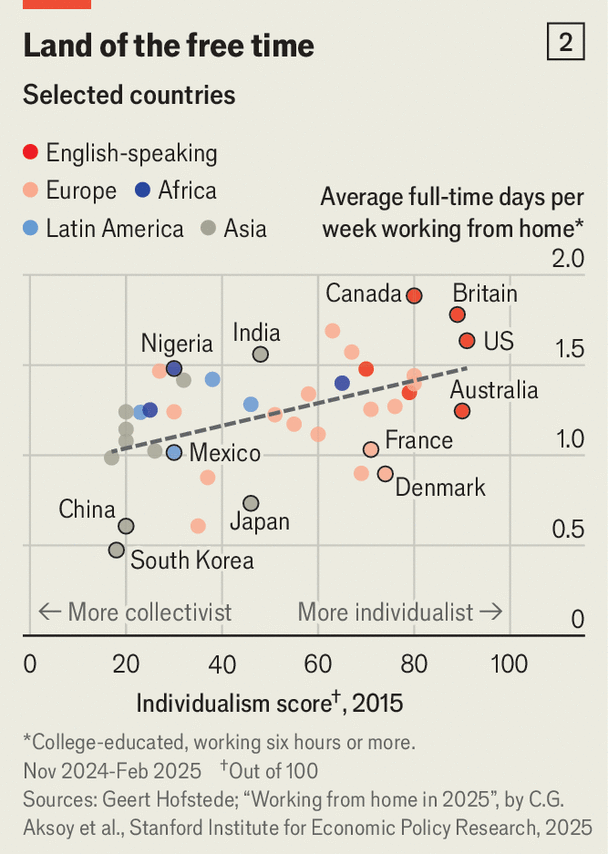
I took a swing at the grand transatlantic spat over GDP figures, and whether Europe really is falling behind America, in this week's
@TheEconomist.
Read on to see if I succeeded in sneaking in enough World Cup sugar to make the PPP medicine go down.
https://t.co/jyHRriHyxO
We spoke to diplomats, advisers, scholars, experts and current and former officials in China. Almost all of them see the war in Iran as a grave American error. Register for free to read why: https://t.co/0CDHuDCMDW
Data has obviously since come in. I process updates 3x daily. So far, it is pointing in the same direction as trends in the charts above. We show a selection of the latest here: https://t.co/wM6Kjgq7l1
Have data centres raised power bills?
Not really, our analysis @TheEconomist finds—at least so far. Adding data centres to a state-level model of electricity prices shows no significant effect.
But backlash is brewing. Link ⬇️ to my latest, on the politics of the data centre.
Unless something dramatic changes, our calculations suggest that Vladimir Putin will be unable to win the war on the battlefield. The fact that he nevertheless continues to try suggests that he is out of ideas https://t.co/C2tMOwrcci
In a region that has known little other than decades of conflict, this is an extraordinary moment: a slender but real chance of a fresh start https://t.co/QTXjkJHmVm
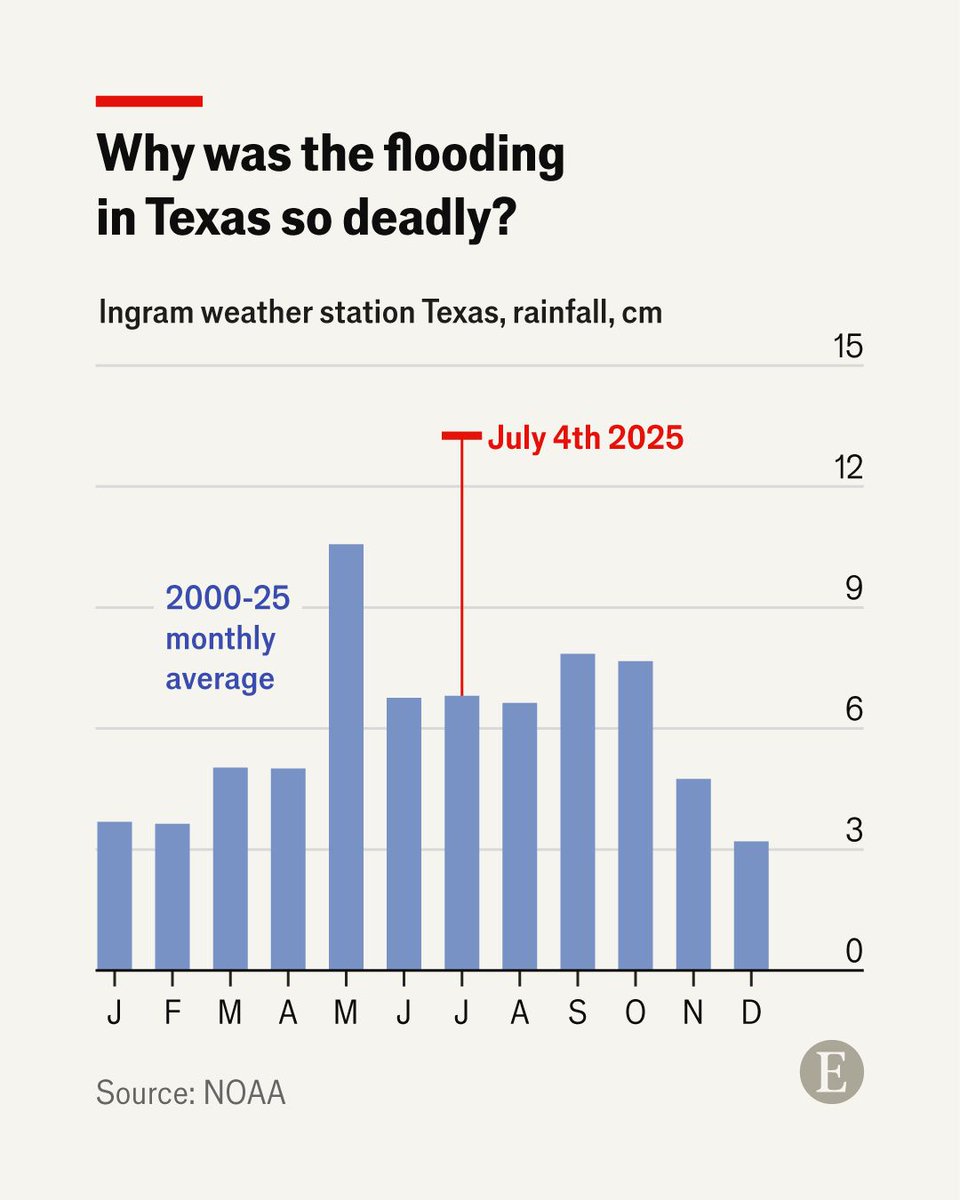
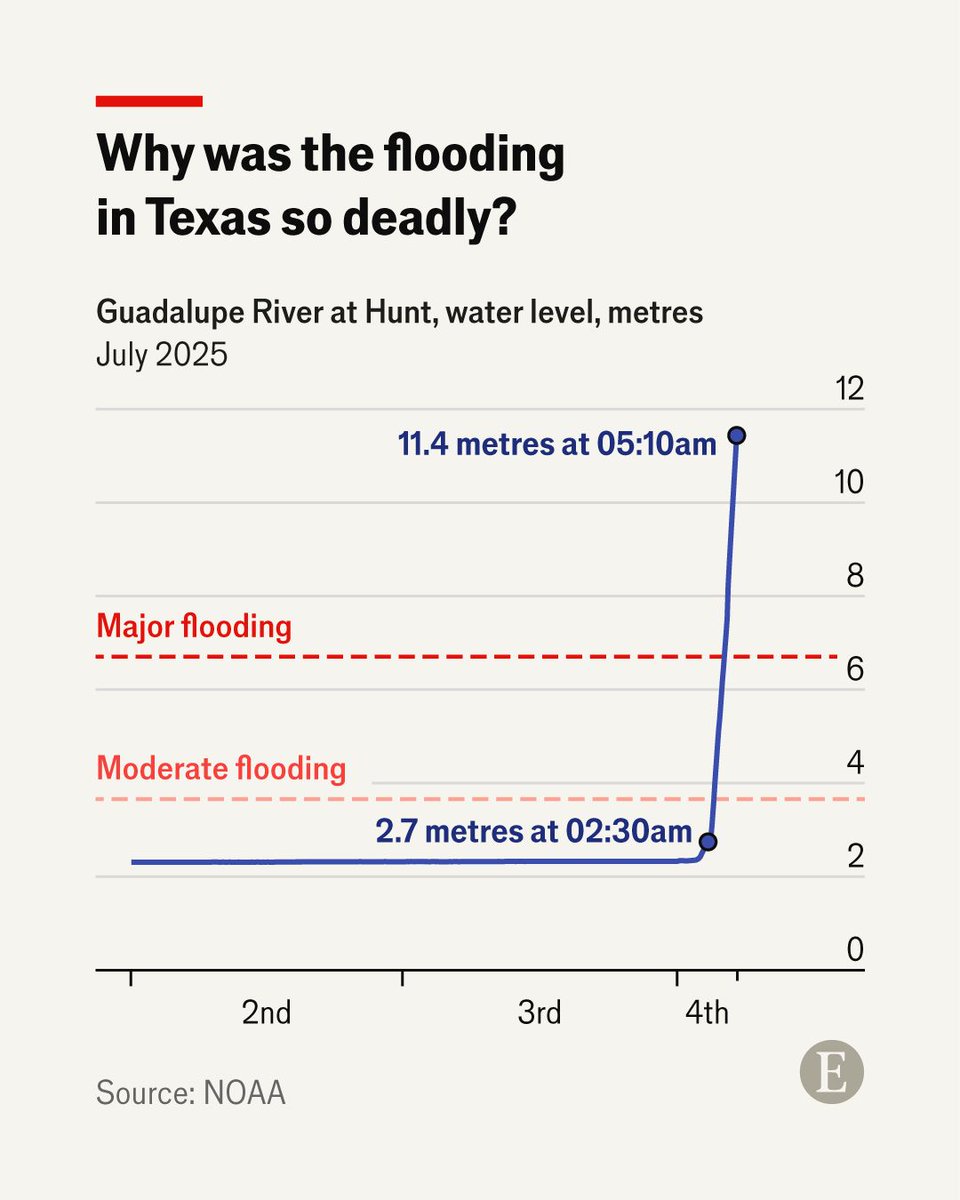
At least 88 people have died in one of the worst floods to hit America in a century. Our charts and maps explain what made the flooding in central Texas so catastrophic https://t.co/GPz7BJI4XJ
Stagnating median income is a problem in some countries. For example in Italy.
But many commentators on this platform speak about the experience of the middle class in high-income countries as if this was universally true, and that's not the case.
If the S&P 500 closes tomorrow where futures are right now, it will be the biggest three-day selloff in 38 years, a faster drop than any during either the global financial crisis in 2008 or the Covid-19 panic in March 2020.