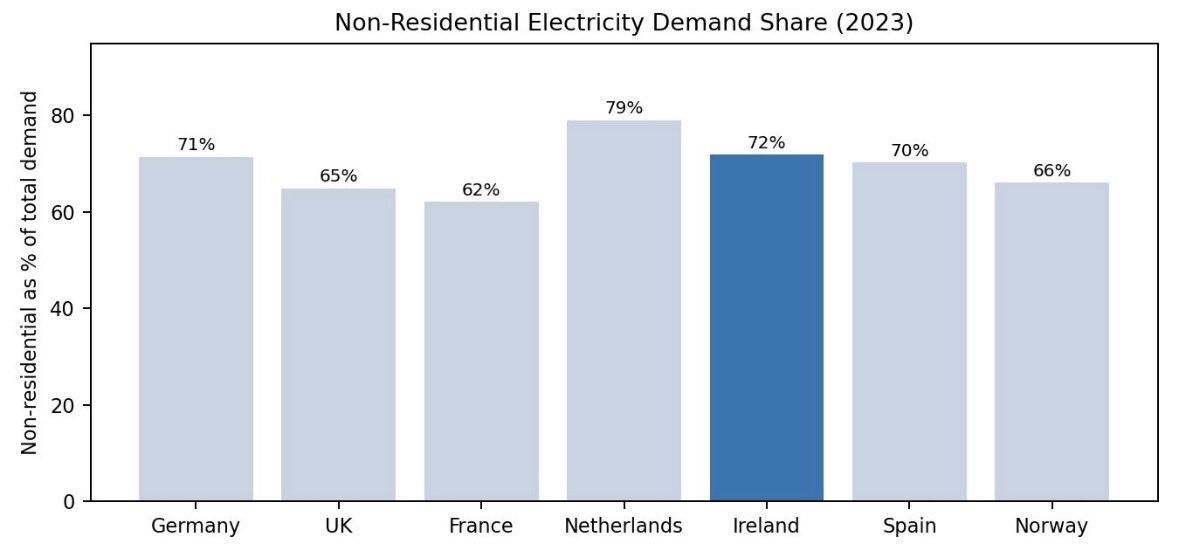
@businessposthq Great piece @cooper_m - what else would we do with the abundance of electricity we have/will have. Export it as electrons? Or add value as DCs. The modelling in the FOE piece was also quite one sided
@CleanPowerDave Ireland installed its first grid connected solar farm less than 4 years ago - yesterday solar provided 13% of daily demand, 18% of demand during solar hours and over 33% at peak!
4/ Paul Deane put it perfectly: if Ireland can’t build transmission, we can’t build a reactor.
Norway’s independent review reached the same conclusion: alternatives are sufficient to 2050, SMR cost claims unproven.
Ireland should take the same approach.
1/ Ireland banned nuclear power in 1999.
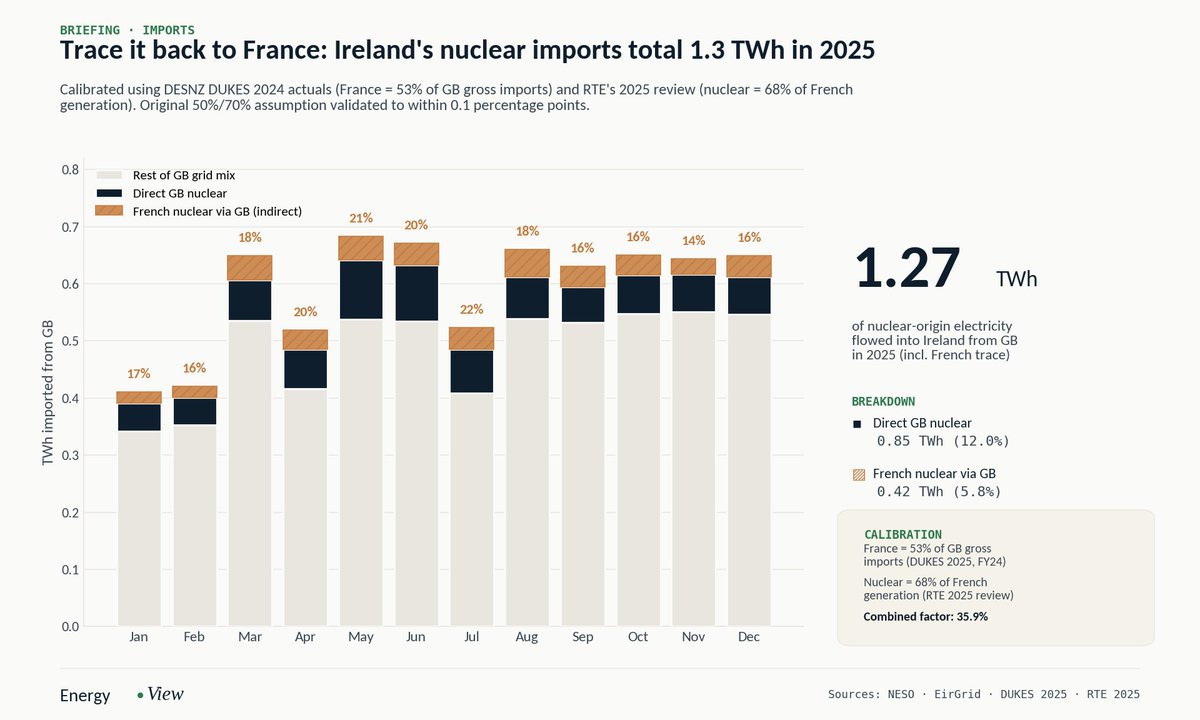
In 2025, we imported ~1.3 TWh of nuclear electricity from France and GB via our interconnectors.
The ban hasn’t kept nuclear out. It’s just kept it off the table for analysis.
3/ The real 2030s job: grid build-out, offshore wind, planning reform, long-duration storage, demand flexibility.
We’re already struggling for resources without adding a non-commercial SMR-shaped question to the mix.
@EO_Halloran@PeterSmartpower Ireland previously had supports for battery’s but got rid due to budget and wanting to support solar more. I agree it should be reinstated- have an 8kWh battery at home and the savings/benefits are massive
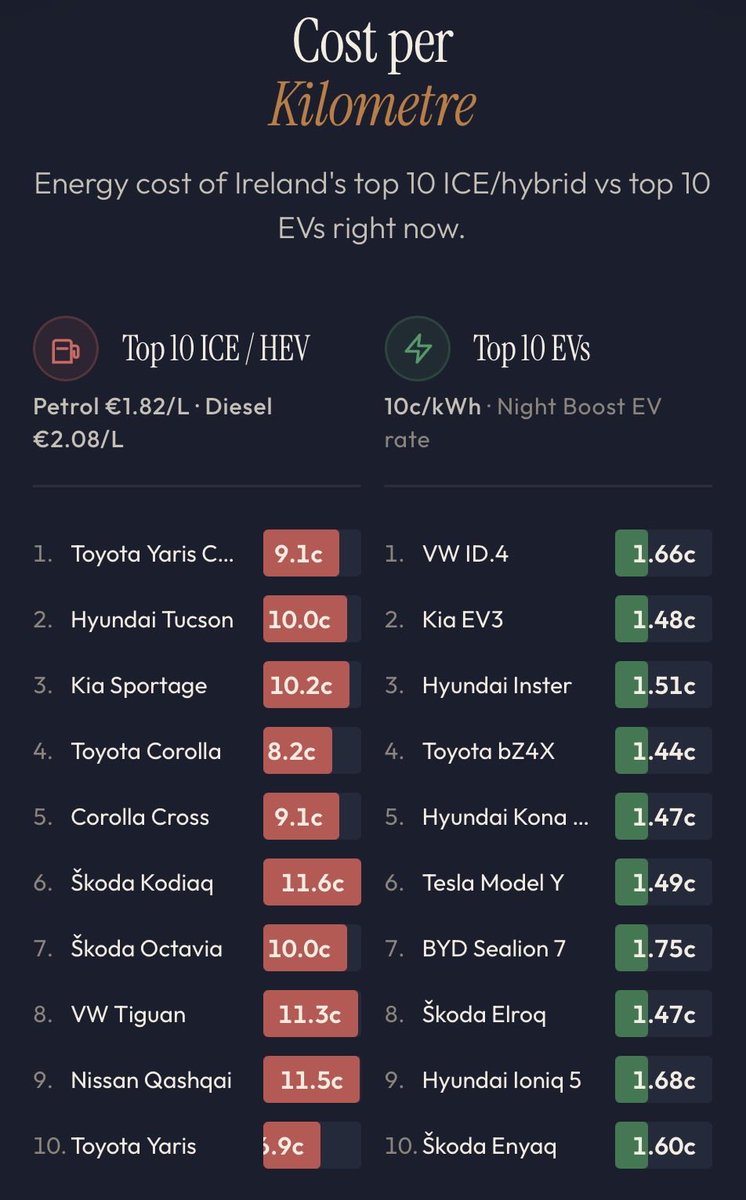
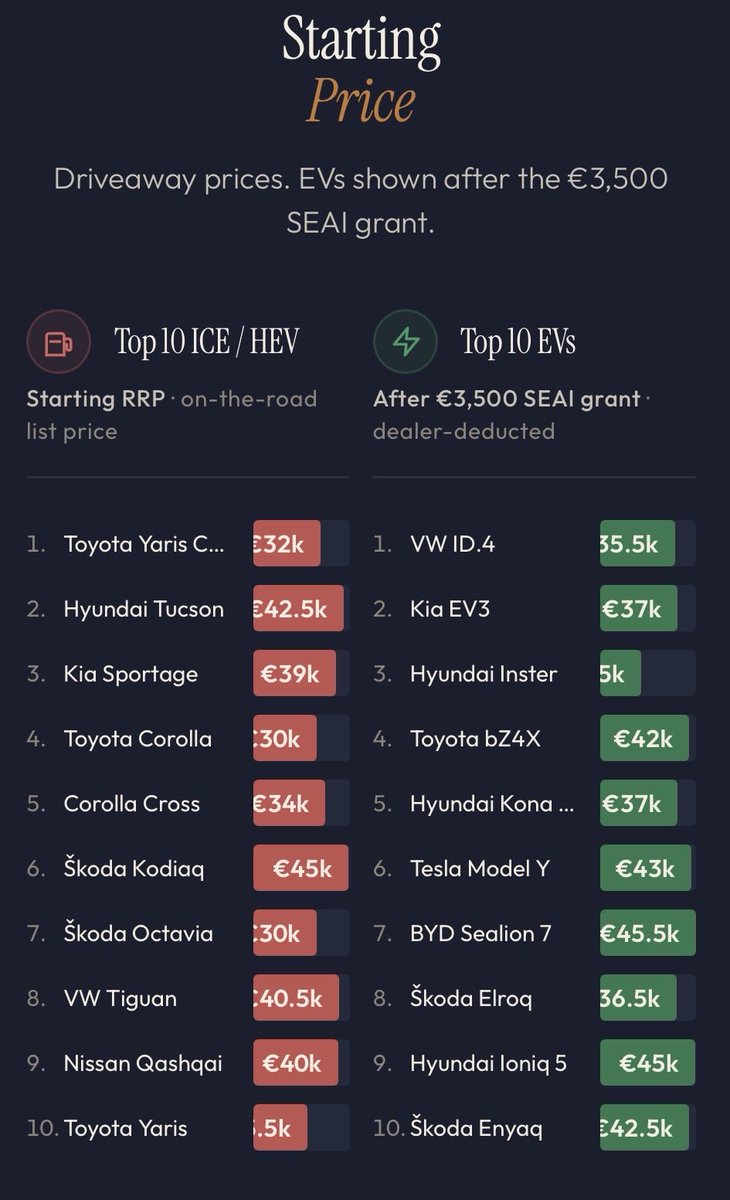
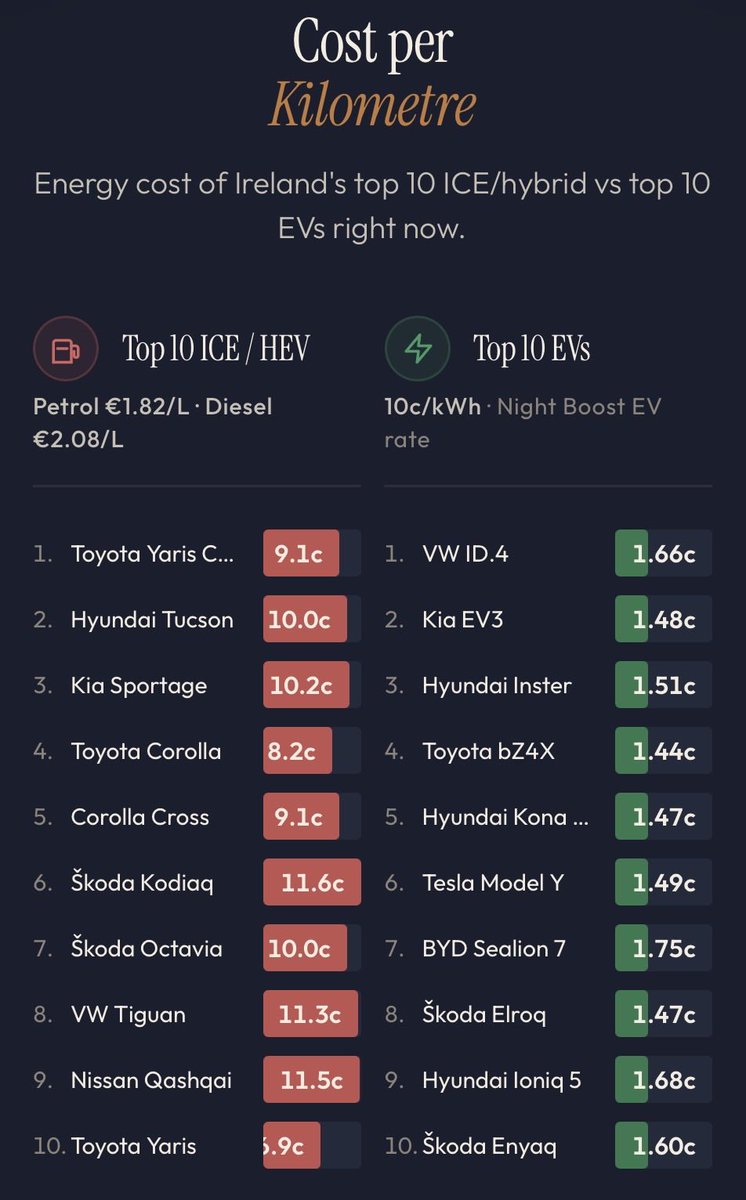
EVs in Ireland and now as cheap to buy as their competitors, and are 7x times cheaper to run.
Based on top 10 sales in Q1 2026. The only way a ICE vehicle beats an EV is if you can’t charge at home.
@adrianweckler@GerHerbert1
@Styo28183449@adrianweckler@GerHerbert1 Nope - each car has its own efficiency number under WLTP (which I know are wrong) but I use the equivalent for diesel and petrol. It’s not one size fits all - Tesla model 3 is more efficient than ID4 for example
@Styo28183449@adrianweckler@GerHerbert1 So the EVs use WLTP and diesel and petrol also use WLTP efficiency. From memory it’s c. 17 kWh/100km and c. 6l/100km so the numbers are true