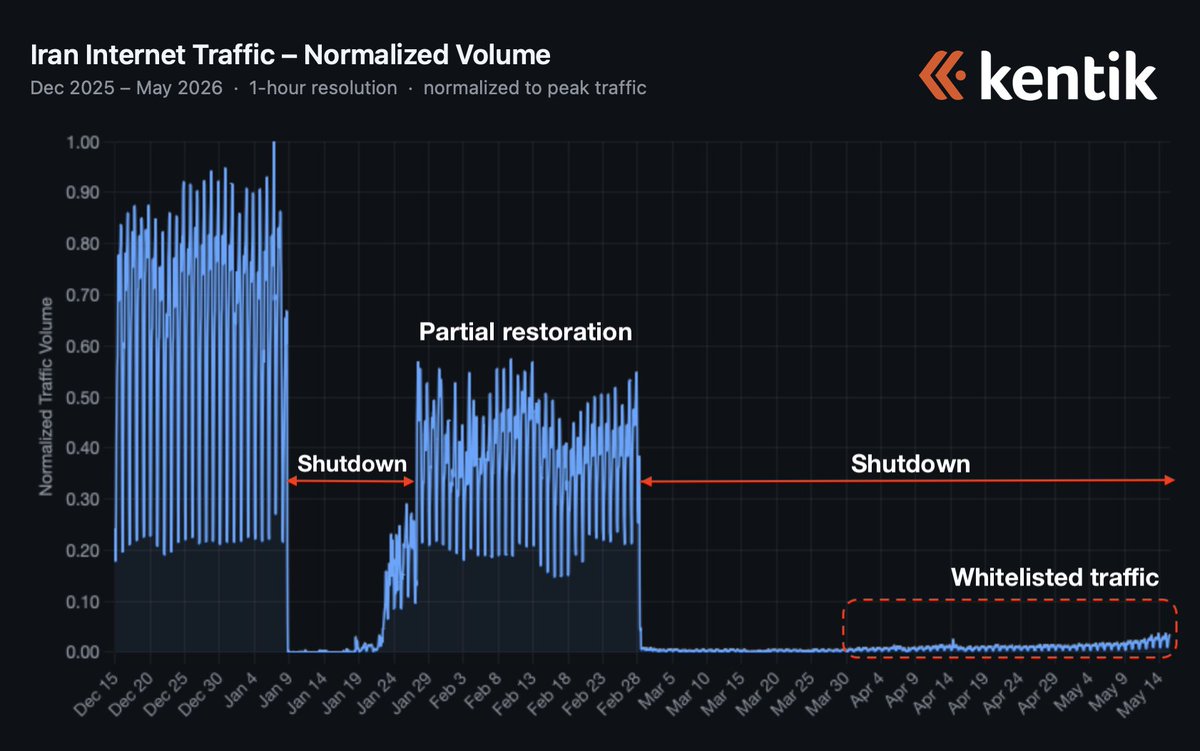
More than a month after Iran began partially restoring international internet access, connectivity remains far below pre–January 8 levels. Kentik data showed traffic reaching only about 60% of its previous baseline before plateauing below normal.
Meanwhile, data centers face tighter identity verification and tiered-access requirements, raising concerns over increased state oversight of servers used for VPNs and other anti-censorship tools.
Banking disruptions remain technically unexplained, broadband costs are effectively rising, and power outages and GPS interference continue to expose the fragility of Iran’s digital infrastructure.
Iran’s internet has not returned to normal—it remains trapped between partial connectivity, tighter control, and growing infrastructure instability.
https://t.co/K734v17Tor
The primary role of internet censorship and the blocking of social media platforms and websites in Venezuela is to impose an information blockade, control political narratives, and suppress dissent. These measures are often intensified during sensitive periods such as elections and public protests in order to restrict citizens’ access to reliable information and disrupt media coverage of demonstrations.
The main dimensions and functions of Venezuela’s censorship policies include:
Silencing independent media outlets.
Disrupting citizens’ communication and organization efforts.
Forcing private companies to participate in censorship practices.
Advancing technical filtering capabilities to block circumvention tools.
Creating “news deserts” and encouraging self-censorship.
In a video provided to Filterban, Andrés Azpúrua, Executive Director of VE sin Filtro (“Venezuela Without Filters”), discusses the state of internet disruptions and restrictions on social media platforms in Venezuela.
نقش اصلی #فیلترینگ و مسدودسازی شبکههای اجتماعی و وبسایتها در ونزوئلا، اعمال یک محاصره اطلاعاتی، کنترل روایتهای سیاسی و سرکوب مخالفان است. این اقدامات بهطور ویژه در زمانهای حساس مانند برگزاری انتخابات یا شکلگیری اعتراضات مردمی تشدید میشوند تا از دسترسی شهروندان به اخبار موثق جلوگیری کرده و پوشش خبری تظاهرات را مختل کنند.
مهمترین ابعاد و نقشهای سیاست فیلترینگ در ونزوئلا به شرح زیر است:
۱. ابزاری برای خفه کردن رسانههای مستقل
۲. مختل کردن سازماندهی و ارتباطات شهروندان
۳. همدستی اجباری شرکتهای خصوصی در سانسور
۴. ارتقای فنی فیلترینگ برای مسدود کردن راههای فرار
۵. ایجاد «بیابانهای خبری» و ترویج خودسانسوری
آندرس آزپوروآ مدیر اجرایی سازمان «VE sin Filtro»؛ به معنی «ونزوئلا بدون فیلتر» در ویدئویی که در اختیار فیلتربان قرار داده در مورد وضعیت #قطعی اینترنت و اختلال در شبکههای اجتماعی در این کشور میگوید.:
🚨 Anthropic claims that Alibaba used 25,000 fake accounts and nearly 29 million interactions to extract the capabilities of its Claude AI model.
Beyond corporate competition, this case raises a broader concern for the AI ecosystem:
If AI models can be replicated at industrial scale through fake accounts and automated interactions, the issue is no longer just intellectual property. It becomes a matter of AI infrastructure security, user trust, and the protection of sensitive data.
As AI becomes increasingly integrated into finance, healthcare, education, and governance, model security is becoming an essential part of digital security.
#DigitalRights #Privacy #CyberSecurity #AI #Anthropic #Alibaba
🚨 آنتروپیک مدعی است علیبابا با ۲۵ هزار حساب جعلی و نزدیک به ۲۹ میلیون تعامل، قابلیتهای مدل Claude را استخراج کرده است.
فراتر از رقابت تجاری، این پرونده یک هشدار مهم برای اکوسیستم هوش مصنوعی است:
اگر مدلها بتوانند در مقیاس صنعتی از طریق حسابهای جعلی، رفتار و دانش مدلهای دیگر را کپی کنند، سؤال فقط مالکیت فکری نیست؛ امنیت زیرساختهای هوش مصنوعی، اعتماد کاربران و حتی حفاظت از دادههای حساس نیز به چالش کشیده میشود.
در دنیایی که هوش مصنوعی به خدمات مالی، سلامت، آ��وزش و حکمرانی متصل میشود، امنیت مدلها به بخشی از امنیت دیجیتال جامعه تبدیل شده است.
#DigitalRights #Privacy #CyberSecurity #AI #Anthropic #Alibaba
The European Parliament's recent resolution, led by @HNeumannMEP, is a historic milestone against "Transnational Repression." As documented by @Filterwatch, the digital sphere is the regime's primary frontline, with 30% of the Iranian regime's cyberattacks targeting activists and media abroad.
Digital security in exile is the ultimate shield for your physical safety and your networks back home. If you are targeted by cyber threats, Miaan's Digital Security Help Desk is here to assist you confidentially: 🟩 Signal/WA: +46766860503 🟦 Telegram: @miaan_helpline_bot 🟪 Email: [email protected]
#TransnationalRepression #TNR #DigitalRights
About 26.5 hours after the gradual restoration of internet connectivity began in Iran (around 3:30 PM on May 27), Cloudflare data reveals a notable pattern:
The number of HTTP requests has increased significantly more than the actual volume of exchanged data (Total/HTTP bytes).
This pattern may suggest that users and applications have regained the ability to send requests and test connectivity, but the quality and stability of the connection have not yet improved enough to produce a proportional rise in actual data usage.
Such behavior is commonly associated with unstable connectivity, repeated attempts to establish connections, or continued restrictions affecting access to certain services.
📌 The orange line represents the number of requests, which remains noticeably above the blue line.
Iran’s gradual internet restoration may be more than a technical shift; it appears to reflect a deeper political struggle over who controls access to the digital space.
According to Filterwatch, while limited connectivity has begun to return, the sales page for “Internet Pro” has been removed from the website of Iran’s largest mobile operator.
Internet Pro represented a move away from traditional filtering toward a model of differentiated access — where connectivity is not equally available, but distributed through approved access tiers and whitelists.
But it is still too early to draw conclusions:
Is this the beginning of a retreat from tiered internet policies or simply a pause in a broader experiment?
#DigitalBlackoutIran #InternetFreedom
https://t.co/Ni0U5gXoaB
Seeing the first signs of a possible internet restoration in Iran at 12:01 UTC today.
While a few networks spiked in traffic, most are still down.
#DigitalBlackOutIran
Based on 20 in-depth interviews across Iran, the Filterwatch new report finds that internet shutdowns and restrictions are no longer just a technical disruption; they have become a social, economic, and psychological crisis.
• Access to the global internet is increasingly becoming a class privilege rather than a universal right.
• Stable VPN access has become prohibitively expensive, with reported costs reaching up to ~$17.65 per GB while Iran’s minimum hourly wage is estimated at ~$0.48.
• Many lower-income and less digitally dependent users have effectively abandoned the global internet altogether and shifted to domestic platforms, SMS, or satellite TV.
• Users repeatedly described feelings of anger, humiliation, exclusion, and loss of dignity linked to forced migration toward domestic platforms.
• Teenagers described losing access not only to entertainment, but to spaces for learning, identity formation, creativity, and opportunity.
• Migration emerged across interviews as a recurring response; not because of internet restrictions alone, but because restrictions increasingly shape people’s broader life choices.
The report warns that Iran’s trajectory may be producing a form of class-based digital exclusion, where access to the open internet increasingly depends on income, social position, and ability to pay.
Internet access is no longer experienced as infrastructure alone, but as a question of rights, dignity, and participation in modern life.
https://t.co/47jMPX5R1Q
Doug Madory, Internet Analysis Manager at the Kentik Institute, describes the recent state of the internet in Iran as one of the most severe and unprecedented instances of communication disruptions in history, in an interview with Filterbaan.
According to Mr. Madory, in the traffic charts of the Kentik Institute, the data related to Iran—which always exhibited a regular and wave-like (sinusoidal) pattern—has, following the current internet outage in Iran, taken on a highly jagged, unstable, and irregular behavior. These uneven lines and NetFlow records indicate repeated disconnections and reconnections, along with the creation of a deliberate, structured disruption in the main internet routing paths.
داگ مادوری، مدیر تحلیل اینترنت در موسسه کنتیک (Kentik) در گفتگو با فیلتربان وضعیت اخیر اینترنت در ایران را یکی از شدیدترین و بیسابقهترین نمونههای قطع ارتباطات در تاریخ توصیف میکند.
به گفته آقای مادوری در نمودارهای ترافیکی موسسه کنتیک (Kentik)، دادههای مربوط به ایران که همیشه رفتاری منظم و موجی شکل (سینوسی) داشتند، پس از قطعی جاری اینترنت در ��یران،رفتاری به شدت دندانهدار، ناپایدار و نامنظم پیدا کردند. این خطوط نا��موار و سوابق جریان شبکه (NetFlow)، نشاندهنده قطع و وصلهای مکرر و ایجاد یک اختلال عمدی ساختاریافته در مسیرهای اصلی اینترنت (Routing) است.
The Guardian reported on Monday that the Islamic Republic’s plan to charge fees for undersea internet cables passing through the Strait of Hormuz is “highly unlikely” to materialize.
Quoting a former U.S. State Department official, The Guardian wrote that the Islamic Republic lacks the technology required to covertly cut subsea cables, and that its only real leverage would be through “threats.”
Nevertheless, Iranian authorities have launched extensive propaganda campaigns around the issue and Tehran’s supposed ability to impose such tolls.
Pooyesh Azizaldin, an information technology expert from Filterwatch, spoke with Doug Madory, Director of Internet Analysis at Kentik, about the possibility and likelihood of Iran being capable of disrupting global internet cables crossing the Persian Gulf.
روزنامه گاردین روز دوشنبه گزارش داد تحقق طرح جمهوری اسلامی برای دریافت پول از کابلهای اینترنتی زیردریایی در تنگه هرمز «بسیار بعید» به نظر میرسد.
گاردین به نقل از یک مقام پیشین وزارت خارجه آمریکا نوشت جمهوری اسلامی فناوری لازم برای قطع مخفیانه کابلهای زیر دریا را ندارد و تنها راه اعمال فشار، «تهدید» خواهد بود.
با این حال مقامات جمهوری اسلام�� دست به تبلیغات گستردهای درباره این موضوع و توانایی تهران برای دریافت عوارض زدهاند.
پویش عزیزالدین کارشناس فناوری اطلاعات از فیلتربان در گفتگو با داگ مادوری مدیر تحلیل اینترنت موسسه Kentik از او درباره امکان و احتمال توانایی ایران برای قطع کابلهای عبور اینترنت جهانی در خلیج فارس پرسیده است:
#cable #digitalblackoutiran #hormuz
@DougMadory
در هشتادمین روز قطعی اینترنت در ایران، پویش عزیزالدین پژوهشگر فناوری اطلاعات از فیلتربان در گفتگو با ماگ مادوری مدیر تحلیل اینترنت از موسسه kentkit از او درباره مقایسه این خاموشی با دیگر خاموشیهای اینترنت در عمر کوتاه تاریخ اینترنت در جهان میپرسد . ماگ مادوری با مقایسه نمونه ایران با نمونههایی چون لیبی، مصر و سودان ، قطعی اینترنت در ایران را شدیدترین خاموشی در تاریخ میداند.
#DigitalBlackOutIran
@DougMadory@kentikinc
Iran's ongoing internet shutdown has been going for more than 66 days.
It's been 117+ days since the Jan 8 blackout first cut off broad internet access — meaning Iranians have had widespread connectivity for just ~6.4% of 2026. #DigitalBlackOutIran
Now, in the Islamic Republic, even owning Starlink can cost citizens their lives.
Hesam Aladdin (on the left) resisted when agents tried to confiscate his Starlink device, and was brutally beaten to death.
#DigitalBlackoutIran#Starlin@elonmusk
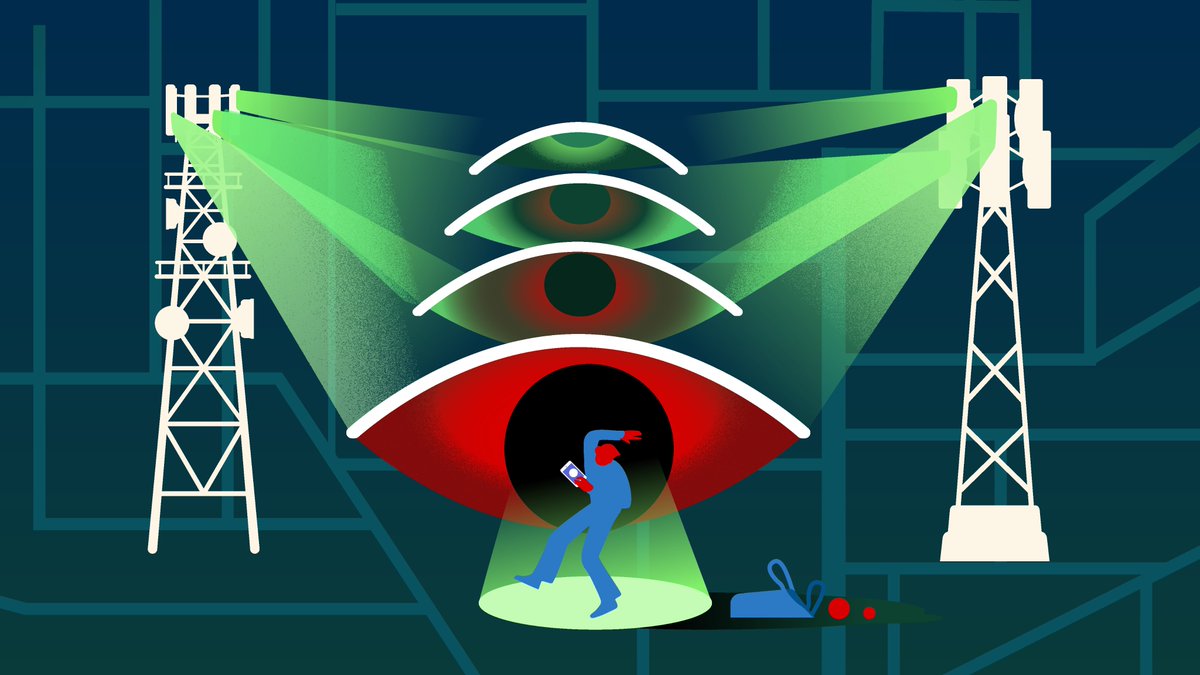
🚨New research reveals how two sophisticated surveillance actors exploited the global telecom ecosystem and, for the first time, directly links combined 3G and 4G network attacks to mobile operator infrastructure.
Full report 👇
https://t.co/NfBNUuewdj