Understanding Indian Stocks the Smart Way | Techno Funda Insights for Everyday Investors | Learn & Become Financially Free with Us | Disclaimer: No Buy/Sell Adv
🪔 Diwali Special Offer!
This Diwali, we have a special gift for the investor community!
We have launched a FREE course to help investors learn and improve their understanding of the stock market.
Subscribe here:
https://t.co/fDTJuishkt
No payment. No hidden charges.
Simply subscribe to our website and start watching the course for FREE.
Happy Learning and Happy Diwali! 🪔
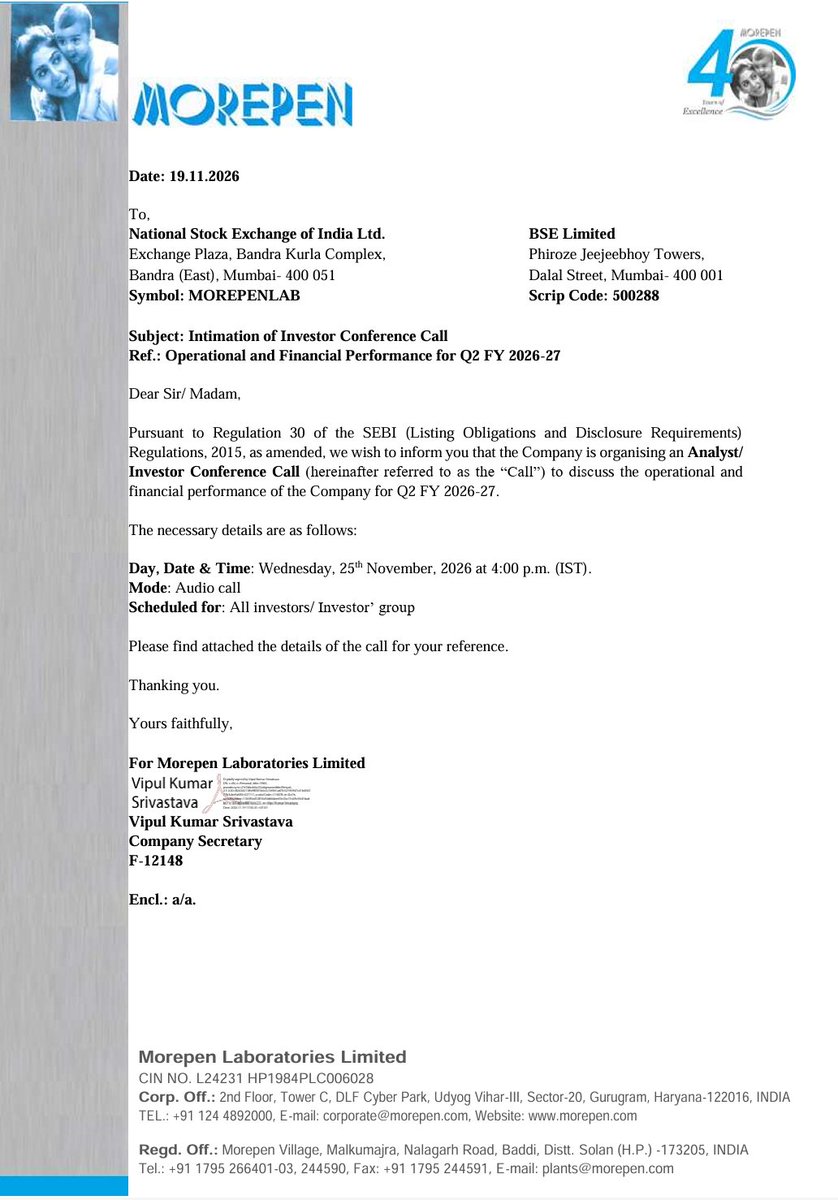
Crude oil volatility is expected to have only a limited impact on the company, as it can pass on the increased costs to end users within three to four weeks.
The company has also guided for 15% volume growth, along with margin expansion. The segment-wise revenue breakdown is provided below. The management is also focusing on increasing the contribution of high-margin products, which could further support overall profitability.
Time Technoplast Ltd
The company has a presence not only in India but also across international markets. It is also expanding its geographical footprint through strategic acquisitions. This provides a broader perspective of the company's overall business operations and growth opportunities.
NASDAQ has officially entered bear market territory, declining more than 20% from its all-time high. The last time we witnessed a similar correction was in March 2025, triggered by Trump's tariff announcements.
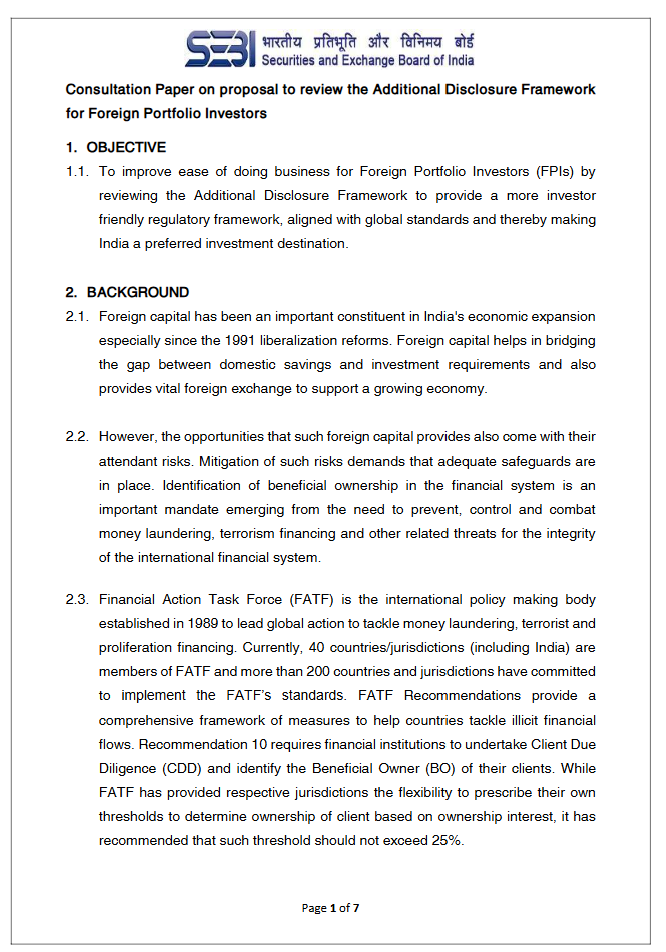
BIG DEVELOPMENT FOR INDIAN CAPITAL MARKETS!
Potentially positive for BSE, NSE, brokers and foreign institutional investors.
SEBI has proposed removing additional disclosure requirements for Foreign Portfolio Investors (FPIs), potentially making Indian markets more attractive to global funds.
Let's understand the complete story. 👇
1. Why were these rules introduced?
In 2023, following concerns over opaque offshore ownership structures, SEBI tightened disclosure requirements to identify the ultimate investors behind certain foreign funds.
The objective was to prevent promoters from indirectly holding shares in their own listed companies through offshore entities.
2. What were the restrictions?
FPIs faced additional detailed disclosure requirements if:
More than 50% of their Indian equity portfolio was invested in a single corporate group.
Their Indian equity AUM exceeded ₹50,000 crore.
Certain exemptions were available.
3. What is SEBI proposing now?
SEBI wants to remove these additional disclosure requirements.
The reasoning is that existing beneficial ownership, KYC and anti-money-laundering regulations already provide important safeguards.
This could significantly reduce compliance complexity for global funds.
4. Why is this important now?
Foreign investors have withdrawn substantial capital from Indian equities over the past two years.
SEBI appears to be recognising that excessively complicated disclosure requirements could make India less competitive compared with other global investment destinations.
Simpler regulations may encourage foreign funds to increase their participation.
5. Which companies could benefit?
📈 BSE & NSE: Potentially higher trading volumes and transaction revenue.
📈 Brokerage companies: Angel One, Groww and other brokers could benefit from increased market activity.
📈 Indian equities: Greater foreign participation could support liquidity and market depth.
This blog only for info.
Sai Silks (Kalamandir) Ltd
Revisiting a Previously Studied Company and Sharing purely as an observation, not a recommendation.
After a significant correction, the stock had reached a valuation zone, trading at a single-digit P/E. Since then, it has started showing signs of a reversal post Q2 FY27 commentary.
Key management expectations:
FY27 Revenue: ₹1,850–1,900 crore
H2 Growth: Strong recovery expected from festive and wedding demand
SSSG: Double-digit growth anticipated in H2
EBITDA Margin: Expected to improve to 17.5–18% in H2
Disc: No buy/sell
Bank Nifty has witnessed a strong rally of nearly 11000 points from its recent low to hit all time high today.
Despite this sharp recovery, its historical valuation indicates that it is still trading under value.
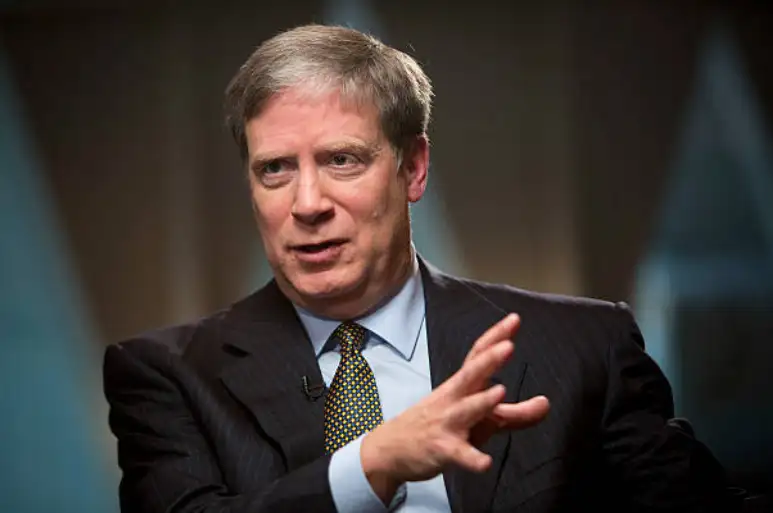
Mr Stan Druckenmiller is basically staying out of the market: equity exposure is roughly flat, with only a few small long and short positions and a small dollar position. He says he would normally prefer to go short given the weakening signals, but he will not because AI innovation remains powerful, many related stocks are oversold, and positioning is already tactically stretched.
So his view is not “buy the dip” and not “crash is certain.” It is: the risk/reward is unclear, so reduce risk and wait for better clarity.
Full Interview 👇
https://t.co/m3FbqMirFo
Palo Alto Networks CEO just dropped a truth bomb on the network outages sweeping through major companies
AI is changing attacks: Attackers are using open-weight AI models and “agentic” frameworks to automate multi-stage attacks, letting a small number of operators compromise many targets at once.
https://t.co/PFP7ufnaIB
Greaves Cotton Ltd
Business Update – Ampere EV Sales Accelerating
93% YoY growth in electric 2W registrations to 70,333 units (FY27 till Nov 15), vs 36,452 last year.
Already surpassed full FY26 sales of 61,842 units in just 7.5 months.
Reached 5th position in India's electric 2W market with 5.7% market share in Nov 2026 (till Nov 15).
Expanding product portfolio and distribution network with 600+ touchpoints across India.
Key takeaway: Strong volume growth and improving market position indicate a potential turnaround in Ampere's EV business. Profitability improvement remains the key monitorable.
Please have a look on Segmental trend 👇
Greaves Cotton Ltd
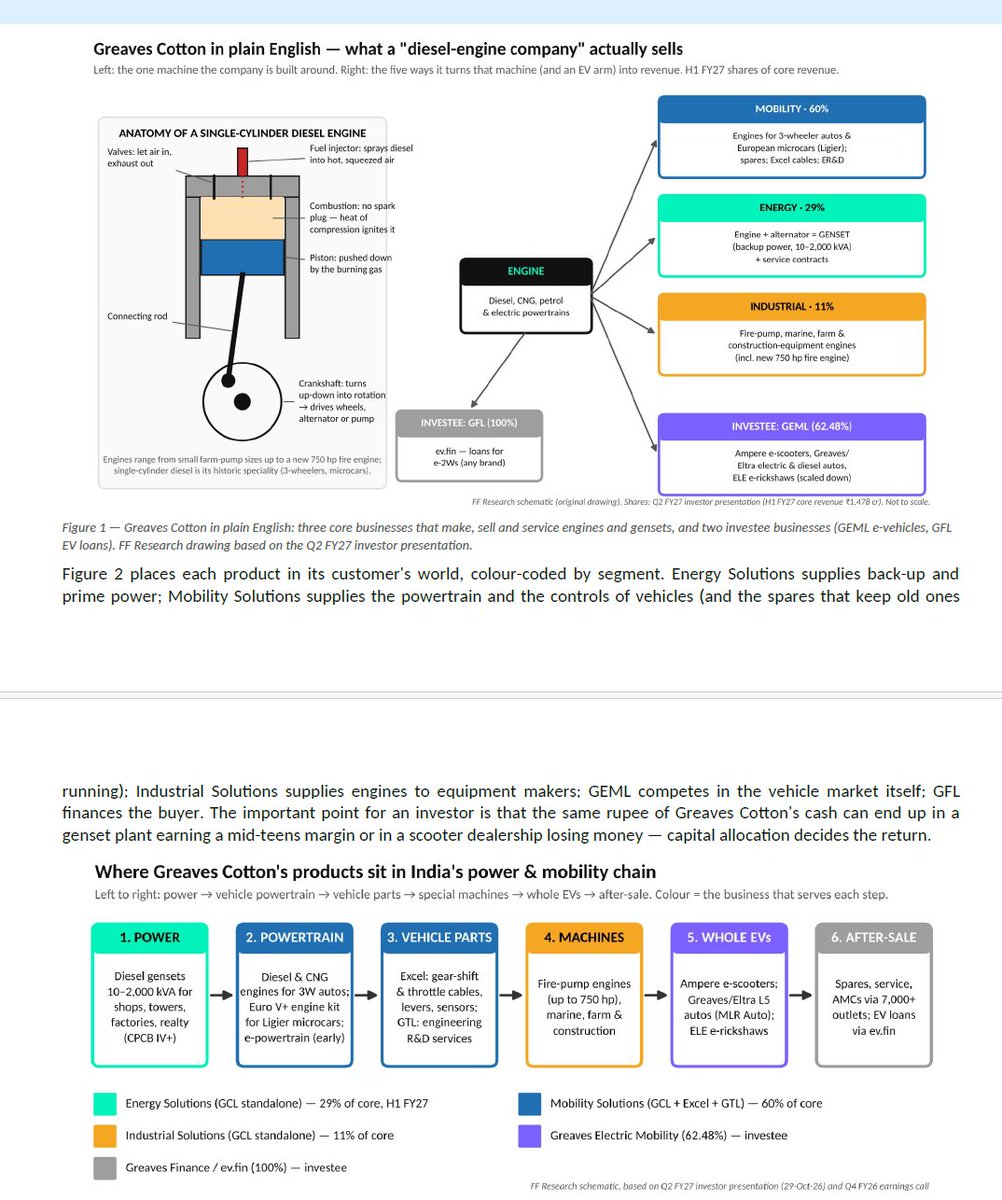
Greaves started in 1859 as a trading house in Bombay, founded by James Greaves and later joined by George Cotton. This is how the company got its name, Greaves Cotton.
At first glance, most people might assume it is a textile company because of the word "Cotton" in its name. However, that is not the case.
The business model is explained in simple. Can you guess which sector this company belongs to? Comment below!
Every year, The Economist publishes its predictions and key themes for the upcoming year. You can go through the points in detail to understand the major global events and trends they expect.
One interesting observation is that pharma appears to be one of the leading sectors for the coming year.
They have also highlighted several other important global developments. Go through the link. Interesting insights!
https://t.co/99AhrRBAUk
NVIDIA Q3 FY2027 — Earnings Concall Highlights
November 17, 2026 | Management commentary & Q&A only
FY28 growth guidance upgraded: Management raised its preliminary revenue-growth outlook from ~70% to ~75%, driven by AI infrastructure demand and improved supplier capacity.
Vera Rubin ramp: Shipments have started. Management described the rollout as exceptionally strong, with deployments across major hyperscalers.
AI demand: Management remains confident about sustained demand for AI computing infrastructure, supported by cloud providers and broader enterprise adoption.
Supply chain: NVIDIA is expanding supplier capacity to support growing demand, although availability of critical components remains important.
Gross margin pressure: Q4 gross margins are expected at 71–72%, compared with 74.9% in Q3. Investors remain concerned about component costs and product-transition expenses.
China business: NVIDIA generated $2.4B from Hopper GPU sales to China in Q3, but licensed Data Center shipments have stopped. Q4 guidance assumes no China Data Center compute revenue.
Neocloud exposure: Approximately $32B of commitments and up to $118B of infrastructure-related guarantees have raised questions about customer financing and counterparty risk.
Leadership transition: Management confirmed it will not reinstate Jensen Huang. A permanent CEO search is underway, and executives declined questions concerning his resignation.
Business strategy: Management reiterated confidence in its AI platform roadmap and committed to disciplined infrastructure investment.
STANLEY DRUCKENMILLER ON THE MARKET:
"I can't remember a period where I had less clarity on where we're gonna be in 12 months."
"We're in capital preservation, trying to not lose money as opposed to make money."
"We're not long equities & we're not short."
"I'm really alert to the fact that the second half of '27 could be economically disappointing."
"I wouldn't dare go short with all the innovation going on."
"Those stocks are oversold, they're washed out. We have some small positions but we're basically staying away."
We are short Copper, “The Fed is not cutting, they’re hiking.”
"I'm not playing. I play big when I'm hot, when I'm cold I do little bunts."
NVIDIA 3Q REV. $115.8B, EST. $109.33B
NVIDIA 3Q DATA CENTER REVENUE $107.6B, EST. $101.87B
NVIDIA 3Q ADJ GROSS MARGIN 74.9%
BOARD APPROVED AN BOOST OF $150B SHARE BUYBACK
SEES 4Q REV PLUS OR MINUS $130B VS 125B EST
Rolex Rings Ltd
#ROLEXRINGS
Rolex Rings – 5 Most Exciting Takeaways from Q2 FY27 Concall
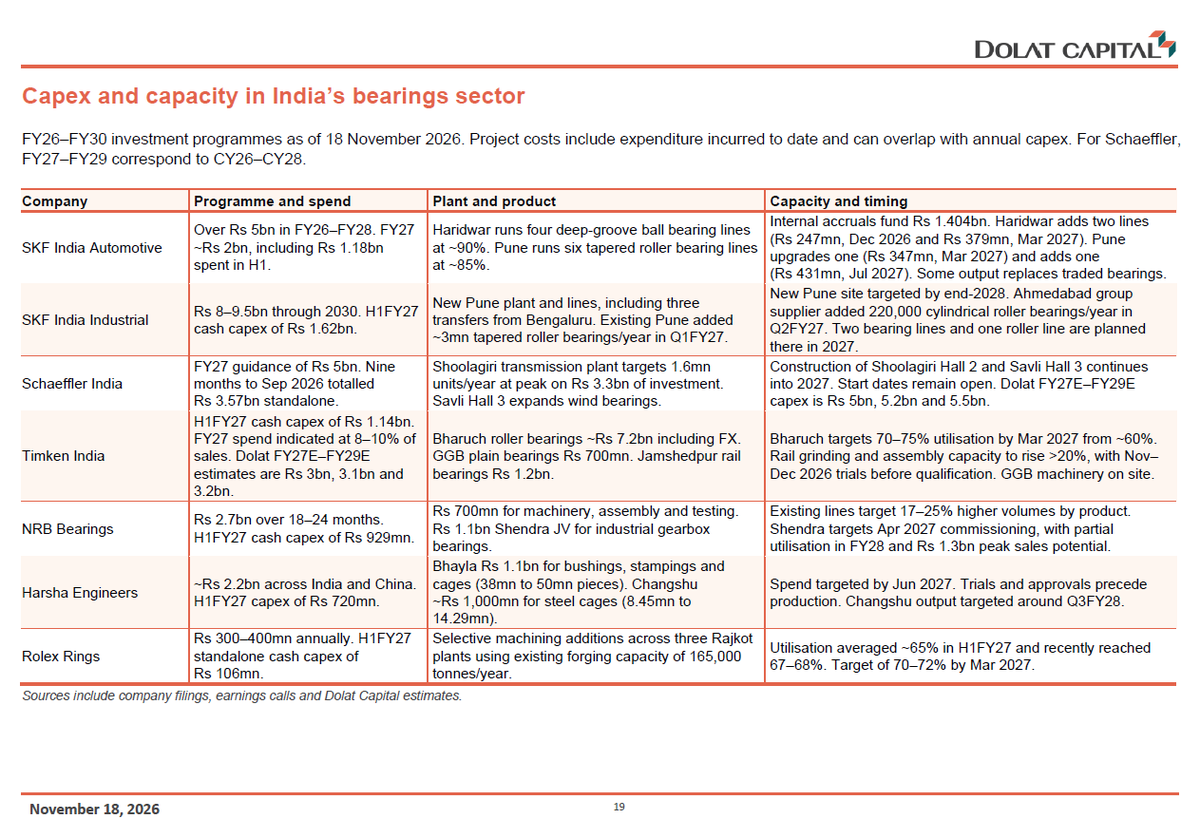
1. Auto Components Emerging as a Growth Engine: Q2 revenue surged 68% YoY to ₹177 Cr, now contributing 54% of component sales versus 42% last year. Management expects 20–22% annual growth in this segment in FY28–29, driven by new programmes and ramp-ups.
2. US Business Makes a Strong Comeback: US component revenue more than doubled to ₹92 Cr in Q2. A major customer's volumes, which had fallen 35–40% in FY26, have recovered to FY25 levels. Management says US tariff disruptions are no longer affecting order flows.
3. Potential Growth Acceleration in FY28–29: Monthly product orders are running at ₹120–125 Cr. Two new customer plants are expected to begin supplies in Q3/Q4 FY27. Management sees high-teen growth in FY28 and indicated potential for 22–23%+ growth in FY29, subject to market conditions.
4. Operating Leverage + Margin Expansion: Capacity utilisation is currently ~65%, with a target of 70–72% by FY27-end, requiring just ₹30–40 Cr annual capex. Normalised EBITDA margins are guided at 21–22%, with another 50–75 bps improvement expected in FY28 as product mix improves and freight costs moderate.
5. Three New Growth Opportunities Taking Shape: Rolex is entering defence and aerospace forging (initial approvals received), developing larger high-margin bearing rings for wind and industrial applications, and exploring acquisitions to add value-added manufacturing capabilities and OEM access. Defence/aerospace revenue is expected to begin over the next 12–18 months, but management does not expect meaningful near-term contribution.
Investor takeaway: Rolex Rings is transitioning from a traditional bearing-ring manufacturer toward higher-value precision components, with export recovery, new programmes, spare capacity and margin improvement potentially driving the next growth cycle.
The chart maps all the key events in the stock's journey, from its IPO to the present.