HOW DO YOU ACTUALLY NARROW DOWN YOUR COLLEGE LIST? 🥎
One of the hardest parts of recruiting isn’t finding schools.
It’s figuring out which schools actually make sense for YOU.
A list of 50–75 schools might be necessary early in the process. But as recruiting progresses, that list should become more intentional.
Here’s how I encourage athletes to narrow it down:
STEP 1: Start with your non-negotiables.
Before worrying about division or softball, ask yourself:
📚 Does it have my major?
📍 How far from home am I willing to go?
💰 Is the potential cost realistic for my family?
🏫 Big school or small school?
🌎 City, suburbs or college town?
☀️ Does location/weather matter?
🎓 What type of academic environment do I want?
If a school doesn’t meet your most important needs, it probably shouldn’t stay on the list just because you like the softball program.
STEP 2: Evaluate the softball fit.
Now look at the roster.
🥎 Where are their current players from?
🥎 How many players are at your position?
🥎 What classes are those players in?
🥎 What level of athlete are they recruiting?
🥎 How do your measurable skills compare?
🥎 Are they actively recruiting your graduation year?
This is where you have to be realistic about where you could compete.
STEP 3: Look for actual recruiting interest.
Not every school on your list should be weighted equally.
Start separating schools into categories:
🔥 High Interest — Coaches are communicating, watching you, inviting you to visit/camp or actively evaluating you.
👀 Possible Interest — Some engagement, but you still need more information.
📩 No Clear Interest Yet — You like the school, but you’re still trying to get on their radar.
This helps you decide where your time, money and energy should go.
STEP 4: Do deeper research.
Once your list gets smaller, dig beyond Instagram and the softball website.
Research the academics, campus, housing, team culture, coaching staff, travel schedule, roster size and overall student experience.
Ask yourself:
“If softball disappeared tomorrow, would I still want to attend this school?”
That answer matters.
STEP 5: Visit when possible.
A school can look perfect online and feel completely different once you’re standing on campus.
Pay attention to how you feel.
Can you picture yourself walking to class here?
Living here?
Being part of this team?
Calling this place home for four years?
STEP 6: Keep adjusting your list.
Your recruiting list is NOT permanent.
Coaches fill positions.
Your priorities change.
New schools show interest.
You learn more about what you want.
Removing a school isn’t a failure.
Adding new schools isn’t “starting over.”
It means you’re learning how to make a better decision.
The goal of recruiting isn’t to collect the most schools or chase the biggest name.
The goal is to eventually narrow everything down to the schools where these three things overlap:
ACADEMIC FIT + ATHLETIC FIT + PERSONAL/FINANCIAL FIT
That’s where you should be spending your energy.
You don’t need 50 perfect schools.
Eventually, you just need one that is the right fit.
— Coach Jennifer Turner
LET’S TALK ABOUT WHAT COLLEGE SOFTBALL OFFERS ACTUALLY LOOK LIKE. 🥎
One of the biggest trends I’m seeing in recruiting right now?
Families need to reset their expectations around “offers.”
An offer does NOT always mean a full ride.
It doesn’t always mean a huge athletic scholarship.
And sometimes, the best overall financial package isn’t coming from the highest division.
Here’s the reality across the different levels:
D1:
Some programs have significant scholarship resources, but that doesn’t mean every recruit is receiving a full scholarship. Roster needs, position, program resources and how highly an athlete is prioritized can all impact the offer.
D2:
Partial athletic scholarships are very common. Coaches may combine athletic money with academic scholarships and other institutional aid to create a stronger overall package.
D3:
There are no athletic scholarships — but don’t immediately assume D3 will be more expensive. Strong academic and institutional aid can make some D3 opportunities financially competitive with scholarship offers elsewhere.
NAIA:
This is a level families should NOT overlook. Athletic aid can be combined with other forms of financial aid, and strong academics can make an athlete even more valuable financially.
JUCO:
Another option that deserves more attention. Depending on the program and situation, JUCO can provide an affordable path to develop, compete immediately and potentially transfer to a four-year program later.
But here’s the biggest trend I want families to understand:
STOP COMPARING THE DOLLAR AMOUNT OF THE ATHLETIC SCHOLARSHIP.
Compare the actual out-of-pocket cost.
A $15,000 athletic scholarship at one school could still leave your family paying more than a $5,000 athletic scholarship at another.
And a D3 school offering $0 in athletic money could ultimately cost LESS because of academic and institutional aid.
The question shouldn’t be:
“How much athletic money did she get?”
It should be:
“What will this school actually cost our family — and is it the right academic, athletic and personal fit?”
Recruiting is changing.
Roster construction is changing.
Scholarship strategies are changing.
And athletes who stay open-minded about D1, D2, D3, NAIA and JUCO are giving themselves more opportunities to find the right fit.
Don’t chase the biggest offer.
Chase the best opportunity.
— Coach Jennifer Turner
🥎 TALENT GETS YOU NOTICED. COMMUNICATION KEEPS YOU RECRUITABLE.
One of the most overlooked parts of the college softball recruiting process isn’t talent — it’s communication.
You can have the stats, the skills, and the video… but coaches still need to know who you are, where you stand, and whether you’re genuinely interested.
Communication can look like:
📩 After a coach watches you:
“Coach, thank you for taking the time to watch me play this weekend. I’d love to hear your feedback and learn more about where I may fit within your recruiting class.”
📱 When a school is high on your list:
“Coach, I wanted you to know your program continues to be one of my top choices. I’m very interested in continuing the conversation.”
🥎 After attending a camp:
“Thank you for the opportunity to compete at camp. I really enjoyed learning more about your program and would love to know what you see as the next step.”
⏰ When you have another offer or deadline:
“I wanted to be transparent that I have another opportunity with a decision timeline. Before making that decision, I wanted to understand where I currently stand with your program.”
❤️ When a school is no longer the right fit:
“Thank you for the time you’ve invested in getting to know me. After careful consideration, I’ve decided to move in another direction, but I truly appreciate the opportunity.”
Don’t make coaches guess.
You don’t have to have the perfect words.
You DO have to communicate.
Because recruiting is about more than being a great softball player.
It’s about building relationships.
— Coach Jennifer Turner
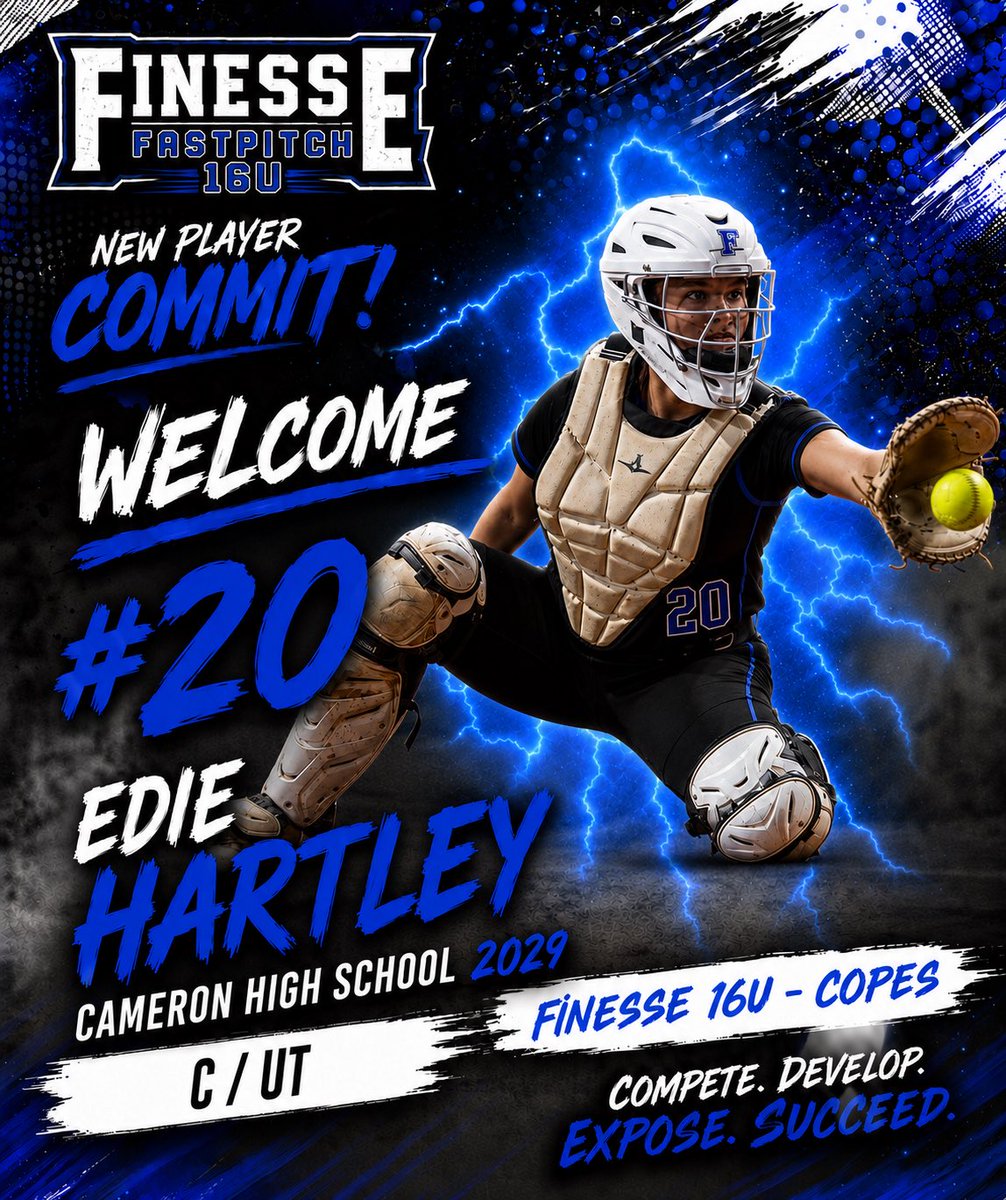
🥎💙🖤 2026–2027 ROSTER 🖤💙🥎The roster is set. The work starts now.
We’re excited to officially introduce the 2026–2027 Finesse Fastpitch 16U-Copes roster! This group is loaded with talent, versatility, competitiveness, and players who are ready to put in the work and compete.