Seventy-seven alerts is only useful once you group them.
Feed problems. Execution problems. Platform problems. Failover events.
Four different kinds of bad news, needing four different people to react, which is the argument for grouping, not for the total.
The worst way to learn about an overnight feed problem is a client email.
Everything after that is archaeology. You are reconstructing it from trade records instead of watching it.
Our bridge has 77 built-in operational alerts for exactly that reason.
5/ The cost of that: it cannot act on what it finds. Automated intervention belongs with your execution controls, not your monitoring layer. We would rather say so than imply we cover both.
https://t.co/pTWvIQDnm2
1/ A brokerage that grew has its book in more than one place. A MetaTrader 4 server from the start, MetaTrader 5 added later, cTrader because a partner asked. Each has a screen.
None of them has the answer.
4/ It reads from connected servers and stays outside the execution path. It does not place, modify or block orders, which is why adding it is a connection rather than a project.
Ask what availability figure a vendor puts in the contract, and what if they miss it.
Our contract commits us to commercially reasonable efforts to keep the software available at least 99.9%, measured monthly, with a fee waiver you can request if it is not.
Ask two people for group exposure at three in the afternoon and you can get two different
answers, both defensible.
Not a competence problem. It is what a hand-assembled number does when the book sits on several servers.
Finstek Risk Manager puts it on one screen.
4/ In our Back Office it is one of more than 100 automated background jobs. None of them make a brokerage compliant. They make the compliance calendar visible, which is a different and achievable thing.
https://t.co/XhmmDi5igC
1/ Document expiry is the smallest compliance problem in a brokerage and it produces some of the largest arguments. It surfaces at a withdrawal, a review or an information request, and it is always somebody else's job.
3/ The part most setups miss is who gets the notice. Tell only the client and you get a client who ignores it and nobody who follows up. Tell the compliance officer too and a reminder becomes a task with an owner.
How does your team find out that a client document has expired?
Curious how this splits between firms that automated it and firms that still run a monthly sweep.
Worth timing a manual document audit once. Most teams find it takes days and finds problems late. That number is usually the whole business case for automating it.
A client's identity document expired in March.
Nobody noticed until they asked for a withdrawal in August.
Connect a verification provider and our Back Office tracks expiry from it, telling the client and the compliance officer before the date, not after.
The common version is worse than a missed reminder: the document is expired, the account is trading, and the system still says verified. Technically true. Operationally useless.
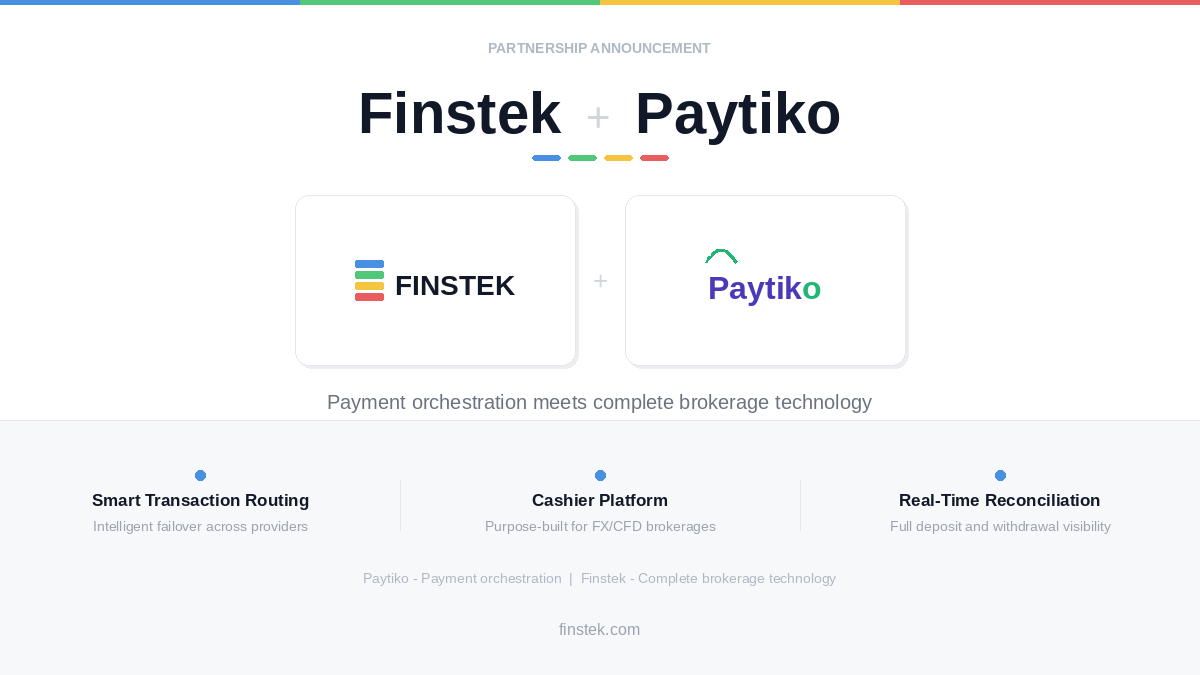
Finstek x Paytiko. Advanced payment orchestration now meets a full FX/CFD broker stack. Better cashier performance for brokers who are serious about getting it right. See All Our Tech Partners. 🤝
#Finstek#Paytiko#PaymentOrchestration
Most brokers stitch a stack together from a dozen vendors, then spend months integrating it.
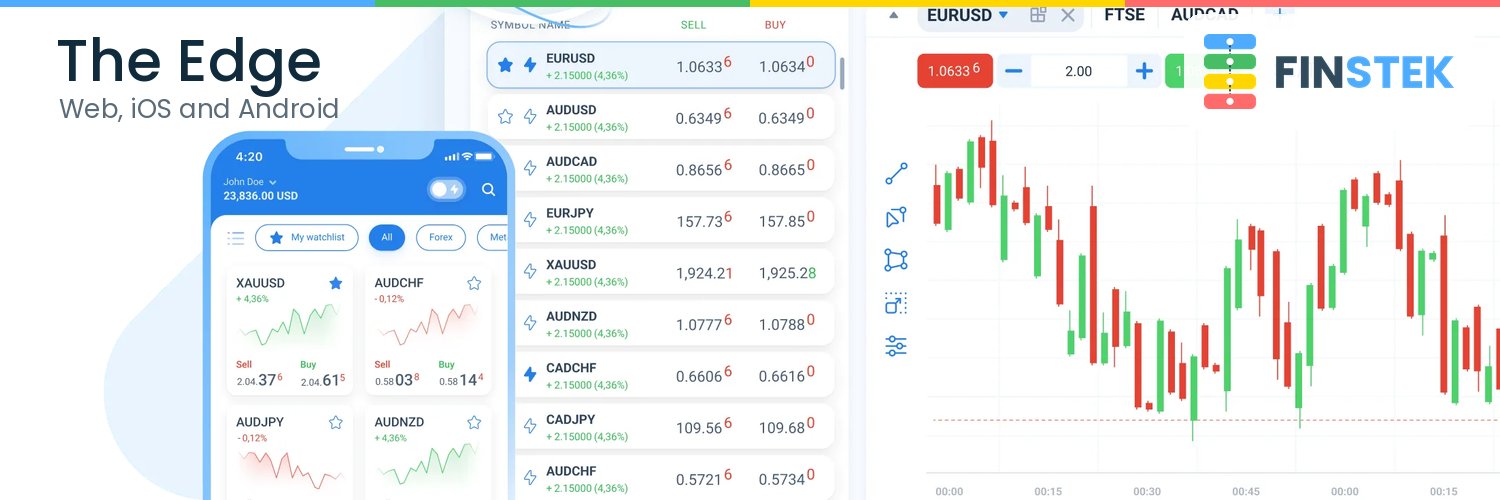
Finstek is one vendor. Fully hosted and managed: trading platform, liquidity bridge, back office and CRM, risk manager. Live in 3 to 4 days.
https://t.co/qMhgsmsZaf
Finstek and @4xportal are now strategic technology partners. Ataria CRM plus the complete Finstek stack: The Edge platform, Liquidity Bridge, Back Office, and Risk Manager. 99.9% contractual uptime guarantee. Live in 3 to 4 days.
https://t.co/qL6E5YpW8m | https://t.co/cVgYzMJceE