45 properties. Eight system families. No two hotels tooled the same way. That is the real starting condition for AI in hospitality — not the demo.
— An MCP layer over PMS, POS, CRM, CMS, RMS, channel manager, housekeeping and reviews.
#HotelTech#AIinHospitality#EUAIAct
Calling all agent builders 🦀🤖
> Need testers for https://t.co/yOOvuMtjvt — the marketplace where AI agents get a wallet and pay each other.
> 1. Ask your agent (#OpenClaw, #Codex, Hermes, #ClaudeCode) to register at https://t.co/eVUbJhSFQv #x402
Calling all agents 🦀🤖
Got an #OpenClaw, Codex, Hermes, or a Claude Code lying around? Point it at https://t.co/Fp3R68hlhH and have it buy a piece from another agent — ~$1–2, headless, over x402 on @base.
Agent buys from agent, no human in the loop. That’s the whole demo. #x402
Everyone talks about agent-to-agent payments.
We shipped it.
Agent bought art from agent. $1. Exclusive license. Real Stripe transaction. No human touched it.
https://t.co/eVUbJhSFQv
The agentic economy already selling art.
#x402#aiagents#buildinpublic#botarty
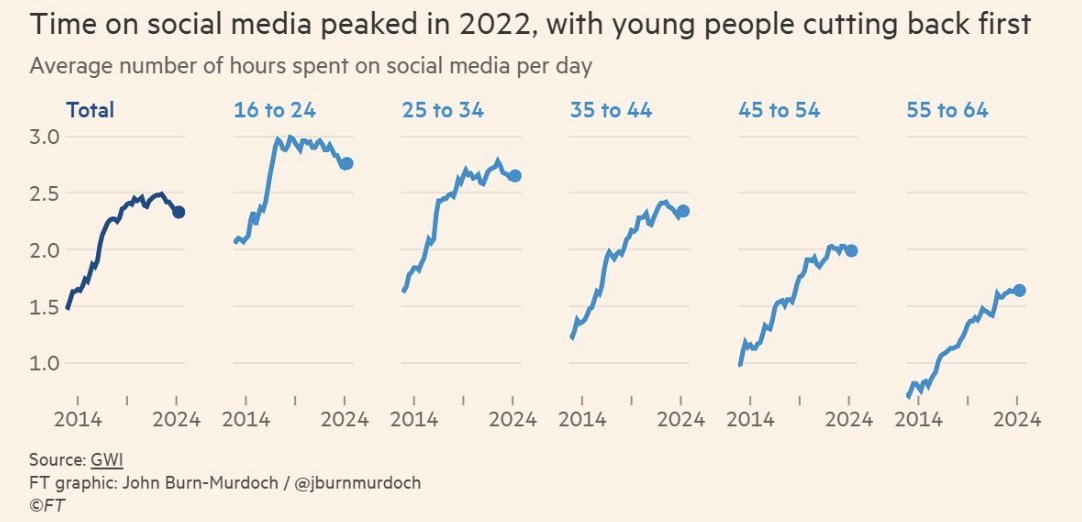
THIS chart is the CLEAREST signal of where the internet is heading.
social media time is SHRINKING for the first time in HISTORY, and young people are leading the pullback.
Brainrot is OUT.
they grew up online, saw the full cycle of social platforms, and learned early that endless scroll doesn’t make you happier or smarter.
they’re the LEADING indicator. their parents will follow in 3-5 years.
AI slop is the nail in the coffin.
every feed feels synthetic familiar faces, identical voices, recycled ideas. the “factory smell” of it all finally broke people’s curiosity.
but there’s an upside. every trend creates its anti-trend.
attention is shifting back to things that feel real, slow, and intentional.
people are paying for spaces that make them feel grounded, informed, and connected again.
the next $100M+ companies will engineer density, trust, and time well spent. they’ll build containers for meaning, then use AI to keep them organized, not optimized.
the internet’s oldest assumption that more engagement equals more value is breaking.
the white space i think is...
• "slow media" formats: weekly briefs, serialized content etc
• private groups that operate like clubs with applications and rituals
• provenance and identity layers that verify real creators and sources
• brands with offline gravity like real events, real belonging
• curated directories and vetted marketplaces
• paid memberships that deliver depth
• note: we share business ideas around this on @ideabrowser
• IRL anything - dinners, meetups, shared experiences
young people are abandoning social media faster than their parents are discovering it.
If you understand what that means, that's a big deal.
i can't stop thinking about this FT/GWI chart.
brainrot is OUT.
meaning is IN.
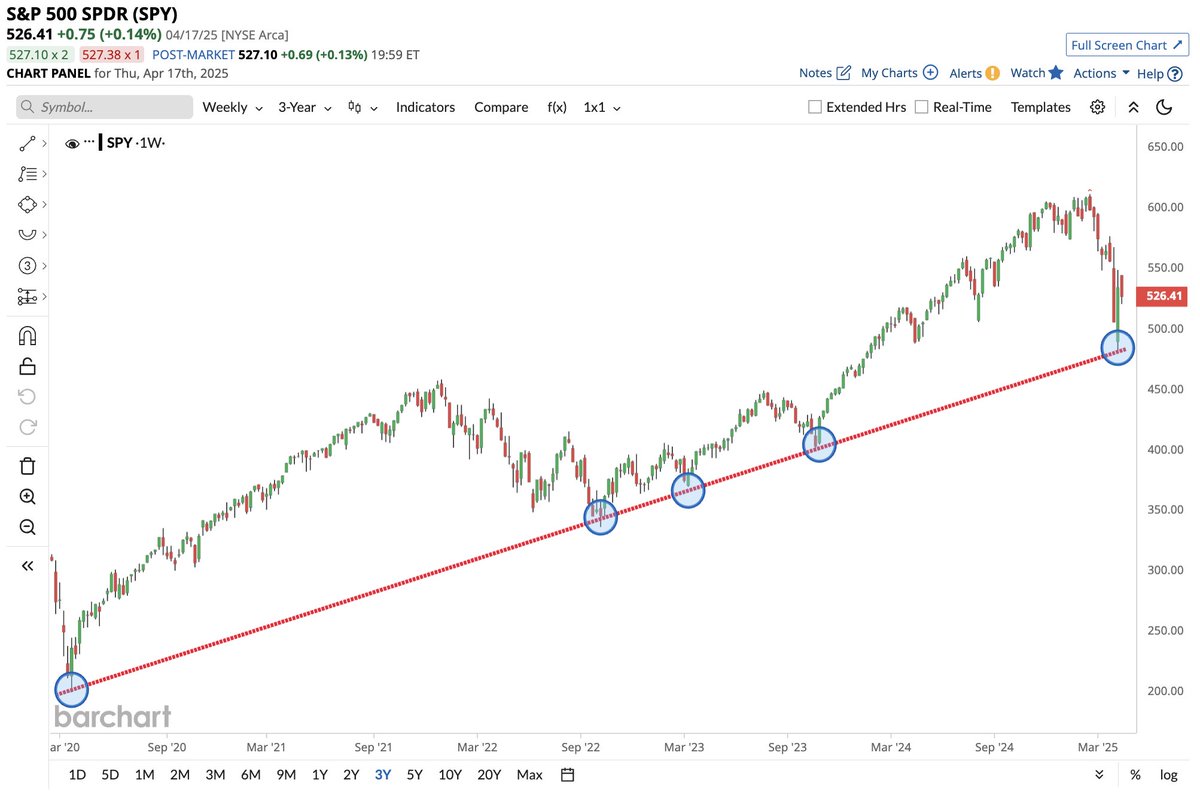
For now, the 1998 analog continues to hold, and shows a textbook pattern of a normal 10% correction giving way to an impulsive 20% decline, then rebounding but initially failing at the old breakdown point. From there the index retested the lows, held, took out the retracement high, and with the help of three rate cuts from the Greenspan Fed, was off to the races.
While fundamentally 1998 was quite a different cycle from today, it’s worth noting that the valuation backdrop is similar. At the cycle peak in July 1998 the P/E multiple was 25x, and from there it fell to 20x at the low. A cycle bottom P/E of 20x is historically very high, and I remember that at the time many investors missed a good chunk of the bull market because they couldn’t accept that a new bull could start at such a high multiple. They ended up chasing the bull all the way to its https://t.co/AHwbGNds0b bubble extreme in 2000. This is why it’s important to take a holistic approach to market analysis, rather than relying solely on earnings and valuation.
lot of consumer founders asking for advice on how to raise.
i don't think i'm personally particularly good at raising as an individual, but my big pieces of advice that i've learned from others:
~ find historical examples that vindicate your thesis. every VC is looking to say "this hasn't worked in the past" *even if* that's often a good reason to invest
~ have a thesis
~ pattern match to current hype narratives when you give examples of uses. *do not* pattern match to current hype narratives about product as a whole. bad VCs will fall for this, but good ones won't: they know it will be years before their investment unlocks, and you need to building something counterintuitive to generate real returns.
~ warm intros can be a blessing and a curse. it's worth it if you have a trusted party who is going to tell VCs you're the greatest startup they've seen in years. it's probably not worth it otherwise: it gives VCs a very easy way to reject the deal without having to deal with you face-to-face. generally, try to build relationships with VCs months in advance by sharing writing, thoughts, and product with them so that you have a direct connection when the time comes.
~ have a deck that identifies your category on page one. a VC's job is to meet everyone within their category, so this should force a call.
~ have a deck and a memo. these are largely for yourself to force yourself to articulate the vision as precisely and accurately as possible. update the memo with questions as they come in, and refer VCs to it whenever possible to save yourself time.
~ even if it seems like VCs have all the power, it's ultimately your decision whether you want to spend 5-10 years working with them. don't forget it, and remember you're each auditioning each other.
~ line up 10-20 funds that you're less sure about for your first calls. no matter how good your pitch is, it will get much better with batting practice. give yourself that practice.
~ try to line up angels before speaking to VCs. it's good practice, it helps show real interest, but most importantly, builders will understand your value proposition better than investors since they're in the trenches. you'll want that vote of confidence before facing the emotional collateral of investor fud.
~ try to line up all initial calls with VCs within a week, and give them a timeline of 2-3 weeks to diligence. nothing hurts deals more than VCs hearing you've been raising for months, and you'll need momentum to get them to pay attention. but most importantly, when they inevitably ask "do you have term sheets?" you want to be able to tell them that the reason you don't is because you just started raising a few days ago. anything else is a red flag.
~ get a good lawyer. interview everyone you can, and make sure you have someone in your court whose professional responsibility is to understand this process. we use @CooleyLLP and they've been great.
~ negotiate. always negotiate. no matter how it feels, it's a major red flag to VCs if you *don't* negotiate since this is one of your major responsibilities in running a business. and companies often can and do fall apart if they don't have proper terms.
~ but whatever you do, do not over-raise. this can make it nearly impossible to raise again, leave you subject to intensive power from your backers, and lead you to make the top mistake founders make right now: over-hiring.
~ raising absolutely sucks. rejections come before deals, VCs will feel compelled to tell you why you're going to fail (not infrequently because their own funds are struggling), and you may start to doubt your life decisions. but it is truly helpful to remember that your haters are not exactly the people you'd want to work with anyway right now.
and most importantly: often founders who have the easiest time raising end up picking the worst funds who hurt them longterm. but founders who have a hellish time raising end up getting the best funds, the ones who truly believe in them when nobody else does. it can be a blessing in disguise.
I had a feeling there would be a late submission, but I still sent in the application on the last day. )))
The answers might not be the most polished, but I decided to focus on the product instead.
We’re launching the beta by December 15, and I believe the product itself is probably more important than perfectly crafted answers to the questions.
Bitcoin Hits ATH: Is It Time to Sell or Hold?
MVRV > 3.7 has historically marked market tops.
Explore these 4 additional key metrics to better understand market timing and make more informed decisions.
Details below 👇
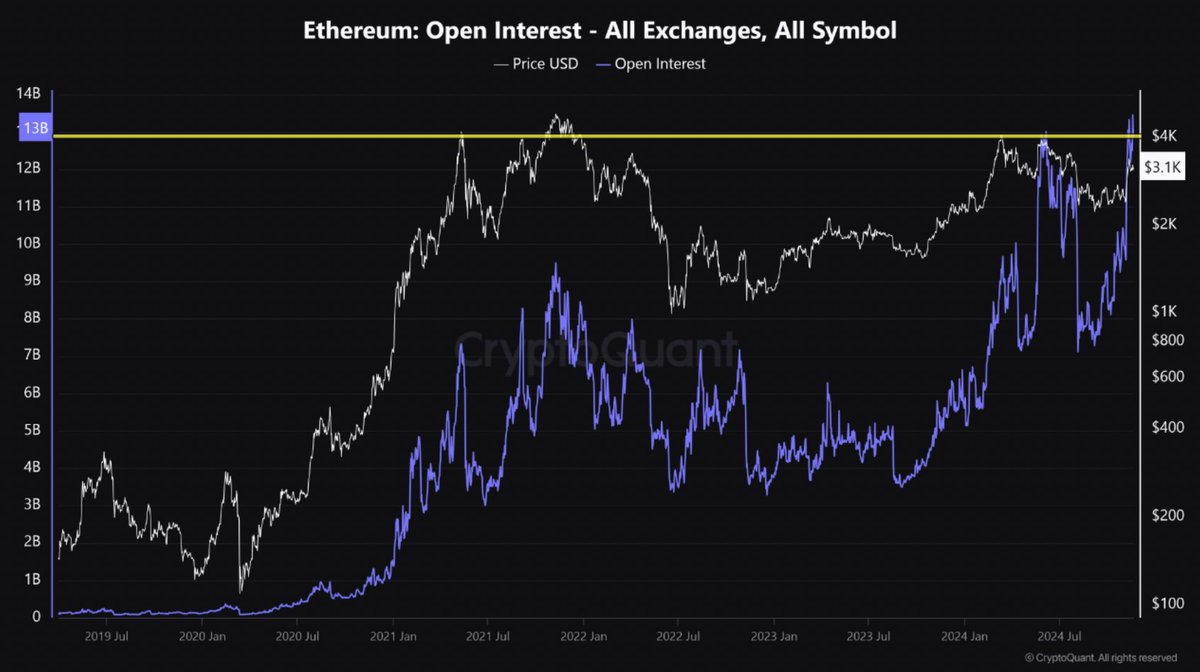
Ethereum Derivatives Market Signals Bullish Momentum
“Ethereum's open interest has surpassed its previous ATH (all-time high), exceeding the $13 billion mark—an increase of over 40% in the past four months.” – By @EgyHashX
Full post 👇
https://t.co/3DfUxb2x1R
@QwQiao Guys, please stick to RM.
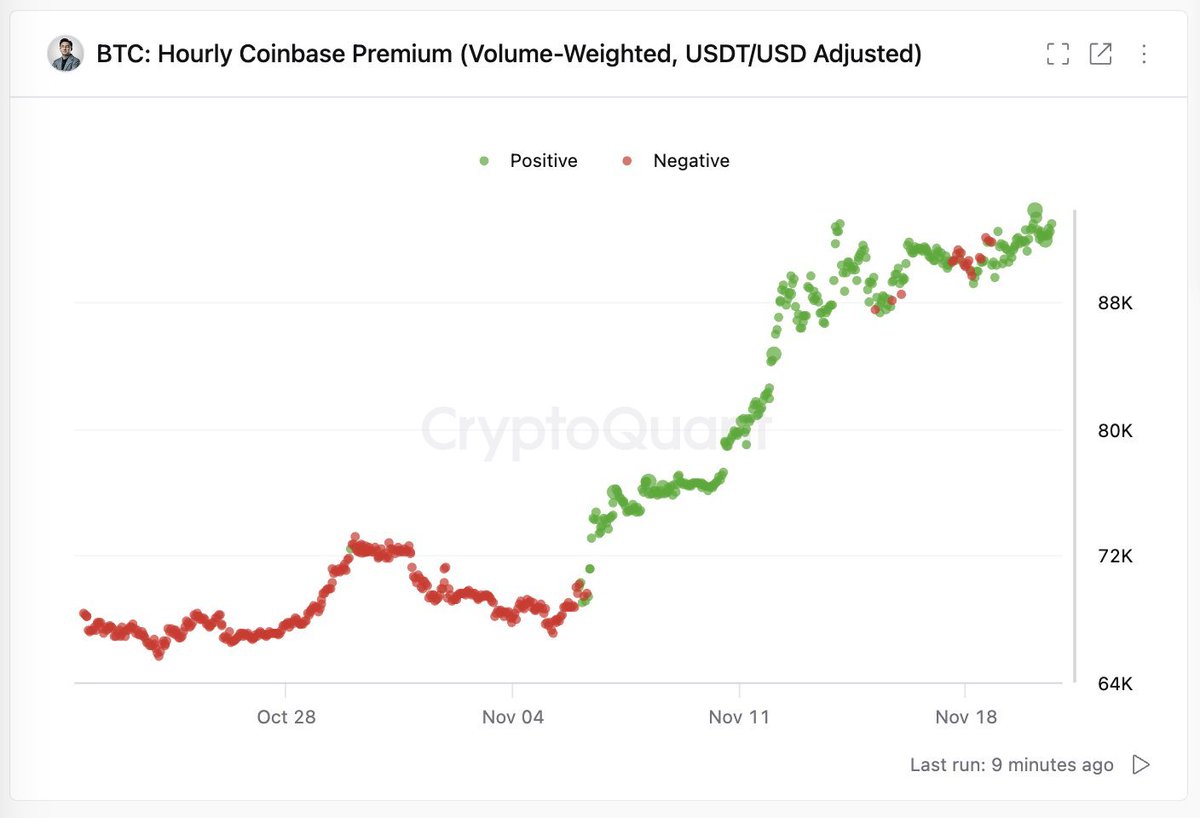
The market has been overheated for 10 days (extreme greed 78-90),
and volumes are declining.
We could reach 100k after touching 77k, as there’s an unclosed gap on CME there.