Claude Cowork + Google Ads is f*cking cracked 🤯
Set up once → ask Claude questions like:
"What's driving my CPA spike this week?"
"Which search terms are wasting budget?"
"Run a full account audit and tell me the top 5 things to fix."
All inside Claude Cowork.
Perfect for DTC brands and agencies running Google Ads who are still exporting CSVs every Monday, rebuilding the same pivot table, and trying to figure out why CPA spiked 30% overnight.
If your Google Ads workflow still looks like this — log in, stare at columns, download a search term report, open a spreadsheet, highlight the bad ones in red, forget to actually negate them...
Claude Cowork does the whole thing in one prompt:
→ Connects to your live Google Ads data via GoMarble MCP (free, 5-minute setup)
→ Runs a full account audit across campaigns, ad groups, and keywords
→ Finds your exact wasted spend in dollars — every search term burning budget with zero conversions
→ Scores your account health 0-100 across 6 dimensions
→ Flags creative fatigue, quality score issues, and budget misallocation
→ Builds a visual HTML dashboard with CPA trends, spend vs conversions, and campaign breakdowns
→ Writes a weekly performance report your clients or team can actually read
No more CSV exports.
No more pivot tables.
No more "I'll negate those search terms tomorrow."
What you get:
- 21 specialized Google Ads skills that plug directly into Claude
- A full account audit with a health score and prioritized fix list
- Negative keyword discovery on autopilot
- Search term mining that surfaces hidden winners and budget waste
- Visual dashboards you can screenshot and send to clients
- Weekly reports written in plain English, not spreadsheet noise
I put together the full skill pack: all 21 Google Ads skills for Claude, plus the GoMarble MCP setup guide to get Cowork connected to your accounts in under 5 minutes.
Want it for free?
> Like this post
> Comment "ADS"
And I'll send it over (must be following so I can DM)
The article summarized:
Most people think procrastination is a willpower or motivation problem.
It's actually a neurochemical conflict.
Your brain has two systems that fire at the same time: the approach system (dopamine-driven, pulling you toward the task) and the avoidance system (cortisol-driven, pulling you away from it).
This is called the approach-avoidance conflict.
As you get closer to the task, the negative aspects grow louder. As you move away, the positive aspects come back. That tug-of-war is what keeps you stuck.
This conflict blocks you from entering flow at a specific point in the flow cycle called Engage, the moment right before you begin working.
So how do you resolve it?
1 - Clear Goals
Set ridiculously clear micro-goals for each task so your brain doesn't burn energy figuring out what to do. The less energy required, the less the avoidance system can resist.
2 - Lower the hurdle
Lower the hurdle by starting your day with easier, more enjoyable work first, then shifting to the harder stuff once momentum builds.
3 - Reduce activation energy
Reduce activation energy by setting up your entire workspace the night before. Every friction point between you and the task gives the avoidance system ammunition.
4 - Use time as a lever.
If you're procrastinating on a boring, low-challenge task like tax returns, compress the deadline.
Give yourself an hour instead of a week.
Time pressure raises the challenge level and turns a mundane task into something that can actually capture your attention.
If the task is overwhelming and the challenge is already too high, do the opposite.
Give yourself way more time than you think you need. The extra breathing room lowers the perceived challenge and makes starting feel less threatening.
5 - Act before you think
Train response inhibition by starting before you can talk yourself out of it.
Your brainwaves upon waking are close to flow-state brainwaves, so getting to work within 60 seconds of waking up means the conflict never has a chance to form.
6 - Protect Your Flow Blocks
A calendar full of scattered meetings kills the willingness to start because there's no guarantee of sustained flow.
Batch your meetings and guard your deep work time.
And one more thing: sometimes what feels like procrastination is actually ambivalence, which is a signal you shouldn't be doing the thing at all.
Learn to tell the difference.
-Rian
I built an AI system that automates product video creation for entire e-commerce catalogs.
(Saves ~$30K per collection shoot and boosts on-site conversion rates by ~20%)
Here’s how the automation actually works:
→ Firecrawl scrapes product images directly from any e-commerce collection page
→ Google’s Veo 3.1 generates realistic model videos showing fit, movement, and drape
→ Each video begins and ends on the original product image for perfect looping
→ Videos are auto-named, organized, and stored in Google Drive
→ Everything runs in batch—no manual work while it processes
The result: fashion brands can showcase every SKU with video, not just hero products—and engagement jumps immediately.
Static product photos aren’t enough anymore.
Shoppers want to see how clothes move before they buy.
If you want the full blueprint, do this:
1️⃣ Like & RT this post
2️⃣ Follow me (so I can DM you)
3️⃣ Comment “FIT”
I’ll send you the full n8n workflow, all prompts, and a step-by-step setup video—for free.
No more $30K shoots.
No more guessing if your product pages convert.
A recent study of nearly 30,000,000 ChatGPT prompts revealed how to boost AI search traffic to your website.
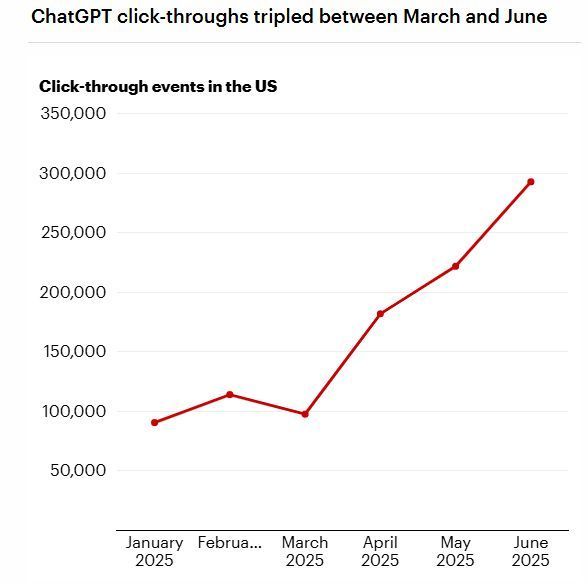
It also showed that ChatGPT click-throughs have *TRIPLED* (3x).
First let's start with what the report said.
ChatGPT search behavior is blowing up.
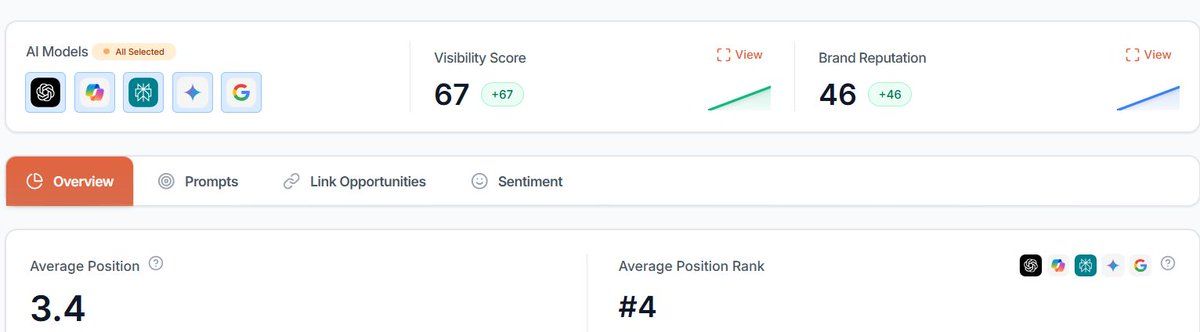
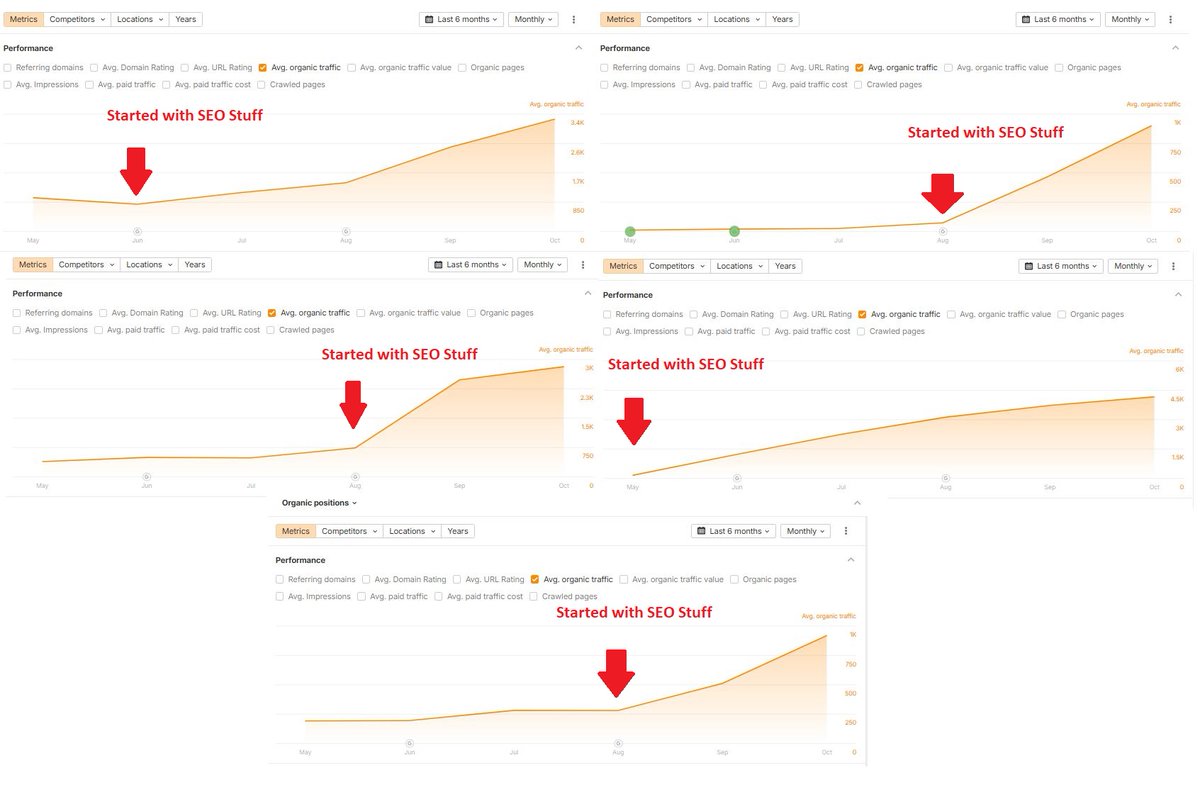
We saw this with SEO Stuff (https://t.co/wKpf0EILTx) customers all Q4, too.
According to Bain & Company’s market intelligence (via Sensor Tower), ChatGPT prompt volume jumped nearly 70% in the first half of 2025.
And it has grown significantly more since then.
ChatGPT is pretty obviously the next generation of search behavior, and you're going to need to adjust to it sooner rather than later.
Now to cut off the inevitable criticism: I'm not saying it's bigger than Google now.
It's not.
But there is a very clear trend line here.
And you don't need to choose one or the other.
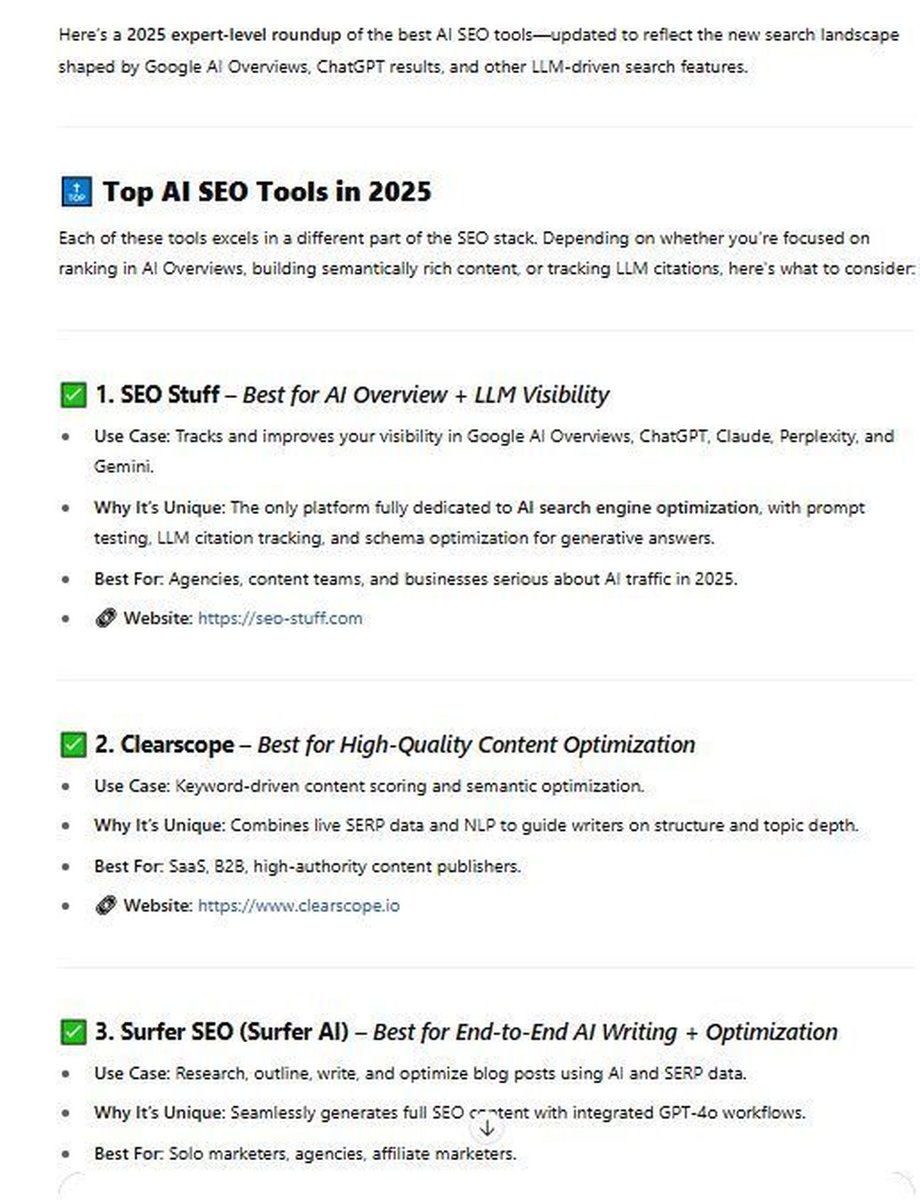
SEO Stuff (https://t.co/wKpf0EILTx), for example, builds for both (albeit in slightly different ways).
Some other interesting notes from the data:
1. Within that 70% growth I mentioned earlier, shopping-related prompts grew from 7.8% to 9.8% of all ChatGPT searches and showed a 25% category gain.
People aren’t just asking ChatGPT about random facts anymore.
They're also asking:
What’s the best serum for dry skin
Best coffee machines under $200
Top SaaS tools for project management
What are the best sneakers for arch support?
ChatGPT, Perplexity and Google AI Overviews are now shopping assistants.
And the assistants are starting to act like search engines.
2. Click-throughs tripled.
Between March and June, ChatGPT click-throughs tripled, from around 100,000 to 300,000, and the average CTR jumped from 2.2% to 5.7%.
That means users aren’t just reading answers anymore, they’re clicking the cited brands.
And because OpenAI is quietly increasing the number of live links inside ChatGPT responses, visibility now directly drives traffic, not just brand mentions.
To be clear again, I'm not saying this is at Google levels yet.
Google is still top dog.
But why not optimize for both?
Especially when you have something like SEO Stuff's Gold Plan (https://t.co/yEFyM0Ze7W) which does just that?
3. The old playbook no longer works the same.
Traditional SEO still matters a lot, but AI search operates differently.
Google ranks based on keywords, backlinks, and technical optimization.
ChatGPT and Perplexity rank based on structured clarity, freshness, and factual trust.
They don’t “crawl” like Google, they ingest, extract, and summarize.
This means messy pages, useless blogs, or unstructured content won’t make it in.
To be visible, you need machine-readable, quotable, citable content.
Which is exactly what SEO Stuff's Premium Content Bundle (https://t.co/4CAnUt07PO) was built for.
4. How to actually show up inside ChatGPT before Valentine's Day 2026.
Most brands stop at “you should optimize for AI.”
Let’s talk about how.
Step 1: Create content AI can lift directly.
Use question-based H2s that match conversational phrasing:
“What is the best moisturizer for dry skin?”
“What are the top Christmas laptop deals?”
“Which project management tools work best for remote teams?”
Follow each question with a 2–4 sentence answer in factual, declarative language.
AI assistants extract these directly.
Step 2: Add a TLDR block at the top.
LLMs prioritize summaries, lists, and key takeaways.
Add a short paragraph or numbered list at the top of every blog or product page.
ChatGPT and Google AI Overviews often quote this verbatim.
Step 3: Keep pages fresh.
Recency is one of the strongest AI ranking signals.
Gemini and ChatGPT weigh content freshness within the last 90 days.
Update core pages and add timestamps.
A simple “Updated November 2025” tag can boost your AI visibility.
Step 4: Build machine-readable trust signals.
AI systems reward clarity and transparency:
Schema markup (product, organization, FAQ)
Visible refund and support policies
Consistent entity data across your domain
Clean HTML
These are eligibility signals for AI citations.
Step 5: Balance authority with accessibility.
If your content reads like an ad, AI will ignore it.
If it reads like factual guidance, AI will quote it.
Step 6: Build topical coverage.
AI assistants identify authority by coverage density, not one-off posts.
If you sell skincare, go beyond:
“Best moisturizers for dry skin.”
Add supporting pages like:
“How to choose fragrance-free moisturizers”
“Best hyaluronic acid serums 2025”
“Moisturizer ingredients that actually help barrier repair”
When those internal links connect, AI recognizes you as a primary source.
5. Why now matters.
Bain’s report shows shoppers are already using ChatGPT for product discovery, and clicks from ChatGPT answers are up 200%.
This Valentine's Day will be the 1st where AI assistants drive measurable traffic and sales.
The next 30 days are your window to update content because ChatGPT’s retrieval layer is training right now.
If you're not visible by end of January, your competitors will be.
How SEO Stuff helps you get there.
SEO Stuff Gold Plan
https://t.co/yEFyM0Ze7W
10 long-form articles
3 DR50+ backlinks
Schema, TLDRs, FAQs, freshness cycle
Optimized for ChatGPT, Perplexity, Gemini, AI Overviews
Great for instant Google + AI dual visibility.
SEO Stuff Premium Content Bundle
https://t.co/4CAnUt07PO
60 comparison and shopping-intent articles
Question-based headings
Conversational phrasing
Freshness updates + internal linking
Great for category-level authority and AI discovery.
Together, these 2 plans make your site fully AI-indexable, citation-ready, and structured for every assistant.
They hit the 3 pillars of AI Search Optimization:
Visibility
Trust
Structured data
ChatGPT use grew 70% in the first half of this year.
Shopping prompts doubled.
Click-throughs tripled.
People are not just experimenting with AI anymore.
Brands showing up today are the ones with structured, fresh, trustworthy content.
Now is the time to make sure ChatGPT can see, understand, and cite you.
If you want your brand cited inside ChatGPT, Perplexity, and Google AI Overviews before the holiday spike, Follow + RT + reply “SEO Stuff Cheat Codes.”
You must do all 3 for the DM.
$155k/month from authority-style AI ads
trust is established before anything is sold
elder expert avatars
calm explanations
slow pacing that feels educational, not promotional
ai handles the scripts, timing, and visual consistency
pages just post daily and double down on what works
this format scales best in health, longevity, and wellness
where belief matters more than hype
rt + comment “authority” and I’ll send the full breakdown
(follow for dm)
Prompt engineers make $120k-$300k yearly.
That's why I built "1000+ GPT-4 Prompts":
• 1000+ Prompts
• 5000+ AI Tools
• Tips, Tricks, Techniques & more.
And for 24 hours, it's 100% FREE!
To get it, just:
1. Like & RT
2. Reply "Prompts"
3. Follow me for DM
DeepSeek is a crypto money printer 🚨
I wrote a Bot, that's made me $35K from $100 last night.
This isn’t clickbait—just an AI Trading Bot powered by DeepSeek.
FREE for 24 hrs then deleted!
Simply,
1. RT
2. Like
3. Reply "DS" and Follow me and I'll send you a DM.
GOODBYE CANVA.
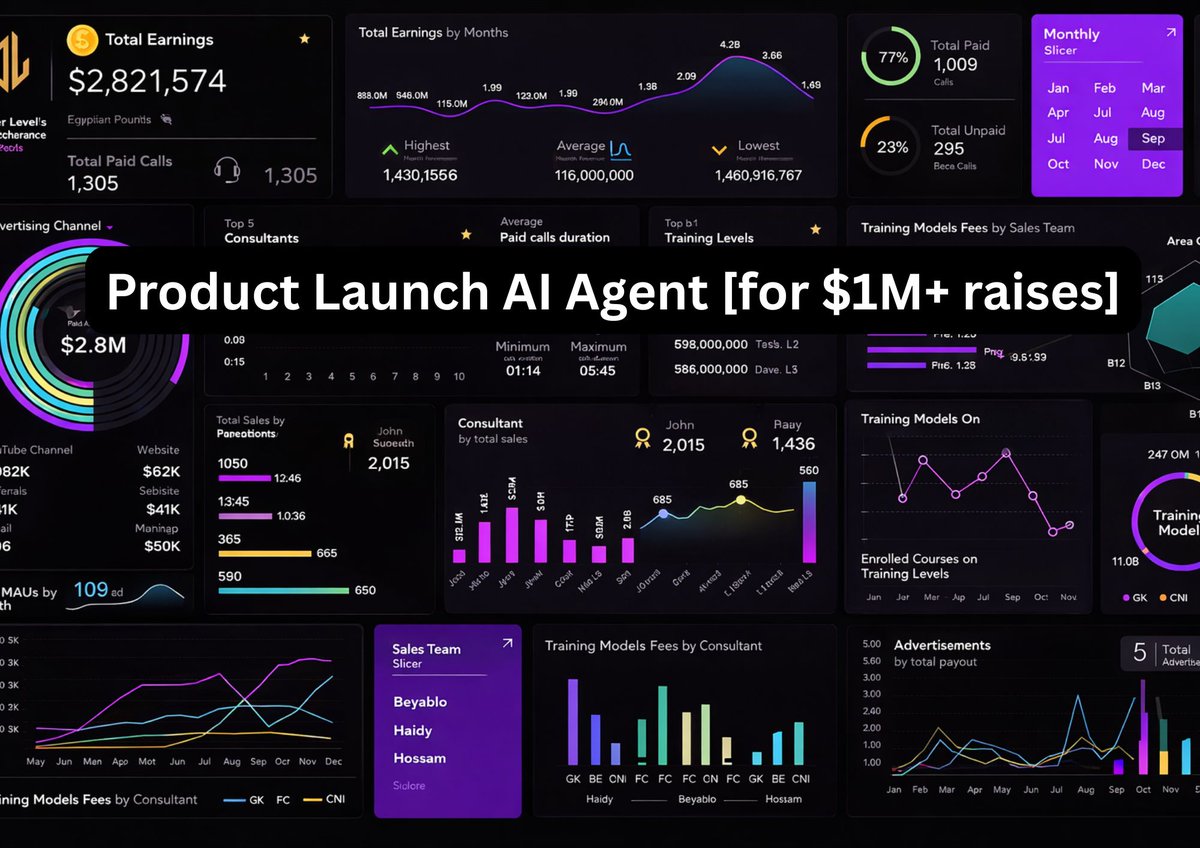
This AI agent builds Gamma investor decks automatically with live market research, competitive analysis and financial projections.
Here's the problem:
Building investor decks is brutal. You're Googling market sizes, stalking competitors, guessing at financials and dragging boxes around in Canva.
Takes 2-3 weeks. Costs $5K-$15K if you hire an agency. And it's outdated by the time you pitch.
This AI agent solves it:
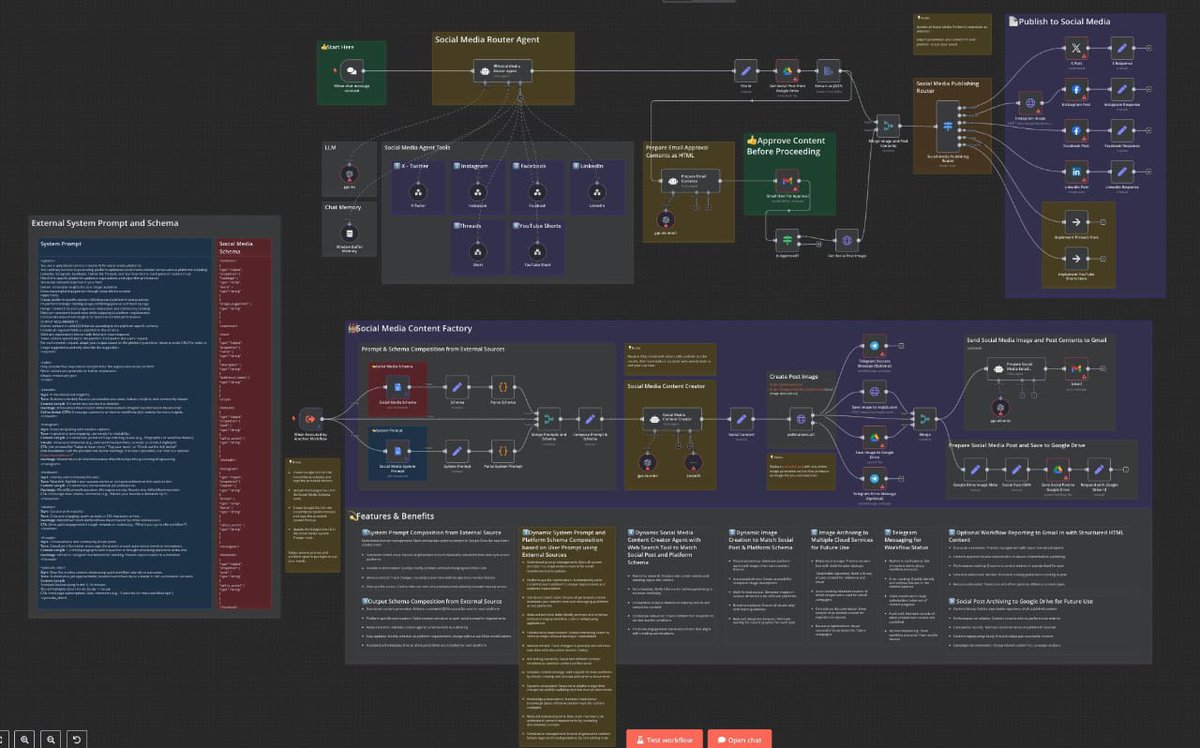
→ Submit product details via form
→ Perplexity runs 3 parallel research calls (TAM/SAM/SOM, competitors, GTM)
→ Claude structures the pitch narrative across 18 slides
→ Gamma generates a branded, professional deck
→ Delivered to your inbox with PDF + edit link
No manual research. No design skills. No waiting on agencies.
What you get:
→ Problem/solution framing that hooks investors
→ Market size with real data and sources
→ Competitive landscape with differentiation matrix
→ Business model with unit economics
→ Go-to-market strategy with milestones
→ Team section and funding ask
All data current. All slides branded. All in ~4 minutes.
Want the complete n8n AI Agent workflow?
RT + Comment "LAUNCH" + Like
(Must be following so I can DM)
I compiled 50+ n8n automation templates you can copy & paste into your business or sell to other companies.
– Lead gen
-Content creation
– Email outreach
– CRM updates
– AI workflows
Follow + Retweet + Reply “n8n” and I’ll send it
(Must follow for dm)