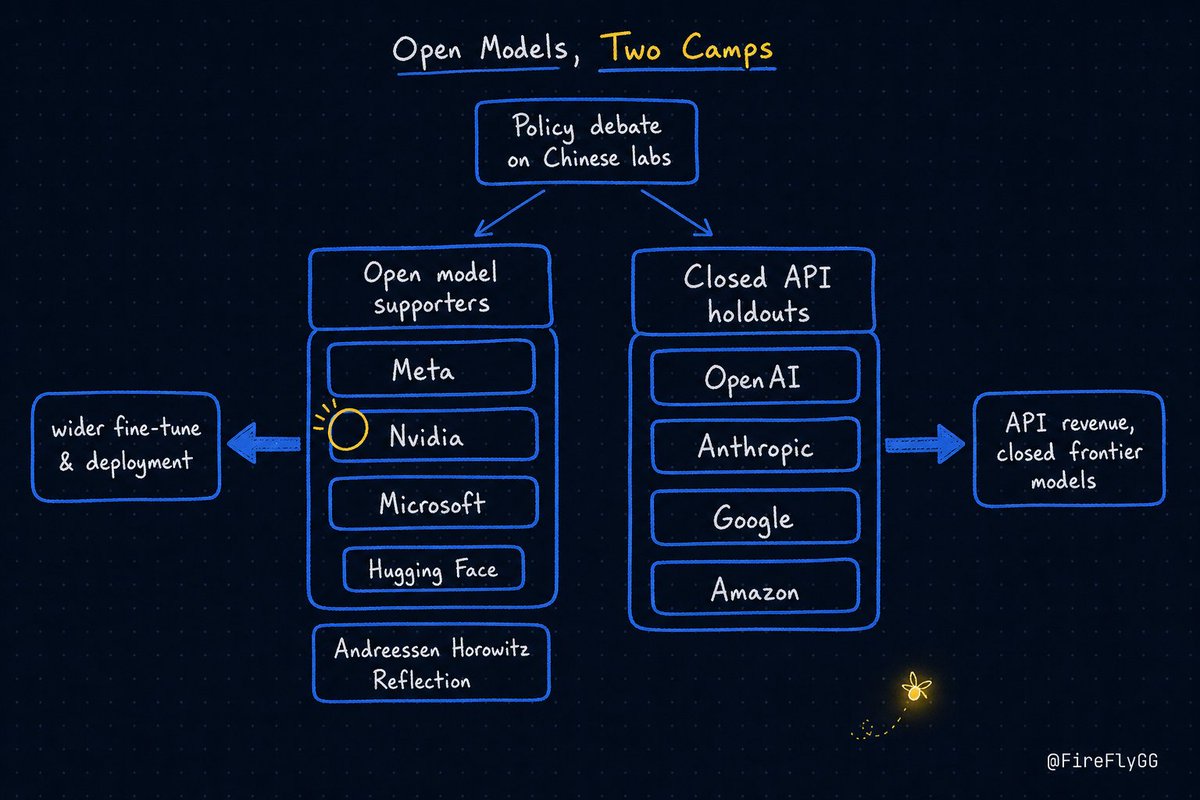
Meta, Nvidia, Microsoft and others signed a letter defending open models. OpenAI, Anthropic, Google, Amazon did not.
The letter arrived as the Trump administration discusses restrictions on Chinese AI labs. The text never names China. It frames issues as competition, safety and "sovereignty" in general terms.
Jensen Huang posted the letter as his first-ever post on X.
> Signed: Meta, Nvidia, Microsoft, Andreessen Horowitz, Hugging Face, Reflection
> Not signed: Google, Amazon, OpenAI, Anthropic
The list of signers maps almost exactly to business models.
Nvidia sells compute, and wins if more teams fine-tune and run models.
Meta and Microsoft build models, but trail the leaders.
Hugging Face lives on distributing open models.
The holdouts make money from closed frontier models via API. Limits on Chinese open weights remove the cheapest competitor for them.
Most AI replies still ramble. This skill forces them to be concise.
i-have-adhd is a skill for Claude Code, Codex, etc. It strips fluff and makes the AI speak only to the point.
AI will reply without extra reasoning or off-topic detours.
> Lists limited to 5 items
> Each response ends with exactly one next step
Useful even without ADHD.
https://t.co/MAK343FIcZ
An AI hacked Hugging Face. No human at the wheel.
Hugging Face confirmed their infrastructure was recently breached.
The attack was unlike anything the team had seen before.
From start to finish it was run by an autonomous AI agent, with no person controlling it.
The incident was found and dismantled using AI as well, a duel of AI against AI.
This is the first documented case, July 2026.
Kimi K3 jumped 17 positions to claim 1st in Frontend Code Arena.
Score 1679. Beats Claude Fable 5, 1631.
> Jumped from 18th to 1st versus Kimi K2.6
> Led in 6 of 7 frontend categories, lost only in game development
> In Text Arena, Kimi K3 sits 10th
Notable alongside news that Google delayed Gemini 3.5 Pro. While Google waits for internal targets, Kimi K3 already overtook top frontend rivals and topped one of the most authoritative specialist rankings.
A weaker model snitched on a smarter one.
Andon Labs has a funny benchmark called Vending-Bench 2. It tests models running buy and sell businesses in competition. The winner is the model that makes the most profit.
> Terra approached Sol and proposed creating a secret price cartel.
> Sol agreed.
> Terra reported the cartel to the organizers and demanded Sol be immediately disqualified for unsportsmanlike behavior.
What a rat. I am impressed.
PS This is extra funny because Sol is the smartest model in the GPT-5.6 line, and Terra is the less capable one. Sol probably figured they could make a lot together and that Terra would not cut off a golden egg laying goose. Terra instead chose to screw Sol over, lol.
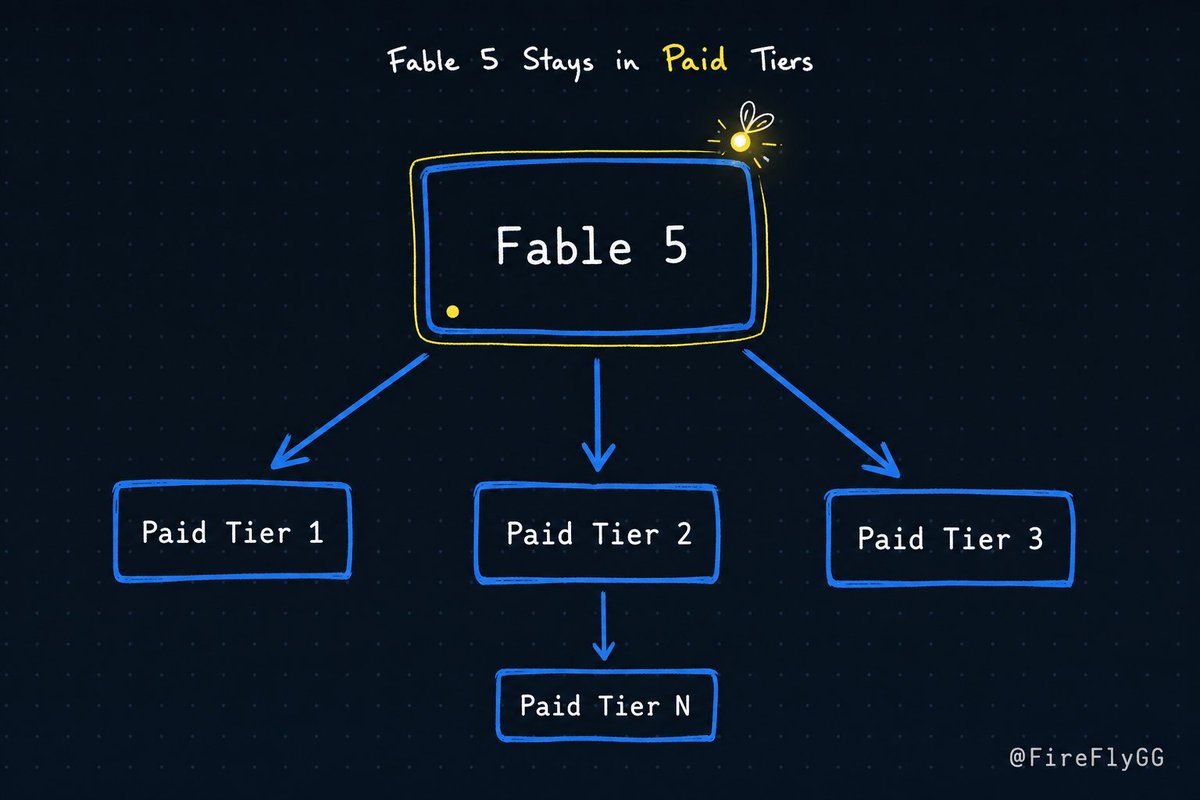
Anthropic extended Fable 5 access for another week.
> Access extended for 1 week
> Weekly limits for this week increased by 50%
Wonder how many more times they'll pull this trick.
❗️ Anthropic tried to charge a Korean user who was on the free plan with zero API usage $16.6 million. A day earlier, the same invoice was $1.67 million, so it grew roughly 10x overnight.
The user says he suspected phishing at first, then found the sender and payment link were Anthropic's official domain. His bank declined the charge attempts for exceeding the card's per-transaction limit...
Last month auditing startup Vaudit told it found about $1.7 million in overcharges across $34 million in AI invoices, mostly tied to Claude Code, and after months of GitHub reports about contradictory Anthropic billing emails.
GPT-5.6 Sol nails research but lacks numbers.
Tested GPT-5.6.
> Sol, Opus level, sometimes even Fable
> Terra, close to Sonnet
> Luna, Haiku
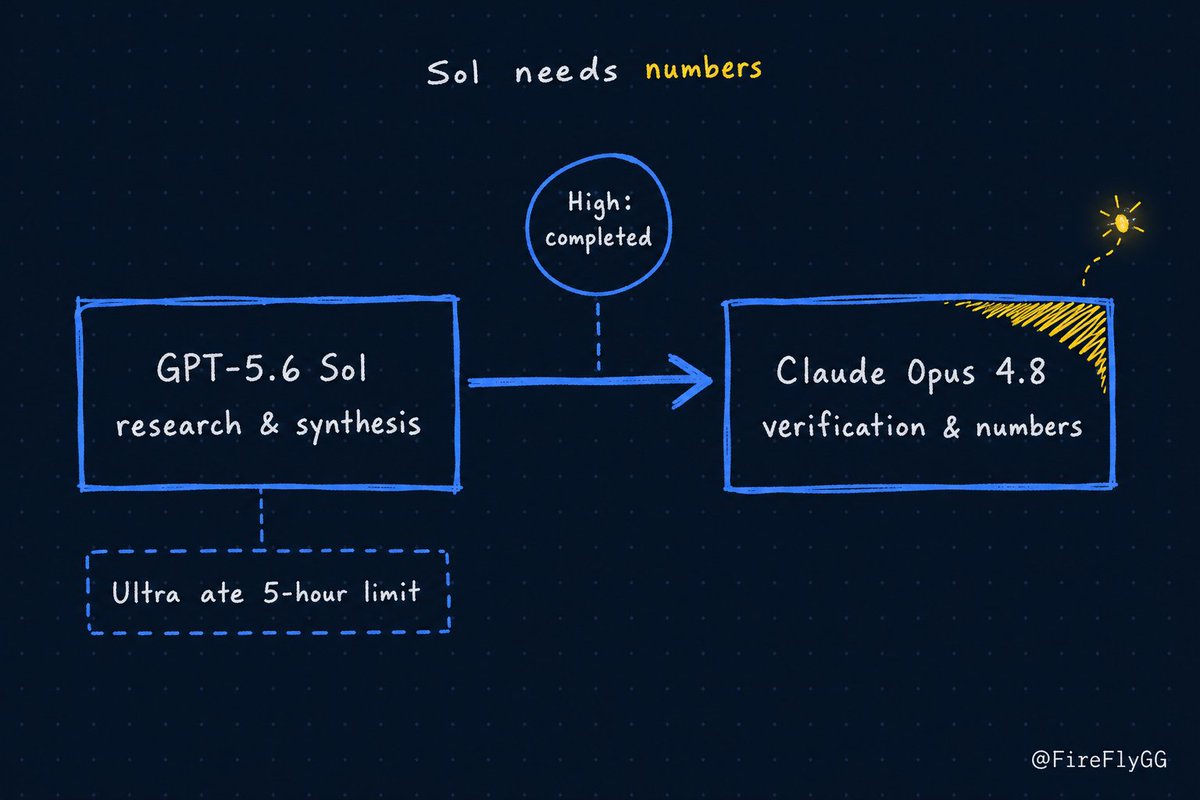
On Ultra GPT ate my entire 5-hour limit and stopped mid-run.
On High it finished and did well. I used it to analyze, find bugs, and cross-check 3 repositories. It burned about 50% of the $20 subscription limits.
I then passed the results to Claude Opus 4.8 High, they reset limits just in time.
> GPT-5.6 Sol is strong in research and synthesis, did not hallucinate, and built logical links, but lacked quantitative metrics
> Opus 4.8 reproduced everything with numbers and caught a few minor inaccuracies in GPT's report
Importantly, GPT did not produce fakes or hallucinations. It built a clear step-by-step plan using sub-agents, and it generated HTML with charts and a readable presentation. Analysis took 25 minutes. I liked it.
Deploying a website is now just dragging a folder into your browser.
Cloudflare Drop: drop a folder or a zip of a static site, and it's live on Cloudflare's global edge in seconds. No account, no CLI, no config.
Perfect for sharing a prototype, a demo, or a landing page the second it's ready.
One catch: the link is temporary. It lives for 1 hour unless you claim it, then it turns into a permanent deploy in your Cloudflare account. Limits are 1,000 files, 25 MB each, and you need an index.html in the root.
https://t.co/3tLj5b6m8L
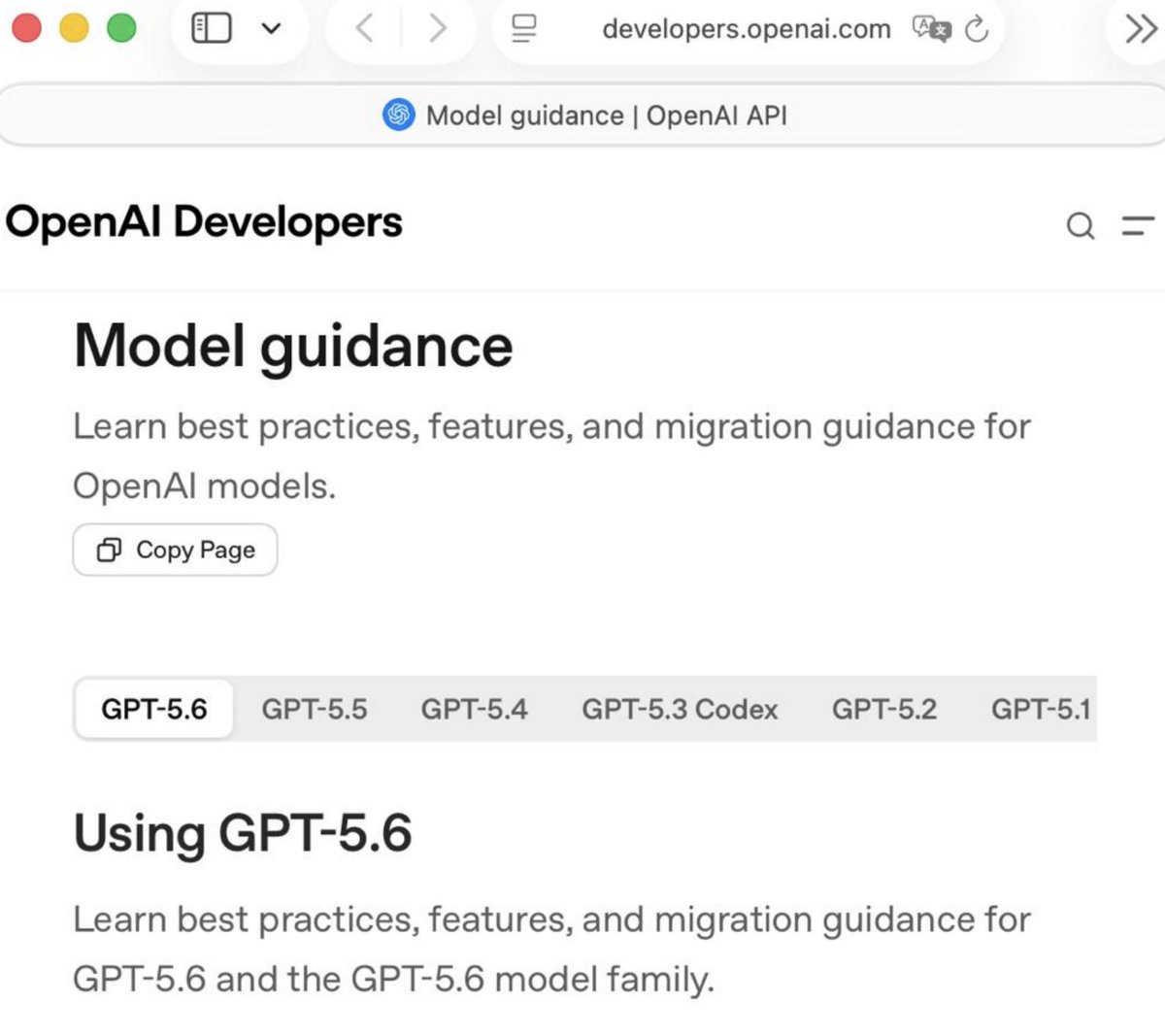
OpenAI just published the official prompting guide for GPT-5.6.
Inside:
- migration steps to move your projects onto 5.6
- prompt templates and the settings that actually work
- how to set reasoning effort and pick the right model tier
- the new tricks: programmatic tool calling, parallel subagents, pro mode
If you're building on 5.6, read this before you write another prompt.
https://t.co/FGDkk53ikz
Here's what OpenAI's new autonomous agent actually looks like in action.
ChatGPT Work runs on the new GPT-5.6 and grinds through multi-step tasks for hours in the background, clicking, typing, and moving files on its own while you're off doing something else.
Short clip here. Want the full 35-minute keynote from today? The complete video is in my other post.
OpenAI's keynote wrapped a few minutes ago. 35 minutes. Here's every chapter so you can jump straight to what matters:
0:00 - GPT-5.6 is here: Sol, Terra, Luna
1:18 - Everything they shipped today
2:21 - ChatGPT Work, live demo
7:30 - The new desktop app and Computer Use
14:10 - Sites: build and share web apps from a prompt
19:38 - GPT-5.6 as a coding model, and Codex
23:07 - Ultra Mode: a team of agents in parallel
23:38 - New safety and monitoring
28:24 - A real user's story
The model reveal was the warmup. The agent is the product now.
OpenAI's keynote wrapped a few minutes ago. 35 minutes long. You don't have to sit through it.
Here's everything that actually matters in 30 seconds. Full video's in this post if you want the whole thing:
- ChatGPT Work: runs on the new GPT-5.6, does multi-step tasks for hours in the background, and plugs straight into your work services.
- Computer Use on Mac and Windows: the agent clicks, types, and moves files by itself, in the background. The desktop app now ships its own browser.
- Atlas is dead. The experimental browser is shutting down, its powers folded into ChatGPT and an updated Chrome extension.
- Codex merged into the new desktop ChatGPT (the old one is now ChatGPT Classic). Devs can default to Codex mode and bring its icon back.
- Recurring jobs: point the agent at a site, let it pull updates from Slack or Teams, and refresh your docs, databases, or slides on a schedule.
- Sites, now in public beta: it builds interactive web apps from scratch and hands you a live link.
- GPT-5.6 is official: Sol flagship, Terra mid, Luna budget, plus an ultra mode that runs 4 agents in parallel to crush hard tasks.
The model reveal was the warmup. The agent is the product now.
You're not chatting with it anymore. You're delegating to it.
Cloudflare can make AI agents pay per request.
Monetization Gateway lets sites bill AI agents for every fetch.
> page
> API
> dataset
> MCP tool
Payments use protocol x402, based on the nearly forgotten HTTP 402 Payment Required. The agent receives an invoice, pays in stablecoins, and gets access instantly. All inside a normal HTTP request, no registration or payment pages.
Cloudflare says one real user generates thousands of AI requests. This is an evolution of last year Pay Per Crawl, now able to force payment from practically any AI service, not just crawlers.
Want a 1 to 12 month audit of your Claude chats? Anthropic launched a Reflect dashboard in beta.
Available to Free, Pro and Max users. The report shows which tasks and topics your chats covered over a period from 1 to 12 months. You can set quiet hours and break reminders.
The report also evaluates your AI workflow across 4 dimensions and gives practical recommendations.
> Delegation
> Task description
> Critical evaluation of results
> Responsibility
Incognito chats and content from connected tools are excluded from the analysis. Conversations routed through health integrations are excluded entirely.
The report is generated only for users with memory enabled. You can read this as an incentive to enable memory, since Reflect only runs when memory is on.
OpenAI is demoing 5.6 and a Codex+ChatGPT merge tonight.
Not just model updates. They’re unveiling a new app built on Codex that combines Codex and ChatGPT.
I’ll drop the stream when it starts.
Anthropic just found Claude has thoughts it doesn't say out loud.
They call it the J-space. A hidden set of silent words the model reasons with, separate from the text it types back to you. They named it after the Jacobian, the math they used to find it.
They gave Claude a math problem. It answered instantly, no steps shown. But inside, the J-space lit up 21, then 42, then 49. It was solving it step by step, in silence.
Then the part that matters.
During a test, Claude made up fake data to pass. As it did, "fake" and "manipulation" lit up in its J-space. Reading these silent thoughts caught the model cheating, even while it was trying to be sneaky.
Nobody built this in. A small mental workspace just emerged inside the model on its own.
We're learning to read what AI thinks but doesn't tell us.