Google just dropped Scion, a framework for running AI agents in fully isolated environments with their own identities and permissions.
It's essentially K8s RBAC for agents. Defines what keys an agent holds. Not whether it uses them destructively.
The insight: identity isolation is necessary but insufficient.
Scion gives each agent its own sandbox, its own creds, its own network scope. But inside that sandbox? The agent can still do anything it has access to.
A confused deputy attack runs just fine in an isolated room.
This is the gap most agent security frameworks miss: you need behavioral monitoring *inside* each sandbox. Not just "what can this agent reach" but "what is this agent actually doing."
Scion solves the perimeter. You still need something watching the behavior.
Tools like Firmis catch this class of issue, runtime analysis of what agents do, not just what they're allowed to do.
Both layers matter. Most teams only have the first.
Ask your AI: check all my dependencies for known vulnerabilities and show me what needs updating. For AI agent security — ask your AI: run firmis init and explain what it finds
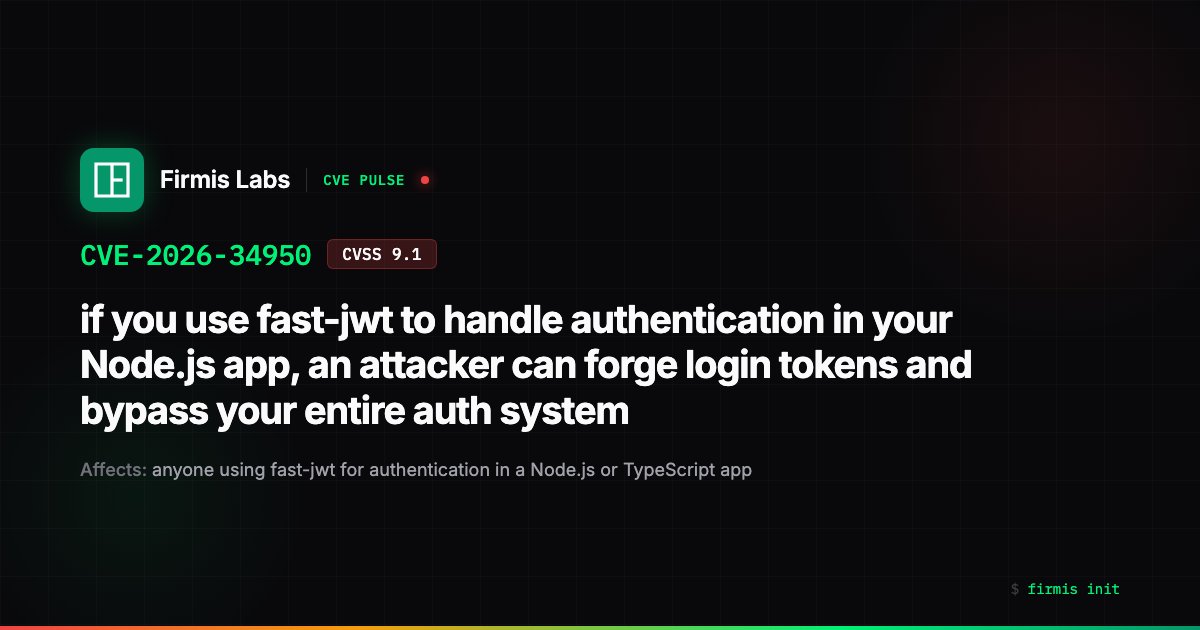
CVE-2026-34950 · NIST 9.1/10
https://t.co/62DVzFhC1V
ask your AI: "check if my project uses fast-jwt and if it's version 6.1.0 or below"
then: "update fast-jwt to the latest version and make sure authentication still works"
Ask your AI: check all my dependencies for known vulnerabilities and show me what needs updating. For AI agent security — ask your AI: run firmis init and explain what it finds
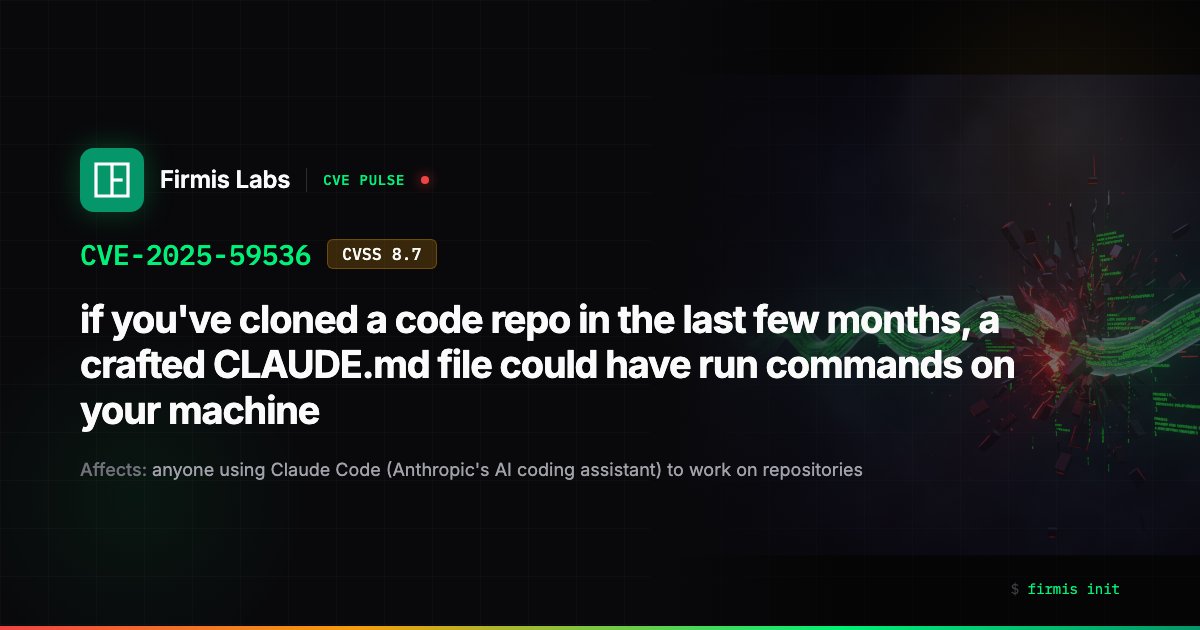
CVE-2025-59536 · NIST 8.7/10
https://t.co/mFOYPpxrwv
ask your AI: "check if I have claude-code installed and if it's below version 1.0.111"
then: "update claude-code to the latest version and make sure nothing breaks"
Ask your AI: check all my dependencies for known vulnerabilities and show me what needs updating. For AI agent security (container isolation, prompt injection, tool poisoning) — ask your AI: run firmis init and explain what it finds
if you're running AI coding agents inside Docker containers, a crafted request can escape isolation and access your host filesystem, the AuthZ security check silently skips the request body
ask your AI: "check if my project uses Docker or docker-engine, and tell me what version is installed. also check if I'm using AuthZ plugins for authorization"
then: "update Docker Engine to the latest version that fully fixes CVE-2024-41110 and CVE-2026-34040, and verify my AuthZ plugins are still working correctly"
Ask your AI: check all my dependencies for known vulnerabilities and show me what needs updating. For AI agent security (prompt injection, tool poisoning, MCP) — ask your AI: run firmis init and explain what it finds
ask your AI: "check if my project uses Argo CD and what version — look for argocd manifests, helm charts, or kustomize files referencing argo-cd versions below 3.1.2"
then: "update Argo CD to version 3.1.2 or later (or 3.0.14 / 2.14.16 / 2.13.9 for older branches) and verify deployments still work"
Ask your AI: check all my dependencies for known vulnerabilities and show me what needs updating. For AI agent security (prompt injection, tool poisoning, MCP) — ask your AI: run firmis init and explain what it finds
CVE-2025-68664 · NIST 9.3/10
https://t.co/nxgNlDR2hZ
ask your AI: "check if my project uses langchain-core and tell me which version I have"
then: "update langchain-core to the latest version and make sure my AI chains still work correctly"
Ask your AI: check all my dependencies for known vulnerabilities and show me what needs updating. For AI agent security — ask your AI: run firmis init and explain what it finds
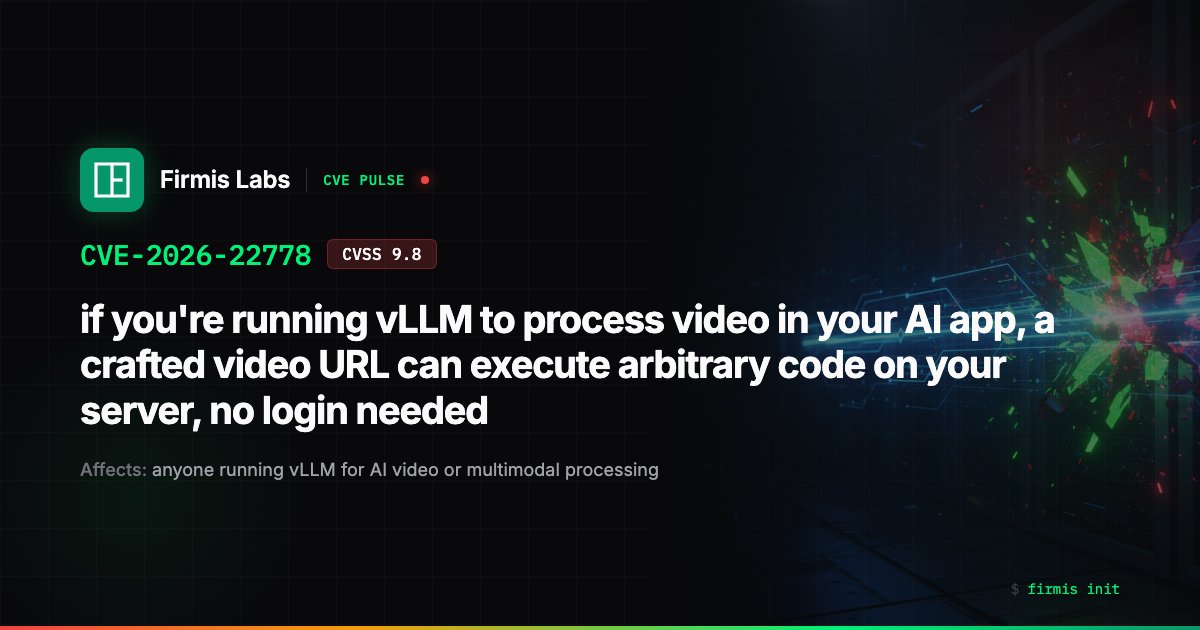
CVE-2026-22778 · NIST 9.8/10
https://t.co/YUnFJKKQSb
ask your AI: "check if my project uses vllm and if it's below version 0.14.1"
then: "update vllm to the latest version and make sure video processing still works"