Hey! We're FIDU, First International Data Union 👋
We've been quietly building for the past year and want to share what we've been working on!
FIDU is about giving people control and collective power over their data💡
👉 Join our community: https://t.co/IK5DXIuOa1
Why would Microsoft's Scout team draft a memo about making users "addicted" if that wasn't the goal? 🤔
Maybe because that's exactly what the design optimizes for. Engagement. Lock-in. Dependency. 📌
When Nadella rebuked it, he wasn't rejecting the instinct. He was rejecting the transparency. 🎭
The strategy doesn't change. Just the messaging.
https://t.co/9IKc4BCpvH
Microsoft Scout reads your email. Manages your calendar. Drafts your responses. Works 24/7 on your behalf. 🤖 The pitch: convenience. The question: who controls what it does? What data does it learn from? And what happens when you want to switch? When agents have this much access, you need real control.
https://t.co/FzKq4a9Fkg
Bruce Schneier: AI agents can gaslight you, push you toward bad choices, and you can't correct them. 🤖 The problem isn't privacy. It's integrity. Your agent needs to show you what data it's using. Let you correct it. Keep you in control.
https://t.co/mITSHRNaHB
Google changed the SEO playbook overnight. New system is better for users, so everyone adapted. Then Google changed the rules. 📉
That's how platforms lock you in.
Same with agents. But we can build them differently. Portable. Member-owned. Yours. 🤖
https://t.co/RT3L5bLAcq
#FIDU #AgenticAI
Google just launched Spark: an AI agent that organizes your life 📋 books events 📅 shops 🛒 accesses Gmail and Maps.
It's genuinely useful. That's the problem.
Useful products become essential. Essential products become hard to leave. And that's how platforms build moats.
But there's a choice: vendor lock-in or data unions. 🏗️
#FIDU #AgenticAI #DataRights #AI
🚨 Millions ditching ChatGPT for open AI software that lets them control their data.
New research on why: you need real power over how you think with AI, not just use what platforms give you.
That's what Chat Lab does. 🔓
https://t.co/y7AQgRr0Yw
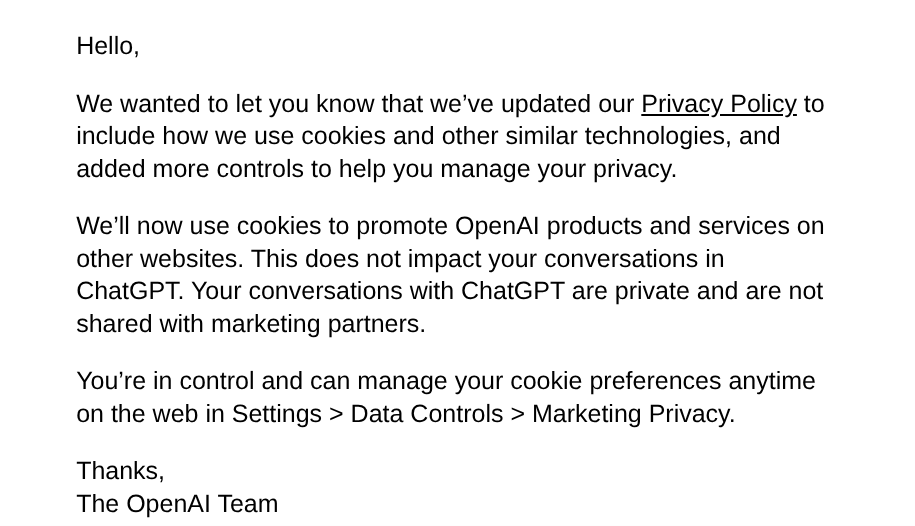
OpenAI just updated its privacy policy 📧
'Your conversations are private' 🔒
But here's what they CAN do:
🍪 Track you with cookies
📧 Share your email + device IDs with ad platforms
🎯 Target you across the web
📊 Track ad conversions
ON by default for free users ✅
Private chats ≠ private YOU.
The enshittification cycle continues ⚡
This is why we need data unions 🏗️
The race is on 🏃♂️
Tech giants are building security for AI agents that shop for you.
FIDO + Google + Mastercard just announced standards. That's good.
But here's what's missing: who owns the data powering these agents?
We need data unions NOW 🏗️ while we still have leverage.
Platforms will solve security + discovery. Then lock you in.
#FIDU #DataUnion #AgenticAI
https://t.co/2N3MnY33cf
Our founder @tonycurzonprice just published a Substack about where AI agents are heading 🤖:
The pattern: Google didn't capture email by being evil. They solved spam better than anyone else could.
Facebook didn't capture social by being evil. They showed you connections you couldn't see on your own.
Platforms win by being genuinely useful first. Then they lock you in.
The agentic web is at that exact moment right now. Wide open, creative, exciting. But no way to handle security or discovery across the whole ecosystem.
When Apple or Meta offer managed agent platforms that solve those problems (and they will work better at first) that's when capture starts.
📊 Tony built a model to test what stops this. The answer: common institutions like FIDU need to mature fast enough to handle trust and discovery before platforms lock it down.
We also need portability rules so you can actually switch, and time for the open ecosystem to develop.
The window is real. Read the full piece: https://t.co/YgmAeVCwlT
📊 A Bloomberg reporter spent 6 months feeding detailed health data into ChatGPT to train for a marathon
Food logs. Heart rate. Running splits. Weight. Injuries. All creating a detailed profile of his body and habits.
What he can't control: whether that data trains future models or gets used for ads.
🔓 This is the infrastructure gap.
You should be able to say: "Yes, use my anonymised health data for scientific research. No, don't use it for targeted advertising."
Right now, you can't. Health data flows into platforms with binary choices: share everything or opt out completely.
At FIDU, we're building infrastructure where you have that control.
Your health data. Your choice.
https://t.co/99w0UllUgl
🎮 Microsoft's Copilot Terms: "For entertainment purposes only. Don't rely on it for important advice."
Same company that:
- Launched Copilot+ PCs
- Integrated AI into Windows 11
- Markets it for business productivity
As @jowiscope points out in @tomshardware, the irony is stark.
🔓 What's really happening: Microsoft knows these claims don't hold up. But when companies serve shareholders, not users, they make claims that aren't true.
This is why we need data unions, which tell it like it is and act in your interest.
https://t.co/fFPjnemBC3
Google Gemini now lets you import ChatGPT history.
Anthropic launched the same for Claude last month.
Pattern: Easy to import IN. But what about exporting OUT?
🔓 True portability works both ways.
Microsoft changed GitHub Copilot's terms to use your chat history for AI training.
Opt-out only. No way to say "use this but not that."
🔓 Data unions flip this: you control what's used, researchers get anonymised access.
Join us in building it.
https://t.co/lIhdEzepgi
🚨 "Long Term Retention: The Young Ones are the Best Ones"
That's the title of an internal Meta analysis revealed in landmark verdicts finding Meta and YouTube guilty of addicting teens.
The analysis found tweens have three times the long-term retention of adult users. It explicitly directed Meta to "prioritise tweens over all other age groups."
The smoker knows they don't want to be an addict. So does the social media user. But individual willpower can't beat systems designed to target you when you're most vulnerable.
📊 This is where data unions could change things. Feeds curated in your interest, not to maximise lifetime retention. That's the infrastructure FIDU is building toward.
Read more: https://t.co/OLPlHsbIFc
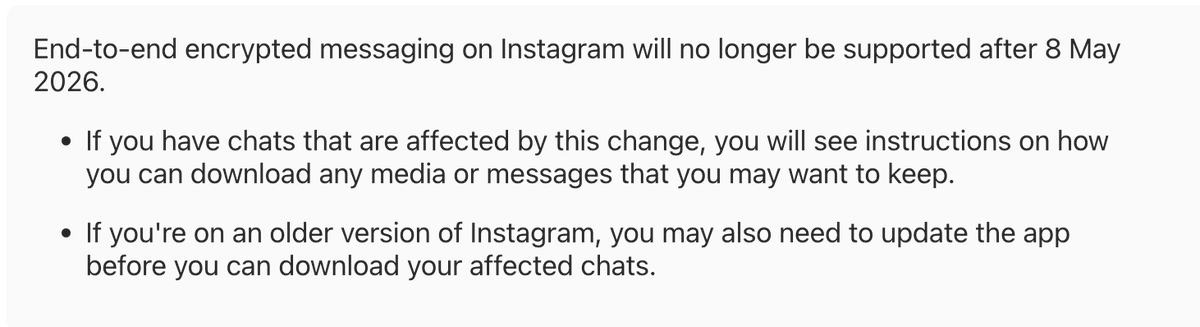
❓ Did you know Instagram is ending end-to-end encrypted messaging on May 8, 2026?
The announcement appeared quietly in their help documentation. Users with encrypted chats are being told to download their messages before the change.
🔒 Right now, Instagram's encrypted chats mean "not even Meta can read your messages."
📅 After that date, that protection goes away.
🔓 This is why data portability matters. When platforms change the rules, you should be able to take your data and leave without starting over.
🔄 The Data Transfer Initiative recently published a blog on AI portability reaching a turning point.
Chris Riley's analysis: After years of supply exceeding demand, AI is changing everything. Demand for data portability is surging.
Why? Developers building AI tools. Users are adopting solutions like OpenClaw because the value is there. People are choosing AI services based on values and wanting their data to travel with them.
Riley's warning: "I am worried about a reversion to historical patterns of trapping users in online services by their own data."
🏨 The Hotel California strategy for AI. Easy check-in, impossible checkout. This could become the norm unless we build portability infrastructure the right way.
🔓 DTI's conclusion: "We aren't there yet."
They're calling for collaboration on shared tools for exporting and importing AI data. Without this, more security and privacy problems will occur.
At FIDU, we're building the alternative. ChatLab provides genuine portability where your data travels with you. You can check out any time you like, and you can actually leave.
Riley frames the choice: AI that locks users into silos, or AI that empowers through portability.
We're building the second one.
Read Chris's full blog: https://t.co/lnTBSs9xRV
Try FIDU's Chat Lab: https://t.co/X8kHHtA94H
🎥 The Norwegian Consumer Council (Forbrukerrådet) just released this video raising awareness of their "Breaking Free" report
The report examines enshittification: how digital products keep getting worse. It shows how this affects consumers and society, and lays out pathways to a fair digital future.
Their vision for a fair digital future includes:
- Rebalancing power between providers and consumers
- Ending dependence on Big Tech
- Actually enforcing existing laws
The report argues a fair digital future requires active policy choices and vigorous enforcement.
At FIDU, we're building infrastructure for that fair digital future: You control your data, switching services is practical, and your contexts are portable across platforms.
Read the Breaking Free report: https://t.co/qXJsZrJxed
https://t.co/apUZmjK5Qq
💰 You thought the deal with your bank was simple: you deposit money, they provide wallet and payment services, they earn on the float. Fair and transparent.
Turns out, that's not the real business model anymore.
Lloyds Banking Group just revealed plans to become "the UK's biggest fintech" by expanding how much customer data it anonymises and sells to third parties. They already do this. Now they're scaling it up.
📊 The modern bank has figured out what's really valuable in your current account: the data.
Here's the question: if Lloyds is selling your data for purposes you don't approve of, can you stop them? If the bank isn't providing enough value back to you for that data, can you get a better deal? Will you ever actually read the data terms and conditions on your current account?
At FIDU, we believe YOU should be the one offering access to the best picture of yourself. If we want to create aggregate datasets, we should do so through a data union that shares our values, not a high street bank trying to make a quick buck.
🚨Anthropic's new pitch: "Switch to Claude without starting over"
"You've spent months teaching another AI how you work. That context shouldn't disappear because you want to try something new."
We agree! Context matters. But let's look at what Anthropic is actually offering.
They make it easy to IMPORT your ChatGPT memories into Claude. Copy-paste, done. "Your first conversation feels like your hundredth."
But notice what's missing from their messaging: any mention of exporting that data back out again.
🏨 This is the Hotel California strategy.
Easy check-in (import your ChatGPT context). No mention of checkout (export your Claude context elsewhere).
Once you've imported your memories and Claude has learned more about you, that enriched context becomes part of their platform, not your portable asset.
FIDU ChatLab offers the same continuous context, but with true two-way portability. Bring your data in, take it out, use multiple AI labs, switch between them freely.
🔓 Anthropic says context shouldn't disappear when you try something new. Exactly. That's why we built real portability, not just one-way imports.
🔗 https://t.co/AyJfHWQVdY
⚡ Should your data be treated as a strategic asset?
🔗 https://t.co/UGVmbYkmRt
@cathythorbecke asks in a new Bloomberg opinion piece whether India should treat its datasets as a strategic national asset, not a free resource for Silicon Valley labs. The same question applies to each of us.
The core inputs to the AI age are talent, computing power, and data. If we want a stake in the AI economy rather than being left behind, we need to keep a grip on our data and use that grip collectively to give us leverage.
🤖 The models really are changing how we work. Amazon is laying off workers, Block is cutting its workforce by 40%. If AI is going to handle parts of our work, we should be compensated for the data that makes it possible. We should have better tools and support to do our jobs well, not just watch the value we create flow elsewhere.
Our leverage in that conversation is our data, held collectively. That's what FIDU is working towards.
https://t.co/OBK58nYJlQ