The spotted scat, ๐๐๐๐ก๐๐โ๐๐๐ข๐ ๐๐๐๐ข๐ , is a commercially important euryhaline fish widely distributed in the Indo-West Pacific, yet its systematics and evolutionary history remain poorly understood. Here, researchers investigated the genetic diversity, phylogeography, and demographic history of ๐. ๐๐๐๐ข๐ from across its range. Haplotype network analysis identified four major haplogroups: two predominantly distributed in the Indian Ocean, one in the West Pacific, and one in Australia.
A haplogroup is a genetic population group of similar haplotypes that share a common direct maternal or paternal ancestor. These groups are defined by specific, slowly accumulating genetic mutationsโmost commonly single-nucleotide polymorphisms (SNPs)โpassed down through generations without being recombined or shuffled like regular autosomal DNA.
"Demographic analyses indicated late Pleistocene population expansion in Haplogroup I, whereas Haplogroups II and IV showed no clear expansion signal. The coexistence of three lineages of ๐. ๐๐๐๐ข๐ within Thai waters highlights this region as a critical zone of genetic diversity for future research. These findings underscore the need to uncover hidden diversity for effective fisheries management and conservation."
๐ฅ๐ฒ๐๐ฒ๐ฎ๐ฟ๐ฐ๐ต ๐ง๐ถ๐๐น๐ฒ
Cryptic diversity and phylogeography of the spotted scat ๐๐๐๐ก๐๐โ๐๐๐ข๐ ๐๐๐๐ข๐ (Acanthuriformes, Scatophagidae) across the Indo-West Pacific
Open access: https://t.co/GeNj00Cguo
๐๐ถ๐๐ฎ๐๐ถ๐ผ๐ป
Seesan K, Janekitkarn S, Ratmuangkhwang S, Chamason O, Liu S-YV, Lavouรฉ S, Zeng C, Muangmai N (2026) Cryptic diversity and phylogeography of the spotted scat ๐๐๐๐ก๐๐โ๐๐๐ข๐ ๐๐๐๐ข๐ (Acanthuriformes, Scatophagidae) across the Indo-West Pacific. ZooKeys 1297: 131-152. https://t.co/u3lkYMi3vm
๐๐ฏ๐๐๐ฟ๐ฎ๐ฐ๐
The spotted scat, ๐๐๐๐ก๐๐โ๐๐๐ข๐ ๐๐๐๐ข๐ , is a commercially important euryhaline fish widely distributed in the Indo-West Pacific, yet the systematics and evolutionary history of this species remain poorly understood.
We investigated the genetic diversity, phylogeography, and demographic history of ๐. ๐๐๐๐ข๐ using 239 mitochondrial COI sequences (129 newly determined for this study) from across its range. Haplotype network analysis identified four major haplogroups: two predominantly distributed in the Indian Ocean, one in the West Pacific, and one in Australia. Mean K2P distances among haplogroups (5.08โ7.72%) greatly exceeded those within haplogroups (0.45โ0.91%), indicating deeply divergent mitochondrial lineages and possible species-level cryptic diversity.
The distributions of the West Pacific and Indian haplogroups overlap in the Thai-Malay Peninsula region. Whereas Pleistocene exposure of the Sunda Shelf may have driven the divergence of these haplogroups by restricting gene flow between the Indian and Pacific Oceans, their secondary contact appears to have been facilitated by the recent inundation of the Sunda Shelf, enabling range expansion and lineage admixture. Demographic analyses indicated late Pleistocene population expansion in Haplogroup I, whereas Haplogroups II and IV showed no clear expansion signal. The coexistence of three lineages of ๐. ๐๐๐๐ข๐ within Thai waters highlights this region as a critical zone of genetic diversity for future research.
These findings underscore the need to uncover hidden diversity for effective fisheries management and conservation.
๐ฃ๐ต๐ผ๐๐ผ ๐๐ฟ๐ฒ๐ฑ๐ถ๐
Lateral views of fresh specimens of ๐๐๐๐ก๐๐โ๏ฟฝ๏ฟฝ๏ฟฝ๐๐ข๐ ๐๐๐๐ข๐ representing each haplogroup. Scale bars indicate 1 cm. Haplogroup I: A. CHB01 (Chonburi), 126.41 mm SL; B. SK04 (Songkhla), 168.33 mm SL; Haplogroup II: C. CT01 (Chanthaburi), 95.45 mm SL; D. PTN02 (Pattani), 121.42 mm SL; E. KS01 (Kaohsiung), 148.27 mm SL; F. KS06 (Kaohsiung), 166.02 mm SL; Haplogroup IV: G. RN06 (Ranong), 119.00 mm SL; H. RN09 (Ranong), 114.98 mm SL.
ยฉ 2026 the Author(s). Published in the journal ZooKeys. An open access article, distributed under the terms of the Creative Commons Attribution 4.0 International (CC-BY-4.0) licence. https://t.co/5IYEkz4Rwi
#Scatophagus #Acanthuriformes #Scatophagidae #Scat #Ichthyology #Taxonomy #Biodiversity #AquariumHobby #Fishkeeping #Aquarist #TropicalFish #FishTank #Phylogeography #CrypticSpecies #Brackish #BrackishWater #Mangroves #BrackishAquarium #SpottedScat #Euryhaline
Cypriniformes, the most species-rich order of freshwater fishes (โผ5,000 species), represents a key lineage for understanding vertebrate diversification in freshwater ecosystems.
๐ https://t.co/KheTv6932H
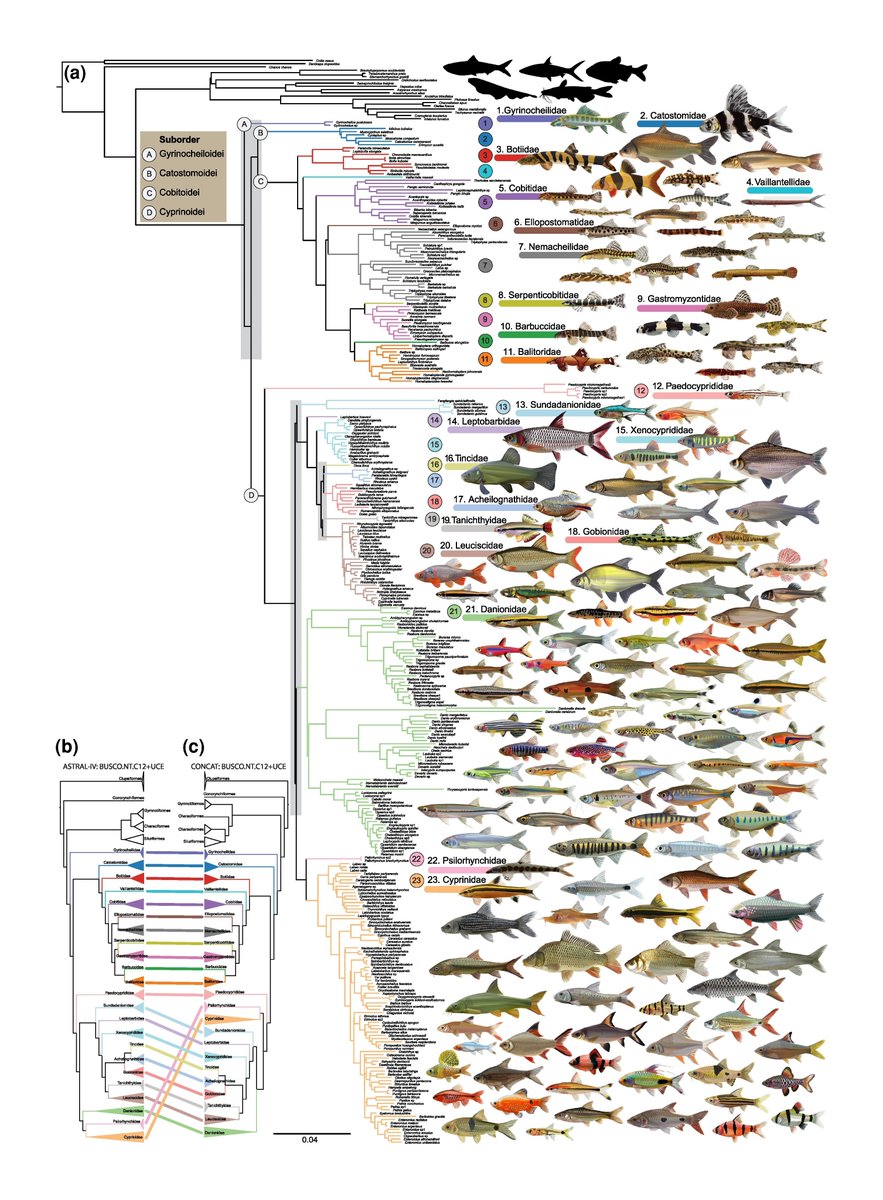
Here, researchers present the first phylogenomic analysis of Cypriniformes with complete family-level representation, encompassing 316 species (comprising โผ30% of all described genera).
"Our results strengthen the evolutionary relationships of several miniaturized lineages, while identifying recalcitrant relationships shaped by both biological processes and model artifacts that can yield superficially similar patterns of phylogenetic conflict. Our study substantially expands genomic representation and establishes a phylogenomic foundation for future comparative, developmental, and evolutionary research in this freshwater radiation."
Lead author Hiranya Sudasinghe has made available an A0 poster, print-size image file, 'The Cypriniformes Tree of Life' - https://t.co/ePWVB9kD89
๐ฅ๐ฒ๐๐ฒ๐ฎ๐ฟ๐ฐ๐ต ๐ง๐ถ๐๐น๐ฒ
Phylogenomics of Cypriniformes, the most diverse order of freshwater fishes: consensus, challenges, and limitations
๐๐ถ๐๐ฎ๐๐ถ๐ผ๐ป
Hiranya Sudasinghe, Ralf Britz, Michael Matschiner, Kevin W Conway, Heok Hui Tan, Maurice Kottelat, Rajeev Raghavan, Neelesh Dahanukar, Vasudevan Komalavally Anoop, Jรถrg Bohlen, Kerstin Howe, Richard Durbin, Walter Salzburger, Catherine L Peichel, Lukas Rรผber, Phylogenomics of Cypriniformes, the most diverse order of freshwater fishes: consensus, challenges, and limitations, Molecular Biology and Evolution, Volume 43, Issue 11, November 2026, msag261, https://t.co/ATDalqxeaY
๐๐ฏ๐๐๐ฟ๐ฎ๐ฐ๐
Cypriniformes, the most species-rich order of freshwater fishes (โผ5,000 species), represents a key lineage for understanding vertebrate diversification in freshwater ecosystems. This clade includes several highly miniaturized and understudied lineages whose phylogenetic placements have long remained contentious.
Here, we present the first phylogenomic analysis of Cypriniformes with complete family-level representation and broad genus-level coverage, encompassing 316 species comprising โผ30% of all described genera. Our dataset integrates 257 newly assembled genomes with publicly available resources and analyzes multiple sets of genome-wide markers using both concatenation-based and coalescent-aware approaches. The general concordance among analytical frameworks indicates that the backbone topology of Cypriniformes is now established, allowing clear identification of well-supported clades and regions of persistent conflict.
Our results strengthen the evolutionary relationships of several miniaturized lineages, while identifying recalcitrant relationships shaped by both biological processes and model artifacts that can yield superficially similar patterns of phylogenetic conflict.
Our study substantially expands genomic representation and establishes a phylogenomic foundation for future comparative, developmental, and evolutionary research in this freshwater radiation.
๐ฃ๐ต๐ผ๐๐ผ ๐๐ฟ๐ฒ๐ฑ๐ถ๐
a) ASTRAL-IV species tree showing the hypothesis of phylogenomic relationships of Cypriniformes inferred from 335 species and 1,167 loci (total alignment length: 541,983โ bp), based on combined first and second codon positions of BUSCO.NT.C12 and UCE nucleotide dataset. The numbers indicate the different Cypriniformes families. The major conflicting zones of phylogenetic relationships are highlighted in gray (see Fig. 2; Figures S11 and S12). Simplified family-level topologies are shown for (b) the ASTRAL-IV species tree and (c) the IQ-TREE2 concatenated phylogeny for the same dataset. Fish illustrations by Nadeela Hirimuthugoda.
ยฉ 2026 the Author(s). Published in the journal Molecular Biology and Evolution. An open access article, distributed under the terms of the Creative Commons Attribution 4.0 International (CC-BY-4.0) licence. https://t.co/5IYEkz4Rwi
#Phylogenomics #Cypriniformes #Ichthyology #Taxonomy #Biodiversity #AquariumHobby #Fishkeeping #Aquarist #TropicalFish #FishTank
Research by Donovan German and Nathan Lujan shows that "wood eating" catfishes donโt digest wood itself but rather the nutrient-rich microbial biofilm, algae, and fungi growing on the surface. They skim the good stuff and poop out the rest.
https://t.co/zBbU4RLn2l
#NewSpeciesAlert - ๐ธ๐ฅ๐๐ ๐ก๐๐๐ ๐๐๐ ๐๐๐๐๐๐๐ก๐ข๐, a new species of sisorid catfish (Glyptosterninae), is described from Bupal stream, a tributary of the Dujang River in the Chindwin River system of Manipur, northeastern India.
๐ https://t.co/rFqUnvYhoF
๐ฅ๐ฒ๐๐ฒ๐ฎ๐ฟ๐ฐ๐ต ๐ง๐ถ๐๐น๐ฒ
๐ธ๐ฅ๐๐ ๐ก๐๐๐ ๐๐๐ ๐๐๐๐๐๐๐ก๐ข๐, a new species of glyptosternine catfish from Manipur, northeastern India
๐๐ถ๐๐ฎ๐๐ถ๐ผ๐ป
Torisha, P., & Shangningam, B. (2026). ๐ธ๐ฅ๐๐ ๐ก๐๐๐ ๐๐๐ ๐๐๐๐๐๐๐ก๐ข๐, a new species of glyptosternine catfish from Manipur, northeastern India. Journal of Natural History, 60(45โ48), 2251โ2263. https://t.co/r8Ihk68n0L
๐๐ฏ๐๐๐ฟ๐ฎ๐ฐ๐
A new species of glyptosternine catfish of the genus ๐ธ๐ฅ๐๐ ๐ก๐๐๐ is described from the Bupal stream, a tributary of the Dujang River, Chindwin River system in Manipur, northeastern India.
๐ธ๐ฅ๐๐ ๐ก๐๐๐ ๐๐๐ ๐๐๐๐๐๐๐ก๐ข๐ Torisha & Shangningam sp. n. can be easily distinguished from congeners of the Chindwin-Irrawaddy by the following combination of characters: possessing a long nasal barbel extending beyond the posterior margin of orbit, adipose fin confluent (vs. separate) with the upper procurrent caudal fin rays except in ๐ธ. ๐โ๐๐ข๐โ๐ข๐๐๐, ๐ธ. ๐๐ข๐๐๐๐๐๐๐ ๐, ๐ธ. ๐๐ข๐๐๐๐๐๐๐ ๐ and ๐ธ. ๐ฃ๐๐๐๐๐๐ข๐๐๐๐๐, rounded and parallel striae on the anterolateral surfaces of the lips (vs. parallel) in ๐ธ. ๐โ๐๐ข๐โ๐ข๐๐๐ and ๐ธ. ๐๐ข๐๐๐๐๐๐๐ ๐, (vs. rounded) in ๐ธ. ๐๐ข๐๐๐๐๐๐๐ ๐ and ๐ธ. ๐ฃ๐๐๐๐๐๐ข๐๐๐๐๐.
๐ฃ๐ต๐ผ๐๐ผ ๐๐ฟ๐ฒ๐ฑ๐ถ๐
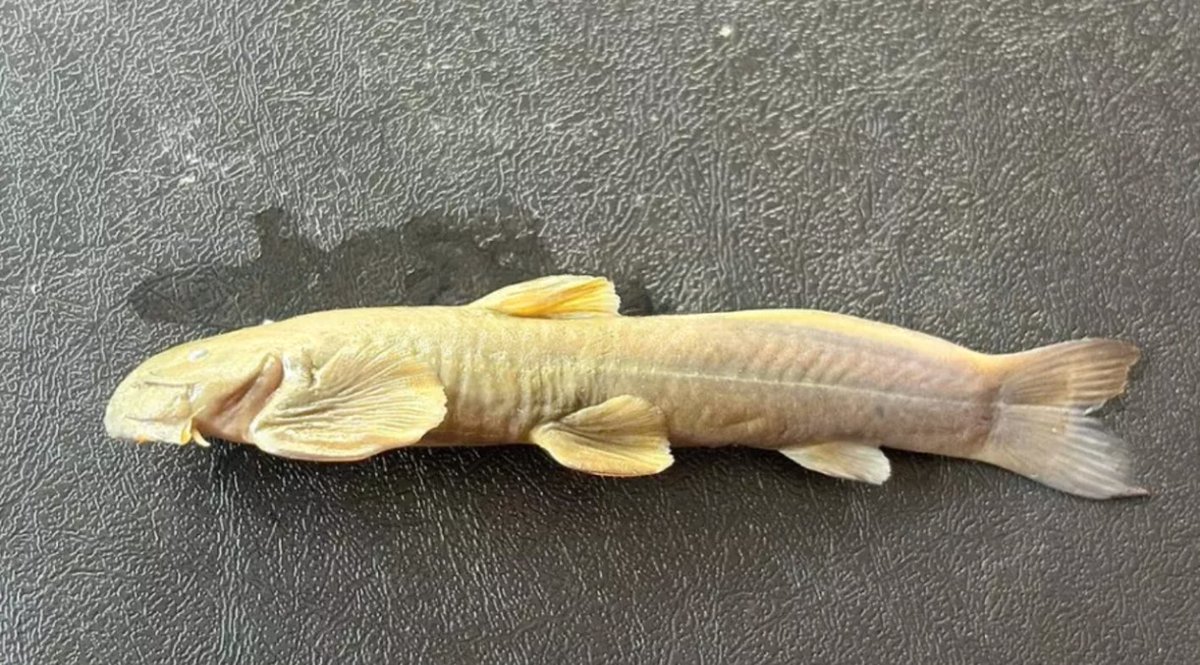
๐ธ๐ฅ๐๐ ๐ก๐๐๐ ๐๐๐ ๐๐๐๐๐๐๐ก๐ข๐, preserved specimen.
ยฉ 2026 the Author(s). Published in the Journal of Natural History.
#NewSpecies #Ichthyology #Taxonomy #Biodiversity #AquariumHobby #Fishkeeping #Aquarist #TropicalFish #FishTank #Exostoma #India #Manipur #Catfishes #Glyptosternine #Glyptosterninae #Sisoridae
#NewSpeciesAlert - ๐ฟ๐๐ข๐๐ข๐๐ ๐๐๐๐๐ข๐๐๐๐ ๐ก๐๐๐๐ก๐, a new species of danionid (Cypriniformes: Danionidae), is described from the Yangon and Pyapon rivers, distributaries of the Irrawaddy River system in Myanmar.
๐ https://t.co/D3Bou6OYrz
๐ฅ๐ฒ๐๐ฒ๐ฎ๐ฟ๐ฐ๐ต ๐ง๐ถ๐๐น๐ฒ
A new species of ๐ฟ๐๐ข๐๐ข๐๐ (Cypriniformes: Danionidae) from the Irrawaddy River System, Myanmar
๐๐ถ๐๐ฎ๐๐ถ๐ผ๐ป
Htay, K.Y., Song, X.-Y., Thu, M.M., Paing, A.K., Naing, N.H., Oo, T.N. & Chen, X.-Y. (2026) A new species of ๐ฟ๐๐ข๐๐ข๐๐ (Cypriniformes: Danionidae) from the Irrawaddy River System, Myanmar. Zootaxa, 5897 (2), 152โ166. https://t.co/LSnjRipONU
๐๐ฏ๐๐๐ฟ๐ฎ๐ฐ๐
A new species of the genus ๐ฟ๐๐ข๐๐ข๐๐ Bleeker, 1859 is described from the Yangon and Pyapon rivers, distributaries of the Irrawaddy River system in Myanmar.
๐ฟ๐๐ข๐๐ข๐๐ ๐๐๐๐๐ข๐๐๐๐ ๐ก๐๐๐๐ก๐ sp. nov. can be distinguished from its congeners by the following combination of features: (1) two blue and golden longitudinal stripes extending from pectoral-fin base to caudal-fin base; (2) swim bladder visible through transparent area beneath blue longitudinal stripe; (3) dorsal-fin base length less than half anal-fin base length; (4) pectoral fin long, reaching beyond tip of pelvic fin; and (5) 21โ22 predorsal scales. Phylogenetic analysis of mitochondrial genes using Maximum Likelihood (ML) and Bayesian Inference (BI) indicates that the new species represents an independent evolutionary lineage, with p-distances of 16โ19% for COI and 19โ22% for Cytb relative to its congeners.
๐ฃ๐ต๐ผ๐๐ผ ๐๐ฟ๐ฒ๐ฑ๐ถ๐
Cover image from the study.
ยฉ 2026 the Author(s). Published in the journal Zootaxa.
#NewSpecies #Ichthyology #Taxonomy #Biodiversity #AquariumHobby #Fishkeeping #Aquarist #TropicalFish #FishTank #Laubuka #Cypriniformes #Danionidae #IrrawaddyRiver #Myanmar #Burma #YangonRiver #PyaponRiver
Over half of vertebrate species are teleost fishes, with over 35,000 species. Why so many species? The answer is complex, but certainly involves the origin and turnover of multiple sex chromosomes, evolving at about the pace of speciation and extinction.
https://t.co/hHKQLsxRrQ
#FishBook - 'Fishes of the Genus ๐๐๐กโ๐๐๐๐๐๐โ๐๐ข๐ ' by Bรฉla Nagy and Brian R. Watters is a comprehensive reference guide to the remarkable seasonal fishes of Africa, bringing together decades of field observations from more than sixty expeditions across Africa, research, aquarium experience, taxonomy and conservation, in a richly illustrated 600-page volume, with many hundreds of full-colour photographs, over 150 habitats including 50 type localities, maps covering all species, phylogenetic diagrams, and detailed accounts of every species.
Available to preorder now (link below) and expected to ship 10th November 2026.
๐ฃ๐๐ฏ๐น๐ถ๐๐ต๐ฒ๐ฟ'๐ ๐ฑ๐ฒ๐๐ฐ๐ฟ๐ถ๐ฝ๐๐ถ๐ผ๐ป:
'Fishes of the Genus ๐๐๐กโ๐๐๐๐๐๐โ๐๐ข๐ ' presents a comprehensive account of Africaโs remarkable seasonal fishes, which complete their entire life cycle in ephemeral wetlands that appear and vanish with the rains.
โ
Drawing on decades of field exploration, scientific research, and aquarium observations, Bรฉla Nagy and Brian R. Watters explore the ecology, life history, reproduction, diversity, classification, and conservation of these extraordinary fishes. From the seasonal wetlands they inhabit to the remarkable adaptations that allow them to survive months of drought as dormant embryos, the book reveals a unique group of fishes living at the edge of time.
โ
The book brings together extensive field observations from across Africa with detailed habitat descriptions, distribution and dispersal patterns, life-history studies, maintenance and breeding techniques, and modern approaches to classification and systematics. The final chapter provides comprehensive species accounts covering identification, taxonomy, habitat, distribution, conservation status, reproduction, and maintenance.
Richly illustrated throughout, the book includes hundreds of full-colour photographs, biotope images, maps, phylogenetic diagrams, historical illustrations, and detailed drawings. It is both a scientific reference and a visual exploration of the extraordinary diversity of ๐๐๐กโ๐๐๐๐๐๐โ๐๐ข๐ .
Written for researchers, conservationists, ichthyologists, killifish enthusiasts, and dedicated aquarists, this book offers an authoritative and accessible synthesis of one of Africaโs most fascinating groups of freshwater fishes.
600 pages โ| over 650 full-colour photos | 102 species accounts | 30 maps covering all species | 14 phylogenies | 7 x 10 in - 17.8 x 25.4 cm
๐ข๐ฟ๐ฑ๐ฒ๐ฟ๐ถ๐ป๐ด ๐ฑ๐ฒ๐๐ฎ๐ถ๐น๐:
A limited number of softcover and hardcover books printed on premium 115gsm coated paper will be available directly from the authors (while supplies last) for 60 and 80 euros, respectively, plus shipping. Available via the website contact form.
https://t.co/vGqcCpWK77
The book will also be available through online distributors worldwide when launched. Online prices via online distributors will start at approximately 90 EUR / 96 USD for the softcover and 110 EUR / 130 USD for the hardcover, plus shipping.
#AquariumHobby #Fishkeeping #Aquarist #TropicalFish #FishTank #Killifish #Killifishes #Books #AquariumBook #AquariumBooks #AnnualKillifish #SeasonalKillifish #Killifische #Nothobranchius #Nothobranchiidae
#NewSpeciesAlert - ๐ต๐ข๐๐๐๐๐โ๐๐๐ข๐ ๐๐๐๐๐๐๐, a new species of banjo catfish (Aspredinidae), is described from the Tocantins-Araguaia River basin, Brazil.
๐ https://t.co/2kiWxMR4Vh
๐ฅ๐ฒ๐๐ฒ๐ฎ๐ฟ๐ฐ๐ต ๐ง๐ถ๐๐น๐ฒ
Description of new species of ๐ต๐ข๐๐๐๐๐โ๐๐๐ข๐ Kner 1855 (Siluriformes: Aspredinidae) from the Tocantins-Araguaia River basin, using an integrative approach
๐๐ถ๐๐ฎ๐๐ถ๐ผ๐ป
Crispim, J.L., Frisoni, W.J.M., Costa, N.S., Sabaj, M.H. & Oliveira, C. (2026) Description of new species of ๐ต๐ข๐๐๐๐๐โ๐๐๐ข๐ Kner 1855 (Siluriformes: Aspredinidae) from the Tocantins-Araguaia River basin, using an integrative approach. Zootaxa, 5894 (1), 65โ83. https://t.co/CeU5eE1m1r
๐๐ฏ๐๐๐ฟ๐ฎ๐ฐ๐
๐ต๐ข๐๐๐๐๐โ๐๐๐ข๐ currently comprises 14 valid species and is the most species-rich genus within the banjo catfish family (Aspredinidae), occurring widely across major trans- and cis-Andean drainages of South America. Despite this broad distribution, no species has yet been described from the Tocantins-Araguaia basin, a region recognized for its high level of endemism.
Here, we describe a new species of ๐ต๐ข๐๐๐๐๐โ๐๐๐ข๐ from the TocantinsโAraguaia basin using an integrative taxonomic approach, applied for the first time in the genus. We also discuss the molecular and morphological diversity within a lineage previously represented by a single valid species, ๐ต๐ข๐๐๐๐๐โ๐๐๐ข๐ ๐๐๐๐ข๐๐๐๐ ๐๐ . Species delimitation analyses based on the cytochrome c oxidase subunit I (COI) marker recovered additional distinct Molecular Operational Taxonomic Units (MOTUs), suggesting the presence of further undescribed species within ๐ต๐ข๐๐๐๐๐โ๐๐๐ข๐ .
๐๐๐๐บ๐ผ๐น๐ผ๐ด๐
The specific epithet โ๐๐๐๐๐๐๐โ honours the Peruvian ichthyologist Dr James Raรบl Garcia Ayala, of the Laboratรณrio de Biologia e Genรฉtica de Peixes (LBP-UNESP), who helped collect part of the type series, in recognition of his research on Neotropical fishes, especially the taxonomy of the subfamily Stethaprioninae.
๐ฃ๐ต๐ผ๐๐ผ ๐๐ฟ๐ฒ๐ฑ๐ถ๐
Holotype of ๐ต๐ข๐๐๐๐๐โ๐๐๐ข๐ ๐๐๐๐๐๐๐ (LBP 37103, 92.2 mm SL) in dorsal (top), lateral (middle) and ventral (bottom) views. Scale bar = 10 mm. Photographed by J. L. Crispim.
ยฉ 2026 the Author(s). Published in the journal Zootaxa.
#NewSpecies #Ichthyology #Taxonomy #Biodiversity #AquariumHobby #Fishkeeping #Aquarist #TropicalFish #FishTank #Bunocephalus #Catfishes #BanjoCatfish #Siluriformes #Aspredinidae #Brazil #rioTocantins #rioAraguaia
Researchers delve into the evolutionary distribution of axillary and pectoral spine glands in Corydoradinae catfishes, showing the presence of axillary glands across all genera in the subfamily, though the venom gland associated with the pectoral spine is restricted to a clade comprising ๐๐ ๐ก๐๐๐๐๐ ๐ก๐๐, ๐ต๐๐๐โ๐๐ , and ๐ป๐๐๐๐๐ ๐๐๐.
๐ https://t.co/hQ0T10fvN5
"This pattern is congruent with phylogenetic relationships and implies that mimicry rings may involve Mรผllerian, quasi-Batesian, and Batesian components depending on their species composition and the degree of defense exhibited by the species present."
"The presence of venom-associated pectoral spine glands only in the clade comprising ๐ต๐๐๐โ๐๐ , ๐ป๐๐๐๐๐ ๐๐๐, and ๐๐ ๐ก๐๐๐๐๐ ๐ก๐๐ supports a single origin of these glands in the Corydoradinae. Further, our histological analyses indicate that these glands are absent in ๐ถ๐๐๐ฆ๐๐๐๐๐ , ๐ด๐ ๐๐๐๐๐๐๐ , ๐๐๐๐๐๐๐๐ฆ๐ ๐ก๐๐ฅ, and ๐บ๐๐ ๐ก๐๐๐๐๐๐๐ข๐ . Interestingly, several species from both venom-bearing and non-venom-bearing lineages have been reported to participate in mimicry rings, often forming mixed-species shoals and exhibiting highly convergent color patterns. Alexandrou et al. (2011) identified 52 Corydoradinae species forming 24 putative Mรผllerian mimicry rings, with more than 90% of these rings composed of species from different genera that, nonetheless, share strikingly similar coloration. Classical Mรผllerian mimicry requires that all participating species are defended, contribute to predator deterrence, and share the costs associated with predator learning a common warning signal (Ruxton et al., 2018). Our results partially support this interpretation, as all examined Corydoradinae possess at least some combination of mechanical and glandular defenses. However, the additional presence of venom-associated pectoral spine glands in only some genera suggests that defensive effectiveness may not be equivalent among lineages."
๐ฅ๐ฒ๐๐ฒ๐ฎ๐ฟ๐ฐ๐ต ๐ง๐ถ๐๐น๐ฒ
Morphological diversification of defensive glands in Corydoradinae catfishes indicates a mixed Mรผllerian-Batesian mimicry system
๐๐ถ๐๐ฎ๐๐ถ๐ผ๐ป
Jimรฉnez-Vergara, C. R., Thomaz, A. T., Garzรณn-Restrepo, A. J., Malabarba, L. R., & Monroy, M. (2026). Morphological diversification of defensive glands in Corydoradinae catfishes indicates a mixed Mรผllerian-Batesian mimicry system. Neotropical Ichthyology, 24(3), e260051. https://t.co/9f3V2W01Fh
๐๐ฏ๐๐๐ฟ๐ฎ๐ฐ๐
Axillary and pectoral-fin spine glands play a central role in the defensive biology of Siluriformes by releasing toxic secretions; however, their distribution, structural diversity, and evolutionary significance within Corydoradinae remain poorly understood.
Here, we present the first comparative histological analysis of these glands across seven genera of Corydoradinae. Axillary glands were present in all examined genera and exhibited a conserved lobular organization consistent with a holocrine secretion type as described previously in other Siluriformes.
In contrast, venom-associated pectoral spine glands were restricted to a clade comprising ๐ป๐๐๐๐๐ ๐๐๐, ๐ต๐๐๐โ๐๐ , and ๐๐ ๐ก๐๐๐๐๐ ๐ก๐๐. In these genera, gland position and cellular morphology closely match venom glands described in other siluriform lineages, supporting a lineage-specific derived condition. Conversely, ๐ถ๐๐๐ฆ๐๐๐๐๐ , ๐ด๐ ๐๐๐๐๐๐๐ , ๐๐๐๐๐๐๐๐ฆ๐ ๐ก๐๐ฅ, and ๐บ๐๐ ๐ก๐๐๐๐๐๐๐ข๐ lacked true venom-associated pectoral spine glands and instead displayed abundant epidermal granular cells and club cells, consistent with the retention of a non-venomous ancestral state.
This pattern is congruent with phylogenetic relationships and implies that mimicry rings may involve Mรผllerian, quasi-Batesian, and Batesian components depending on their species composition and the degree of defense exhibited by the species present.
๐ฃ๐ต๐ผ๐๐ผ ๐๐ฟ๐ฒ๐ฑ๐ถ๐
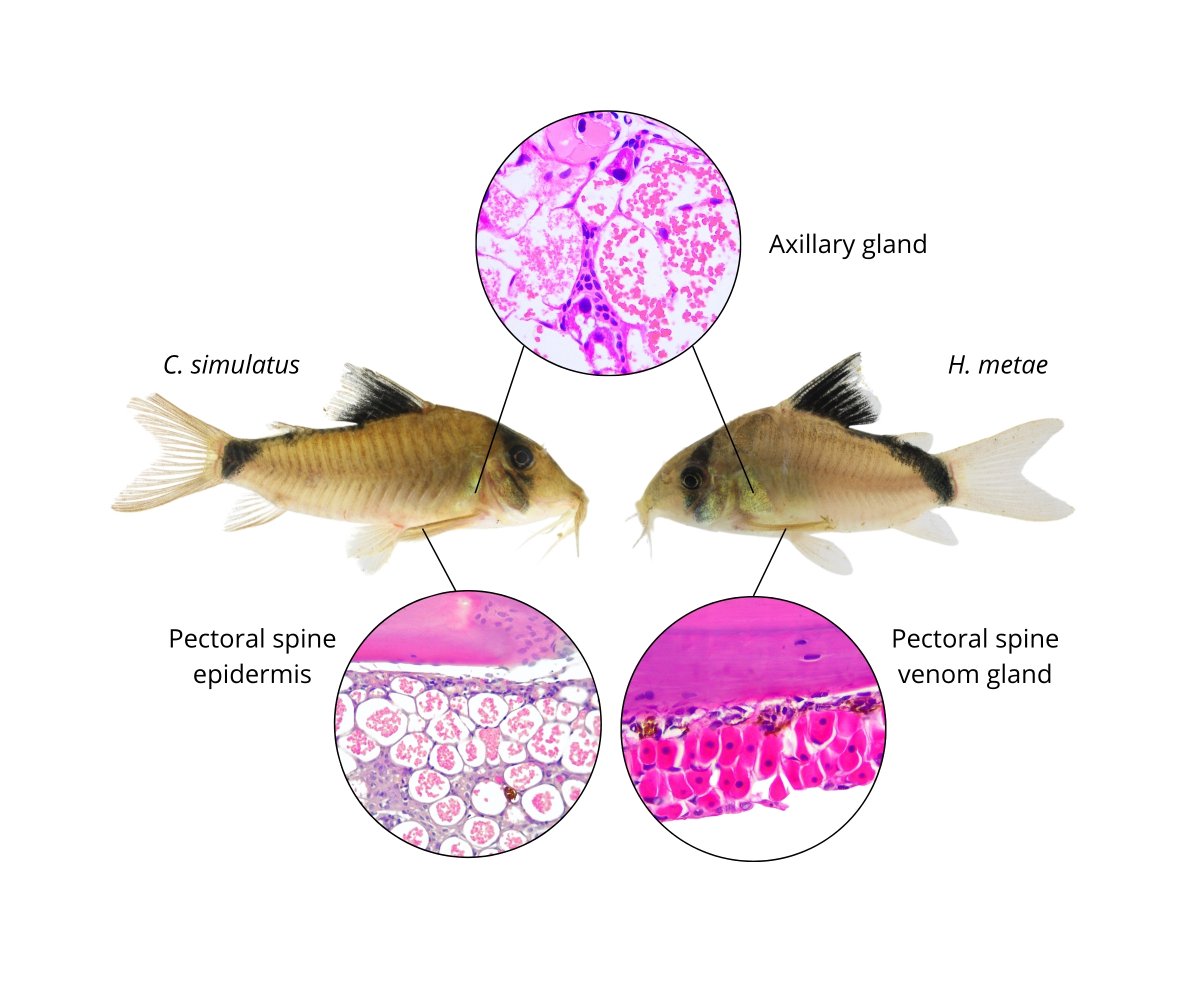
Mimicry ring involving ๐ถ๐๐๐ฆ๐๐๐๐๐ ๐ ๐๐๐ข๐๐๐ก๐ข๐ and the venomous ๐ป๐๐๐๐๐ ๐๐๐ ๐๐๐ก๐๏ฟฝ๏ฟฝ co-occurring in the Meta River basin. Although both possess axillary glands of similar morphology, they differ in the presence of venom spine glands.
ยฉ 2026 the Author(s). Published in the journal ZooKeys. An open access article, distributed under the terms of the Creative Commons Attribution 4.0 International (CC-BY-4.0) licence. https://t.co/5IYEkz4Rwi
#Corydoradinae #Corydoras #Aspidoras #Scleromystax #Gastrodermus #Brochis #Hoplisoma #Osteogaster #Ichthyology #Biodiversity #AquariumHobby #Fishkeeping #Aquarist #TropicalFish #FishTank #Mimicry #Venom #ToxicSecretions #Mรผllerian #VenomGlands #PectoralSpine
#NewSpeciesAlert - ๐๐๐๐๐โ๐๐ข๐ ๐๐ ๐๐๐๐โ, a new species of tetra (Acestrorhamphidae), is described from tributaries of the rio Tapajรณs basin at Serra do Cachimbo, Parรก State, Brazil.
๐ https://t.co/wk5lUDdasL
"This new taxon represents the fifth species of this putative group described from the Serra do Cachimbo, whose members are likely endemic to the region, indicating that the Serra do Cachimbo may represent an important region of endemism for small-bodied freshwater fishes and underscoring the need for continued taxonomic and biogeographic studies in Amazonian shield headwaters."
"The currently known geographic distribution of ๐๐๐๐๐โ๐๐ข๐ ๐๐ ๐๐๐๐โ is highly restricted, encompassing an upper tributary of the rio Teles Pires within the Serra do Cachimbo. The other putative closely related species, ๐. ๐๐๐๐๐๐๐๐๐, ๐. ๐โ๐๐๐๐๐โ๐กโ๐๐๐๐, ๐. ๐๐๐ก๐ฆ๐๐๐ข๐๐๐, ๐. ๐๐๐ข๐๐๐๐, ๐. ๐๐๐๐๐๐๐ , and ๐. ๐ ๐๐๐๐๐๐ , also exhibit narrow distributions, being endemic to elevated areas of the Brazilian Shield."
๐ฅ๐ฒ๐๐ฒ๐ฎ๐ฟ๐ฐ๐ต ๐ง๐ถ๐๐น๐ฒ
Description of a new species of ๐๐๐๐๐โ๐๐ข๐ ๐๐ (Characiformes: Acestrorhamphidae) from tributaries of rio Tapajรณs basin at Serra do Cachimbo, Parรก State, Brazil
๐๐ถ๐๐ฎ๐๐ถ๐ผ๐ป
Camelier, P., & Marinho, M. M. F. (2026). Description of a new species of ๐๐๐๐๐โ๐๐ข๐ ๐๐ (Characiformes: Acestrorhamphidae) from tributaries of rio Tapajรณs basin at Serra do Cachimbo, Parรก State, Brazil. Neotropical Ichthyology, 24(3), e260067. https://t.co/4hIQnKUd0r
๐๐ฏ๐๐๐ฟ๐ฎ๐ฐ๐
A new species of ๐๐๐๐๐โ๐๐ข๐ ๐๐ is described from a tributary of the rio Teles Pires, upper rio Tapajรณs basin, Serra do Cachimbo, Parรก State, Brazil.
The new species is diagnosed by a distinctive body coloration pattern consisting of dark blotches on the anterior portion of scales of the second to seventh longitudinal series, a conspicuous horizontally elongate, drop-shaped blotch on the caudal peduncle, and a unique eye coloration in life, with the dorsal portion of the iris reddish and the ventral portion bright golden, as well as five or six branched pelvic-fin rays. The new species is morphologically similar to a group of Amazonian congeners that share unusual body coloration and colored eyes in life, all of which exhibit restricted distributions associated with upland areas of the Brazilian crystalline shield.
This new taxon represents the fifth species of this putative group described from the Serra do Cachimbo, whose members are likely endemic to the region, indicating that the Serra do Cachimbo may represent an important region of endemism for small-bodied freshwater fishes and underscoring the need for continued taxonomic and biogeographic studies in Amazonian shield headwaters.
๐๐๐๐บ๐ผ๐น๐ผ๐ด๐
The specific name, ๐๐๐๐โ, is in honour of the esteemed ichthyologist Dr Naรฉrcio Aquino Menezes in recognition of his significant contributions to the knowledge of ichthyofauna. Naรฉrcio, whom we affectionately call โNanรกโ, trained many new ichthyologists with respect and kindness and was our PhD advisor. Dr Menezes also coordinated the โSouth American Characiformes Inventoryโ project, which supported the expedition in which the new species was collected. A noun in apposition.
๐ฃ๐ต๐ผ๐๐ผ ๐๐ฟ๐ฒ๐ฑ๐ถ๐
๐๐๐๐๐โ๐๐ข๐ ๐๐ ๐๐๐๐โ, live specimen, paratype, MZUSP 124117, 48.6 mm SL, Brazil, Parรก State, Novo Progresso, rio Teles Pires basin, upper rio Tapajรณs basin.
ยฉ 2026 the Author(s). Published in the journal Neotropical Ichthyology. An open access article, distributed under the terms of the Creative Commons Attribution 4.0 International (CC-BY-4.0) licence. https://t.co/5IYEkz4Rwi
#NewSpecies #Ichthyology #Taxonomy #Biodiversity #AquariumHobby #Fishkeeping #Aquarist #TropicalFish #FishTank #Tetra #Tetras #Characiforme #Acestrorhamphidae #Characin #rioTelesPires #rioTapajรณs #SerraDoCachimbo #ParรกState #Brazil #Neotropical #Endemism #Amazon
Researchers in this study provide genomic and additional morphological data supporting the continued recognition of the Halloween darter, ๐๐๐๐๐๐๐ ๐๐๐ฆ๐๐ก๐, as a valid species distinct from sympatric ๐. ๐๐๐๐๐๐๐๐ ๐๐๐๐ก๐ ๐ ๐๐๐ ๐ข ๐๐๐ก๐.
๐ https://t.co/OJUF7FkQAr
"Additionally, we provide preliminary genomic, meristic, and morphological data that suggest populations of the ๐๐๐๐๐๐๐ ๐๐๐๐๐๐๐๐ ๐๐๐๐ก๐ complex in the Apalachicola, Altamaha, and Savannah basins, which have recently been collectively referred to under the epithet โ๐ค๐๐ ๐ก๐๐๐๐๐โ (Fowler), comprise at least two distinct species.
We treat Apalachicola populations as an undescribed form, ๐๐๐๐๐๐๐ ๐ ๐. ๐๐. ๐๐๐๐๐๐๐๐ ๐๐๐๐ก๐, that occurs sympatrically with ๐. ๐๐๐ฆ๐๐ก๐. Our conclusion that ๐. ๐๐๐ฆ๐๐ก๐ is a valid species supports conservation status for the species in Georgia and Alabama. Ongoing work by the present authors aims to elucidate patterns of speciation in this group and to clarify taxonomy of the eastern populations of the ๐๐๐๐๐๐๐ ๐๐๐๐๐๐๐๐ ๐๐๐๐ก๐ complex."
๐ฅ๐ฒ๐๐ฒ๐ฎ๐ฟ๐ฐ๐ต ๐ง๐ถ๐๐น๐ฒ
Genomic and morphological data corroborate ๐๐๐๐๐๐๐ ๐๐๐ฆ๐๐ก๐ (Percidae: Etheostomatinae) as a valid taxon and reveal undescribed diversity in the ๐๐๐๐๐๐๐ ๐๐๐๐๐๐๐๐ ๐๐๐๐ก๐ complex
๐๐ถ๐๐ฎ๐๐ถ๐ผ๐ป
Hilburn, B.G., Freeman, M.C., Bennett, J., Petersen, K.N., Bayona-Vรกsquez, N.J., Wares, J.P. & Freeman, B.J. (2026) Genomic and morphological data corroborate ๐๐๐๐๐๐๐ ๐๐๐ฆ๐๐ก๐ (Percidae: Etheostomatinae) as a valid taxon and reveal undescribed diversity in the ๐๐๐๐๐๐๐ ๐๐๐๐๐๐๐๐ ๐๐๐๐ก๐ complex. Zootaxa, 5890 (4), 527โ541. https://t.co/h1re4EwP9f
๐๐ฏ๐๐๐ฟ๐ฎ๐ฐ๐
๐๐๐๐๐๐๐ ๐๐๐ฆ๐๐ก๐ Freeman, Freeman & Burkhead, the Halloween Darter, was described in 2008 as a new species endemic to the Chattahoochee and Flint River systems in the Apalachicola Basin, Georgia and Alabama, USA. The description illustrated phenotypic differences between ๐๐๐๐๐๐๐ ๐๐๐ฆ๐๐ก๐ and sympatric ๐๐๐๐๐๐๐ ๐๐๐๐๐๐๐๐ ๐๐๐๐ก๐ (Agassiz) ๐ ๐๐๐ ๐ข ๐๐๐ก๐ (๐ .๐.) (the Blackbanded Darter) but lacked genetic data. Because of certain morphological similarities with syntopic ๐๐๐๐๐๐๐ ๐๐๐๐๐๐๐๐ ๐๐๐๐ก๐ ๐ .๐. and anecdotal evidence suggesting low genetic differentiation between the two forms, recent authors have noted the need for additional investigations to assess the taxonomic validity of ๐๐๐๐๐๐๐ ๐๐๐ฆ๐๐ก๐.
To examine whether ๐. ๏ฟฝ๏ฟฝ๏ฟฝ๐๐ฆ๐๐ก๐ represents a valid species separate from ๐. ๐๐๐๐๐๐๐๐ ๐๐๐๐ก๐ ๐ .๐., we used 3RAD reduced-representation genomic data and expanded phenotypic comparisons between ๐. ๐๐๐ฆ๐๐ก๐ and ๐. ๐๐๐๐๐๐๐๐ ๐๐๐๐ก๐ ๐ .๐. from the Apalachicola basin and three adjacent river basins. Genome-wide sequence data show that ๐. ๐๐๐ฆ๐๐ก๐ is reciprocally monophyletic with respect to ๐. ๐๐๐๐๐๐๐๐ ๐๐๐๐ก๐ ๐ .๐. in every basin examined. Meristic and morphometric data also resolve ๐. ๐๐๐ฆ๐๐ก๐ and ๐. ๐๐๐๐๐๐๐๐ ๐๐๐๐ก๐ ๐ .๐. as distinct clusters in principal component analyses, and pigmentation patterns provide diagnostic characters that allow easy identification of ๐. ๐๐๐ฆ๐๐ก๐ in the field.
Additionally, we provide preliminary genomic, meristic, and morphological data that suggest populations of the ๐๐๐๐๐๐๐ ๐๐๐๐๐๐๐๐ ๐๐๐๐ก๐ complex in the Apalachicola, Altamaha, and Savannah basins, which have recently been collectively referred to under the epithet โ๐ค๐๐ ๐ก๐๐๐๐๐โ (Fowler), comprise at least two distinct species.
We treat Apalachicola populations as an undescribed form, ๐๐๐๐๐๐๐ ๐ ๐. ๐๐. ๐๐๐๐๐๐๐๐ ๐๐๐๐ก๐, that occurs sympatrically with ๐. ๐๐๐ฆ๐๐ก๐. Our conclusion that ๐. ๐๐๐ฆ๐๐ก๐ is a valid species supports conservation status for the species in Georgia and Alabama. Ongoing work by the present authors aims to elucidate patterns of speciation in this group and to clarify taxonomy of the eastern populations of the ๐๐๐๐๐๐๐ ๐๐๐๐๐๐๐๐ ๐๐๐๐ก๐ complex.
๐ฃ๐ต๐ผ๐๐ผ ๐๐ฟ๐ฒ๐ฑ๐ถ๐
A) 3RAD sample locations for ๐๐๐๐๐๐๐ ๐๐๐๐๐๐๐๐ ๐๐๐๐ก๐ ๐ .๐. and B) 3RAD sample locations for ๐๐๐๏ฟฝ๏ฟฝ๏ฟฝ๐๐๐ ๐๐๐ฆ๐๐ก๐. Grey shading represents the respective ranges of each taxon. C) Midpoint-rooted maximum likelihood phylogeny constructed in IQ-TREE using 3RAD SNP data depicting the reciprocal monophyly of ๐๐๐๐๐๐๐ ๐๐๐ฆ๐๐ก๐ and geographic structure in the ๐๐๐๐๐๐๐ ๐๐๐๐๐๐๐๐ ๐๐๐๐ก๐ complex. Bootstrap support values are displayed on the major nodes. The Flint clade also includes a single individual from a tributary of the Apalachicola River proper. Photos from top to bottom: ๐๐๐๐๐๐๐ ๐๐๐ฆ๐๐ก๐ from the Chattahoochee watershed, ๐. ๐ ๐. ๐๐. ๐๐๐๐๐๐๐๐ ๐๐๐๐ก๐ from the Chattahoochee watershed, ๐๐๐๐๐๐๐ ๐๐๐๐๐๐๐๐ ๐๐๐๐ก๐ from the Upper Coosa watershed, and ๐. ๐ ๐. ๐๐. ๐๐๐๐๐๐๐๐ ๐๐๐๐ก๐ from the Savannah watershed. Photos by B.G.H.
ยฉ 2026 the Author(s). Published in the journal Zootaxa. An open access article, distributed under the terms of the Creative Commons Attribution 4.0 International (CC-BY-4.0) licence. https://t.co/5IYEkz4Rwi
#Ichthyology #Taxonomy #Biodiversity #AquariumHobby #Fishkeeping #Aquarist #Percina #Percidae #Etheostomatinae #FishTank #USA #HalloweenDarter #Darter #Darters #Apalachicola #Georgia #Alabama #Altamaha #Savannah #BlackbandedDarter #Chattahoochee