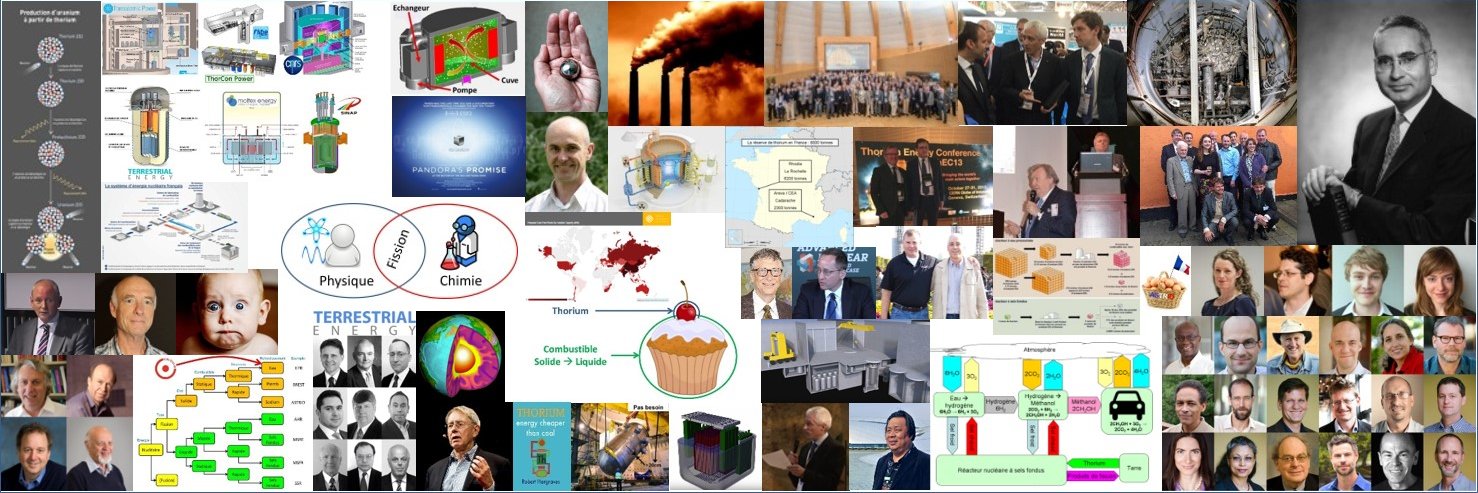
Nouvel article Fission Liquide :
https://t.co/v0SVhoW9ap
"Deux écoles très différentes de conception des réacteurs ont émergé depuis la construction des premiers réacteurs."
#FissionLiquide#SelsFondus
This is what modular construction looks like 👀.
Our second non-nuclear Engineering Test Unit is made up of more than 30 plant equipment skids that come together to form an integrated unit.
Mechanical assembly is nearly complete at our Manufacturing Development Campus in Albuquerque, New Mexico, with operations starting later this year.
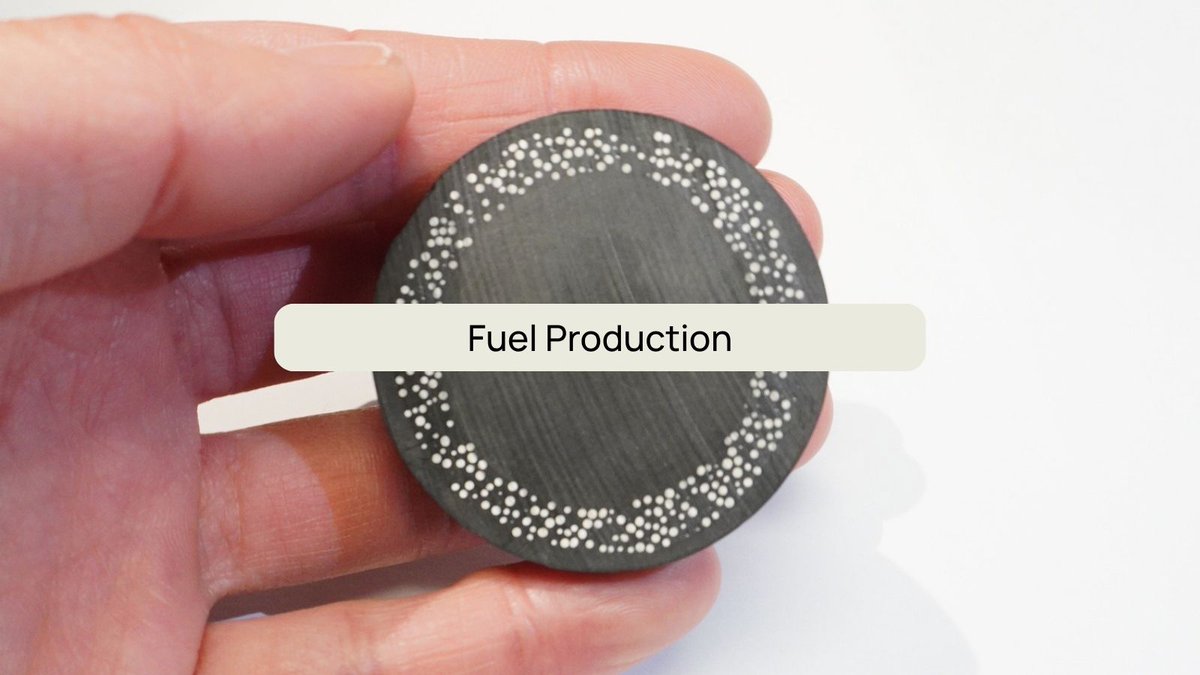
You can’t run a reactor without fuel.
We’re moving quickly to optimize processes to fabricate robust TRISO pebble fuel for our first reactors.
👉 https://t.co/YcDmTn5sxM
📰European Industrial Alliance on #SMRs launches second call for projects
This second call aims to select a limited number of additional projects that can contribute to the Alliance’s objectives.
Read more 👉https://t.co/aKrXvnB6Fw
On the heels of being awarded “Highly Commended” Technology of Change – Energy Efficiency Award at the Reuters 2026 Energy Industry Awards, our CEO, Simon Irish, recently joined industry leaders at Reuters Events Global Energy Forum 2026 for the “The New Investment Equation: Resilience Over Risk Panel.”
For the first time, private capital is funding nuclear technology opportunities pursued by private sector innovators, and screening for the most viable, scalable and capital efficient technologies – those that lower capital requirements, plant construction times, and cost of nuclear energy supply, while improving plant output efficiency and reducing supply chain and regulatory requirements.
Capital is funding the transition from technology development to project-level deployment. Simon offered insights on how projects secure capital, exploring global investment flows, de-risking strategies, and the partnerships that unlock financing specifically highlighting Terrestrial Energy’s IMSR Plant as a practical example. By design, the IMSR captures the special “triple-advantage” of molten salt reactor technology – high-temperature and low-pressure operating with inherent safety, making it stand out in the nuclear tech sector for its high capital efficiency while avoiding fuel supply chain challenges from its use of readily-available low enriched uranium (at <5% U-235).
Thank you to Reuters Events and the fellow panelists for an insightful conversation.
#GEF #IMSR #Energy
Syntholene Energy Corp. (TSX-V: $ESAF.V | OTCBQ: SYNTF | FSE: 3DD0) announces that it has successfully produced its first 500 kilograms of ‘green’ electrolytic hydrogen at its geothermally-integrated Solid Oxide Electrolyzer Cell demonstration facility in Húsavík, Iceland.
▶️ Full Release: https://t.co/R0PXrg5Czk
Every company has an origin story. A third-generation Texas oilman took Natura from organic farming to advanced nuclear. @FortuneMagazine has the story: https://t.co/ZVxXj7XDZ9
.@EIB and @Oranogroup have signed a EUR125 million (USD143 million) credit line to finance the development of @OranoMed and its industrial infrastructure, in particular the construction of the Advanced Thorium Extraction Facility #nuclear https://t.co/an53Qxx4Jw
Very excited to announce that at 12:20am on the 4th of July, Aalo achieved criticality on our first full-scale reactor.
We cut it close, but we pulled it off!!
Working towards this goal with such an incredible group of humans has been the most fulfilling period of my life. This moment has been three years in the making.
Last year, Executive Order 14301 called for at least three new reactors to go critical before July 4th, 2026.
As of late last Friday night, that goal has been surpassed!
When the EO was announced, we immediately sat down to figure out what the most ambitious scope would be, while still being potentially achievable by July 4th.
Some of the team proposed doing simplified designs with smaller fuel loads, or building in existing facilities.
One thing was clear: We wouldn't have time to integrate a full-scale sodium heat-removal loop to bring the reactor to its full 30 MWt.
So here’s where we landed:
➡️ We purchased the entire commercial-scale fuel load. This is enough fuel to operate at 30 MWt / 10 MWe for 3 years before refueling. To my knowledge, it’s the largest fuel load that’s been taken critical in the DOE pilot program, by far.
➡️ We built a full-scale reactor vessel in our factory, and loaded in our commercial graphite layout. All the dimensions, vessel thickness, and manufacturing techniques are essentially the same as we will use for the imminent commercial version. There will be a few minor tweaks for sodium flow and full-power, but nothing major.
➡️ We built an entirely new reactor facility at the Idaho National Lab. Building a building is easy. Building a new reactor facility comes with a mountain of paperwork, policies, operation and training procedures, security, instrumentation and control, and more.
Zero-power criticality might seem like a small step, but I can tell you, going through the exercise of building a reactor and taking it to criticality has been extremely valuable.
The learnings on regulatory, ops, manufacturing, supply chain, QA, economics, engineering, and design will accelerate our path through to the final iteration at full-power.
America is blessed to have a recent Cambrian explosion of startups in nuclear, all going after different markets, technologies, and strategies.
I’m excited that sodium, gas, salt, and new PWRs are all getting pushed forward once again. The best outcome for humanity is to have all these advance in parallel, as quickly as possible, while maintaining safety.
Thanks again to our amazing team, DOE, INL, BEA, and everyone else who helped us get to where we are today.
This could not have happened anywhere else. Happy birthday, America!! 🇺🇸🇺🇸🇺🇸
There has never been a better time for nuclear energy. The Second Atomic Age has begun, and this one will be here to stay.
In the last five days I witnessed things thought impossible just a year ago.
A two year old company with only twelve employees turned on a tiny, portable reactor for the first time.
A squad of twenty-something year olds became the first startup in history to generate nuclear electricity and power a chip.
From DC, to the desert of Idaho to the Utah plateau, the indomitable American spirit made itself present. It manifested in ambitious disruptors who looked at the doubters right in the face and said: just watch me.
What I love the most about the American nuclear renaissance is that it’s about way more than nuclear. It’s about more than electricity, or climate change or data centers.
It’s fundamentally about reconnecting with that raw, defiant American spirit. With the radical optimist view that America can and will. We build stuff. We dream bigger than everyone else. We do the impossible.
🇺🇸 Happy 250th birthday to the best country on Earth 🇺🇸
Mind blowing that @DeployableE, a two year old company, came out of nowhere and went critical before the July 4th deadline.
All of that with only *twelve* employees!
Extremely impressive.
Today, Valar Atomics became the first nuclear startup to make electricity, and we did it by powering an NVIDIA Spark.
This is the first meeting of advanced nuclear and AI; two technologies which will transform the next century.
But that’s only the start of our collaboration.
CRITICALITY NUMBER THREE! 🎉
On June 30, 2026, at around 11:55 PM MDT, @DeployableE’s Unity microreactor achieved initial criticality at @INL. It is the third nuclear test reactor this year to go critical under @ENERGY authorization.
Congratulations to Deployable Energy on reaching this historic milestone!
NUCLEAR 101: The Kairos Power fluoride salt-cooled high-temperature reactor combines proven molten salt and pebble bed reactor technologies to efficiently deliver heat at more than 1,200°F.
Here’s how it works:
🌡️ Fission generates heat inside the TRISO pebble fuel
↔️ Flibe molten salt coolant efficiently transfers that heat to an intermediate loop
💧 The intermediate loop heats water to steam
⚡️ The steam spins a turbine to produce clean electricity.
✋Meet the world’s most famous molten salt reactor.
@ORNL’s Molten Salt Reactor Experiment shut down in 1969 after completing all test objectives. Historical data is still used today and is helping us advance our fluoride salt-cooled high-temperature reactor.
Kairos Power vertically integrates the production or assembly of components and materials that are:
🧂: Salt-connected
🦺: Safety-related
🔧: Not available off-the-shelf.
This drives down costs and mitigates supply chain risk for our commercial fleet.